










































1. Executive Summary
Fanttik’s product portfolio signals an attempt to own a modern self‑reliance identity: compact, cordless devices for the car, garage, and campsite, presented with consumer‑electronics style design consistency. This is a legitimate strategic wedge in a historically utilitarian market — buyers increasingly reward confidence, usability, and reduced friction alongside raw performance.
However, in high‑consequence categories (notably battery jump starting and any products positioned for families or children), trust is not won by aesthetics alone. It is won by visible compliance posture, truthful claim discipline, and predictable post‑purchase behavior (warranty handling, spare parts, and documentation).
This whitepaper argues that the market has reached a new maturity stage where “winning” is a function of credibility math:
- Products must be engineered and documented in a way that aligns with credible safety and performance expectations (battery safety, thermal design, labeling, and user instructions).
- Systems must be built (supplier quality, audit trails, test evidence, and corrective action loops) that reduce the probability of reputational shocks.
- Claims must be structured like contracts: measurable, bounded, and consistent with standard methods.
To make this approach operational, the paper provides a set of worked analytical modules — reusable formulas and calculation patterns — that help teams quantify safety margin, energy feasibility, and buyer ROI in a way that supports both product decisions and E‑E‑A‑T-aligned content.
2. Industry Definition and Category Map
2.1 What “Modern Essential Gear” means in 2026
A useful industry definition is:
Modern Essential Gear = compact, often cordless hardware designed to reduce the friction of everyday maintenance, preparedness, and hands‑on tasks — where the buyer’s primary utility is confidence under stress.
This industry is not one category — it is a converging set of markets connected by four technology pillars:
- Rechargeable energy systems (Li‑ion packs, BMS, power electronics)
- Compact motors and air movement (inflation, suction, cutting, rotary tools)
- Human factors and usability (UX, error‑proofing, storage, intuitive modes)
- Compliance documentation as product infrastructure (labels, manuals, certifications, traceability)
Fanttik’s current assortment breadth is consistent with a platform approach: a shared capability set that can be applied to multiple product forms.
2.2 Category segmentation (where Fanttik sits)
The portfolio intersects four arenas with different economics and trust expectations:
- Automotive preparedness & maintenance accessories (tire inflators, vacuums, jump starters)
- DIY & prosumer precision tools (electric screwdrivers, measurement tools, soldering/rotary tools)
- Home/yard cleaning and maintenance (pressure washers, scrubbers, compact saws)
- Lifestyle adjacency categories (camping goods, personal care, children’s ride‑ons)
The strategic risk is that buyers use category focus as a proxy for reliability. A brand that spans both emergency power and personal care may be read as “good at packaging” unless it provides strong evidence of domain competence.
3. Demand Drivers, Seasonality, and “Moment-of-Need” Economics
3.1 The preparedness demand engine
In automotive accessories, demand is frequently event‑triggered:
- a flat tire on a road trip,
- a dead battery in cold weather,
- seasonal pressure changes,
- a new vehicle purchase,
- gifting and “just in case” anxiety.
NHTSA emphasizes that underinflation is both a safety and cost issue and notes that maintaining tire pressure can reduce costs and extend tire life. NHTSA tire safety and savings
Industry implication: the winning product is often the one that feels safest and simplest before the customer has time to research deeply.
3.2 The identity demand engine (DIY tools)
DIY/prosumer tools are evaluated differently: buyers want competence and repeatability.
- Precision torque, bit compatibility, calibration trust
- Ergonomic comfort over long sessions
- Accessory ecosystem (bits, cases, replacement tips)
- Community endorsement and repairability cues
Here, authority is earned through clarity and evidence, not hype.
3.3 Returns and support as economic gravity
For many hardware categories, the hidden profit driver is not the sale — it is returns containment and warranty cost control. Products touching water, batteries, or high mechanical stress have higher return sensitivity. The unit economics of a multi-category portfolio therefore depend on:
- failure rate distribution,
- defect detectability at incoming QC,
- support resolution time,
- parts availability and repair options.
A growing brand must treat operations and documentation as product features.
4. Regulatory and Standards Landscape
This section is intentionally conservative: it focuses on widely recognized frameworks and the compliance patterns that buyers (and platforms) implicitly expect. Standards are jurisdictional; teams should validate applicability for target markets.
4.1 Battery-powered products: transport and safety expectations
4.1.1 Transport testing baseline (UN 38.3)
Lithium cells and batteries shipped commercially are generally expected to meet UN transport testing requirements commonly referred to as UN 38.3, published in the UN Manual of Tests and Criteria. UN Manual of Tests and Criteria (UNECE)
Many jurisdictions also require test summaries to be available for lithium batteries in transport, which affects documentation readiness and supplier evidence control. PHMSA lithium battery test summary guidance
4.1.2 Product safety baselines (IEC / UL families)
For consumer-facing rechargeable lithium products, a common global baseline reference is IEC’s portable secondary lithium battery safety standard family, including IEC 62133‑2. IEC 62133‑2
In the US ecosystem, UL standards are often used in certification programs and retailer/platform expectations for battery products and portable power packs (e.g., UL categories around batteries and portable power systems). UL standards & safety testing overview
Practical reading: even when a product is not explicitly required to carry a certification mark, platforms and retailers can treat credible safety standards as the default expectation for high-risk categories.
4.2 Household appliances and wet-environment devices
Products in wet environments or with high-pressure cleaning functions are commonly evaluated against household appliance safety frameworks such as the IEC 60335 family, with specific parts for high-pressure cleaners. IEC 60335‑2‑79
4.3 Laser measurement tools
Laser measurement products involve eye-safety classifications. The global reference framework is the IEC 60825 series. IEC 60825‑1
4.4 Children’s products (if applicable)
Children’s products require heightened attention to third‑party testing and certification expectations, depending on jurisdiction. In the US, the CPSIA strengthened CPSC’s safety regime and introduced additional certification and testing mechanisms for children’s products. CPSIA overview (CPSC) For products that qualify as children’s products, CPSC guidance covers the Children’s Product Certificate (CPC) and its required elements. Children’s Product Certificate (CPSC)
Portfolio implication: introducing children’s categories can change the risk posture of the entire brand in buyer perception and platform scrutiny.
4.5 The EU “compliance density” trend (GPSR + batteries)
Two EU regulations illustrate the direction of travel: tighter product safety governance and more explicit battery lifecycle requirements.
- General Product Safety Regulation (EU) 2023/988 (GPSR). EU GPSR 2023/988 (EUR‑Lex)
- Batteries Regulation (EU) 2023/1542. EU Batteries Regulation 2023/1542 (EUR‑Lex)
Even if your primary market is elsewhere, these regimes shape global expectations and platform policies.
4.6 Quality management systems (QMS) as an industry differentiator
A QMS is not a certificate for customers; it is a system for preventing reputational shocks. ISO 9001 is the most widely referenced QMS standard globally. ISO 9001:2015
4.7 Practical standards mapping by product family (decision-ready view)
This mapping is not exhaustive; it highlights the standards “gravity wells” that typically shape buyer and platform expectations.
-
Cordless tire inflators and air compressors Primary risk themes: pressure containment, thermal behavior, hose integrity, battery safety, and clear user instructions for maximum pressure and duty cycle. Evidence themes: pressure accuracy explanation, over-pressure shutoff behavior, thermal protection behavior, and battery transport documentation readiness (UN 38.3).
-
Jump starters / portable emergency power Primary risk themes: short-circuit protection, reverse polarity protection, thermal runaway prevention, conductor heating, connector robustness, and truthful rating discipline. Evidence themes: battery testing posture (UN 38.3 + IEC 62133‑2), protection function descriptions, and clear “what to do in cold weather” guidance.
-
Handheld cordless tools (precision screwdrivers, rotary tools) Primary risk themes: mechanical durability, torque repeatability, battery safety, and instruction clarity (especially around what the tool is not designed to do). Evidence themes: torque guidance tables, bit ecosystem guidance, and safe finishing practices for delicate electronics.
-
Wet-environment maintenance devices (pressure washers, pool cleaners, scrubbers) Primary risk themes: water ingress protection, insulation integrity, switch safety, hose and seal longevity, and safe cleaning chemical guidance. Evidence themes: appliance safety reference families such as IEC 60335; conservative claims around pressure and duty cycle.
-
Laser measurement tools Primary risk themes: eye safety classification, labeling, and user-safe operating distance guidance. Evidence themes: alignment to laser safety frameworks such as IEC 60825; clear labeling and warnings.
-
Children’s products (ride-ons, toys, juvenile goods) Primary risk themes: mechanical entrapment hazards, materials restrictions, sharp edges, and strict certification/testing expectations. Evidence themes: conservative design, third-party testing programs, and clear age/weight labeling consistent with jurisdictional rules (e.g., CPSIA regime in the U.S.).
Why include this in a whitepaper? Because it allows stakeholders to see — at a glance — which category expansions increase compliance density and therefore require deeper operational maturity.
5. Engineering Fundamentals That Determine Trust
5.1 Trust is mostly about failure modes
A buyer does not purchase a product; they purchase an implicit promise: “This will work when I’m stressed.”
In essential gear, the dominant trust drivers are:
- Thermal safety and protection behavior
- Energy feasibility (does the battery energy match the job?)
- Mechanical robustness (seals, hoses, connectors, gears)
- User error tolerance (clear modes, safe defaults, lockouts)
- Instruction quality (especially for edge conditions)
This section outlines the “physics contracts” behind key categories.
5.2 Battery energy: the feasibility contract
All battery-powered devices are constrained by a simple identity:
$$E_{pack} = C_{Ah} \cdot V_{nom}$$
Where:
- $E_{pack}$ is nominal stored energy (Wh),
- $C_{Ah}$ is capacity rating (Ah),
- $V_{nom}$ is nominal cell/pack voltage (V).
Not all energy is usable at the load you care about. A practical form is:
$$E_{usable} = E_{pack} \cdot \eta$$
Where $\eta$ is a combined factor for conversion losses, voltage sag, and reserve margin.
Why this matters: “Peak amps” or “max pressure” are not the core truth; energy and heat are.
5.3 Jump-starting: current, time, and temperature
The energy required for a jump event can be approximated from:
$$E_{jump} = \frac{V_{out} \cdot I_{jump} \cdot t}{3600}$$
Where:
- $V_{out}$ is output voltage (V),
- $I_{jump}$ is the effective current during the attempt (A),
- $t$ is duration (s).
The number of feasible jump events is then:
$$N \approx \frac{E_{usable}}{E_{jump}}$$
Temperature complicates everything because both battery capability and engine load change. Trustworthy products therefore communicate what changes in cold weather and how the user should act.
5.4 Tire inflation: volume, pressure, and flow
Tire inflation is fundamentally a gas-handling problem: how much air mass must be added to raise pressure in a known volume.
A practical approximation for tire internal air volume uses a torus model:
- treat the tire cavity as a ring with circumference approximately equal to the centerline circumference,
- cross-section area estimated from tire size.
The time to inflate is then governed by the inflator’s flow rate and how flow decays as pressure rises. A general integral form is:
$$t \approx \int_{P_0}^{P_1} \frac{V}{Q(P)} , dP$$
Where $Q(P)$ is the pressure-dependent flow.
5.5 Thermal behavior: the hidden limiter
Air compression and high-current discharge both generate heat. Even if a product “works,” it can feel unsafe or be unreliable if thermal behavior is not managed.
A conservative upper bound for compressor outlet temperature rise is the adiabatic estimate:
$$T_2 = T_1 \left(\frac{P_2}{P_1}\right)^{\frac{\gamma-1}{\gamma}}$$
Where $\gamma$ is the heat capacity ratio (≈1.4 for air).
This is not a prediction of surface temperature; it is a conceptual boundary that guides safety margins and material selection.
5.6 Precision tools: torque and damage risk
For precision electronics, torque is both a functionality and safety variable. A useful governance approach is to define:
- a minimum torque to engage and remove a fastener reliably,
- a maximum “safe” torque before damage risk increases,
- a safety discipline: finish delicate fasteners by hand.
A simple framing is:
$$\tau_{safe} = \frac{\tau_{limit}}{SF}$$
Where $SF$ (safety factor) is chosen based on variability in user technique and component fragility.
6. Quality Systems, Reliability, and Documentation
6.1 Reliability is a process outcome, not a product attribute
For multi-category portfolios, reliability is best managed with a unified system:
- incoming inspection plans aligned to failure modes,
- supplier process capability requirements,
- traceability to lots and critical components,
- corrective actions tied to field signals.
ISO 9001 provides a widely used structure for building and auditing such a system. ISO 9001:2015
6.2 Documentation readiness as a “platform capability”
Documentation is not just manuals. For high-risk products it includes:
- transport test evidence (UN 38.3 and test summaries),
- safety labeling and warnings,
- user instructions designed to prevent misuse,
- warranty terms presented clearly,
- region-specific compliance declarations where required.
This “paper infrastructure” is increasingly a gating factor for platform success.
6.3 Field data loops and defect containment
A credibility-first brand treats field signals as a structured dataset:
- return reasons categorized to failure mode codes,
- correlation of defect type with supplier lots,
- time-to-failure distributions,
- remedy effectiveness tracking.
This is how you prevent one weak category from contaminating trust across the catalog.
6.4 Documentation artifacts that scale across categories
A multi-category brand can prevent documentation sprawl by creating reusable templates:
- Safety posture sheet (1 page): key hazards, protection features, and user warnings.
- Transport readiness sheet (battery SKUs): UN 38.3 evidence availability, test summary availability, shipping restrictions summary for support teams.
- Performance method sheet: what was measured, how it was measured, and what causes variance.
- Warranty & service sheet: what is covered, how to request service, typical resolution time, and parts availability.
These artifacts serve three functions simultaneously: customer trust, platform compliance, and internal operational alignment.
7. Channel Reality: Marketplaces, Warranty Law, and Returns
7.1 Warranty expectations are part of the product
In the U.S., the Magnuson-Moss Warranty Act governs written warranties on consumer products and shapes the disclosure and availability expectations that both consumers and platforms implicitly enforce. FTC guide to the Magnuson‑Moss Warranty Act
Practical implication: warranty language, availability, and “what happens when it breaks” must match the brand’s premium signals.
7.2 Marketplace risk: safety incidents travel fast
In essential gear, a single safety incident can trigger:
- platform enforcement,
- increased review skepticism,
- higher return rates,
- brand-wide trust damage.
Therefore, the portfolio governance system must treat higher-liability categories differently (more conservative claims, stronger evidence requirements, and deeper supplier audits).
7.3 Recall and incident readiness (why it matters even if you never recall)
In battery and children-adjacent categories, the “tail risk” is reputational. Even one incident can generate platform enforcement and long-lasting distrust.
A recall/incident readiness posture includes:
- a serial/lot traceability scheme that can isolate impacted units quickly,
- a customer communication playbook,
- internal escalation paths for safety complaints,
- a process to publish corrective guidance rapidly.
Treating this as a standing capability is often cheaper than rebuilding trust after a crisis.
8. Competitive Archetypes and Strategy
8.1 Specialist authority brands
They win by depth and long-term trust cues:
- deep accessory ecosystems,
- conservative specifications,
- clear service pathways.
Fanttik competes by reducing friction, improving usability, and creating a coherent “system” story across categories — but must supplement design with visible assurance.
8.2 Assortment-first aggregators
They win by shelf size, promotions, and review volume. A design-forward brand that drifts toward breadth without governance risks being pulled into pure price competition.
8.3 Compliance-first trust leaders
They win by minimizing buyer anxiety:
- conservative claims,
- robust documentation,
- clear warranties,
- strong safety posture.
In jump starters and children-adjacent categories, Fanttik is judged by this standard even if it markets as a design brand.
9. A Credibility Architecture for Fanttik
Fanttik’s best path is to turn its breadth into a coherent capability narrative:
-
Define the brand promise under stress “Prepared, capable, modern self-reliance — reliably.”
-
Design a “trust layer” that travels across categories
- safety posture pages,
- evidence summaries (methods, not marketing),
- clear manuals and warnings,
- predictable warranty handling.
-
Protect the core as credibility engine Automotive preparedness + compact DIY tools can reinforce each other. More distant adjacencies should be contained by stronger governance.
-
Use analytics as a product and content backbone Provide buyers with transparent calculators: energy feasibility, inflation time, ROI from maintenance discipline. This builds trust because it shows bounded reasoning rather than exaggerated claims.
9.1 Portfolio governance: a simple scoring model
A practical way to govern category expansion is to score candidate categories along two axes:
- Trust criticality (T): how much a failure harms the customer (safety, financial, family risk).
- Compliance density (C): how many explicit standards/regimes are likely to apply and how strict platform scrutiny is.
A simple composite can be:
$$RiskIndex = 0.6T + 0.4C$$
Where $T$ and $C$ are scored 0–10.
This is not a scientific model; it is a management tool to force consistent decisions. High RiskIndex categories require deeper evidence packets, more conservative claims, and stronger supplier auditing.
9.2 “Trust layer” content that customers actually use
A trust layer is more than a badge page. It is a set of utilities:
- calculators (inflation time, ROI, energy feasibility),
- task-based guides (“what to do when the battery is dead at -10°C”),
- parts and maintenance pages,
- support SLAs and warranty clarity.
These utilities reduce support volume and increase conversion because they reduce the buyer’s uncertainty.
10. Worked Analytical Modules
This section integrates reusable modules derived from standard physics/economics identities and the provided “experiment assets” framework. The goal is to demonstrate how a brand can publish useful, bounded, repeatable calculations that support product trust and content authority.
Important: The worked examples below are parameterized so teams can adapt inputs to the exact SKU configuration and target scenario. They are intended as a transparent calculation method, not a guarantee of outcomes.
10.1 Tire internal air volume estimator (ISO metric size)
Use case: estimate the air volume of a tire from size notation (e.g., 205/55R16) to support inflation time planning.
Example (205/55R16):
- Estimated internal air volume: 24.0 L
Method concept: torus approximation with a cavity scaling factor (to account for tread/sidewall geometry). (Asset reference: tire volume estimator.)
10.2 Pressure-dependent inflation time (portable inflator planning)
Use case: estimate inflation time from $P_0$ to $P_1$ given a pressure-dependent flow model.
Example scenario: inflate a 205/55R16 tire from 28 PSI to 36 PSI.
- Estimated time: 2.20 minutes (≈ 132 seconds)
This is consistent with Fanttik’s own positioning that the X8 Apex is designed for fast inflation and includes preset modes with automatic stop. X8 APEX Tire Inflator
(Asset reference: pressure-dependent flow integration.)
10.3 Duty cycle and thermal planning for multi-tire workflows
Use case: plan whether a “4 tires top-up” workload fits within continuous runtime expectations, and understand compression heating boundaries.
Example: 4 tires × 2.20 minutes/tire = 8.8 minutes total run time.
- Within a 40-minute continuous runtime envelope: Yes (planner output).
- Adiabatic outlet temperature upper bound (conceptual): 144 °C (Do not interpret this as surface temperature; it is a thermodynamic boundary to inform materials and safety margins.)
(Asset reference: duty-cycle + adiabatic estimate.)
10.4 Tire pressure ROI & payback (maintenance economics)
Use case: quantify how underinflation can cost money through fuel waste and tire wear, then estimate payback for a maintenance tool.
NHTSA notes that underinflated tires reduce fuel economy and that proper tire inflation can extend tire life. NHTSA tire safety and savings
Example assumptions (editable):
- 12,000 miles/year, 30 mpg, $4.00/gal
- average underinflation: 4 PSI relative to 35 PSI recommended
- tire set cost: $800, tire life: 50,000 miles
- inflator cost: $110
Outputs (range-aware):
- annual fuel waste: $13–$19
- estimated tire life impact: 14.9% (model-based sensitivity)
- payback window: 28–25 months
Payback calculation:
$$Payback_{months} = 12 \cdot \frac{Cost}{Annual,Savings}$$
(Asset reference: ROI estimator.)
10.5 Jump-start feasibility: winter confidence scoring
Use case: translate “peak amps” marketing into a safety margin framing that changes with engine size, fuel type, and ambient temperature.
Example scenario: 2.0L gasoline engine, 0°F ambient, vehicle battery 550 CCA, jump starter peak 2000A with sustained fraction 0.4.
Key outputs:
- estimated required amps at temperature: 256 A
- jump starter sustained amps (assumption): 800 A
- confidence label: High confidence
- safety margin factor: 22.04×
(Asset reference: winter confidence score + temperature derating.)
Why it matters: this style of bounded reasoning reduces buyer anxiety and strengthens trust without exaggeration.
10.6 Jump-starts per charge (energy budget)
Use case: map battery energy to the number of feasible jump attempts under a specified current and duration.
Example inputs (editable):
- capacity 20Ah @ 3.7V (rating voltage)
- efficiency factor 0.70
- jump attempt: 12V × 400A × 3s
Outputs:
- pack energy: 74 Wh
- usable energy: 51.8 Wh
- energy per jump: 4.0 Wh
- estimated jumps: 13
(Asset reference: energy-based estimator.)
10.7 Precision assembly productivity: time and ergonomic load
Use case: quantify workflow savings for electric precision screwdriving, including a proxy for repetitive wrist rotation.
Fanttik’s E1 Max page provides torque modes and usage guidance (including torque settings and manual mode capability). Fanttik E1 MAX Electric Screwdriver
Example: 40 screws
- manual: 15 s/screw
- powered: 3 s/screw
- wrist rotations: 10 per screw manual, ~0 powered
Outputs:
- time saved: 8.0 minutes
- estimated wrist rotations saved: 400
- speed multiplier: 5.0×
(Asset reference: assembly time + wrist rotation estimator.)
10.8 Precision torque fit checker (risk-managed usage)
Use case: help users choose torque mode consistent with screw class and avoid over-torque risk.
Example:
- screw class: m2.5–m4.0 electronics
- selected torque: 0.25 N·m
Output: Good — Torque appears appropriate; still finish final snug by hand for delicate electronics.
(Asset reference: torque fit checker.)
11. Verifiable Product Claims and Communication Protocols
11.1 Claim taxonomy
A credibility-first content system can classify every numeric statement into one of three types:
- Standard-backed (linked to recognized standard/regulator)
- Parameter-derived (calculated from published inputs with formula shown)
- Bounded range (expert synthesis with clear constraints)
Avoid presenting derived outputs as regulatory guarantees.
11.2 A practical fact-check protocol
For each product claim:
- identify the measurement method (test conditions, units, tolerance),
- link to the governing standard or regulator guidance where applicable,
- state assumptions when presenting derived calculations,
- present ranges when real-world variance is material.
This is how content remains robust under review and algorithm updates.
11.3 Turning analytics into durable assets
In a mature market, trust is the primary currency. Buyers and institutional partners increasingly demand content that demonstrates deep technical competence and utility. For hardware brands, the most durable information assets are those that:
- solve a real problem with transparent methods,
- cite regulators and standards for the “rules of the world,”
- avoid unbounded claims,
- provide interactive decision support.
The worked modules in this paper are examples of how to create repeatable, auditable content — where the authority comes from standards and physics, and the value comes from applied reasoning.
12. Sustainability and Lifecycle Considerations
12.1 Why lifecycle matters more now
Battery and electronics products increasingly face lifecycle scrutiny:
- repairability expectations,
- spare parts,
- battery replacement pathways,
- end-of-life handling.
The EU Batteries Regulation is a strong signal of the global trend toward more explicit lifecycle requirements. EU Batteries Regulation 2023/1542
12.2 Practical actions
- publish spare parts and battery replacement pathways,
- design packaging and manuals to reduce misuse and returns,
- treat sustainability as reliability (longer life is the best environmental outcome).
13. Roadmap Checklist: 90 Days → 12 Months
13.1 Next 90 days (high-impact foundations)
- Build a compliance matrix by SKU and market (transport, safety, labeling).
- Create evidence packets for battery products (UN 38.3 evidence + test summaries readiness).
- Standardize manuals and safety warnings templates.
- Build a return-reason taxonomy and dashboard.
13.2 Next 6–12 months (durable advantage)
- Expand supplier audits and process capability requirements.
- Publish “trust layer” pages: safety posture, warranty clarity, support pathways.
- Build an accessory and spare parts program for core categories.
- Institutionalize claim governance in marketing and content.
Continue reading
 We're Thrilled to Announce: Our UK Website Is Now Live!
To Our Valued Customers and Partners, We have always believed that exceptional products and services should be experienced...
We're Thrilled to Announce: Our UK Website Is Now Live!
To Our Valued Customers and Partners, We have always believed that exceptional products and services should be experienced...
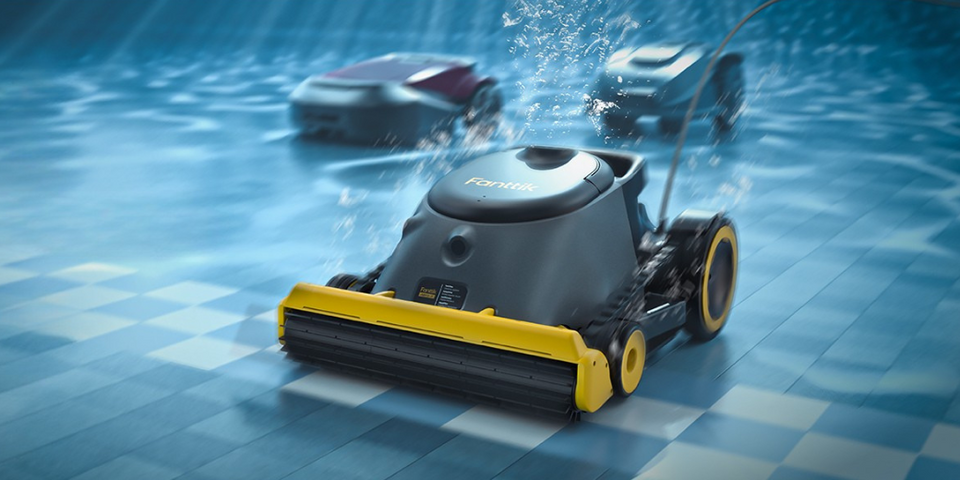 Your Pool Robot Needs an Update! How the Fanttik Aero X is Redefining Smart Pool Cleaning
Tired of pool robots that miss spots? The Aero X cleans 4x faster, covers every inch, and docks...
Your Pool Robot Needs an Update! How the Fanttik Aero X is Redefining Smart Pool Cleaning
Tired of pool robots that miss spots? The Aero X cleans 4x faster, covers every inch, and docks...


Leave a comment
This site is protected by hCaptcha and the hCaptcha Privacy Policy and Terms of Service apply.