










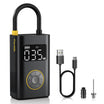
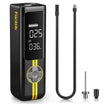


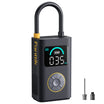
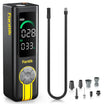

















For many truck owners and off-road enthusiasts, the "150 PSI" rating on a portable tire inflator is the primary metric for purchase. However, we have observed a recurring frustration in the field: an inflator rated for 150 PSI often struggles—or fails entirely—when trying to push a light truck tire from 20 PSI to 65 PSI. The motor groans, the unit heats up, and the battery indicator plummets.
The disconnect lies in a specification rarely discussed in marketing materials: the battery discharge rate, or C-rate. To understand why a portable inflator succeeds or fails under high-load conditions, we must look beyond peak pressure and examine the underlying power electronics. We will explore how C-rate, voltage sag, and thermal management dictate real-world performance for high-volume, high-pressure tasks.
The Physics of the High-Pressure Load
Inflation is not a linear energy task. As the internal pressure of a tire increases, the resistance against the inflator’s piston grows. To overcome this resistance, the electric motor must deliver higher torque. In DC motors, torque is directly proportional to current (amperage).
When you are topping off a bicycle tire to 100 PSI, the volume of air is small, meaning the high-pressure phase lasts only seconds. Conversely, inflating a 265/70R17 light truck tire involves moving a massive volume of air against significant resistance for a sustained period. This creates a high-current demand that many standard battery packs are simply not engineered to sustain.
Defining the C-Rate
To quantify this, we use the C-rate. According to the NBCELLENERGY technical guide, the C-rate is calculated as: C-rate = Current (A) / Capacity (Ah)
A 1C discharge rate means the battery is being depleted at a current equal to its total capacity, which would theoretically empty it in exactly one hour. As noted in the MIT Guide to Battery Specifications, a 1C discharge current will discharge the entire battery in 1 hour. However, high-performance inflators often demand 5C, 6C, or even higher rates to maintain motor speed under load.
The "Glass Box" Logic: A Truck Tire Simulation
To demonstrate the impact of discharge rates, we simulated a "worst-case" scenario. Imagine a contractor in winter conditions (below 50°F/10°C) needing to inflate a 265/70R17 truck tire from 20 PSI to 65 PSI. This tire has an internal volume of approximately 60.6 liters.

Based on our engineering models, here is how the power requirements break down for a typical portable inflator equipped with a 5Ah (18.5Wh) battery pack:
| Metric | Value | Technical Implication |
|---|---|---|
| Required Energy | ~18.0 Wh | Represents 97% of a 5Ah battery's total capacity. |
| Sustained Current Draw | 30A | The motor requires high torque to reach 65 PSI. |
| Calculated C-Rate | 6C (30A / 5Ah) | Approaches the thermal and chemical limits of standard Li-ion. |
| Cold Weather Usable Energy | ~11.1 Wh | 40% loss in efficiency due to internal resistance at <50°F. |
| Estimated Runtime | ~6.5 Minutes | Sustained high-current draw generates massive internal heat. |
Note: Values estimated based on common engineering practices and the Peukert’s Law effect on battery capacity.
In this scenario, the math reveals the failure point. While the motor might be powerful enough to reach 65 PSI, the battery cannot sustain a 6C discharge rate for the duration of the task, especially in cold weather. The result is a "premature shutdown" long before the target pressure is reached.
Voltage Sag and the Performance Illusion
One of the most common "friction points" for prosumers is the noticeable slowdown of the inflator as pressure climbs. This is caused by voltage sag.
When a battery is subjected to a high C-rate discharge, its terminal voltage drops. According to research on voltage sag and battery health, this drop is a function of the battery's internal resistance. As the voltage sags, the motor receives less power ($P = V \times I$), leading to a drop in RPM.
For the user, this feels like the inflator is "struggling." If the voltage drops below a certain threshold—often around 3.0V to 3.2V per cell—the Battery Management System (BMS) will cut power to prevent permanent cell damage. This is why an inflator might show "two bars" of battery left on the display but still shut down under the heavy load of a truck tire; the static voltage is fine, but the load voltage has crashed.
The Role of the BMS as a Hidden Limiter
A robust BMS is essential for safety, but it can act as a performance ceiling. Sophisticated units monitor the temperature of the battery pack in real-time. As we reach a 5C or 6C discharge, the internal resistance of the cells generates heat ($I^2R$ losses).
We have found that some units will progressively reduce motor power as the temperature rises to avoid a hard thermal shutdown. This "thermal throttling" is a sign of a well-engineered safety system, but it means that your 150 PSI inflator might only be able to deliver its full power for the first 2-3 minutes of a heavy task.
Environmental Variables: The Cold Weather "Gotcha"
Experienced users know that lithium-ion batteries and cold weather are a poor match. For those relying on an inflator for emergency preparedness, the impact of temperature is critical.
At temperatures below 50°F (10°C), the chemical reactions within the battery slow down, and the internal resistance increases significantly. This effectively halves the available discharge current. If your inflator requires a 6C rate to push 65 PSI, and the cold weather limits the battery to a 3C effective rate, the unit will fail to start or will stall almost immediately.
According to PKnergypower's analysis of LiFePO4 and Li-ion discharge, high-rate discharge in short bursts is manageable, but sustained high-rate discharge in suboptimal temperatures increases internal resistance over time and can generate dangerous levels of heat.
Choosing the Right Tool for the Load
Understanding C-rates allows you to make an informed purchase based on your specific vehicle needs. Not all inflators are created equal, even if their PSI ratings are identical.
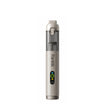
- For High-Volume/High-Pressure (Trucks & EVs): Look for units with larger battery capacities or specialized high-discharge cells. The Fanttik X8 APEX EV Tire Inflator is engineered for these high-consequence scenarios, providing the sustained current necessary for the larger volumes found in EV and light truck tires.
-
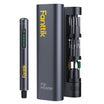
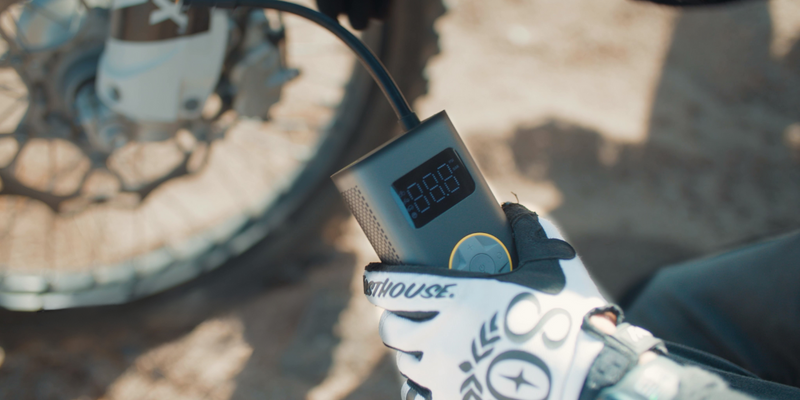
For Moderate Loads (Motorcycles & Compact Cars): A more compact unit like the Fanttik X9 Pro Portable Tire Inflator is ideal. These tires have lower volumes, meaning the high-current "peak" lasts for a much shorter duration, staying well within the battery's comfortable discharge envelope.
-
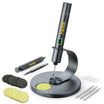
For Precision and Light Maintenance: If your needs are limited to small-scale tasks or maintaining bicycle tires, the Fanttik X10 Ace Tiny Mini Bike Pump offers portability without the overhead of heavy-duty discharge electronics.
Pro-Tips for High-PSI Success
To maximize the life of your portable inflator and ensure it performs when you need it most, we recommend the following practices:
- Maintain a High State of Charge (SOC): Discharge capability is not constant. A battery at 20% SOC has a much lower effective C-rate than one at 90%. For high-PSI tasks, ensure your unit is at least 50% charged.
- Manage Duty Cycles: Most portable inflators have a duty cycle (e.g., 15 minutes on, 5 minutes off). When working on large truck tires, give the unit a "breather" even before the thermal protection kicks in. This preserves the battery chemistry.
- Warm the Unit: If you keep your inflator in your truck during winter, bring it into the cabin to warm up before use. A "warm" battery will deliver a significantly higher discharge rate than one at freezing temperatures.
- Check Your Valves: Ensure your tire valves are clean. Any additional resistance in the airflow path increases the torque requirement on the motor, which in turn spikes the current draw from the battery.
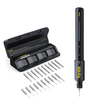
For those performing DIY repairs or automotive trim work alongside tire maintenance, having a precision tool like the Fanttik S2 Pro Cordless Electric Screwdriver ensures you have the right power profile for every task, from high-torque inflation to low-torque electronics.
Engineering Authority and Reliability
The difference between a tool that works and one that fails in an emergency is often found in the margins of the spec sheet. By understanding that high-PSI inflation is a high-current event, you can move beyond marketing "peak" numbers and look for the engineering depth required to sustain performance.
Whether you are preparing for a cross-country haul or a weekend trail ride, the relationship between battery C-rate and motor torque is the key to self-reliance. Choose a tool that matches the energy requirements of your tires, and maintain it with the understanding that chemistry and temperature are just as important as the motor itself.
YMYL Disclaimer: This article is for informational purposes only and does not constitute professional automotive or safety advice. Improper tire inflation can lead to vehicle instability, tire failure, or accidents. Always consult your vehicle's manual for correct PSI settings and follow all safety guidelines provided by the tool manufacturer. If you are unsure of your tire's condition, seek assistance from a certified automotive professional.
Sources
Continue reading
 Why Dual-Cylinder Motors Change the Speed of Inflation
Guide explains how dual-cylinder motors revolutionize portable tire inflation. Understand the physics of volumetric efficiency, BMS, and thermal...
Why Dual-Cylinder Motors Change the Speed of Inflation
Guide explains how dual-cylinder motors revolutionize portable tire inflation. Understand the physics of volumetric efficiency, BMS, and thermal...
 Choosing the Right Inflator Size for Compact Trunk Spaces
Car owners, find the perfect tire inflator for compact trunks. This guide balances portability and power, covering inflation...
Choosing the Right Inflator Size for Compact Trunk Spaces
Car owners, find the perfect tire inflator for compact trunks. This guide balances portability and power, covering inflation...
Leave a comment
This site is protected by hCaptcha and the hCaptcha Privacy Policy and Terms of Service apply.