










































Stop vacuuming when the mess is something your exact vacuum model isn't designed to collect. A car vacuum is built for the debris its own instructions allow. Liquids, hot or smoldering material, flammable substances, and anything else your model excludes need a different cleanup method first.
The deciding factor is your model's documentation, not the general idea of a "car vacuum." If those instructions don't clearly allow a material, treat it as off-limits for that vacuum and handle it another way.
When Should You Stop Vacuuming a Car?
Stop as soon as you reach a mess that falls outside your vacuum's documented car vacuum limits. Switch off the vacuum, move the nozzle away, and figure out what the material is before you go further.
Your model's manual or official instructions set the boundary. Two vacuums that look alike can have different rules, so a limit you read for one model doesn't carry over to another. Routine dry debris like crumbs, dirt, and pet hair is what most people vacuum in a car, but even "dry" jobs belong inside what your model's instructions describe.
Use a cleanup method that fits the material and the surface it landed on, then come back to the vacuum once the area is ready again.
Does Your Car Vacuum Allow Wet Pickup?
Your car vacuum allows wet pickup only if the official instructions for your exact model say so. Many people assume either that all car vacuums are dry-only or that any compact vacuum can handle a spilled drink. Neither assumption is safe, because wet pickup is a model-specific feature.
Here's how to check. First, find the exact model name or number on the unit, its box, or your order receipt. Next, pull up the manual for that model, not a similar one and not a different version. Then look for clear wording that permits wet or liquid pickup.

If you find that permission, note the conditions that come with it. Instructions may specify a setup step, a separate part or mode, a liquid limit, materials that are still excluded, or cleaning steps after use. Wet pickup counts as allowed only when you can follow every one of those conditions.
If you can't find explicit permission, or the wording leaves you unsure, treat your model as not approved for liquids. A "wet/dry" phrase on a listing or a similar-looking model isn't enough on its own. Clean up the liquid another way instead.
What Should You Do With Liquids, Hot Material, and Other Excluded Messes?
Take that material out of the vacuum's job and deal with it on its own terms. Each type of mess sets off the stop for a different reason, so the next step depends on what it is.
| Mess type | Stop when | Next step |
|---|---|---|
| Liquid spill | Your model lacks explicit wet-pickup permission, or you can't meet its conditions | Clean it with a method suited to the affected surface |
| Hot or smoldering material | Anything is still warm, glowing, or giving off smoke | Keep the vacuum away; treat smoke or flame as an emergency, not a cleanup |
| Flammable substance | You see or smell fuel, solvent, or a similar chemical | Don't vacuum it; escalate if the situation grows beyond a small interior spill |
| Other model-excluded material | Your manual lists it as off-limits | Follow that manual's direction and use a different method |
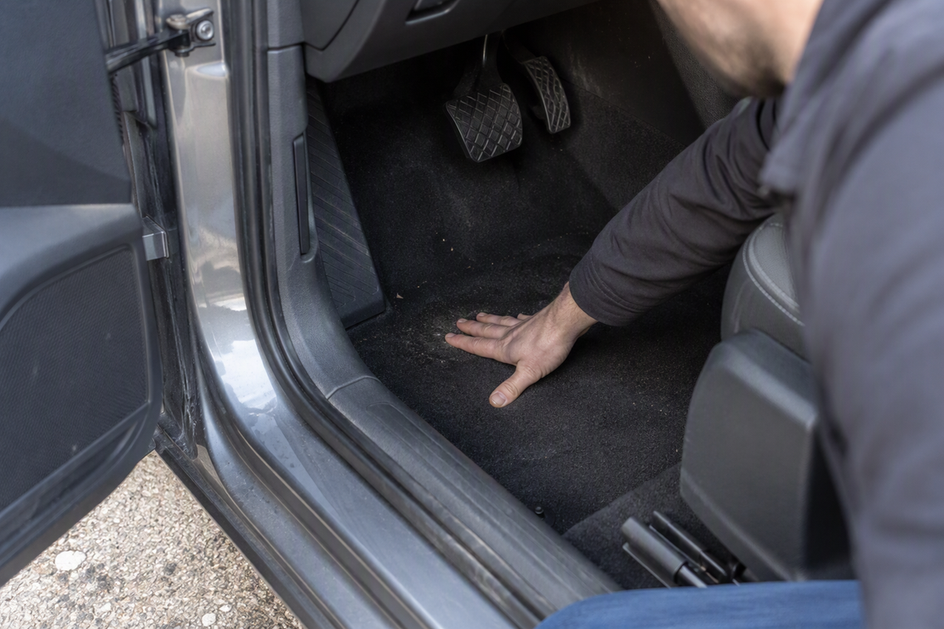
Liquids are where the affected surface matters most. Cloth upholstery, carpet, and floor mats each need care that suits the material, and moisture control is part of the job. For cloth seats, our guide to fabric-seat stain removal walks through cleaning stains while managing moisture. For other surfaces, follow the care instructions for that material or your vehicle.

Flammable spills need extra caution because the risk can grow beyond your car. If a chemical or hazardous-material problem spreads past a small interior mess, Ready.gov's chemical incident guidance says instructions can change with the threat and exposure risk. It also says to evacuate right away if officials tell you to. That page covers broader incidents. It isn't a guide to cleaning fuel out of vehicle upholstery.
Damp debris can blur the line. Wet sand, salty grit, or slush is no longer a purely dry mess. Our dry-only beach cleanup workflow shows how to keep moisture out of that kind of job.
When Can You Vacuum Again?
Vacuum again only when two things are true: the area is ready, and so is the vacuum. Treat them as separate checks.
For the area, the original mess has to be fully cleaned up according to the care needs of that surface. A seat that looks clean may still hold moisture or residue. So base your call on the surface's care instructions, not just on how it looks. No single drying time fits every interior material, so don't count down a fixed number of minutes.
For the vacuum, follow your model's use and maintenance instructions. If it picked up something its manual excludes, check what that manual says about cleaning, inspecting, or servicing the unit before the next use. If the manual doesn't cover the situation, don't put the vacuum back to work until the manufacturer's support confirms it's safe.
Once both checks pass, you're back to routine dry debris within your model's documented car vacuum limits.
FAQs
What if I already vacuumed up liquid by accident?
Stop and switch the vacuum off right away. Don't keep running it to "dry it out." Then follow the cleaning and maintenance steps in your model's manual for emptying the bin and handling the filter. If the manual doesn't cover liquid that got inside, contact the manufacturer before using it again.
Is fine dust like cat litter or clay dust a normal vacuum job?
Dry, loose dust and granules count as dry debris. Still, check your manual for filter care, because fine particles can affect how the filter needs cleaning. Our walkthrough on cleaning up cat litter and clay dust covers that kind of cabin cleanup.
Does the type of seat or carpet change when I should stop?
The surface doesn't change your vacuum's pickup limits. It does change how you clean up a mess the vacuum can't handle. Leather, cloth, and carpet each have their own care needs, so choose a cleanup method for the material that got hit.
Can I trust another owner's advice about my vacuum's limits?
Only if they own the same exact model and their advice matches its official instructions. Limits and wet-pickup permission vary by model and version. Advice about a similar-looking vacuum isn't a reliable guide to yours.
Continue reading
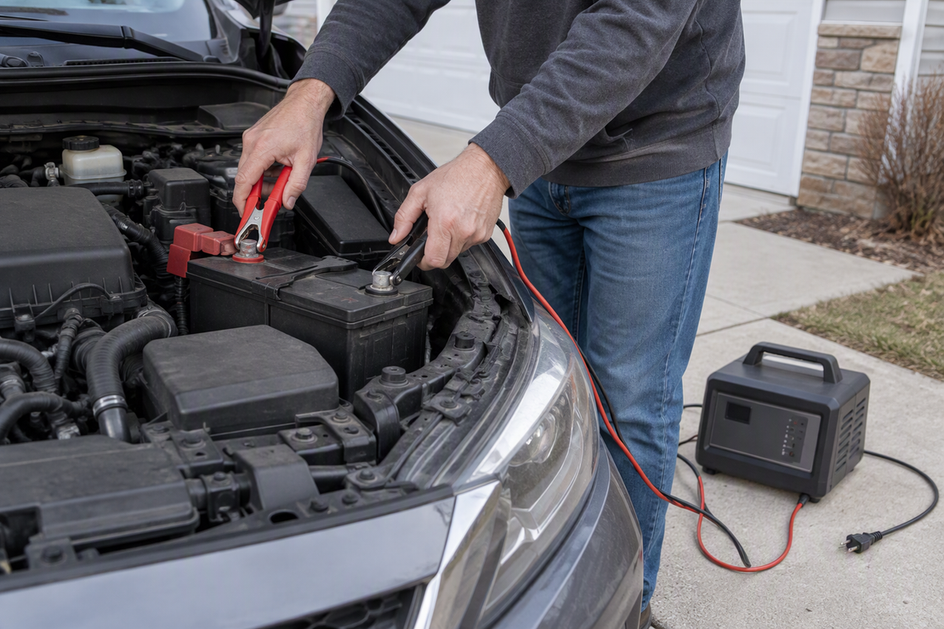 After a Successful Jump-Start, Does the Battery Need More Charging?
A jump-start gets the engine running, not the battery restored. See how drive-time tips, external charging, and battery...
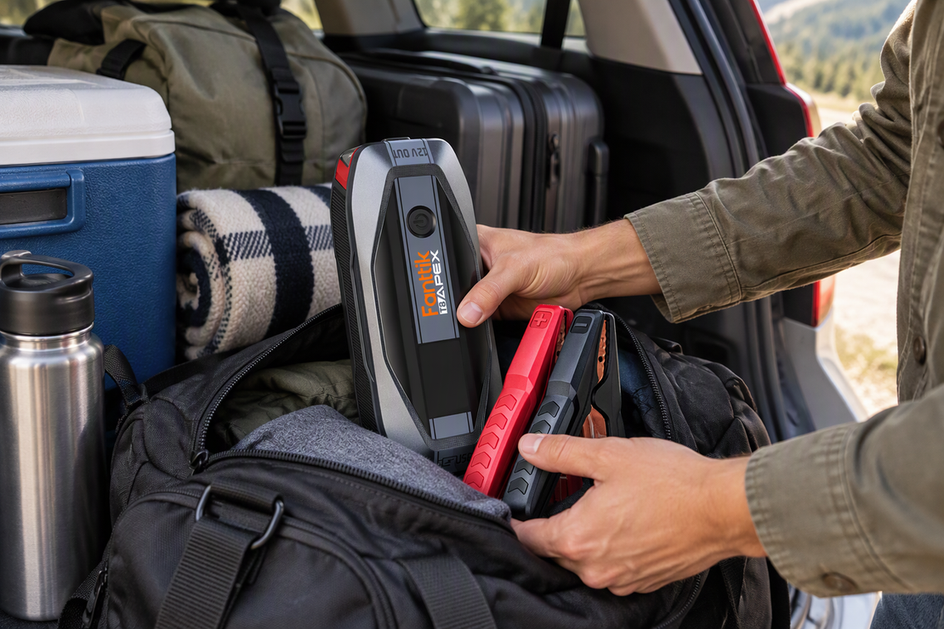 How to Store a Jump Starter So It Is Ready for a Road Trip
How to keep a portable jump starter charged and cared for between trips, where to store it, and...
Leave a comment
This site is protected by hCaptcha and the hCaptcha Privacy Policy and Terms of Service apply.