







































One of the most common "which jump starter should I buy" questions comes from drivers who are choosing between trucks or SUVs with a V6 or V8 option and wondering if the larger engine demands a larger pack. The short answer is "not really" — and the longer answer is worth the read, because the difference between V6 and V8 cranking current is smaller than marketing implies.
The Quick Answer
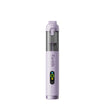
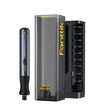
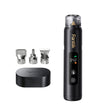
For a normal gas V8 in a half-ton pickup or full-size SUV, peak cranking current is typically 150-250A higher than the equivalent V6 — which is a negligible difference in jump-starter terms. Any 1,500A+ portable will jump both. The Fanttik T8 APEX at 2,000A peak offers generous margin for V8s without being overkill for V6s.
Why This Question Matters
It's easy to assume that a V8 must demand dramatically more amperage than a V6, because everyone can hear the V8 crank "differently." But that difference is mostly acoustic and mechanical — V8s have more reciprocating mass, so the crank sounds heavier, and the starter pulls for a fraction of a second longer. Peak inrush current isn't dramatically different.
Side-by-Side: V6 and V8 Cranking Reality
| Vehicle / engine | Engine type | Typical crank current | T8 APEX verdict |
|---|---|---|---|
| Ford F-150 3.5L EcoBoost V6 | Twin-turbo V6 | 650-800A | Comfortable |
| Ford F-150 5.0L Coyote V8 | NA V8 | 600-800A | Comfortable |
| Silverado 4.3L LV3 V6 | NA V6 | 550-700A | Comfortable |
| Silverado 5.3L L84 V8 | DFM V8 | 700-900A | Comfortable |
| Ram 3.6L Pentastar V6 | NA V6 | 500-650A | Comfortable |
| Ram 5.7L HEMI V8 | NA V8 | 700-900A | Comfortable |
| Toyota 3.5L V6 (2GR-FKS) | NA V6 | 700-850A | Comfortable |
| Toyota 5.7L V8 (3UR-FE) | NA V8 | 750-950A | Comfortable |
| Fanttik T8 APEX rating | — | — | 2,000A peak / 8.5L gas |
The Four Things That Actually Move the Amperage Number
- Temperature. Cold viscosity increases crank current by 30-60% regardless of engine type. A V6 at -10°F can pull more than a V8 at 70°F.
- Compression ratio. Higher compression means more torque needed. This is why diesels (15-23:1) dramatically outpace gas (9-13:1), but V8 vs V6 compression is usually identical.
- Battery condition. A weak battery can't provide the voltage support a starter needs, so the jump-pack has to do more work. This is far more impactful than V6 vs V8.
- Starter design. Modern starters use rare-earth magnets and planetary gears. A 2024 V8 starter may actually draw less than a 2005 V6 starter despite moving more mass.
What About V10 and V12?
The V10 family (Ford Triton 6.8L V10, Dodge/Ram Viper 8.3L V10) and V12 (rare in trucks/SUVs) fall outside typical portable jump starter discussions but are worth noting: the Ford 6.8L V10 has a typical cranking current around 900-1,100A, still inside the T8 APEX's 8.5L gas rating. V12 engines in luxury sedans usually have multi-battery architectures and benefit from dedicated boosters anyway.
FAQ
Q: Do V8 trucks drain batteries faster than V6s?
A: Slightly, but the difference is small. Modern trucks' parasitic draw is dominated by body control modules, infotainment, and telematics — not cylinder count. A V8 and V6 of the same model year in the same trim have nearly identical storage behavior.
Q: Is the HEMI V8 harder to jump than the Pentastar V6?
A: Marginally. The HEMI pulls about 150-200A more than the Pentastar, but both sit well inside the T8 APEX's 2,000A peak. Either engine is easy to jump.
Q: Is buying "more amps" ever bad?
A: Only in terms of weight, size, and price. Over-sized jump starters are fine electrically — a 2,000A pack won't damage a V6 — but you're carrying a pack that's heavier than needed if your only vehicle is a compact sedan.
Verdict
V6 vs V8 is a surprisingly small difference in jump-starter terms for modern trucks and SUVs. The Fanttik T8 APEX 2000A Jump Starter handles both with generous margin, and is a reasonable choice whether you drive a 3.5L EcoBoost F-150 or a 6.2L L87 Silverado. Pick your jump starter based on temperature range, cold-weather features, and recharge speed — not the number of cylinders under your hood.
Related reading: Diesel vs gas amperage guide · Best jump starter for F-150 · Best jump starter for Silverado 1500
Leave a comment
This site is protected by hCaptcha and the hCaptcha Privacy Policy and Terms of Service apply.