





















The Urban Dilemma: Car Care Without a Garage
For the modern urban family, the car is often a vital extension of the home—a vessel for school runs, weekend escapes, and the occasional mobile dining room. However, living in high-density cities like Seattle or Phoenix presents a unique logistical hurdle: the absence of a private garage. When your "workshop" is a shared parking structure three floors below your apartment, maintaining a vehicle requires a shift in perspective. You are no longer just a car owner; you are a logistics manager for a mobile environment.
The challenge isn't just about finding a place for a jack or a vacuum; it’s about integrating industrial-grade tools into a domestic space without compromising aesthetics, floor area, or—most importantly—child safety. We have observed that the most successful urban car-care strategies rely on a "Trust Architecture." As highlighted in the industry whitepaper The 2026 Modern Essential Gear Industry Report: Engineering Trust in a Cordless World, modern self-reliance is built on the reliability of compact, cordless tools that reduce friction in our daily lives. In an apartment setting, this reliability extends to how these tools are stored and accessed.

Measuring the Constraints: Why "Under the Bed" Often Fails
A common piece of advice for small-space living is to utilize the "dead zone" under the bed. However, our analysis of standard furniture dimensions reveals a significant mismatch for automotive gear.
Logic Summary: Storage Clearance Analysis
- Heuristic: The "12-Inch Rule" for car kits.
- Assumption: A comprehensive family car kit (including a portable tire inflator, jump starter, cleaning fluids, and emergency triangles) requires a vertical clearance of at least 12 inches.
- Finding: Based on a review of platform bed frame guides, standard frames typically offer only 8–9 inches of clearance.
- Conclusion: Storing a functional car kit under a standard bed is often impractical without specialized, ultra-low-profile containers that may compromise tool accessibility.
Before purchasing any storage system, we recommend a "geometry audit" of your closet. Professional organizers emphasize that measuring closet depth and available wall space is the first step toward a functional system. A common mistake is buying containers that are too deep for the shelf, which wastes vertical space and creates a cluttered "front-heavy" appearance.
In apartments under 200 square feet, every inch must be earned. We've found that the most effective storage utilizes "micro-voids"—the 4-inch gap behind a door, the narrow space between a refrigerator and a wall, or the vertical height above a closet's top shelf. These areas can provide 5–15 cubic feet of storage without encroaching on your living area.
The 80/20 Kit Architecture: Segmenting for Efficiency
To maintain an organized apartment, you must resist the urge to store every possible car accessory in one bulky bin. Instead, we advocate for a segmented approach based on the 80/20 rule: 80% core essentials and 20% seasonal or vehicle-specific items.
| Category | Typical Items | Storage Logic |
|---|---|---|
| Core Essentials | Tire inflator, jump starter, car vacuum, basic screwdriver set. | High accessibility; primary closet shelf. |
| Emergency/Safety | First aid kit, high-visibility vest, emergency triangles. | "Grab-and-go" location; near the apartment exit. |
| Chemicals & Fluids | Tire sealant, glass cleaner, upholstery wipes. | Strictly separate; secondary locked bin for child safety. |
| Seasonal Gear | Ice scrapers, snow chains, sunshades. | Deep storage; high shelves or back-of-closet. |
Methodology Note (Heuristic Labeling): This 80/20 ratio is a practical baseline derived from common patterns in urban mobility needs. It is designed for quick selection and may vary based on your specific vehicle type or local climate.
By separating tools from chemicals, you not only improve organization but also enhance safety. According to the EU General Product Safety Regulation (EU) 2023/988, manufacturers and distributors must ensure that products do not pose a risk to consumers. For parents, this means taking proactive steps to store hazardous liquids like tire sealants in a completely separate, ideally locked, container to prevent accidental exposure or chemical reactions with electronic tools.
Engineering a Child-Safe Zone: The High-Mount Strategy
In a household with curious children, "out of sight" is not enough; tools must be "out of reach." When designing storage for car kits, we look to the World Health Organization (WHO) Child Growth Standards to determine safe mounting heights.
For a family apartment, the most secure solution is often a single, hard-to-reach, lockable cabinet mounted high in a closet. This is superior to multiple smaller boxes that children can potentially stack to reach higher items.
The "Reach-Safety" Calculation
To determine the optimal height for your car kit cabinet, consider the average height of a 5-year-old (approximately 110cm or 43 inches). To ensure the cabinet remains inaccessible even with the help of a small chair or stool, the bottom of the lockable unit should be mounted no lower than 160cm (63 inches) from the floor.
Modeling Note (reproducible parameters):
Parameter Value Rationale Target User Parent of child < 6 years High-risk group for accidental tool access. Avg. 5yo Height 110 cm Based on WHO P50 growth charts. Stool/Chair Height 45 cm Standard dining chair height. Safety Margin 5 cm To prevent fingertip reach. Min. Mount Height 160 cm Sum of height + stool + margin.
Beyond physical height, labeling plays a crucial role in safety and efficiency. Labels should not just name the tool; they should indicate the use-case. A bin labeled "Flat Tire Repair Kit" is much more useful during a stressful midnight emergency than one labeled "Automotive Tools."
The Entryway "Mobility Nook"
If your closets are at capacity, the entryway often holds untapped potential. In many urban apartments, the entryway (typically 5–15 square feet) can be transformed into a "Mobility Nook." By using vertical systems like pegboards or wall-mounted organizers, you can store 8–12 essential car maintenance items while occupying less than 2 square feet of floor space.
However, geography matters. In earthquake-prone regions like Seattle or Long Beach, California, high-mounted storage presents a seismic hazard. According to local safety guidelines for apartments in Long Beach, heavy items should be stored low or secured with earthquake straps. If you are building a Mobility Nook in these areas, prioritize low-profile, floor-anchored cabinets or use heavy-duty wall anchors and safety latches to prevent tools from becoming projectiles during a tremor.
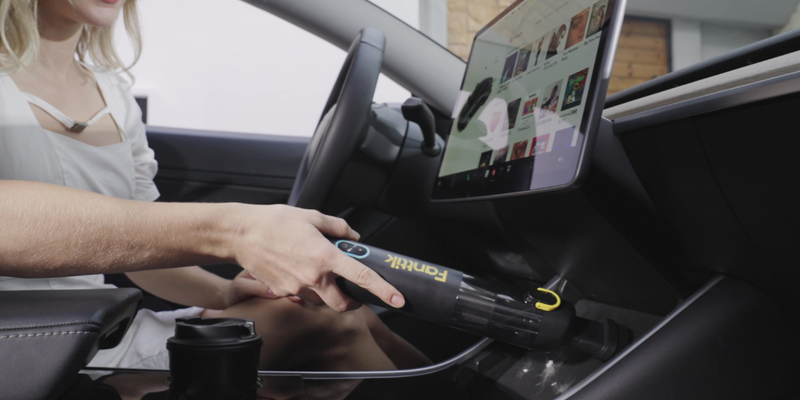
Maintaining the "Ready State": Battery Care and Compliance
The transition to cordless, lithium-ion powered tools has revolutionized apartment car care, but it introduces a new maintenance requirement: battery management. Storing these tools in a closet requires a systematic approach to ensure they are ready when you need them.
Based on IATA Lithium Battery Guidance, lithium batteries are most stable when stored at a State of Charge (SoC) between 30% and 50%. However, for an emergency car kit, you likely want your jump starter and tire inflator at 80–100% capacity. To balance battery health with emergency readiness:
- Quarterly Check-ins: Set a calendar reminder to check the charge levels of your tools every three months.
- Temperature Control: Ensure your storage closet is not adjacent to heat sources like water heaters or ovens, as high ambient temperatures accelerate battery degradation.
- Charging Safety: Never leave tools charging unattended in a closet. Use a dedicated charging station in a visible area of the apartment, and return the tools to their secure storage once fully charged.
This disciplined approach is part of what we call the "Trust Architecture." When you know your tools are charged, accessible, and safe, you reduce the "preparedness anxiety" that often comes with urban vehicle ownership.
Integration with Interior Hygiene
Managing a car kit in an apartment is also about maintaining the hygiene of your living space. Car tools can be dirty, oily, and covered in road salt. To prevent these contaminants from entering your home environment:
- Wipe-Down Protocol: Keep a dedicated microfiber cloth in your kit to wipe down tools before they enter the apartment.
- Secondary Containment: Store tools in hard-shell plastic bins that can be easily washed. This is especially important for items like car vacuums that hold dust and allergens.
- Odor Management: If your kit includes cleaning chemicals, ensure the storage bin is airtight to prevent VOCs (Volatile Organic Compounds) from lingering in your closet.
For more on maintaining a healthy environment for your family, see our guide on The Mobility Nook: Organizing Car Gear in Urban Entryways.
Summary: The Blueprint for Urban Readiness
Organizing a car kit in a small apartment is a design challenge that rewards precision and safety-first thinking. By measuring your space, segmenting your gear, and engineering for child safety, you can maintain a high-performance maintenance kit without sacrificing your home's comfort.
- Measure First: Don't guess closet depth or bed clearance.
- Segment the Gear: Use the 80/20 rule to prioritize access.
- Prioritize Safety: Use high, lockable cabinets and separate chemical storage.
- Leverage Dead Space: Look for vertical opportunities in the entryway or closet gaps.
- Maintain the Battery: Follow a quarterly check-in schedule to ensure emergency readiness.
By treating your car kit as a professional system rather than a collection of clutter, you align your home with the principles of modern self-reliance. As we navigate a "cordless world," the way we store our tools becomes as important as the tools themselves.
Disclaimer: This article is for informational purposes only and does not constitute professional safety, legal, or automotive advice. Always follow the manufacturer’s instructions for tool storage and battery maintenance. Consult with a professional organizer or safety expert for specific home installations, particularly in seismic zones.


Leave a comment
This site is protected by hCaptcha and the hCaptcha Privacy Policy and Terms of Service apply.