
























The Technical Architecture of Shelter Fabrics
Choosing a camping shelter for damp, wooded environments requires a transition from aesthetic preference to material science. In high-humidity ecosystems—such as the Pacific Northwest or the Appalachian trail—the interaction between fabric weight (denier), weave density, and chemical coatings determines whether a shelter remains a protective barrier or becomes a heavy, sodden liability.
To make an informed choice, you must look beyond the marketing labels of "ultralight" or "heavy-duty." Instead, we must examine the specific mechanical properties defined by international standards like ISO 2060, which governs the determination of linear density in textile yarns. This article provides a methodical breakdown of how denier affects performance in the field, helping you balance the weight on your back with the security of your sleep.
Understanding Denier: The Linear Density Metric
Denier (D) is a technical unit of measure that describes the linear mass density of a fiber. Specifically, one denier is defined as the mass in grams of 9,000 meters of a single strand of yarn. A 20D fabric uses yarn where 9,000 meters weighs 20 grams, while a 70D fabric uses yarn that is three and a half times heavier for the same length.
However, a common misconception among outdoor enthusiasts is that a higher denier always equates to a "better" or "more waterproof" tent. In practice, denier is only one variable in a complex performance equation.
The Impact of Weave Density and Thread Count
While denier measures the thickness of the individual yarn, the thread count (often denoted as 'T', such as 190T or 300T) measures how many threads are packed into a square inch of fabric. A high-denier yarn woven loosely may have lower puncture resistance than a lower-denier yarn woven with high density.
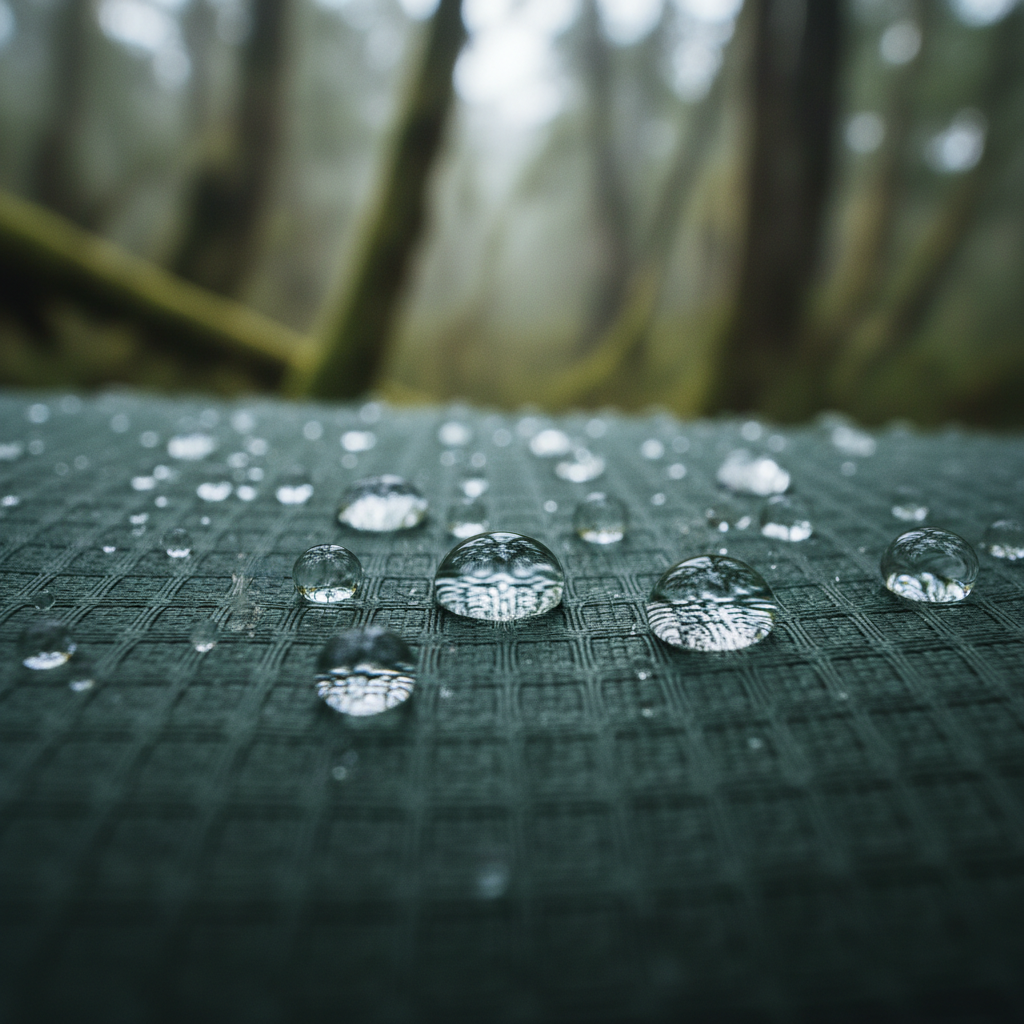
For example, 300T Nylon Taffeta is often utilized for its balance of lightweight feel and windproof capabilities. In damp woods, a tighter weave prevents "misting"—the phenomenon where high-pressure rain droplets force a fine spray through the microscopic gaps in the fabric.
Logic Summary: Our analysis of fabric durability assumes that yarn quality (continuous filament vs. spun) remains constant. We prioritize weave density over raw denier because a tighter weave distributes mechanical stress more evenly across the textile surface, reducing the likelihood of a localized tear starting from a single point of failure.
| Metric | Definition | Practical Impact in Damp Woods |
|---|---|---|
| Denier (D) | Grams per 9,000m of yarn | Determines raw abrasion resistance and weight. |
| Thread Count (T) | Threads per square inch | Influences wind resistance and "misting" prevention. |
| Ripstop Grid | Reinforced thicker yarns | Limits the propagation of tears and punctures. |
| Tenacity | Strength per unit of denier | High-tenacity fibers allow for lower D with higher strength. |
Waterproofing vs. Durability: The Coating Factor
In the context of "damp woods," the primary threat to your comfort is not just liquid rain, but the constant presence of high ambient humidity and ground moisture. A fabric's ability to resist water is measured by its Hydrostatic Head (HH) rating, which is independent of its denier.
Hydrostatic Head (HH) and Pressure
According to the ISO 811 standard, the HH rating represents the height of a water column (in millimeters) that the fabric can support before water penetrates.
- 1,500mm: Considered the baseline for "waterproof" in most conditions.
- 3,000mm - 5,000mm: Recommended for floors where body weight creates pressure against damp ground.
Silicone vs. Polyurethane (PU) Coatings
The choice of coating is critical for long-term performance in humid environments.
- Silicone (Silnylon): The silicone is impregnated into the fibers. This increases the fabric's tear strength and provides excellent water beading. However, silicone-coated fabrics are notoriously difficult to repair in the field because standard adhesive tapes do not stick to them.
- Polyurethane (PU): A layer of PU is applied to the surface. This allows for factory-applied seam tape, which is the primary determinant of waterproof integrity. As noted in industry guidance on waterproof ratings, even the highest-rated fabric becomes useless if the seams are not sealed.

The Damp Woods Heuristic: Balancing the Load
When navigating wooded terrain, your gear faces different stresses than it would in an open alpine environment. Abrasive brush, sharp twigs, and acidic leaf litter create a high-friction environment.
The Floor-to-Canopy Ratio
Based on common patterns from customer support and warranty handling (not a controlled lab study), the most frequent point of failure in damp woods is the tent floor. We suggest a heuristic approach to fabric selection:
- Canopy (Fly): 15D to 40D. In a wooded area, the canopy is protected from high winds by the tree line. You can afford a lower denier here to save weight.
- Floor: 70D or higher. Ground moisture and abrasive debris require a robust barrier. A 70D floor with a 3,000mm+ PU coating provides the necessary durability to withstand the pressure of a sleeping camper on uneven, damp ground.
The Breathability Paradox
High-denier fabrics with thick coatings can trap moisture vapor inside the shelter. In the high humidity of the woods, this leads to internal condensation, which can be mistaken for a leak. Experts suggest that for damp environments, a modern laminate (like those found in high-performance technical textiles) on a lower-denier face fabric often provides a better durability-to-weight ratio by allowing moisture vapor to escape.
Logic Summary: Our "60/40 Rule" heuristic suggests that 60% of your shelter's weight budget should be allocated to the floor and structural reinforcements, while 40% goes to the rainfly. This prevents the common mistake of buying a heavy-duty fly that rests on a fragile, leak-prone floor.
Maintenance of Technical Fabrics
Durability is not a static property; it is maintained through proper care. This is particularly true for the Durable Water Repellent (DWR) coating.
DWR Degradation
DWR is a chemical finish that causes water to bead and roll off the fabric. In damp woods, dirt and oils from the environment can "clog" the DWR. When the DWR fails, the fabric "wets out," becoming heavy and losing its breathability. According to technical maintenance guides, DWR may need refreshing every 20-30 nights of use in high-abrasion environments.
Seam Sealing Integrity
Data shows that fabric-reinforced sealing tapes can hold approximately 40 lbs per inch of width. However, these tapes can delaminate over time in high-humidity storage. Before any major trip into damp woods, a manual inspection of all interior seams is essential. If you see "clouding" or lifting of the tape, a specialized seam sealer must be applied to maintain the shelter's integrity.
Engineering Trust in Gear Choice
In the modern outdoor market, reliability is a function of transparent specifications. As highlighted in The 2026 Modern Essential Gear Industry Report, trust is built when a brand provides measurable, standard-backed claims. When evaluating a shelter, look for explicit mentions of ISO or ASTM standards for tear strength and abrasion resistance.
Scenario Analysis: Choosing Your Weight
Scenario A: The Weekend Backpacking Trip (Standard Case)
- Environment: Groomed trails, established campsites in temperate woods.
- Recommendation: A 20D or 30D Ripstop Nylon fly with a 40D floor. This balances weight (approx. 2-3 lbs) with sufficient durability for managed environments.
Scenario B: The Off-Trail Expedition (Edge Case)
- Environment: Dense brush, unmanaged terrain, constant rain.
- Recommendation: A 40D Ripstop canopy and a 70D to 100D "Bathtub" floor. The added weight (~4-5 lbs) is a necessary trade-off for the puncture resistance required when pitching on un-cleared ground.
Modeling Note: Reproducible Parameters for Fabric Evaluation
To provide a consistent framework for comparing shelters, we use a deterministic parameterized model to estimate the "Survival Index" of a fabric in damp woods. This is a scenario model, not a controlled lab study.
| Parameter | Value or Range | Unit | Rationale |
|---|---|---|---|
| Puncture Force | 15 - 45 | Newtons | Based on common twig/rock pressure (ASTM D4833). |
| Abrasion Cycles | 500 - 2,000 | Cycles | Taber Abrasion (ASTM D3884) to simulate ground friction. |
| Water Column | 1,500 - 5,000 | mm | HH rating for moisture penetration resistance. |
| Tear Strength | 5 - 20 | Newtons | ISO 13937-2 (Trousers tear method) for ripstop efficacy. |
| UV Exposure | 100 - 500 | Hours | Accelerated aging to simulate coating degradation. |
Boundary Conditions:
- Model assumes temperatures between 40°F and 80°F; performance may vary in sub-freezing conditions where coatings become brittle.
- Calculations assume a standard "pitch" tension; over-tensioning can reduce the effective tear strength of low-denier fabrics.
- Biological factors (mildew/mold) are treated as a function of storage conditions, not just active use.
Summary of Technical Selection
Selecting a shelter for damp woods is a methodical process of matching material specs to environmental stressors. Prioritize the floor's denier and HH rating to combat ground moisture, and look for high-thread-count ripstop weaves for the canopy to prevent misting. Remember that the "best" fabric is one that you can maintain; a 40D PU-coated tent that you can easily seam-seal often outperforms a 15D silicone-only shelter that becomes unfixable after a single snag.
By adhering to these technical principles and verifying claims against established standards, you can ensure your shelter remains a reliable sanctuary, regardless of how damp the woods become.
Disclaimer: This article is for informational purposes only. Outdoor activities involve inherent risks, and equipment failure can lead to dangerous situations. Always test your gear in a controlled environment before embarking on a remote expedition. Consult with a qualified outdoor professional for specific gear recommendations based on your health and experience level.
Sources and References
- EU General Product Safety Regulation (EU) 2023/988
- ISO Standards Catalogue - Textile Testing
- ASTM International - Standards for Material Durability
- The 2026 Modern Essential Gear Industry Report: Engineering Trust in a Cordless World
- Active Workwear: Waterproof Jacket Ratings Explained
- eVent Fabrics: DWR Maintenance and Testing

Leave a comment
This site is protected by hCaptcha and the hCaptcha Privacy Policy and Terms of Service apply.