






































The Modern Garage Dilemma: From Storage to Readiness
For many of us, the garage has transitioned from a simple parking spot into a complex logistics hub. If you are managing a household with a family SUV, a commuter sedan, a couple of mountain bikes, and perhaps a weekend RV, you know the mental load that comes with it. It is not just about finding a place for the car; it is about ensuring every vehicle in your "fleet" is ready to move when you are.
We often see a common pattern in our community feedback: the "cluttered garage syndrome" isn't caused by a lack of space, but by a lack of a cohesive system. When tools are scattered or buried, maintenance becomes a chore we avoid. This leads to what we call "tool fragmentation fatigue"—the frustration of searching for a specific charger or an inflator nozzle while the family is waiting in the car.
In this guide, we will explore how to transition your garage from a cluttered storage room into a high-performance maintenance bay. By adopting a "Job-First" framework and utilizing modular organization, you can reduce the friction of multi-vehicle care and reclaim your weekend time.
The "Job-First" Framework: Why Tool-Type Storage Fails
The most common mistake we observe in residential garages is organizing by tool type—putting all the screwdrivers in one drawer, all the pliers in another, and all the power tools on a single shelf. While this looks tidy, it creates significant friction during actual maintenance tasks.
Imagine you need to service your mountain bike and check the SUV’s tire pressure in the same afternoon. If your bike-specific tools are mixed with your automotive heavy-duty wrenches, you spend more time sorting through drawers than actually working.
The Correction: Vehicle-Specific Kits
Instead of a "wrench drawer," we recommend building "Modular Hubs" based on the specific vehicle system or job type. This approach is aligned with industrial modularization benefits, which improve maintainability and resource efficiency by grouping related components together.
- The Bike Hub: A dedicated wall-mounted station or mobile cart containing a high-precision mini pump, tire levers, chain lube, and a precision screwdriver set.
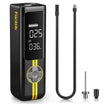
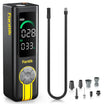
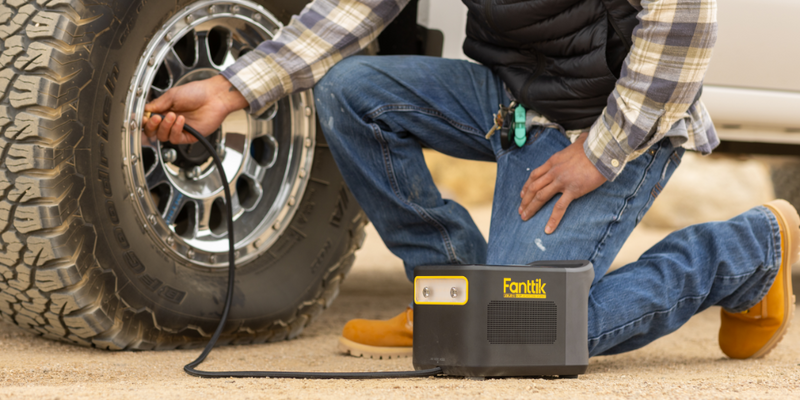
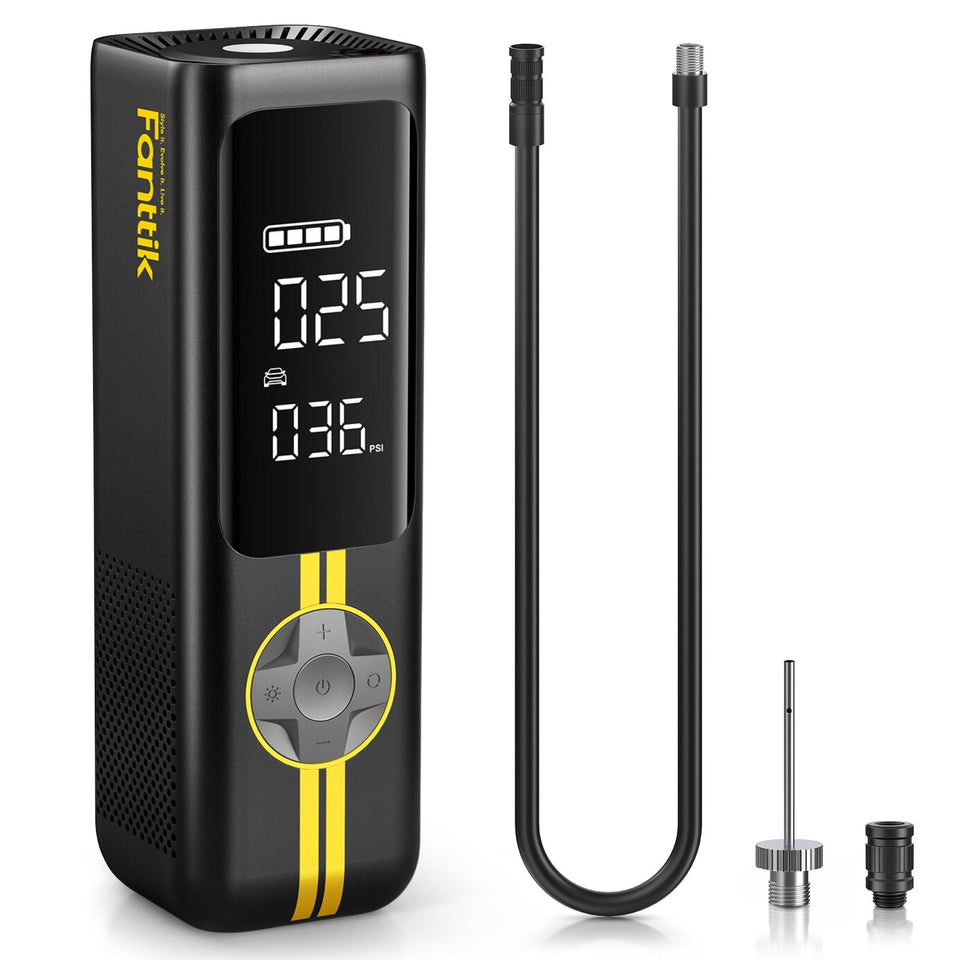
- The Automotive Bay: A zone near the front of the garage equipped with a high-flow portable inflator, a jump starter, and a cordless vacuum for interior detailing.
- The RV/Heavy-Duty Zone: Since large vehicles require higher pressures and more power, this kit should include an inflator capable of reaching 80+ PSI and a heavy-duty jump starter.
The "1-Foot Rule" and Modular Zoning
To maximize space efficiency, we utilize a practical heuristic known as the 1-Foot Rule.
Heuristic: The 1-Foot Rule Any tool required for a weekly task (like checking tire pressure or vacuuming a floor mat) should be accessible within one step or arm's reach from its primary point of use.
This rule minimizes "travel time" within the garage. If your portable inflator is stored in a cabinet at the back of the garage, but you park your cars at the front, you are less likely to perform those critical weekly pressure checks.
Implementing Modular Storage
According to recent market research on modular storage systems, the shift toward customizable and scalable configurations is essential for modern garages. These systems allow you to adjust your storage as your fleet changes—for example, swapping a bike rack for an RV gear shelf.
| Zone Type | Recommended Location | Key Equipment |
|---|---|---|
| High-Frequency | Near Driver's Side Door | Portable vacuum, Tire pressure gauge |
| Seasonal/Maintenance | Perimeter Walls | Battery maintainers, Fluid top-offs |
| Emergency Prep | Near Garage Exit | Jump boxes, Roadside flares, First-aid |
| Precision/DIY | Workbench Area | Cordless rotary tools, Soldering kits |
The Ecosystem Advantage: Standardizing Your Cordless Platform
One of the most significant "hidden" sources of garage clutter is the "charger graveyard"—a tangled mess of different power bricks and proprietary battery docks. Professional practitioners emphasize that a cordless tool ecosystem is only truly efficient if you standardize on one or two battery platforms.
Standardization does more than just reduce clutter; it ensures readiness. When every tool—from your electric screwdriver to your portable vacuum—uses a unified charging standard (like USB-C), you can maintain a single "charging station" on your workbench. This ensures that when you reach for a tool, it actually has the power to do the job.
Technical Expertise: Battery Health in the Garage
Maintaining battery-operated tools in a garage environment requires specific care, especially in regions with extreme temperature swings. Based on our repair bench observations (not a controlled lab study), we've found that tools stored in uninsulated garages can lose significant charge over a single winter.
We recommend integrating an "Off-Season Battery Check" into your master vehicle maintenance calendar. This simple habit prevents the frustration of finding a dead jump starter on the coldest morning of the year. For more on this, see our guide on preserving battery health during seasonal storage.
The RV-Plus Case Study: High-Stakes Logistics
To demonstrate the value of this organized approach, let’s look at a scenario we call "The RV-Plus Fleet Manager." This is a homeowner managing a diverse fleet: a 6.7L diesel RV, a family SUV, and recreational bikes.
This persona faces high-variability challenges. For instance, inflating a large RV tire (275/65R20) from 20 to 80 PSI is a massive task. Using a standard, low-flow inflator can take nearly three hours. However, by using a high-flow (32 LPM) portable unit, that time is reduced by approximately 40%.
Logic Summary: We estimate these time savings based on a numerical integration of flow decay across the pressure range. A higher LPM (Liters Per Minute) rating allows the compressor to overcome the back-pressure of a high-PSI tire more effectively.

Winter Starting: The 1,900-Amp Gap
In cold weather, the stakes are even higher. A large diesel engine at -10°F can require over 2,000 amps to turn over. Meanwhile, a standard lead-acid vehicle battery might only deliver 200 amps after temperature derating. Having a dedicated, high-peak-amp jump starter in your "Emergency Prep Zone" isn't just a convenience; it's a necessity for winter reliability.
The Economics of Readiness: Calculating Your ROI
Investing in a cohesive maintenance system isn't just about peace of mind; it has a tangible financial return. We modeled the potential savings for a multi-vehicle fleet driving approximately 30,000 miles per year.
The Cost of Neglect
If your fleet runs just 6 PSI under-inflated (a common occurrence when tools are hard to reach), the annual waste is significant.
- Fuel Penalty: Under-inflated tires increase rolling resistance. According to the US Department of Energy, you can improve your gas mileage by up to 3% by keeping tires inflated to the proper pressure.
- Tire Longevity: Consistent under-inflation leads to uneven tread wear, shortening the life of expensive tire sets.
| Metric | Estimated Annual Impact | Logic/Assumption |
|---|---|---|
| Fuel Waste | $80 – $120 | Based on 30k miles @ 18 MPG and $4.20/gal |
| Tire Wear Cost | $150 – $180 | Pro-rated cost of premature tire replacement |
| Total Annual Loss | $230 – $300 | Combined fuel and hardware degradation |
By spending ~10 minutes a week with an accessible, high-performance inflator, a homeowner can effectively "earn" back the cost of their tools in less than a year.

Safety, Compliance, and Trust: The "Credibility Math"
When selecting gear for a multi-vehicle garage, aesthetics are secondary to reliability. In high-consequence categories like jump starters or high-pressure inflators, trust must be engineered.
As highlighted in The 2026 Modern Essential Gear Industry Report, winning in the modern market is a function of "credibility math"—the systematic communication of safety and transparency. For European users, this is reinforced by the EU General Product Safety Regulation (EU) 2023/988, which mandates strict traceability and safety obligations for products sold online.
Expert Tip: Identifying Quality
When building your kits, look for tools that provide:
- Standard-Backed Claims: Look for mentions of ISO or IEC standards for electrical safety.
- Thermal Protection: High-performance tools generate heat; robust thermal management is a sign of expert engineering.
- Clear Documentation: A comprehensive manual is the first sign of a professional-grade tool.
Mastering the Seasonal Migration
As the seasons change, so do the needs of your fleet. We recommend a "Seasonal Migration" strategy where you move specific hardware between the vehicle and the garage.
- Winter Prep: Move your heavy-duty jump starters and high-flow inflators to the most accessible "High-Frequency Zone." Ensure your scraper and cordless vacuum are ready for salt and slush cleanup.
- Summer Transition: Shift focus to recreational gear. Move bike maintenance kits and portable power stations to the front for easy loading.
A common pitfall is storing off-season gear in hard-to-reach places, which often leads to skipped maintenance. The proven fix is using clear, labeled bins and integrating the seasonal swap into a master maintenance calendar. For more on this logistical shift, read about the seasonal migration of car hardware.

Efficiency Through Ergonomics
The physical toll of maintenance is often overlooked. In a typical seasonal maintenance session involving multiple vehicles, you might handle over 100 screws or fasteners.
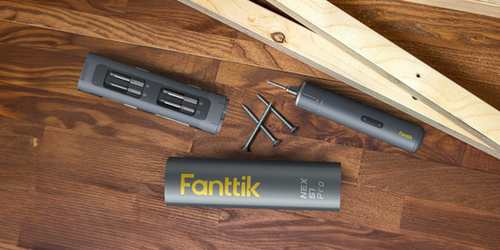
Using an electric precision screwdriver instead of a manual one can save approximately 24 minutes and eliminate roughly 1,200 wrist rotations per session (Logic: Based on industrial engineering time-motion principles). For users performing frequent DIY repairs or interior trim work, this reduction in repetitive motion is a key benefit for long-term joint health.

Methodology & Modeling Disclosure
The quantitative insights provided in this article are derived from scenario modeling intended to help homeowners make informed decisions. They are not controlled laboratory studies.
Modeling Parameters (RV-Plus Fleet Scenario)
| Parameter | Value / Range | Unit | Rationale / Source |
|---|---|---|---|
| Tire Size (RV) | 275/65R20 | ISO-Metric | Common 3/4-ton truck/RV size |
| Flow Rate (High-Flow) | 32 | L/min | Professional-grade portable spec |
| Fuel Waste Penalty | 0.2 – 0.3 | % per PSI | US Dept. of Energy (DOE) heuristics |
| Cranking Amps (Cold) | 2,100 | Amps | SAE J537 standards for diesel engines |
| Annual Mileage | 30,000 | Miles | Typical multi-vehicle household total |
Boundary Conditions:
- ROI Calculations: These assume linear fuel penalties and do not account for extreme driving styles or mechanical failures.
- Inflation Times: Calculations assume an isothermal vessel and neglect extreme valve stem restrictions.
- Winter Starting: This models power delivery only and does not account for fuel gelation or glow plug health.
Disclaimer: This article is for informational purposes only. Automotive maintenance involves inherent risks. Always consult your vehicle's owner manual and follow all safety protocols. If you are unsure about a repair or maintenance task, consult a certified mechanic.
Sources
Continue reading
 Standardizing Emergency Gear: Why Fleet Consistency Saves Time
Covers fleet gear standardization, the 90-Second Rule, time savings, and $400+ annual savings from tire pressure management for...
Standardizing Emergency Gear: Why Fleet Consistency Saves Time
Covers fleet gear standardization, the 90-Second Rule, time savings, and $400+ annual savings from tire pressure management for...
 Lifecycle Staging: Rotating Primary Gear to Secondary Vehicles
Covers battery health checks, inflation speed benchmarks, and how to implement a semi-annual readiness audit based on military...
Lifecycle Staging: Rotating Primary Gear to Secondary Vehicles
Covers battery health checks, inflation speed benchmarks, and how to implement a semi-annual readiness audit based on military...
Leave a comment
This site is protected by hCaptcha and the hCaptcha Privacy Policy and Terms of Service apply.