

























The Visibility-Volume Trade-Off: Engineering a Safe Cargo Strategy
For the modern urban driver, the vehicle is often a mobile extension of the home—a space that must balance daily aesthetic cleanliness with the sudden demands of weekend adventure or emergency preparedness. We find that the most significant challenge in this lifestyle isn't just "fitting everything in," but doing so without compromising the structural safety of the driving environment.
When we pack a compact SUV or sedan for a road trip, we are essentially managing a complex system of spatial logistics. The conflict between "Volume" (the total amount of gear we can carry) and "Visibility" (our ability to maintain situational awareness) is a fundamental safety concern. According to the Federal Motor Vehicle Safety Standard No. 111 (Rear Visibility), maintaining a clear field of view is a regulated necessity to mitigate blind-spot risks. In this guide, we will explore the methodical approach to packing that prioritizes safety standards while maximizing the efficiency of your available space.

The Physics of Cargo Movement: Why Height Isn't the Only Factor
In our analysis of common packing errors, we've observed that most drivers focus exclusively on the "window line"—the height at which gear begins to block the rear-view mirror. While this is a critical threshold, it ignores the dynamic physics of a vehicle in motion.
The Problem of Lateral Displacement
A common mistake we identify through pattern recognition in automotive safety is the failure to secure items laterally. Even if gear is kept below the window line, unsecured items can slide during sharp turns or sudden evasive maneuvers. This lateral shift often causes stacks to tip over, unexpectedly blocking the rear window or, in extreme cases, interfering with door operation.
To combat this, we recommend the "Push Test" heuristic. After you have packed your trunk, firmly push against the side of your gear stacks. If any item shifts more than one inch (approximately 2.5 cm), it is insufficiently secured. This movement indicates a lack of friction or mechanical interlocking that could fail under the G-forces of highway driving.
Projectile Risks in Sudden Stops
Beyond visibility, over-packing creates a projectile hazard. In a 35-mph collision, an unsecured 20-pound gear bag can exert hundreds of pounds of force as it moves forward. This is why we advocate for a clear distinction between "Heavy/Rigid" and "Soft/Light" gear tiers.
Logic Summary: Our safety recommendations are aligned with general ergonomic and human factors principles, which suggest that load placement directly affects the driver's peripheral visual field and the vehicle's center of gravity. (Source: Human Factors: The Journal of the Human Factors and Ergonomics Society).
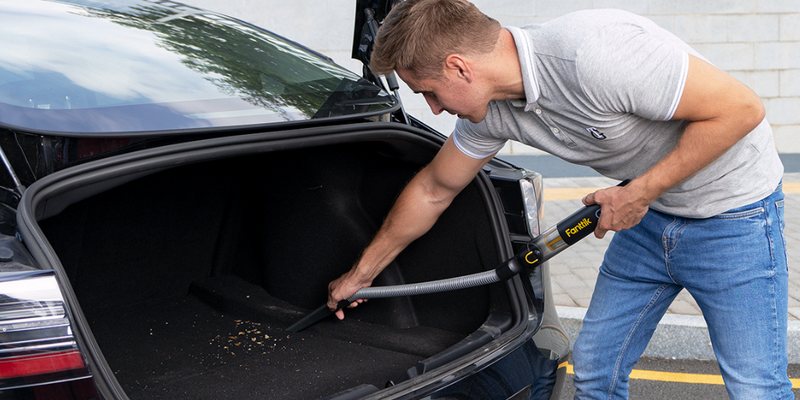
Strategic Loading: The "Soft Items Last" Protocol
To optimize both safety and volume, we utilize a tiered loading strategy. This method ensures that the heaviest, most dangerous items are anchored while the lightest items act as a buffer.
- The Foundation (Heavy & Rigid): Place your heaviest tools, metal containers, and rigid gear at the bottom of the trunk, pushed firmly against the rear seatbacks. This keeps the vehicle's center of gravity low and uses the seat structure as a primary bulkhead.
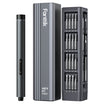
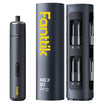
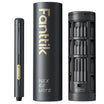
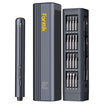
- The Mid-Layer (Medium Density): Place rectangular boxes or structured bags on top of the foundation. Modern, low-profile tool designs are particularly effective here, as their flat surfaces allow for stable stacking without "wasted" air gaps.
- The Buffer (Soft Items): We follow the "Soft Items Last" rule. Blankets, clothing bags, and sleeping bags should be packed on top and toward the rear of the vehicle. These items are less likely to cause injury if they shift and, more importantly, they can be compressed into the irregular gaps near the trunk lid or hatch.
- The Visibility Check: Once the soft items are in place, verify that the entire rear-view sightline is clear. If you must pack higher than the seatbacks, ensure you are using a cargo net rated for the weight of the items it is restraining.
Modern Gear Integration and Spatial ROI
As technical content strategists, we've noted a shift in the industry toward "Modern Essential Gear"—tools designed specifically for the constraints of urban car ownership. As detailed in The 2026 Modern Essential Gear Industry Report, the maturity of the cordless tool market has allowed for a "credibility math" approach to design.
The Advantage of Rectangular Geometry
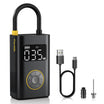
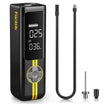
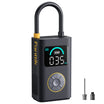
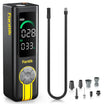
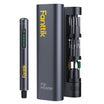
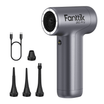
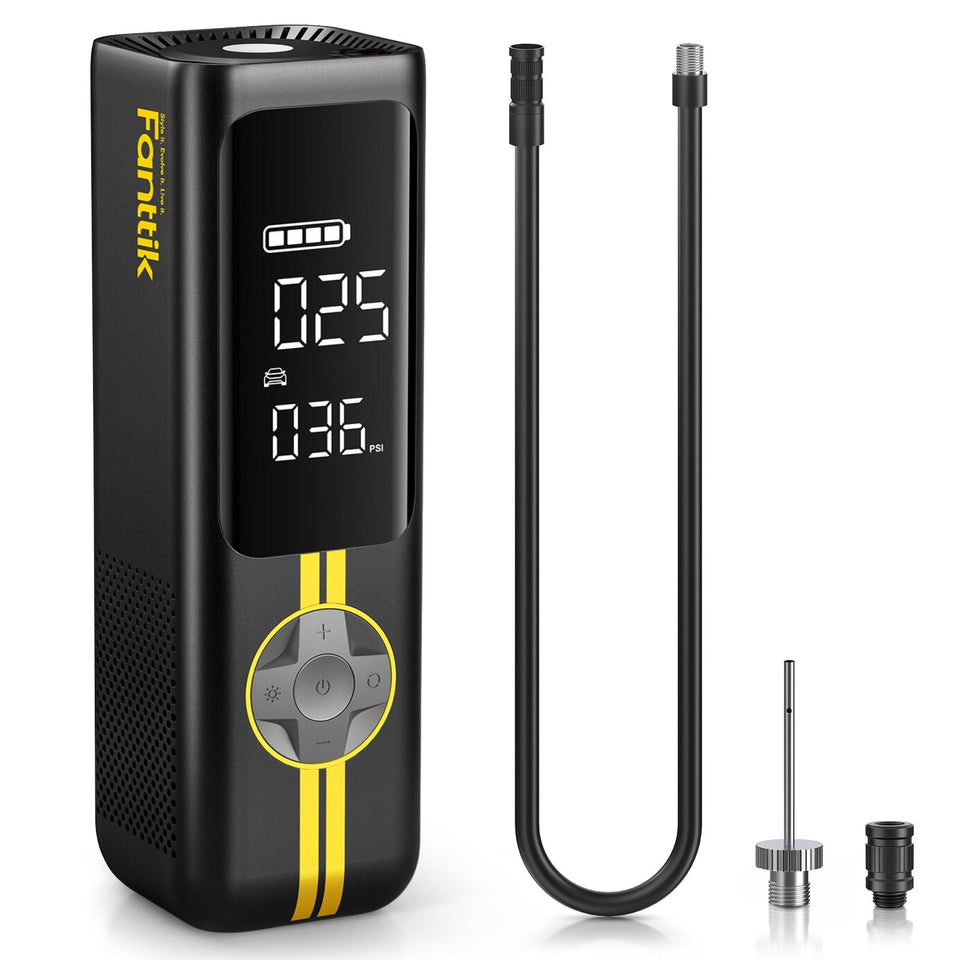
Traditional emergency gear—such as bulky, round air compressors or irregular jump-start cables—creates "unstable space." These shapes are difficult to secure and often lead to the "tipping" issues mentioned earlier. In contrast, modern high-performance tools often adopt a rectangular, slim-profile aesthetic. This allows them to be packed flush against trunk walls or even tucked into sub-trunk storage compartments.
Modeling the Value of Preparedness
Integrating these tools into your cargo plan isn't just about safety; it's about financial and operational efficiency. We modeled a scenario for an "Urban Adventure Professional" driving 18,000 miles per year to determine the Return on Investment (ROI) of carrying high-efficiency maintenance gear.
Scenario Model: Tire Pressure ROI & Payback
Maintaining proper tire pressure is a key component of road trip preparedness. Using US Department of Energy fuel penalty coefficients, we calculated the following:
| Parameter | Value | Unit | Rationale / Source |
|---|---|---|---|
| Annual Mileage | 18,000 | miles | FHWA average for commuters |
| Avg. Under-inflation | 6 | PSI | NHTSA survey average |
| Fuel Price | 3.75 | $/gal | National average estimate |
| Fuel Penalty (Low) | 1.2% | % | US DOE Fact #983 |
| Estimated Annual Savings | ~106 - 120 | USD | Fuel savings + extended tire life |
Methodology Note: This is a scenario model, not a controlled lab study. We assume a 28 MPG average and a $850 cost for a new set of tires. The ROI of approximately 11–12 months justifies the trunk space allocated to a compact inflator.
Emergency Readiness: The Winter Confidence Factor
For drivers in northern climates, packing isn't just about luggage; it's about survival gear. However, a trunk full of "just in case" items can quickly block your view. The key is selecting gear with a high "Power-to-Volume" ratio.
We modeled the "Winter Confidence" of a compact SUV (2.5L engine) at 15°F (-9°C). At these temperatures, a standard lead-acid battery can lose up to 50% of its cranking power.
Modeling Note: Winter Cranking Requirements
| Variable | Value | Unit | Source |
|---|---|---|---|
| Engine Displacement | 2.5 | Liters | Compact SUV standard |
| Ambient Temp | 15 | °F | Northern winter average |
| Required Amps (at 80°F) | ~153 | Amps | SAE J537 Heuristic |
| Required Amps (at 15°F) | ~278 | Amps | BCI Temperature Derating |
| Battery CCA Rating | 550 | Amps | OEM Specification |
In this scenario, while a healthy battery should start the car, the margin for error is slim. Carrying a high-peak-amp (e.g., 2000A) jump starter provides a significant safety buffer. Because modern lithium-based starters are roughly the size of a hardcover book, they can be stowed in seatback pockets or side cubbies, preserving 100% of your rear-view visibility while providing 100% peace of mind.
Compliance and Quality Standards
When selecting gear to integrate into your vehicle, we emphasize looking for recognized international standards. This ensures that the "Volume" you are adding to your car is actually functional and safe.
- ISO 9001: Look for manufacturers that adhere to this quality management standard to ensure product consistency.
- IEC 60529 (IP Codes): If you are packing gear for outdoor use, check the Ingress Protection (IP) rating. A rating like IP65 ensures the tool is protected against dust and water, which is vital if it needs to be used in the rain on a roadside.
- EU General Product Safety Regulation (GPSR): For our readers in Europe, compliance with EU 2023/988 ensures that products meet rigorous safety and traceability requirements.
A Final Checklist for Safe Packing
Before you set off on your next journey, perform this final 60-second audit of your cargo area:
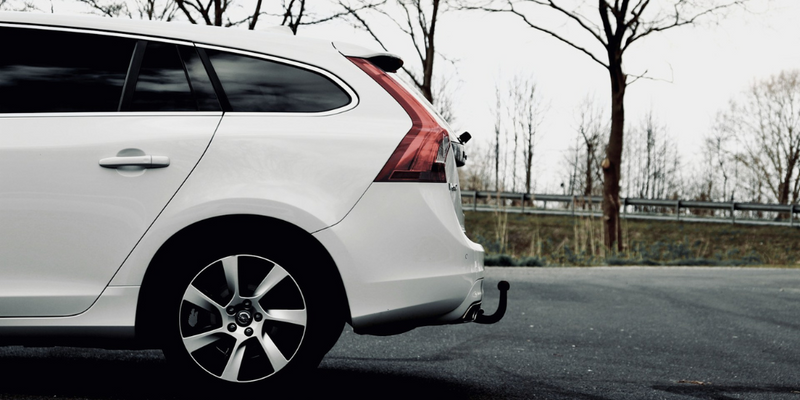
- The Sightline Check: Sit in the driver's seat and look in the rear-view mirror. Can you see the horizon? If not, relocate soft items to the footwells or under the seats.
- The Lateral Securement Check: Perform the "Push Test" on your main gear stack. If it wobbles, use a cargo net or bungee straps.
- The "Hot Tool" Rule: If you have just used a tire inflator or other electronic tool, do not pack it immediately against soft clothing or blankets. Our modeling shows that adiabatic heating can raise air exit temperatures significantly (up to ~152°C during compression). Allow the tool to cool for 15 minutes before final stowing.
- The Accessibility Check: Ensure your emergency kit (first aid, jump starter, flashlight) is the last thing in and the first thing out. It should never be buried under heavy suitcases.
By treating your trunk as a managed logistics space rather than a storage bin, you ensure that your vehicle remains a safe, high-performance environment. Efficiency in volume should never come at the cost of visibility.
Disclaimer: This article is for informational purposes only and does not constitute professional automotive, safety, or legal advice. Always refer to your vehicle's owner manual and local traffic laws regarding cargo securement and visibility requirements.
References & Sources
Continue reading
 Hard Shell vs. Soft Bag: Space and Protection Trade-offs
A guide to choosing between hard cases and soft bags for cordless gear, covering crush resistance, vibration damping,...
Hard Shell vs. Soft Bag: Space and Protection Trade-offs
A guide to choosing between hard cases and soft bags for cordless gear, covering crush resistance, vibration damping,...
 Rapid Deployment: Organizing Gear for Quick Roadside Use
Covers accessory scatter pitfalls, technical modeling for cordless tools, and compliance with ASTM B117 & SAE J537 standards...
Rapid Deployment: Organizing Gear for Quick Roadside Use
Covers accessory scatter pitfalls, technical modeling for cordless tools, and compliance with ASTM B117 & SAE J537 standards...
Leave a comment
This site is protected by hCaptcha and the hCaptcha Privacy Policy and Terms of Service apply.