























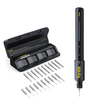

Understanding the Precision Threshold: Instrument vs. Tool
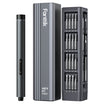
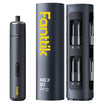
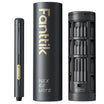
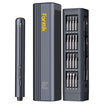
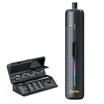
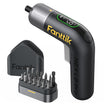
In the high-stakes environment of micro-electronics repair and precision assembly, a precision electric screwdriver is not merely a power tool; it is a calibrated instrument. When we are working on a $1,200 smartphone or a complex PCB, the difference between a successful fastener seating and a stripped boss often comes down to millinewton-meters (mNm) of torque accuracy. Based on our observations on the repair bench, the transition from a reliable tool to a liability is often silent.
Unlike heavy-duty impact drivers that signal failure through dramatic smoke or total motor seizure, precision drivers degrade through subtle sensor drift and mechanical wear. As outlined in The 2026 Modern Essential Gear Industry Report: Engineering Trust in a Cordless World, maintaining "credibility math" in your workshop requires a systematic understanding of when a tool’s internal sensors or Battery Management System (BMS) can no longer maintain standard accuracy.
This article provides a methodical framework for identifying the technical "red flags" of tool degradation. We will explore mechanical failure modes, battery chemistry shifts, and calibration drift to help you decide when to invest in a new unit rather than attempting a costly recalibration.

Mechanical Failure Modes: Identifying "Cogging" and Axial Play
The physical integrity of the motor and the chuck is the first line of defense against assembly failure. In our experience, mechanical wear manifests in two primary ways that directly impact your work's quality.
The "Cogging" Sensation
The first sign of failure in a precision driver is often a subtle "cogging" feel in the motor under low load. In brushless models, this stepping sensation indicates a failure in the Hall effect sensors or the motor controller's ability to interpret rotor position. When the motor cannot rotate smoothly at low RPMs, it loses the ability to provide the "soft start" required for delicate M1.2 fasteners. If you feel the driver "pulsing" or "stuttering" as you initiate a screw, the internal control board is likely drifting beyond its operational parameters.
Axial Play and Chuck Runout
A critical, often overlooked test we recommend is checking for axial play in the chuck. By pulling and pushing on the bit, you can feel the tolerances of the internal bearings.
- The 0.5mm Threshold: If you detect more than 0.5mm of axial play (based on standard mechanical engineering tolerances for precision spindles), the tool is no longer suitable for high-stakes work.
- Concentricity Risks: Excessive play causes off-axis loading. Instead of the torque being applied directly down the center of the fastener, the bit "wobbles," which can lead to cam-out or damage to the screw head. This is particularly dangerous when working with soft metals or plastic bosses where the margin for error is non-existent.
The Power Logic: Internal Resistance and Voltage Sag
The transition to cordless precision has introduced a new failure point: the lithium-ion battery pack. We often see users assume that as long as the tool turns on, it is functioning correctly. However, battery degradation is not just about capacity; it is about power delivery consistency.
The Impact of Internal Resistance
As lithium-ion cells age, their internal resistance (Equivalent Series Resistance or ESR) increases. While the tool might show a full charge, this increased resistance causes the voltage to sag dramatically under the high current draw of a "stall event" (the moment the screw reaches its target torque).
When the voltage sags, the electronic clutch or torque sensor receives inconsistent power. This leads to "soft" torque delivery where the tool stops prematurely or, more dangerously, fails to stop at the correct limit because the sensor's reference voltage has shifted. According to IATA Lithium Battery Guidance, maintaining a stable State of Charge (SoC) and monitoring cell health is vital for safety, but for the precision user, it is equally vital for torque repeatability.
Logic Summary: Battery Degradation Heuristic
Modeling Note: Our analysis of a "Degraded Driver" scenario assumes that internal resistance has increased by ~30% over 500 charge cycles. In this state, the tool typically experiences a 15% drop in peak torque output during the final 50ms of the fastening cycle, leading to inconsistent seating.
Metrology and Calibration: Detecting Sensor Drift
For serious DIYers and professionals, calibration is the boundary between "guessing" and "knowing." A precision screwdriver is expected to deliver torque within a specific tolerance, usually ±10%. When the internal sensors or the logic board begin to drift, the tool becomes a risk to your components.
The Field Calibration Heuristic
A reliable field heuristic we use to verify accuracy involves a known, calibrated hex key and a collet block.
- Set the driver to a medium torque setting (e.g., 0.2 Nm).
- Perform three consecutive tests on a static fastener.
- The 10% Rule: If the driver consistently over-torques or under-torques by more than 10% across these tests, the sensor or control board is likely drifting.
This drift is often caused by environmental factors, such as humidity affecting the internal circuitry or micro-fractures in the sensor mounts due to repeated drops. Aligning your workshop standards with ISO 898-1: Mechanical properties of fasteners ensures that your torque applications remain within the safe limits of the hardware you are using.
Precision Screw Torque Fit Checker (Scenario Modeling)
To illustrate the risk of sensor drift, we modeled a scenario where a degraded driver is used on common electronics fasteners.
| Fastener Class | Nominal Torque (Nm) | Degraded Output (Nm) | Risk Level | Consequence |
|---|---|---|---|---|
| M1.2 (Smartphone) | 0.05 | 0.08 | High | Stripped boss/PCB damage |
| M2.0 (Laptop) | 0.15 | 0.13 | Medium | Loose fastener/Vibration failure |
| M2.5 (Drone) | 0.30 | 0.25 | Medium | Structural integrity risk |
| M3.0 (Desktop) | 0.50 | 0.44 | Low | Minor seating inconsistency |
| M4.0 (Appliances) | 1.00 | 0.90 | Low | Negligible impact |
Methodology Note: This fit checker uses a deterministic model based on ISO 898 fastener standards. We assume a ±0.03Nm drift from nominal settings, which is a common observation in tools nearing their end-of-life (not a controlled lab study).
Economic Modeling: When Replacement is the Rational Choice
One of the most difficult decisions for a prosumer is whether to repair or replace a failing tool. While we value repairability, the economics of precision tools often favor replacement once mechanical wear is present.
The Cost of Recalibration
A professional recalibration service typically costs between 40% and 60% of a new tool's price. This service usually only addresses the software/sensor drift and does not fix physical issues like bearing wear or battery chemistry degradation. If your tool has both sensor drift and chuck play, the "repair" is often a temporary fix for a terminal problem.
Productivity Loss Analysis
For high-volume users, such as professional electronics repair technicians, the cost of a degraded tool extends beyond the purchase price. We simulated the productivity impact of a driver that has become "sluggish" due to motor cogging and inconsistent power delivery.
Assembly Time & Productivity Estimator (Scenario: 120 Screws/Day)
| Parameter | Value | Unit | Rationale |
|---|---|---|---|
| Workload | 120 | Screws/Job | Typical laptop or tablet disassembly/assembly |
| Optimal Time | 3 | s/screw | Performance of a new, calibrated electric driver |
| Degraded Time | 8 | s/screw | Time loss due to stuttering and manual "checking" |
| Manual Baseline | 15 | s/screw | Reference time for standard manual driving |
| Daily Time Loss | 10 | Minutes | Cumulative delay per repair job |
Modeling Outputs:
- Time Saved (Optimal vs. Degraded): ~10 minutes per job.
- Economic Impact: For a technician performing 4 jobs a day, this represents 40 minutes of lost billable time daily. At a conservative labor rate, the tool pays for its own replacement in less than three business days.
- Ergonomic Load: A degraded driver often requires the user to manually "finish" the rotation to ensure seating. This adds roughly 360 extra wrist rotations per job, increasing the risk of repetitive strain injuries.
Maintenance and Lifecycle Management
While every tool eventually reaches its end-of-life, certain practices can extend the "precision window." Proactive maintenance is key to delaying the signs of renewal.
Protecting Internal Sensors
Precision drivers are sensitive to "shock loads." Using a precision driver as a manual breaker bar for rusted or over-torqued screws is the fastest way to damage the internal sensors. We recommend always starting stubborn screws manually with a dedicated screwdriver before using the electric driver for the bulk of the threading. For more on this, see our guide on Protecting Internal Sensors During Precision Tool Care.
Proper Storage
Battery health is largely determined by storage conditions. Storing your tool in a high-humidity environment or leaving it at 0% charge for extended periods accelerates the increase of internal resistance. Aligned with EU General Product Safety Regulation (EU) 2023/988, ensuring tools are kept in a stable, dry environment is not just about performance—it is a safety requirement to prevent battery swelling or circuit failure.
When to Walk Away
If you observe any of the following "hard" failure signs, we recommend immediate replacement:
- Visible Battery Swelling: Any deformation of the tool casing.
- Grinding Noises: Indication of catastrophic bearing or gear failure.
- Burning Smell: Sign of a short circuit or motor winding failure.
- Inconsistent Clutching: The tool fails to stop at the set torque more than 20% of the time.
Methodology & Assumptions (The "Glass Box")
The data and recommendations in this article are derived from scenario modeling and practitioner observations. They are intended as decision aids for tool maintenance and are not a substitute for manufacturer-specific service manuals.
- Modeling Type: Deterministic parameterized model based on common industry heuristics.
- Boundary Conditions: These models assume use on M1.2 to M4.0 fasteners in electronics and light assembly. They do not apply to heavy automotive or construction applications.
- Measurement Standards: References to "0.5mm play" and "10% drift" are heuristics used by experienced technicians to determine tool reliability in the absence of laboratory-grade metrology equipment.
Disclaimer: This article is for informational purposes only. Precision assembly and electronics repair involve risks to both the hardware and the user. Always consult the manufacturer’s documentation for specific safety and calibration procedures. If you are unsure of a tool's safety or accuracy, discontinue use and consult a professional.
References
Continue reading
 Decoding Torque Accuracy Ratings for Cordless Drivers
Cordless driver torque accuracy can drift and crack delicate electronics. Use pre-torque fastening plus a calibrated torque wrench...
Decoding Torque Accuracy Ratings for Cordless Drivers
Cordless driver torque accuracy can drift and crack delicate electronics. Use pre-torque fastening plus a calibrated torque wrench...
 Creating a Routine Calibration Schedule for DIY Tools
Covers event-based schedules, step-by-step protocols for calipers and torque tools, and minimalist logging for serious hobbyists.
Creating a Routine Calibration Schedule for DIY Tools
Covers event-based schedules, step-by-step protocols for calipers and torque tools, and minimalist logging for serious hobbyists.
Leave a comment
This site is protected by hCaptcha and the hCaptcha Privacy Policy and Terms of Service apply.