

























The Seasonal Pressure Shift: Why Spring Requires a Tire Recalibration
As the final frosts of winter recede and ambient temperatures begin their steady climb, most drivers focus on spring cleaning or switching out winter tires. However, a critical mechanical transition is happening inside your tires that often goes unnoticed until it manifests as uneven tread wear or a harsh ride. Based on common patterns observed in our technical service centers and routine maintenance records, tire maintenance is not a "set it and forget it" task; it is a seasonal dialogue between the air inside your tires and the environment outside.
The physics governing this relationship is straightforward but unforgiving. For every 10°F change in ambient temperature, tire pressure typically fluctuates by approximately 1 PSI (Pounds per Square Inch). While a 1 PSI drop in winter is a well-known precursor to a "Low Tire Pressure" warning light, the inverse—a 4 to 8 PSI spike as we move from a 30°F winter morning to a 70°F spring afternoon—rarely triggers an alert. This creates a silent over-inflation scenario that can compromise vehicle handling and safety.
⚡ Quick Action Guide: Spring Calibration in 3 Steps
If you need to get back on the road quickly, follow this proven routine to ensure your tires are safe for the season.
-
Time It Right (The "Cold" Rule): Check pressure first thing in the morning before driving, or after the car has been parked for at least 3 hours.
- Why: Driving generates heat that temporarily increases pressure, giving you a false high reading.
-
Verify the Target PSI: Open your driver’s side door and locate the yellow or white Tire and Loading Information placard.
- Note: Use the PSI listed here, not the "Max PSI" printed on the tire sidewall (which indicates the tire's maximum structural limit, not the vehicle's optimal setting).
- Measure & Adjust: Use a digital gauge for accuracy. If the reading is higher than the placard recommendation (common in spring), bleed air in short 2-second bursts until it matches the spec.
The Science of Thermal Expansion and Solar Load
Understanding why your tires seem "fuller" in the spring requires looking at the Ideal Gas Law. When air molecules are heated, they move faster and collide with the tire's inner liner with more force, increasing the internal pressure.
The 1 PSI Rule vs. Radiant Reality
While the standard heuristic is 1 PSI per 10°F, our workshop observations and external thermal studies suggest this can be an underestimate in specific conditions. According to research on thermal performance and radiant heat gain, solar radiant heating can cause localized pressure spikes significantly higher than ambient air temperature alone would suggest.
A tire sitting in direct sunlight can reach internal temperatures significantly higher than the surrounding air. For example, on a sunny 65°F spring day, a black rubber tire can absorb enough radiant heat to reach surface temperatures of 85°F or higher, leading to a pressure increase beyond what the ambient temperature predicts.
Scenario Modeling: Theoretical Pressure Deviation (Extreme Case) The table below illustrates a "worst-case" stacking of factors to demonstrate how pressure variance accumulates. These values are estimated extremes used to illustrate the risk of measuring "hot" tires in spring compared to a "cold" winter baseline.
Parameter Estimated Value (Upper Limit) Unit Rationale / Assumptions Base Temperature Delta ~40 °F Transition from 30°F winter morning to 70°F spring afternoon. Predicted Pressure Gain ~4 PSI Based on the standard 1 PSI per 10°F heuristic. Potential Solar Load +3 to +5 PSI Extreme Example: Blackbody absorption in direct sun vs. a shaded tire. Kinetic Driving Heat +4 to +8 PSI Operating Temp: Heat from 30+ mins of highway driving (checking "Hot"). Total Potential Deviation 11 to 17 PSI Combined Effect: Theoretical difference between winter "Cold" and spring "Hot."
Note: This total represents an extreme outlier scenario. You should always measure and adjust tires when they are cold (at ambient temperature) to avoid chasing these temporary fluctuations.
The Risks of Silent Over-Inflation
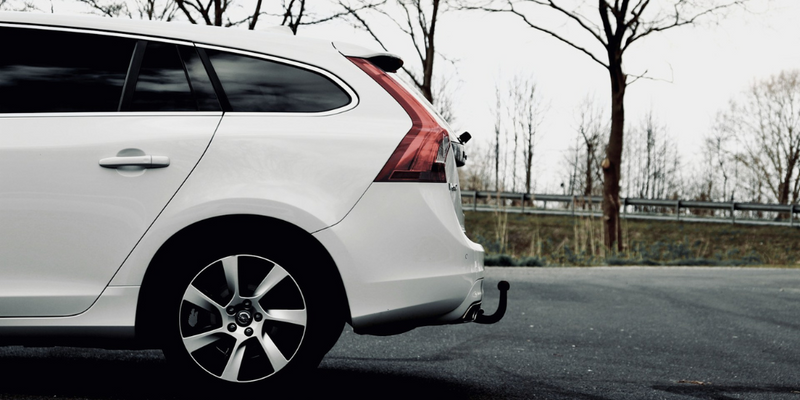
Over-inflation is often viewed as "less dangerous" than under-inflation, but this ignores the mechanics of the tire's contact patch. When a tire is over-inflated, the center of the tread can bulge outward, becoming the primary point of contact with the road.
- Reduced Traction: A smaller contact patch means less rubber on the road. This can be particularly dangerous during spring rain showers, as reduced surface area may increase the risk of hydroplaning.
- Accelerated Center Wear: Based on years of repair records, we frequently see tires that have plenty of tread on the shoulders but are worn to the cords in the center. This is a classic symptom of chronic over-inflation.
- Compromised Suspension: Tires act as the first stage of your vehicle's suspension. Over-inflated tires are more rigid, transmitting road imperfections directly to the suspension components, leading to a harsher ride and potential premature wear on shocks.
- Braking Efficiency: Because the contact patch is distorted, the tire may not provide the optimal grip required for emergency braking, potentially increasing stopping distances.
Balancing the "Inflation Crisis": Myth vs. Data
While we focus on the risks of spring over-inflation, it is vital to maintain a balanced perspective. According to a statistical investigation by the NHTSA, only about 6% of tires on the road were found to be severely over-inflated (defined as more than 8 PSI over the placard). In contrast, nearly 20% of vehicles are driven with severely under-inflated tires.
The takeaway is critical: while you must bleed off excess pressure in the spring, do not over-correct. Typical industry estimates, supported by rolling resistance and fuel efficiency studies, suggest that over-deflating by just 5 PSI can increase rolling resistance by approximately 5%, which may correlate to a 1–2% drop in fuel economy under standard driving conditions.
Our recommendation is to view spring maintenance not as a "deflation event," but as a precision recalibration.
Step-by-Step Guide to Spring Pressure Calibration
1. Identify the "Cold" Pressure Specification
Avoid using the "Max PSI" on the tire sidewall. That number is the structural limit for maximum load. Instead, find the manufacturer’s recommended pressure on the tire information placard, usually located on the driver’s side door jamb.
2. Timing is Everything
"Cold Tire Pressure" refers to tires that have not been driven for at least three hours. We recommend checking your pressure first thing in the morning, before the sun has had a chance to heat the tire casings.
3. Use a Reliable Digital Gauge
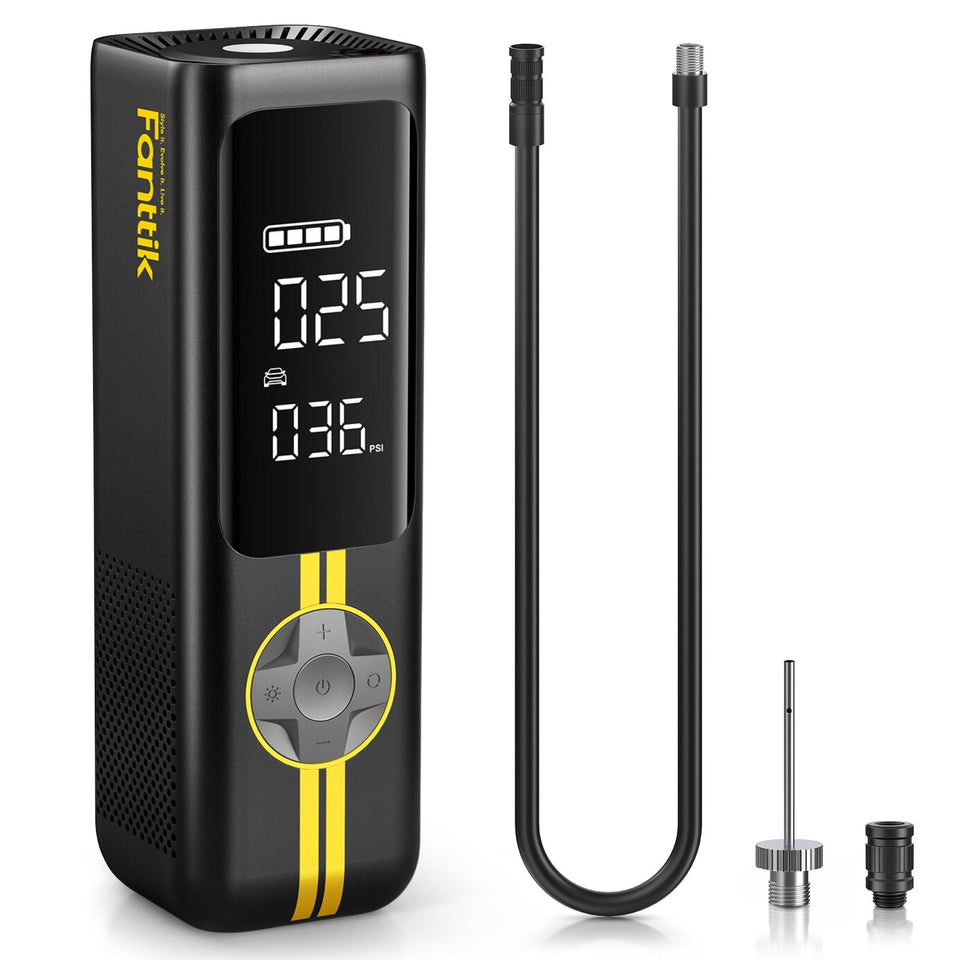
Analog "pencil" gauges can be inconsistent, sometimes varying by 3–5 PSI due to internal friction or age. For safety-conscious drivers, we suggest using a high-quality digital gauge or a portable inflator with a built-in digital sensor. High-precision tools generally aim to align with accuracy standards such as those outlined in NIST Handbook 44.
4. The "Short Burst" Bleeding Technique
If your tires are over-inflated:
- Use the small nib on the back of your tire gauge to release air.
- Bleed air in short, 2-second bursts.
- Re-check the pressure after every burst.
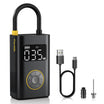
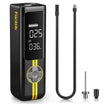
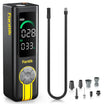
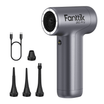
- Pro Tip: If using a modern digital inflator with a "deflate" function, set your target PSI on the screen. The device will handle the precision release for you.
5. Account for All Four (or Five) Tires
Variations in sun exposure (e.g., the side of the car facing south in a driveway) can create pressure imbalances. Always check all four tires, and don't forget the spare—a flat spare is useless in an emergency.

Tool Integrity and Compliance
When selecting tools for tire maintenance, reliability is paramount. As discussed in the industry white paper, The 2026 Modern Essential Gear Industry Report, the shift toward cordless automotive tools requires a "trust architecture" involving verified accuracy.
For drivers, this means choosing devices that meet stringent safety and traceability standards. In the European Union, for example, general product safety is governed by the EU General Product Safety Regulation (EU) 2023/988. When you use a tool that adheres to these frameworks, you are ensuring that your maintenance equipment provides a reading you can actually trust.
Special Considerations: Beyond the Standard Commute
- Off-Roading and Cycling: Interestingly, for those who take their vehicles off-road or ride mountain bikes, spring often requires lower pressures. As trails thaw and become muddy, dropping pressure by 5–15 PSI increases the tire's footprint, providing necessary traction on soft, wet terrain.
- Towing and Heavy Loads: If you are planning a spring road trip with a trailer, your rear tire pressure requirements will likely increase. Always consult your vehicle's manual for "loaded" vs. "unloaded" pressure recommendations.
Precision as a Habit
Managing tire pressure as ambient temperatures rise is one of the simplest yet most effective ways to ensure vehicle safety and protect your investment. By moving away from reactive maintenance—waiting for a warning light—and adopting a proactive, methodical calibration routine, you align yourself with the best practices of automotive experts.
Remember, the goal is not just to have "enough" air, but to have the exact amount of air required for your vehicle's specific engineering.
Disclaimer: This article is for informational purposes only. Tire pressure requirements vary by vehicle and tire type. Always refer to your vehicle manufacturer’s guidelines and consult a certified automotive technician for specific safety concerns or if you notice unusual tire wear patterns.
Sources and References
- Tire Rack: How Temperature Affects Tire Pressure
- NHTSA: Tire Pressure Maintenance Statistical Investigation (2009)
- AAA: Understanding Tire Pressure and Temperature Change
- EUR-Lex: EU General Product Safety Regulation (2023/988)
- NIST Handbook 44: Specifications for Weighing and Measuring Devices
- Thermal Studies on Radiant Heat Gain in Rubber Compounds
- Tire Rolling Resistance and Fuel Economy Analysis
Continue reading
 Deflating for Spring: Managing Pressure as Ambient Temps Rise
Tire pressure changes with spring temps. This guide explains thermal expansion, risks of over-inflation, and a recalibration procedure...
Deflating for Spring: Managing Pressure as Ambient Temps Rise
Tire pressure changes with spring temps. This guide explains thermal expansion, risks of over-inflation, and a recalibration procedure...
 Storing Your Jump Starter: Can It Survive a Frozen Trunk?
Covers the 40-60% charge rule, thermal buffer strategies, and recovery protocols for cold climate drivers.
Storing Your Jump Starter: Can It Survive a Frozen Trunk?
Covers the 40-60% charge rule, thermal buffer strategies, and recovery protocols for cold climate drivers.
Leave a comment
This site is protected by hCaptcha and the hCaptcha Privacy Policy and Terms of Service apply.