


























The Garage Environment: A Hostile Territory for High-Tech Gear
For the self-reliant vehicle owner, the garage is a sanctuary of productivity. However, from a technical perspective, an unheated garage is one of the most volatile environments for portable power tools. Unlike climate-controlled workshops, residential garages subject gear to extreme thermal cycling, particulate infiltration, and fluctuating relative humidity (RH).
Based on common patterns observed in repair centers, many "premature" tool failures—ranging from degraded battery capacity to seized internal motors—often stem from passive degradation during storage rather than active use. Treating high-performance portable tools like legacy hand tools ignores the sensitive electronics and complex chemistries that define modern gear.
Building a durable toolkit requires a methodical approach to preservation. This guide outlines professional-grade protocols for shielding your investment from dust and humidity.
The Mechanics of Infiltration: Dust and Micro-Particulates
In a garage, dust is more than an aesthetic nuisance; it acts as a mechanical abrasive and a potential electrical conductor. Garage dust frequently contains organic matter, pulverized concrete, and metallic shavings from vehicle wear.
Port and Screen Protection
USB-C charging ports, LED displays, and cooling vents are the primary entry points for particulates.
- The Risk: Micro-dust accumulation in a charging port can create high-resistance connections, potentially leading to heat buildup during charging or connectivity issues.
- The "Port-First" Rule: Before connecting any charger after storage, always inspect the port with a flashlight. Use compressed air (short bursts) to clear particulates. Avoid physical probes (like toothpicks or needles), which can bend internal pins or strip coatings.
- Seal Maintenance: For tools with rubber gaskets on battery doors, we often see these seals dry and crack over time. A light application of dielectric grease during seasonal prep can help maintain elasticity and sealing integrity.
Internal Particulate Management
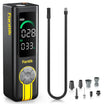
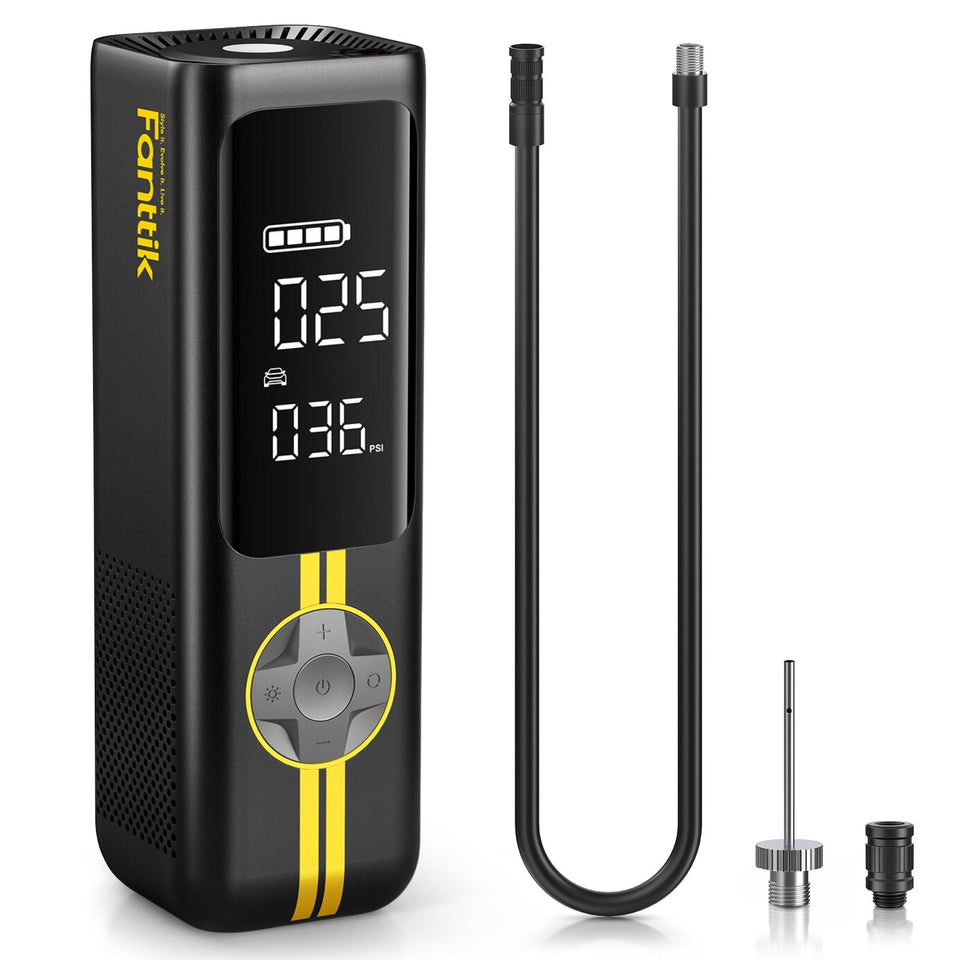
For tools with active cooling, such as high-output tire inflators, dust settles on internal fan blades and heat sinks, which can reduce thermal efficiency.
- Why it matters: Clear airflow is a fundamental requirement for preventing component overheating, a principle aligned with general industrial maintenance standards (such as those found in the ISO Standards Catalogue).
Managing the Humidity Drift: Beyond Silica Gel
Humidity is the primary driver of internal oxidation. While surface rust on cast iron is obvious, the internal corrosion of precision electronics is more insidious.
The 50% Threshold and RH Targets
Corrosion rates generally do not increase linearly; they tend to accelerate significantly once relative humidity (RH) crosses the 50% threshold.
- Target Range: For precision electronics, we recommend a storage environment between 30% and 40% RH.
- Source Note: This target is a practical shop heuristic based on established corrosion science; while 50% is a general industry baseline for steel, lower levels further reduce the risk of moisture adsorption on PCB surfaces.
Creating a Controlled Microclimate
Instead of attempting to dehumidify an entire uninsulated garage—which is often inefficient—focus on "micro-storage."
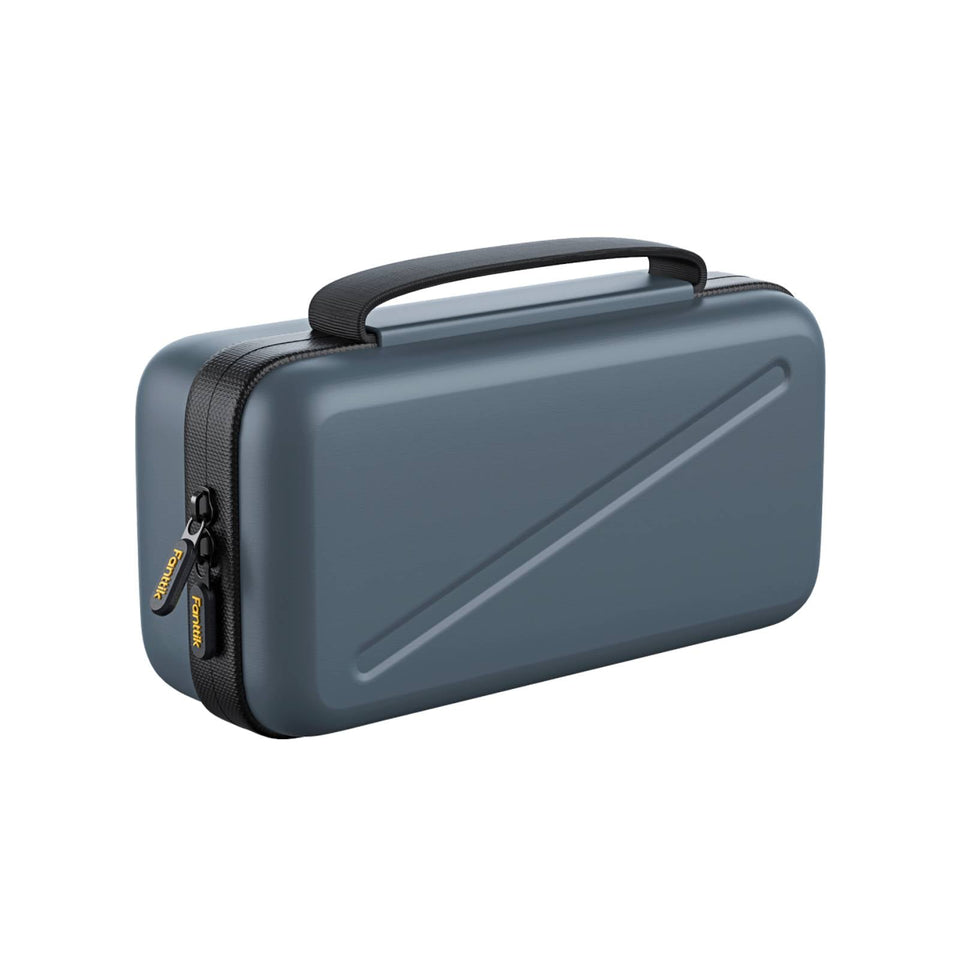
- Sealed Containers: Use heavy-duty, gasket-sealed plastic bins to isolate tools from the ambient garage air.
-
Rechargeable Desiccants: Standard silica packets have limited capacity. Use larger, rechargeable desiccant canisters with color-changing indicators.
- ⚠️ SAFETY WARNING: When "recharging" desiccants in a microwave or oven, always follow the manufacturer’s specific instructions. Ensure the container is microwave-safe and never leave the process unattended, as overheating can pose a fire risk.
- VCI Technology: Vapor Corrosion Inhibitors (VCI) emit a protective vapor that molecularly bonds with metal surfaces. Using VCI emitters inside tool cases can provide a more robust barrier than oil-based sprays, which may attract dust.
Battery Health: The Impact of Thermal Cycling
The lithium-ion batteries powering your gear are "living" chemical engines. Their longevity is heavily influenced by storage conditions, particularly in regions with harsh seasonal swings.
The Problem with Temperature Swings
Repeated swings between hot and cold promote the growth of the Solid Electrolyte Interphase (SEI) layer on the battery's anode. While some SEI is necessary, excessive growth increases internal resistance.
- Cold Weather Risk: Research, such as that cited in A Comprehensive Review of EV Lithium-Ion Battery Degradation, suggests that low-temperature cycling can lead to lithium plating, an irreversible failure mode that reduces capacity.
The 40-60% State of Charge (SoC) Protocol
Storing a battery at 100% charge in a hot garage can accelerate chemical breakdown due to high voltage stress. Conversely, storing at 0% risks a "deep discharge" that may render the battery unchargeable.
- Optimal SoC: Aim for a 40-60% charge for long-term storage, a range widely recommended by cell manufacturers and IATA guidance.
- Thermal Buffering: Store tools inside an insulated box or cooler (dry). This acts as a thermal buffer, slowing the rate of temperature change during rapid weather shifts.
- ⚠️ SAFETY WARNING: Never charge lithium-ion batteries inside an insulated or airtight container, as heat buildup during charging requires adequate ventilation.
Specialized Care for High-Performance Tools
The "30-Second Dry Run" for Inflators
When air is compressed, moisture naturally condenses. If a tire inflator is stored immediately after use, moisture can remain trapped in the internal valves.
- Protocol: After use, run the inflator "dry" (not connected to a tire) for 30 seconds. This helps clear residual moisture from the system, reducing the risk of internal piston corrosion.
Rotary Tool Collet Maintenance
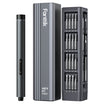
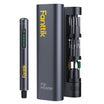
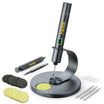
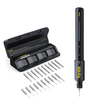
Precision tools rely on tight tolerances. Dust in the collet can cause "runout" (wobble).
- Protocol: Use a soft brush to clear the collet after use. Avoid storing the tool with a bit installed, as constant tension can lead to metal fatigue in the collet over time.
Methodology Note: Seasonal Storage Modeling
To derive these recommendations, we modeled a "worst-case" seasonal storage scenario for a detached, uninsulated garage in a humid continental climate.
| Parameter | Value / Range | Unit | Rationale |
|---|---|---|---|
| Annual Temperature Swing | -20 to 100 | °F | Typical Midwest unheated garage |
| Storage Duration | 6 - 8 | Months | Standard winter dormancy period |
| Peak Humidity | 70 - 80 | % RH | Summer peak in unheated spaces |
| Target Storage SoC | 40 - 60 | % | Based on IATA/Manufacturer guidelines |
| Engine Load Factor | 2.5x | - | Derived from BCI Temperature Derating Matrix |
Modeling Boundaries:
- The "2.5x load factor" refers to the increased strain on battery-powered starters at -10°F compared to 80°F, highlighting the need for thermal buffering.
- Thermal buffering estimates assume a standard 25-quart insulated cooler; results vary by insulation R-value and tool mass.

Strategic Maintenance: A Professional Checklist
Durability is a function of both engineering and stewardship. As discussed in the 2026 Modern Essential Gear Industry Report (a Fanttik industry analysis), predictable performance is maintained through consistent maintenance cycles.
Seasonal Maintenance Checklist
- Clean: Wipe exterior surfaces; use compressed air on vents.
- Inspect: Check for cracked seals or frayed cables.
- Charge: Adjust battery levels to the 40-60% range.
- Purge: Run inflators for 30 seconds to clear moisture.
- Seal: Place tools in a gasket-sealed container with a desiccant or VCI emitter.
- Buffer: Store containers off the concrete floor (which acts as a heat sink) to minimize thermal shock.
Protecting your portable power tools from the elements is the most effective way to ensure that your investment in quality gear remains an asset rather than a liability.
Disclaimer: This article is for informational purposes only. Always refer to your specific tool's user manual for manufacturer-approved maintenance. Improper handling of lithium-ion batteries can pose a fire risk; ensure all charging and storage comply with local fire safety regulations.
Sources and Authoritative References
Continue reading
 Understanding Parasitic Drain: Why Dormant Car Batteries Die
Covers the Winter Starting Power Gap, step-by-step fuse-pull diagnostics, and debunks maintenance myths like weekly idling.
Understanding Parasitic Drain: Why Dormant Car Batteries Die
Covers the Winter Starting Power Gap, step-by-step fuse-pull diagnostics, and debunks maintenance myths like weekly idling.
 Preserving Battery Health During Seasonal Trunk Storage
Covers the 40-60% SOC rule, BMS safety, and practical tests like the 'Fridge Test' to preserve battery health...
Preserving Battery Health During Seasonal Trunk Storage
Covers the 40-60% SOC rule, BMS safety, and practical tests like the 'Fridge Test' to preserve battery health...
Leave a comment
This site is protected by hCaptcha and the hCaptcha Privacy Policy and Terms of Service apply.