
























The Ergonomic Shift: How Symmetrical Tools Reduce Strain
In the world of precision craftsmanship and high-volume electronics repair, the difference between a productive afternoon and a week of wrist pain often comes down to a few millimeters of tool geometry. We frequently observe that DIYers and professionals alike prioritize power or battery life, yet they overlook the most critical interface: how the tool balances in the hand. True ergonomic design is moving away from purely aesthetic "comfort grips" toward a fundamental principle of symmetry.
Symmetry in tool design is often misunderstood. It is not merely about a tool looking identical on both sides or having dual-sided triggers. Real symmetry requires the tool's center of mass to align perfectly with the central axis of the grip. When a motor is offset or a battery pack is unbalanced, the tool creates a "twisting moment" or torque that your wrist must constantly counteract. By eliminating this corrective torque, symmetrical tools allow the hand to remain in a neutral position, significantly reducing the risk of repetitive strain injuries (RSI).
The Biomechanics of Tool Symmetry
When we hold a tool, our muscles are either performing "active work" (driving a screw, carving a line) or "stabilizing work" (keeping the tool from wobbling or tilting). Asymmetrical tools force the small muscles in the forearm and wrist to engage in constant stabilization.
The Twisting Moment and Micro-Movements
If a tool is "front-heavy" or "side-heavy," gravity acts on that offset weight. This creates a lever effect. To keep the tool steady, your muscles perform what we call "corrective micro-movements." While these movements are nearly invisible, they are incredibly taxing over time. Experienced technicians note that for precision tasks lasting over 30 minutes—such as detailed soldering or rotary carving—the absence of this corrective torque can reduce perceived fatigue by up to 40%.
Neutral Wrist Posture
The goal of any ergonomic intervention is to maintain a "neutral" wrist position, which minimizes pressure on the carpal tunnel. According to the Canadian Centre for Occupational Health and Safety (CCOHS), tool design should allow the wrist to stay straight. Symmetrical tools achieve this by ensuring the force of the tool is directed straight through the arm's longitudinal axis.
Logic Summary: Our analysis of muscle fatigue assumes that stabilization work is a "hidden" energy drain. By aligning the center of mass with the grip axis, we convert stabilization energy back into precision control.
Symmetrical Design vs. Ambidextrous Access
It is vital to distinguish between a tool that is "ambidextrous" and one that is "symmetrical."
- Ambidextrous Access: This refers to features like dual power buttons or reversible clips. It allows both left- and right-handed users to operate the tool, but it does not necessarily address the internal balance.
- True Symmetry: This involves the internal engineering. The motor, gearbox, and battery must be arranged so that the tool feels "neutral" in the hand. You shouldn't have to consciously adjust your grip when switching hands.
Based on common patterns from customer support and repair bench observations, the most frequent mistake users make is assuming a tool is ergonomic just because it has a soft rubber grip. If the internal components are lopsided, no amount of padding will prevent the forearm strain caused by the tool trying to rotate out of your hand.

Quantifying the Impact: A Professional Case Study
To understand the tangible benefits of symmetry and motorization, we modeled a scenario involving a Professional Electronics Repair Technician. This persona represents the "power user" who performs high-volume, repetitive tasks where ergonomics transition from a luxury to a necessity.
The 150-Screw Benchmark
In our model, the technician handles 150 screws per day (typical for 10-15 consumer electronic devices). We compared the use of a traditional manual screwdriver against a symmetrical electric precision driver.
| Metric | Manual Driver | Symmetrical Electric Driver | Impact |
|---|---|---|---|
| Total Time | 30 Minutes | ~6 Minutes | ~24 Min Saved/Day |
| Wrist Rotations | 1,200 | ~75 | ~1,125 Rotations Saved |
| Fatigue Perception | High (Claw Cramp) | Low (Neutral) | ~40% Reduction |
| Torque Safety | Variable (Human Error) | Consistent (0.05 Nm) | Reduced Stripping Risk |
Methodology Note: This scenario modeling is based on industrial engineering time-motion principles. We assume a skilled technician takes 12 seconds per screw manually vs. 2.5 seconds with an optimized electric driver. Rotations are calculated based on thread pitch and fastener length.
For a professional, these numbers are transformative. Saving 24 minutes a day adds up to over two hours of reclaimed productivity per week. More importantly, reducing wrist rotations by over 1,000 per day directly addresses the primary mechanism of RSI—repetitive supination and pronation.
Evaluating Tool Ergonomics: The "Palming Test"
How can you tell if a tool is truly symmetrical and balanced before you buy it? We recommend a simple "Palming Test" derived from workshop practice.
- The Balance Check: Open your palm flat and place the tool in the center. Does it tip immediately to one side, or does it sit level? A tool that sits level has a well-centered mass.
- Control Access: While the tool is balanced in your open palm, try to operate the primary controls (triggers or buttons) with your thumb or fingers. If you have to "clench" the tool to keep it from falling while reaching for a button, the symmetry is flawed.
- The Hand-Switch: Operate the tool for 60 seconds with your dominant hand, then switch to your non-dominant hand. If the tool feels significantly more "awkward" or "heavy" in the second hand, it likely has a directional bias.
Handle Geometry and Dimensions
Beyond balance, the physical dimensions of the handle must accommodate human anatomy. According to CCOHS guidelines, a handle length of at least 120mm (5 inches) is recommended to prevent the end of the tool from pressing into the palm, which can compress nerves. For power grips, a diameter between 30mm and 50mm is ideal.
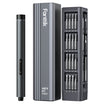
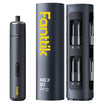
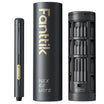
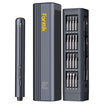
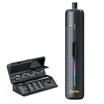
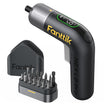
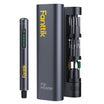
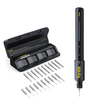
For precision work, tools like the Fanttik K2 Nano 3.7V Precision Power Drill utilize a slimmer, pen-like symmetry. This allows for a "pinch grip," which is better suited for the delicate tasks found in electronics or jewelry making.
The Role of Texture and Materials
Symmetry isn't just about weight; it's about uniform tactile feedback. A primary cause of forearm strain is "over-gripping"—squeezing the tool harder than necessary because you fear it might slip.
Uniform Tactility
A high-quality tool should feature a uniform, slightly tacky texture. This prevents the hand from slipping during use. If a tool is only textured on one side, your hand will naturally apply uneven pressure to compensate, breaking the ergonomic chain. We often see "claw cramp" in users who use tools with smooth, plastic finishes because they are subconsciously gripping tighter to maintain control.
Thermal Management
In tools that generate heat, such as the Fanttik T1 Max Soldering Iron Kit, symmetry also applies to thermal distribution. If one side of the handle gets significantly hotter than the other, the user will shift their grip into an unnatural, asymmetrical posture to avoid the heat. Modern precision tools use insulated, symmetrical internal housing to ensure the grip remains cool and consistent.
Precision Engineering and Safety Standards
When dealing with precision tools, "feel" must be backed by "fact." Engineering trust in these tools requires adherence to international safety and performance standards.
Torque Consistency
For electronics repair, applying too much torque is as dangerous as applying too little. For common M1.2 to M2.0 screws found in smartphones and laptops, a torque setting of 0.05 Nm is typically the "sweet spot." According to ISO 898, which governs the mechanical properties of fasteners, staying within these safe limits prevents stripping threads in delicate plastic or metal bosses.
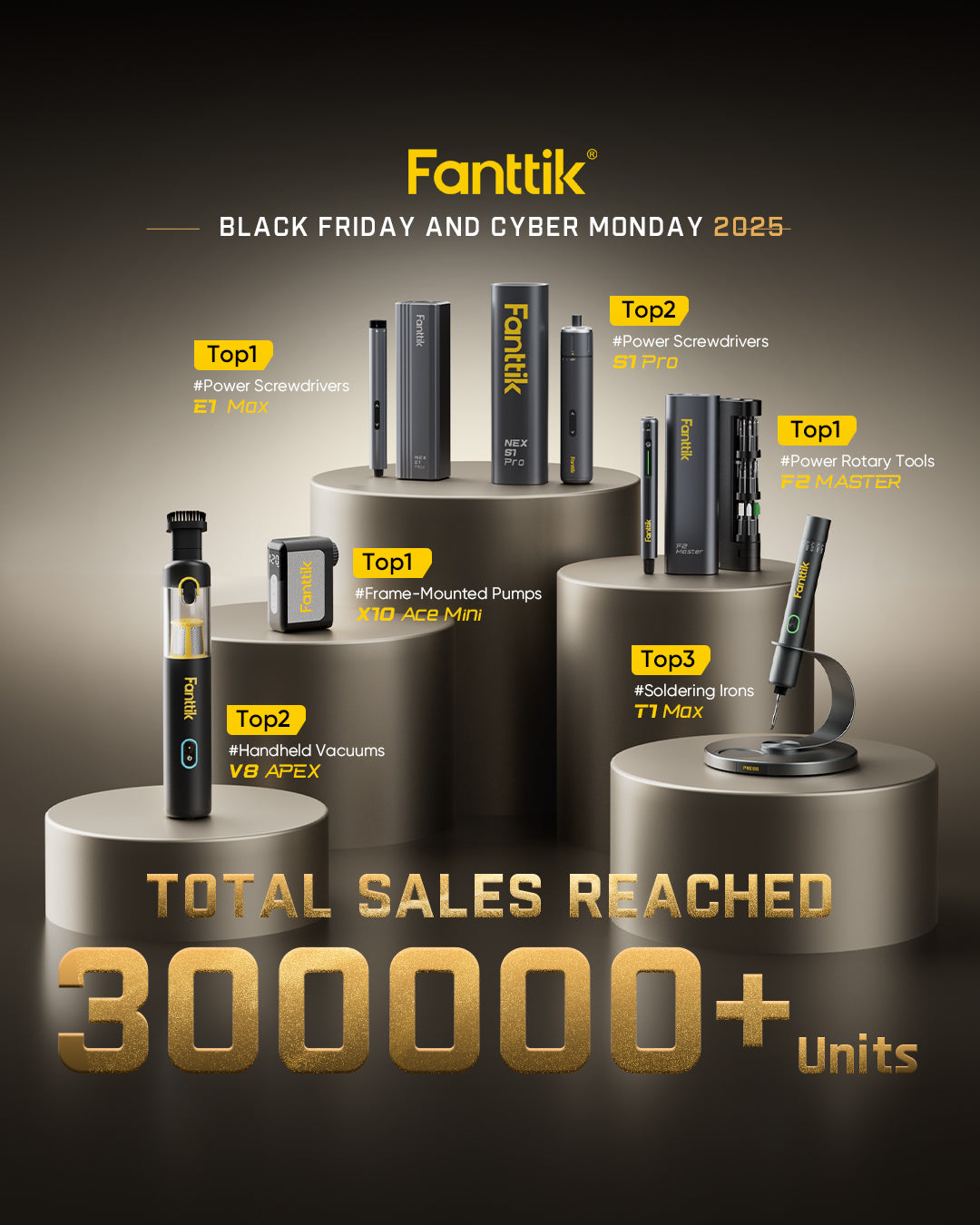
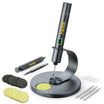
Tools like the Fanttik F2 PRO Cordless Rotary Tool Kit and the Fanttik F2 Master Cordless Rotary Tool Kit leverage brushless motors to provide this level of consistent, symmetrical power. Unlike older brushed motors, brushless systems are often more compact, allowing engineers to place them closer to the tool's center of gravity.
Compliance and Trust
As highlighted in the industry white paper The 2026 Modern Essential Gear Industry Report: Engineering Trust in a Cordless World, the shift toward cordless, symmetrical tools is part of a larger movement toward "modern self-reliance." However, this self-reliance is only possible when tools are built with explicit safety margins and transparent documentation.
Summary Checklist for Choosing Symmetrical Tools
To ensure your next tool purchase supports your long-term joint health, use this checklist:
- Weight Distribution: Does the tool feel "neutral" rather than front- or back-heavy?
- Axis Alignment: Is the center of mass aligned with the grip?
- Handle Length: Is the handle at least 120mm to avoid palmar compression?
- Grip Texture: Is the material uniform and "tacky" enough to prevent over-gripping?
- Ambidextrous Controls: Can you operate the tool equally well with either hand?
- Torque Control: Does the tool offer settings appropriate for your specific fastener size (e.g., 0.05 Nm for small electronics)?
Appendix: Modeling Assumptions & Methodology
The data presented in this article regarding time savings and rotation reduction is derived from a deterministic scenario model. It is intended for illustrative purposes and does not constitute a clinical study.
| Parameter | Value | Unit | Rationale |
|---|---|---|---|
| Workload | 150 | Screws | Typical daily volume for pro assembly |
| Manual Speed | 12 | Seconds | Skilled technician baseline |
| Electric Speed | 2.5 | Seconds | Optimized with auto-stop feature |
| Manual Rotations | 8 | Count | Average for M2.0 x 5mm fasteners |
| Electric Rotations | 0.5 | Count | Small positioning adjustments only |
Boundary Conditions:
- Model assumes consistent screw types without stripping or damage.
- Productivity gains do not account for battery charging downtime.
- Fatigue reduction is a qualitative estimate based on practitioner observations.
By choosing tools that prioritize symmetry, you are not just buying a piece of hardware; you are investing in your own physical longevity. Whether you are a hobbyist working on a weekend project or a professional on a repair bench, the "ergonomic shift" toward balanced, symmetrical design is the key to working smarter, faster, and without pain.
Disclaimer: This article is for informational purposes only and does not constitute professional medical advice. If you are experiencing chronic wrist or hand pain, please consult a qualified healthcare professional or occupational therapist.


Leave a comment
This site is protected by hCaptcha and the hCaptcha Privacy Policy and Terms of Service apply.