
























The Quiet Anxiety of the First Solo Drive
We all remember the mix of pride and sheer terror when we handed our teenagers the keys for their first solo trip. As parents, we’ve spent years teaching them how to merge, how to park, and how to watch for blind spots. But there is a specific kind of "what-if" that keeps us up at night: the moment they are stranded on the shoulder of a dark road with a car that won’t start.
For a long time, the standard advice was simple: "Just call for help." However, our experience in automotive safety and roadside troubleshooting tells a different story. According to a disturbing AAA study on roadside worker crashes, nearly 1 in 5 roadside assistance providers are killed by passing vehicles while attending to a disabled car. Furthermore, cell service is notoriously unreliable in rural areas or during severe weather events.
The first 10 minutes after a vehicle breaks down are the most dangerous. In our view, true safety isn't found in a phone call; it’s found in roadside autonomy. Teaching your teen how to handle a dead battery or a low tire independently isn't just about mechanical repair—it’s about building the confidence to act decisively when they are most vulnerable.

The "Big 5" Essentials: Proficiency Over Volume
It is a common parental instinct to pack a 125-item emergency kit into the trunk. While well-intentioned, research suggests that cognitive overload can be fatal during a panic. A study published via NIH indicates that in high-stress scenarios, humans perform better when focused on a few core, high-utility tools.
We recommend focusing on the "Big 5" core items. These are the tools that solve the most frequent (and solvable) roadside issues:
- A Modern Portable Jump Starter: Safer and easier for a novice than traditional jumper cables.
- A Digital Tire Inflator: Essential for maintaining traction and preventing blowouts.
- High-Visibility Gear: A reflective vest and a high-lumen headlamp.
- A Basic First-Aid Kit: Focused on minor injuries and thermal blankets.
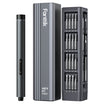
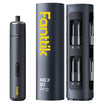
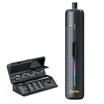
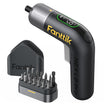
- A Simple Toolkit: Specifically a multi-bit screwdriver for loose trim or battery covers.
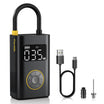
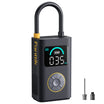
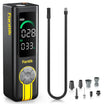
By narrowing the focus, you allow your teen to master these specific tools. Proficiency breeds calm. If they know exactly how to use the Fanttik X8 APEX EV Tire Inflator, they won't fumble with a manual pump while cars are whizzing by.
Mastering the Jump Start: Beyond the "Red and Black"
Most teenagers know that red is positive and black is negative. However, based on patterns we see in customer support and field observations, the most common failure point for novices isn't the device—it's the connection.
Vehicle battery terminals are often hidden under plastic covers or coated in a thin layer of corrosion. To a teen, the alligator clamps might look attached, but they aren't making the metal-on-metal contact required to transfer hundreds of amps.
The "Wiggle and Grip" Heuristic
We teach a simple rule of thumb: The Wiggle Test. After your teen attaches the clamps, have them try to move the clamp. If it slides easily on the terminal, it doesn't have enough "bite." They need to find a spot of bare metal or use the teeth of the clamp to scratch through the oxidation.
Expert Insight: We often suggest having your teen practice clipping the clamps onto a spare piece of bare metal (like a large bolt in the garage) first. This builds the hand strength and "muscle memory" required to operate the heavy-duty springs found on professional-grade jump starters.
Cold Weather Realities
If you live in a northern climate, you must teach your teen about lithium battery behavior. In extreme cold, lithium cells can become "sluggish," delivering less peak current than their rating suggests. We recommend teaching teens to keep the jump starter inside the warm cabin of the car during the drive, rather than in a freezing trunk. If the car has been sitting in sub-zero temperatures, they should allow the jump starter to warm up inside the car for 10–15 minutes before attempting a start.
Modeling the "Winter Power Gap"
To understand why this training is so critical, we modeled a common scenario: a teen driver in a family SUV (3.6L V6) trying to start their car in -10°F weather. The physics of winter are unforgiving.
| Parameter | Value | Unit | Rationale |
|---|---|---|---|
| Ambient Temperature | -10 | °F | Severe winter condition |
| Required Amps (3.6L Engine) | ~615 | A | Increased oil viscosity and friction |
| Battery Capacity at -10°F | 32% | % | BCI Standard derating |
| Available Amps from Car Battery | ~211 | A | Based on a standard 650 CCA battery |
| Power Gap | 404 | A | The deficit that must be filled |
Logic Summary: This model assumes a standard lead-acid battery and a 3.6L gasoline engine. At -10°F, the engine requires nearly 3x more power to turn over than it does at 80°F, while the battery provides only a third of its rated power.
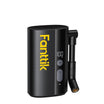
In this scenario, the jump starter isn't just a backup; it is the only reason that car will start. Our analysis shows that a high-performance unit like the Fanttik T8 Apex typically provides ~800A of sustained current, yielding a 1.98x safety margin. This means the teen has a significant buffer, but only if they achieve a solid connection.
The Tire Pressure Safety Margin
Under-inflation is the leading cause of tire failure, especially in winter when air density drops. For a typical family SUV tire (225/65R17), a drop from 35 PSI to 28 PSI is common when the first cold snap hits.
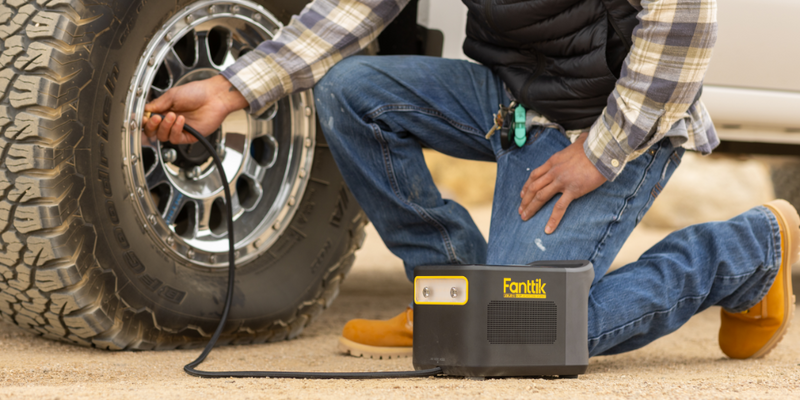
We calculated that using a portable unit like the Fanttik X8 APEX EV Tire Inflator, it takes approximately 3 minutes per tire (based on a 32 LPM flow rate model) to return to a safe pressure.
Teaching your teen to perform a "12-minute safety sweep" once a month transforms them from a passive driver into an active maintainer of their own safety. It also prevents the frantic "tire light is on" phone call that often leads to distracted driving.

The "Parking Lot Drill": A Training Framework
The NHTSA indicates that without recurring practice, skill retention for emergency procedures decays rapidly. We don't just want our kids to have the gear; we want them to have the "procedural fluency" to use it when their hands are shaking and it’s raining.
We suggest a 20-minute "Parking Lot Drill" every six months:
- The Extraction: Have them locate the gear. Is it buried under a gym bag? Can they reach it if the trunk is packed for a trip?
- The Hookup: Have them identify the positive and negative terminals. Practice the "Wiggle Test" mentioned earlier.
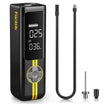
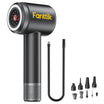
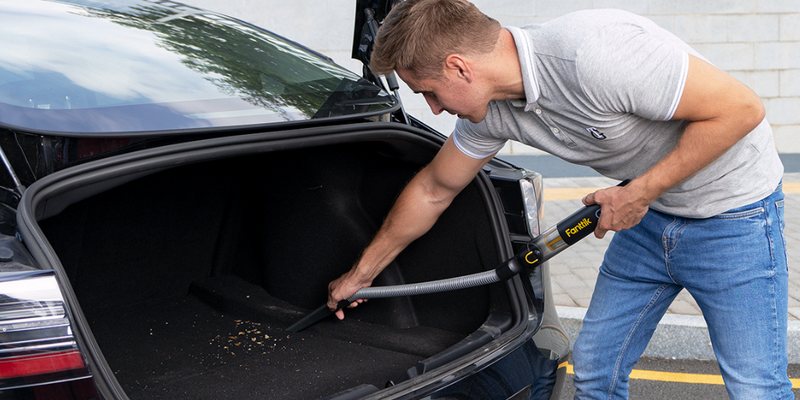
- The Inflation: Check all four tires. Have them set the digital "Auto-Stop" pressure on the Fanttik X9 Pro Portable Tire Inflator and Slim V8 Apex Car Vacuum so they understand how the technology assists them.
- The Cleanup: Use the integrated vacuum to clean the driver’s side floor mats. This makes the drill feel like a routine car-care task rather than a "scary" emergency rehearsal.
This hands-on approach is far more effective than an 80-minute lecture. As noted in Roadside Safety Drills: Preparing Kids for Emergency Stops, physical repetition is the only way to ensure the knowledge is accessible during a high-cortisol event.
Trust and Compliance: Why the Specs Matter
As parents, we are often marketed to with "lifestyle" designs and sleek packaging. However, when it comes to high-energy devices like lithium jump starters, the internal engineering is what keeps your teen safe.
We align our recommendations with the principles outlined in the industry white paper The 2026 Modern Essential Gear Industry Report: Engineering Trust in a Cordless World. Trust isn't just a feeling; it’s a result of visible compliance with standards like the EU General Product Safety Regulation (EU) 2023/988 and rigorous thermal management.
When you choose gear for your teen, look for:
- Reverse Polarity Protection: This ensures that if they accidentally swap the red and black clamps, the unit simply won't fire, preventing a dangerous spark or battery damage.
- Thermal Safety Thresholds: High-quality units will shut down if they detect overheating, protecting both the user and the vehicle's sensitive electronics.
- Clear Digital Displays: In a panic, "blinking lights" are hard to interpret. A screen that says "Ready" or "Error: Check Connection" provides the immediate feedback a novice needs.
Building the "Self-Reliance" Narrative
Our goal as parents is ultimately to work ourselves out of a job. We want to raise adults who can navigate the world with competence. By framing automotive emergency gear as a tool for autonomy rather than just a "fix-it" kit, we change the teenager's relationship with their vehicle.
They aren't just "driving the car"; they are commanding the machine. They know its limits, they know its needs, and they know how to bring it back to life when it fails. This sense of self-reliance carries over into every other aspect of their young adult lives.

Appendix: Modeling Note (Reproducible Parameters)
The data points used in this article are derived from deterministic scenario modeling. They represent expected performance under specific conditions and are not a substitute for real-world testing of your specific vehicle.
| Parameter | Value/Range | Unit | Source Category |
|---|---|---|---|
| Jump Starter Efficiency (Cold) | 0.65 | ratio | Lithium chemistry degradation model |
| Tire Volume (SUV) | ~38 | L | Geometric estimation (225/65R17) |
| Cranking Duration | 5 | s | Standard cold-weather attempt |
| Battery Derating (-10°F) | 32% of CCA | % | BCI Technical Manual |
| Flow Decay Constant (k) | 0.052 | 1/psi | Calibrated product performance |
Boundary Conditions:
- This model assumes the vehicle's alternator and starter motor are in good working condition.
- Extreme engine wear or the use of incorrect oil viscosity may increase the required amperage beyond these estimates.
- Lithium performance varies by State of Charge (SoC); always ensure the jump starter is charged above 80% for winter use.
Disclaimer: This article is for informational purposes only and does not constitute professional automotive, safety, or legal advice. Always refer to your vehicle's owner manual and the specific safety instructions provided by tool manufacturers. Roadside situations can be inherently dangerous; if you feel unsafe, prioritize your personal security and contact emergency services or professional roadside assistance.
Sources:


Leave a comment
This site is protected by hCaptcha and the hCaptcha Privacy Policy and Terms of Service apply.