







































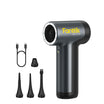



You can use bucket water in a cordless pressure washer only if the instructions for your exact model allow a bucket, siphon, or suction feed and describe the intake setup. Being cordless doesn't prove a washer can draw from a bucket. Owning a spare intake hose doesn't prove it either.
Once the manual approves it, keeping debris out comes down to the water source. Start with a clean bucket and visibly clean water, and use only the pickup hose and filter your model lists. If the water looks cloudy or you can't confirm the intake setup, don't run the washer from the bucket.
Does Your Cordless Pressure Washer Support Bucket Water?
Your washer's own instructions answer this question. A general rule for cordless washers can't. Go through these checks in order before you connect a bucket.
- Find the exact model number. Look for it on the rating label or the body of the washer, then match it to the manual or support document for that same model. A manual for a similar-looking washer, or for an older version, may describe a different intake.
- Look for clear permission to draw from a container. Manuals use different terms for it. Search for words like "bucket," "siphon," "suction," "container," or "water source." The setup is supported only if the instructions say outright that the washer can pull water from a bucket or similar container. A line about connecting a garden hose to a spigot is a different setup.
- Write down the intake parts the manual names. Note the pickup or siphon hose, any filter or screen on the hose end or inlet, and any connector or adapter. The manual's list is the setup. Don't assume your model needs a filter it doesn't mention, or that it can skip one it does.
- Check for limits on the water itself. Some instructions say what kind of water the washer can use or tell you to avoid certain sources. If yours do, those limits apply to bucket water too.

If you get through steps 1 through 3 and the instructions still don't say the washer can draw from a bucket, treat bucket feed as unapproved. Missing information isn't permission. An intake hose that happens to fit the inlet, or a product photo that shows a bucket, doesn't settle it. In that case, use the water source the manual does describe.
Pay attention to wording that limits what you can use. A manual may approve a siphon hose sold for that model but say nothing about third-party hoses. It may also show the hose with a filter attached. Either detail means the approved setup includes those exact parts, so a generic hose or a bare hose end is outside what the instructions cover.
If you own one of our cordless washers and can't find the manual for your model number, contact our support team and include that number. Then you'll be working from the instructions for the washer you actually own.
How Do You Keep Debris Out of the Intake?
With bucket feed confirmed for your model, the goal is simple. Give the pickup hose as little loose material as possible, and let the manual's own filter handle what's left. The steps below are practical precautions, not a factory-tested procedure, so your model's instructions still win wherever they say something more specific.
- Start with a clean bucket. Rinse out grit, old cleaner, and residue before you fill it. Whatever is stuck to the bottom or sides can end up in the water.
- Fill it with water that looks clean. Clear tap water is a better starting point than water that is already cloudy or has things floating in it.
- Keep visible debris out while you work. Leaves, grass clippings, and sand often end up in a bucket that sits on a driveway or lawn. Pick out anything that lands in the water before it can reach the pickup end.
- Use only the intake parts your manual lists. That means the specified pickup hose, plus any filter or screen the instructions include, installed the way they show. Don't add an unlisted filter, swap in a different screen, or invent your own way to position the hose.
- Look again before you start. If you can still see debris in the water, empty the bucket, rinse it, and refill it instead of hoping the filter catches everything.
- Watch the water level. Refill before the level drops below the end of the pickup hose. A pickup that pulls in air is a separate problem from debris. Our guide to pump air bubbles covers what air can do inside a pump.

These steps work because they cut down the amount of visible material sitting near the pickup. They can't make the water debris-free. Fine particles can stay suspended in water that looks clear, and a clean bucket won't remove them.
That's why the filter your manual specifies matters. Hydro Tek, a pressure washer manufacturer, tells owners to feed the pump filtered water. It also notes that most pump makers recommend 50 or 60 mesh screens. Mesh number is the count of openings across one linear inch of screen, so a higher number means smaller openings and finer filtering. Hydro Tek's examples come from its own garden hose, float tank, and bulk tank setups. They aren't a spec for a cordless washer drawing from a bucket, so use whatever screen your model's instructions call for.
Know when to skip the bucket. If the water is muddy or cloudy, if you can't clear the visible debris, or if you don't know what intake setup your model needs, this method isn't a good fit. Switch to a water source your manual approves.
FAQs
Can I add my own inline filter or strainer to the intake?
Only if your model's instructions call for that part or approve it. The listed intake parts are what the manual covers. An unlisted filter changes that setup in ways the instructions don't account for. If the manual names a filter but you've lost it, get the same part for your model rather than a lookalike.
Will a mesh screen stop sand and silt?
It stops the larger particles, but not everything. In a reference chart published by Hydro Tek, a 60 mesh screen lines up with openings of about 250 microns, which is roughly fine sand. Silt is listed at about 44 microns, and pollen is even smaller, so those particles can pass through a screen that coarse. A screen is a backup for clean water, not a replacement for it.
Is rainwater or water from a pond OK in the bucket?
First check whether your manual limits water sources. If it does, follow that limit. If it doesn't, judge the water by the same standard as anything else you put in the bucket. Water that is cloudy, has floating material, or leaves sediment on the bottom isn't a good choice for the intake.
Do I need a different bucket for bucket feed?
The instructions you'd check are about the hose, filter, and water, and they may not mention the bucket at all. What matters most is that the bucket is clean and holds enough water to keep the pickup end covered while you work. If your manual names a container size or type, use that.
Continue reading
 How to Choose a Sandpaper Grit Progression Before Painting
Match grits to rough, smooth-milled, or previously painted wood, advance only when old scratches vanish, and check your...
 Why a Detail Sander Leaves Scratches in the Finish
Learn how grit progression, sanding dust, and heavy pressure can mark wood, why finish makes scratches easier to...

Leave a comment
This site is protected by hCaptcha and the hCaptcha Privacy Policy and Terms of Service apply.