








































Pick a spot for your boots and pack before you crawl into the tent. If your tent has a vestibule with room for both items, and you can still open the door and get in and out, put everything there. If it doesn't, set up a separate covered spot outside, off to the side of the door. Put the boots on something that catches mud, and seal the pack's contents against rain.
Either way, wet tent gear stays at the edge of camp, not on the floor where you sleep. You keep the full sleeping area, and the mud stays at the door instead of ending up on your sleeping bag.
Choose the Gear Spot Before You Enter
Make this call while you're still outside with your boots on. The tent's layout tells you which of two setups to use.
When the Vestibule Has Room
A vestibule is the covered space between the inner tent door and the rainfly. It's the first place to try. In its winter-camping guidance, NOLS notes that a large vestibule can store gear. Size is what matters, though. Do a quick test: set the pack and boots in the vestibule, then unzip the inner door all the way. If you can climb in and out without stepping on the gear, kneeling on it, or moving it, the vestibule works. Put the pack on the side away from the door zipper. Set the boots closest to the opening, since they're the last thing you take off going in and the first thing you put on coming out.
When It Doesn't
Some tents have no vestibule. Others have one that's too small, or the pack fills the doorway. When that happens, set up a covered staging spot outside. This is a practical camp habit, not a tested standard, so adapt it to your site. A small tarp strung low beside the tent works. So does a picnic shelter or a car trunk at a drive-in site. Keep the spot to one side of the entrance so the doorway stays clear and you won't trip over gear at night. Put the boots on a ground cloth, an old tarp scrap, or a trash bag so the mud stays on that surface and doesn't mix with the dirt you walk through. Keep the pack upright and off wet ground, with its cover on. A small tarp may not keep wind-driven rain off everything, so how you pack the gear inside the pack matters (more on that below).
If you keep running short on floor and storage space, rethink tent size the next time you shop. Our guide to choosing an outdoor tent covers sizing and other key factors.
Handle Boots and Packs Differently
Boots and packs need different care. With boots, you're trying to stop mud from moving. With the pack, you're trying to keep water away from what's inside. Handle each one on its own terms:
- Boots: keep the mud in one place. Knock off loose mud and scrape the soles before you sit down at the door. Then set the boots straight onto the surface you laid out. A plastic tray or ground cloth is a practical choice, not a required item. Trays and cloths both keep dirt from spreading toward the sleeping area. It also helps to have something else to wear. The National Park Service's Denali gear list recommends dedicated camp shoes for changing out of wet boots, which also reduces your impact on vegetation. With dry camp shoes on, you can walk around camp after dark without putting the muddy boots back on.
- Pack: protect what's inside. On the same Denali list, the NPS recommends large plastic or waterproof bags for the gear inside your pack. This matters most if the pack itself isn't waterproof. The list also says that even with a rain cover, keeping your clothes and sleeping bag in plastic trash bags inside the pack is smart. Once the gear inside is sealed, the pack can sit in the vestibule or under a tarp, and the items you need tonight stay dry.

The order at the door ties this together. Sit in the doorway with your feet still outside. Pull the boots off onto the mat, then swing your feet inside or slip on camp shoes. Before you settle in, take out only the dry bags you'll need overnight, such as your sleeping bag and sleep clothes. The wet pack and wet tent gear stay outside the sleeping area, and the floor stays clean for the night.

FAQs
Is a pack rain cover enough to keep my gear dry?
Not on its own, according to the NPS Denali gear list. It recommends keeping clothes and your sleeping bag in plastic trash bags or waterproof bags inside the pack, even if you have a rain cover. Treat the cover as one layer and the inner bags as the backup for the things you can't afford to get wet.
Are camp shoes worth packing for a short trip?
They're worth it if you expect wet or muddy boots. The NPS lists a change of shoes for camp on its Denali gear list. That way you can get out of wet boots and lower your impact on vegetation. Even on a weekend trip, a light pair of camp shoes means you don't have to put cold, muddy boots back on every time you step out.
What can I use to hold muddy boots if I don't have a tray?
Use any flat, wipeable or disposable surface you already carry. A spare trash bag, a small square of old tarp, or a scrap of ground cloth all work. Fold the edges up slightly so loose mud stays on it. Shake it out away from the door in the morning.
What should I take out of the pack before I leave it outside the sleeping area?
Take only what you need overnight. That usually means your sleeping bag, sleep clothes, a headlamp, and anything you'll want before breakfast. If those items are already in their own dry bags, you can grab them in one move and leave the wet pack zipped and covered.
Continue reading
 Can You Pressure Wash Window Screens Without Damaging Them?
Learn why no single washer setting is proven safe for window screens, how to read screen and washer...
Can You Pressure Wash Window Screens Without Damaging Them?
Learn why no single washer setting is proven safe for window screens, how to read screen and washer...
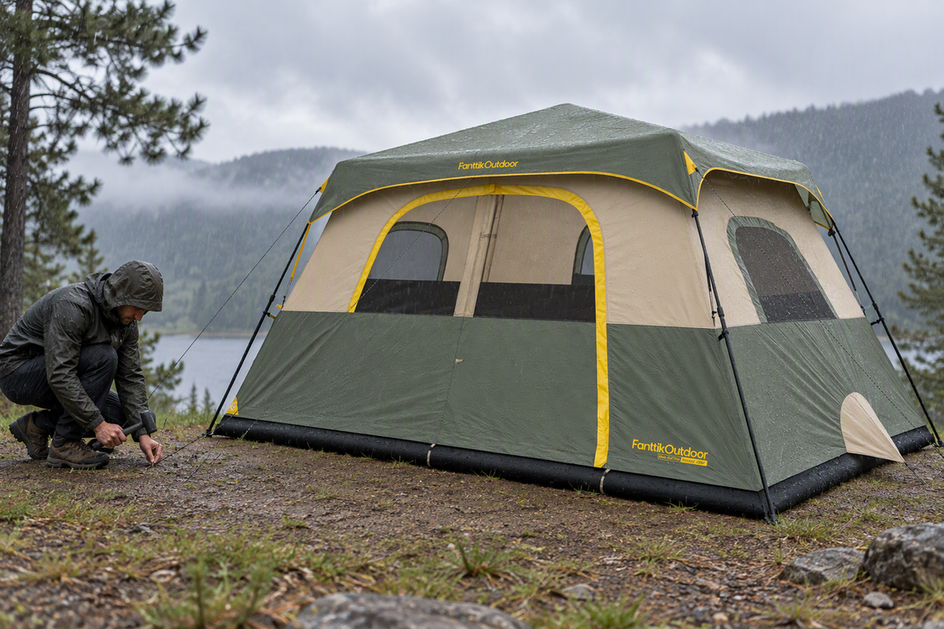 How to Set Up a Camping Tent in the Rain Without Soaking the Sleeping Area
A step-by-step rain setup guide covering site choice, part staging, body-first versus fly-first pitching, and when to move...
How to Set Up a Camping Tent in the Rain Without Soaking the Sleeping Area
A step-by-step rain setup guide covering site choice, part staging, body-first versus fly-first pitching, and when to move...


Leave a comment
This site is protected by hCaptcha and the hCaptcha Privacy Policy and Terms of Service apply.