











































If your bike tire loses pressure again after you inflate it, air is still escaping somewhere, and another top-up won't change that. A pump puts the pressure back, but it can't fix a puncture, a leaky valve, or a seal that has failed.
The fix starts with finding the leak. Look over the tire and valve first. Then follow the check that matches your setup: an inner tube or a tubeless tire.
Start With a Leak Check, Not Another Top-Up
Recurring bike tire pressure loss means something is still letting air out. These quick checks don't diagnose the problem, but they tell you where to look next:
- Scan the tread and sidewalls. Look for thorns, glass, wire, cuts, or bulges.
- Look at the valve. Check whether it sits straight, has visible damage, or looks loose.
- Confirm your setup. A tube-type tire has a separate inner tube inside. A tubeless system has no tube. The tire and rim seal together to hold the air. If you aren't sure which one you have, check before you go further, because the leak check is different for each.

For Tube-Type Tires, Find the Leak in the Tube
With a tube, you can take it out and check it directly. Then you match what you find to the tire and rim.
Locate the Leak
Park Tool's method for locating a tube leak is simple:
- Pump a little air into the removed tube.
- Hold it near your ear or close to your lips, and move slowly around the whole tube to hear or feel escaping air.
- If you can't find it that way, put the tube underwater and watch for a stream of bubbles.
- Mark the hole so you can line it up with the tire and rim.
Hole Position Points to the Cause
Where the hole sits tells you which part to check next. These are clues, not a full list of every possible cause:
- A small puncture on the outer side can come from a thorn, wire, or small nail. Park Tool recommends that you inspect the tire for debris both outside and inside, because the object can stay stuck in the tire and puncture a new tube. Wipe the inside of the casing with a rag before you feel around with your fingers.
- A hole on the inside edge, facing the rim, points to the rim side.
- A leak at or near the valve points to the valve itself or to how the tube sits in the rim.
For Tubeless Tires, Track the Bubbles
A tubeless tire has no tube to pull out, so you look for leaks while the tire is still on the rim and inflated.
Apply Soapy Water in Sections
Singletracks describes the soapy-water leak check like this:
- Mix water with a little dish soap in a spray bottle.
- Inflate the tire. Stay within the pressure range marked on your tire and rim.
- Spray or pour the soapy water over the tire and rim one section at a time.
- Note every spot where bubbles form.
Follow the Bubbles to the Likely Leak Area
- Bubbles on the tread or sidewall: look closely at that spot for a puncture or cut.
- Bubbles along the bead, where the tire meets the rim: the tire may not be sealing fully against the rim there.
- Bubbles around the valve: check the valve and its seal at the rim.
- Bubbles at the spoke nipples: this points to the rim tape (see the table below).
If you see no bubbles, the leak may still be there. Keep checking the areas above with care.
Match the Leak to the Right Next Step
Once you've found a clue, fix the part it points to instead of adding more air.
| What you found | What it may mean | Next step |
|---|---|---|
| Small tube puncture | Thorn, wire, or nail | Remove the object from the tire, then patch or replace the tube |
| Hole on tube's inside edge | Rim strip failure, protruding spoke, sharp rim edge | Inspect the rim area before fitting a new tube |
| Leak at the valve | Loose or leaky valve core, misaligned tube | Tighten the core with a valve core tool; make sure the tube sits straight |
| Tubeless bubbles at spoke nipples | Rim tape leak | Patch or re-tape the rim |
| Large shredded hole or long cut | Blowout or tire damage | Replace the tube; inspect or replace the tire |
Park Tool explains when a tube may be repairable. A small puncture often can be patched. A large shredded hole or a long cut usually can't, and you should check the tire and rim for damage too.
On tubeless setups, Singletracks notes that bubbles at the spoke nipples usually mean the rim tape needs a patch or full replacement, especially if it looks wrinkled, torn, or punctured. Schwalbe points out that latex sealant can't repair larger damage such as cuts, so don't count on more sealant to fix a big gash.
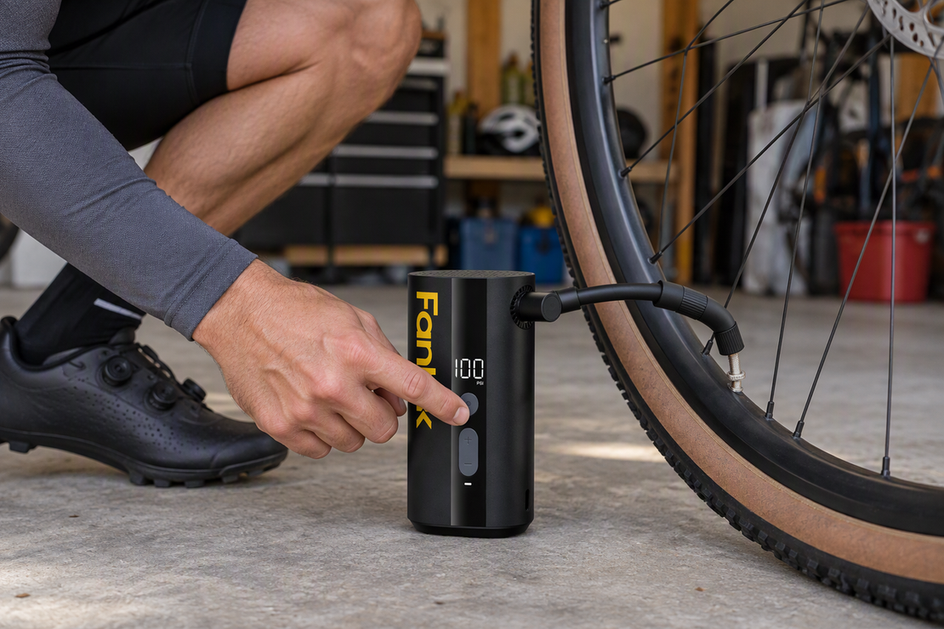
After any repair, inflate the tire to its recommended pressure. If it stays firm overnight, the fix worked. If it goes soft again, run the leak check again or have a shop look at it. To confirm the pressure, use a pump with a gauge, like the options in our bike pump collection.

When to Pause Riding and Get Help
Don't ride the bike until the tire has been checked or repaired if any of these are true:
- The tire loses air quickly.
- You can see damage on the tire, such as a cut, bulge, or exposed casing.
- The tire won't hold its proper pressure.
Take it to a bike shop if you can't find the leak, if it keeps coming back after repairs, or if the fix needs skills or tools you don't have.
FAQs
Can a tire lose air without a puncture?
Yes. The leak may be a loose or leaky valve core, a rim strip or rim tape problem, or a tubeless tire that isn't sealing at the bead. None of these leaves a hole in the tread.
Why did my new tube go flat in the same way?
The cause is probably still there. A thorn or piece of glass stuck in the tire, or a sharp spot inside the rim, can puncture each new tube. Check the tire and rim at the spot that matches the hole before you fit another tube.
Will adding sealant stop a tubeless leak?
It can help with small punctures, but it won't fix everything. Schwalbe says latex sealant can't repair larger cuts. Sealant also can't fix damaged rim tape under the spoke holes.
Do Schrader and Presta valves both leak at the core?
They can. Park Tool says a leaky valve core is more common on Schrader valves but can also happen on some Presta valves with removable cores. If yours leaks there, tighten it with a valve core tool.
Leave a comment
This site is protected by hCaptcha and the hCaptcha Privacy Policy and Terms of Service apply.