











































Choose an electric pressure washer for car detailing by matching its documented operating pressure and usable flow (GPM) to your washing setup, not by its maximum PSI rating. Then confirm the nozzle options and any foam-cannon connections actually fit your routine before you buy. A high headline number with no operating data or attachment specs is not a safe basis for comparison.
Key Takeaways
- Compare documented operating pressure and flow (GPM), not maximum PSI alone.
- Foam-cannon compatibility depends on connector type, flow, and pressure conditions, not just a soap-dispensing feature.
- Match specs to your scene: routine washing, heavy soil, sensitive finishes, and compact home setups each prioritize different things.
- Protect paint with a broad nozzle, a steady working distance, and a test spot, and stop if the surface reacts poorly.
Start With Operating Pressure and Flow, Not Maximum PSI
Many electric pressure washers list a maximum PSI on the box, but that number describes the pump's ceiling under a specific test condition. It does not tell you what actually reaches your car's paint once the water passes through your chosen nozzle, hose length, and trigger habits. The number that matters for detailing is the operating pressure the unit delivers during real use, alongside its flow rate.
Before comparing units, look for three things on the product page or manual:
- Operating pressure: the pressure delivered through the nozzle you plan to use, not just the top rating.
- GPM (flow): how much water moves per minute, which affects rinse speed and attachment behavior.
- Attachment fit: whether the nozzle and foam-cannon options are documented for that exact model.
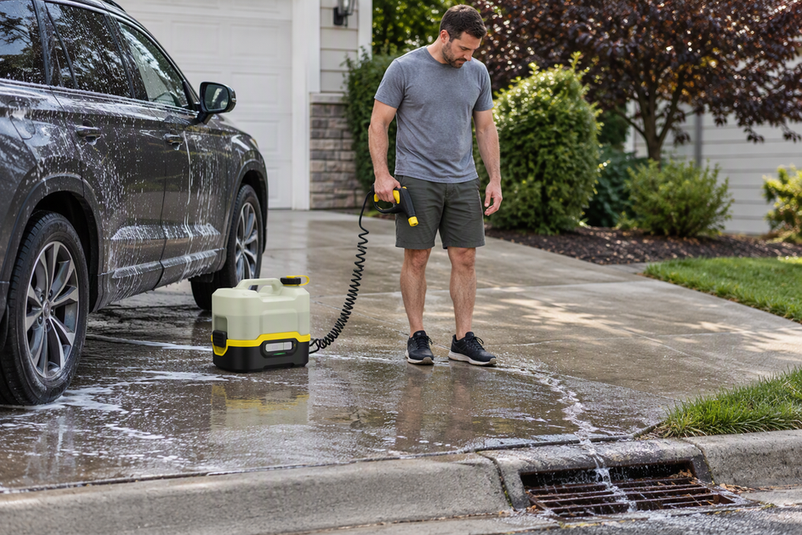
Some manuals describe several output levels instead of one fixed number. As one example, our cordless pressure washer gun documents three selectable modes at 100, 130, and 150 PSI. That layout illustrates how a spec sheet can show multiple operating points rather than a single maximum, not a fit test for full-vehicle foam-cannon detailing.
What PSI Tells You—and What It Does Not
PSI (pounds per square inch) measures pressure, and pressure alone does not tell you how a washer will clean or how safe it is on paint. The same headline PSI rating can behave very differently once you change the nozzle, move the wand closer, or hold the trigger longer.
- Maximum PSI: the highest pressure the pump can generate under test conditions, useful only as a rough ceiling.
- Operating pressure: the pressure actually delivered through your chosen nozzle at your working distance, which is what touches the car.
- Nozzle and setup conditions: spray angle, distance, and dwell time change how the same pressure feels on a painted panel.
Treat any PSI figure as a starting reference, not a promise of performance or paint safety. If a listing only shows a maximum rating with no operating data, treat that gap as a comparison limitation rather than assuming the missing number is favorable.
Why GPM Matters for Rinsing and Foam Cannons
GPM (gallons per minute) measures water flow, and it works alongside pressure rather than replacing it. A washer with strong pressure but low flow can still leave you rinsing longer, because flow is what clears soap and loosened grime off the car.

Flow also shapes how a foam cannon performs. A cannon needs a minimum flow and pressure to draw detergent through its nozzle and build the foam texture detailers expect; thick-looking foam by itself does not prove the cleaning is more effective, only that the attachment is dispensing more product. Two different things happen at once: rinsing speed depends mainly on flow, while foam texture depends on the interaction between flow, pressure, and the cannon's own orifice design.
- Rinse workload: higher usable flow clears soap and debris faster over a full vehicle.
- Foam behavior: foam consistency depends on matching flow and pressure to the cannon's documented range, not on pressure alone.
- Documentation quality: if a washer's listing does not state GPM, you cannot verify foam-cannon fit from the pressure rating alone.
Soap-foam compatibility and conventional foam-cannon compatibility are not the same claim. A machine that can spray a pre-mixed soap through an included nozzle is not automatically compatible with a separate foam-cannon attachment; that depends on the connector and flow requirements covered next.
Verify Nozzles, Hoses, and Foam-Cannon Connections
Before buying, work through the connection chain rather than assuming everything will fit together. Confirm each of the following on the product page or manual.
- Operating pressure and GPM: confirm both are documented for the mode you plan to use, not just the maximum rating.
- Nozzle options: check whether the included nozzle offers a wide, adjustable, or interchangeable pattern suitable for painted surfaces.
- Foam-cannon connector: verify the exact connector or adapter needed to attach a foam cannon, and whether one is included.
- Manufacturer compatibility notes: look for a direct statement that the model supports a foam cannon, rather than inferring it from a soap-dispensing feature.
- Water and electrical requirements: confirm the water inlet type, expected household water pressure, and the outlet or cord requirements for the unit.
- Hose reach and storage: measure the hose and power cord length against your driveway or garage layout before assuming it will reach every panel.
Pump construction also affects how a unit holds up to repeated detailing sessions; alloy choice changes how the pump handles heat and wear over time, a difference explained in our guide to brass and aluminum pump materials. If any of the six items above is undocumented for a specific model, treat that model as unverified for your setup instead of assuming it will work.
Match the Washer to Your Detailing Scenario
The right specification balance changes with the job. Use your typical washing scene, not the highest number on the box, to decide what to prioritize.
Routine Maintenance Washing
For a car that gets washed regularly, prioritize a documented operating pressure suited to vehicle use, adequate rinse flow, and a quick setup. There is little reason to pay for extra maximum PSI when the car rarely carries heavy, bonded dirt.
Heavy Road Film, Mud, or Neglected Exterior
Heavier soil responds better to flow, pre-treatment, and repeated controlled passes than to raw pressure. A high maximum PSI rating without usable flow or the right attachments will not clear bonded mud or road film any faster; give chemical dwell time and hose reach more weight in this scenario.
Sensitive, Older, Wrapped, or Uncertain Finishes
Older paint, wraps, decals, and trim call for the most controllable setup available: a broad spray pattern, conservative distance, and a test area first. If the surface condition is uncertain, that uncertainty itself is a reason to start cautious rather than to rely on a specific pressure number.
Compact Driveway or Garage Setup
For a small residential setup, hose reach, water source, outlet requirements, and storage size matter as much as pressure and flow. If a listing does not document its power cord length, hose reach, or water inlet requirements, treat that as a fit limitation for a compact space rather than assuming it will work.
| Scene | Prioritize | Avoid | Not-fit condition |
|---|---|---|---|
| Routine wash | Documented operating pressure, adequate flow | Paying for unused maximum PSI | Unit has no operating-pressure data |
| Heavy soil | Flow, pre-treatment, repeat passes | Relying on pressure alone | Low flow with high maximum PSI only |
| Sensitive finish | Broad spray, conservative setup, test area | Narrow jet nozzles | No documented surface guidance |
| Compact setup | Verified hose reach, water and power fit | Assuming reach without checking | Missing utility specifications |
Set Up the Washer to Protect Paint and Trim
Reduce the chance of finish damage with a short, repeatable sequence rather than guesswork.

- Select the least aggressive setting that can do the job, using the broadest available spray pattern before switching to anything narrower.
- Keep the wand moving at a steady working distance instead of holding it in one spot.
- Test an inconspicuous area first, especially on older paint, repairs, wraps, decals, or trim you are unsure about.
- Wash the full vehicle using the same pattern and distance you confirmed in the test step.
- Stop and change your setup if paint, trim, decals, wraps, or seals show lifting, peeling, cracking, or discoloration; do not compensate by moving closer or increasing pressure.
FAQs
Is maximum PSI the number I should use when choosing a car-detailing pressure washer?
No. Maximum PSI is a headline ceiling, not the pressure that reaches your car through your chosen nozzle and setup. Compare documented operating pressure, GPM, and nozzle options instead, and treat a listing with no operating data as unverified rather than assuming it performs at its maximum rating.
Can any pressure washer use a foam cannon?
Not automatically. A washer can support soap injection or an included soap nozzle without supporting a separate foam cannon. Before buying for foam-cannon use, confirm the connector or adapter type, the documented GPM and pressure conditions, and whether the manufacturer states foam-cannon compatibility directly.
What nozzle should I use on painted vehicle surfaces?
Start with the broadest, most controllable spray pattern that still completes the task, and avoid concentrated or pinpoint jets near paint, trim, decals, and seals. Test an inconspicuous area first, since the safest starting point depends on the surface condition as well as the nozzle.
Can a pressure washer damage older paint or a vehicle wrap?
It can, depending on the surface condition and how the washer is used rather than on pressure alone. Begin conservatively, keep the spray moving, test a hidden area first, and stop immediately if the surface lifts, peels, cracks, or discolors.
What should I do if a pressure washer does not list operating PSI or GPM?
Treat that model as unverified for a specification-led comparison rather than assuming it is adequate or inadequate. Look for current manufacturer documentation, or choose a model that publishes both its operating pressure and flow along with its attachment requirements.
Continue reading
 Car Air Freshener or Odor Removal: What Does the Smell Need?
A two-branch guide for drivers: when a cabin scent fits the goal, and how to trace a lingering...
 Signs Your Tire Pressure Is Too Low: Handling and Visual Warning Signs
Spot handling changes and visual clues of low tire pressure early, then verify exact PSI with a cold...
Leave a comment
This site is protected by hCaptcha and the hCaptcha Privacy Policy and Terms of Service apply.