












































Yes, you can use a mini car polisher on the open painted panel next to a door handle. It works when your polisher, pad, and polish instructions allow that job and the pad can sit flat and stay controlled on the paint. If the handle recess or raised trim keeps the pad from staying on the paint, don't use the machine on that spot.

Protect vulnerable edges first, test one small spot with your actual setup, and keep the pad moving.
Can You Use a Mini Polisher Around a Door Handle?
The real test is pad control. Before you switch the tool on, set the pad on the paint beside the handle and move it through the area you plan to polish. If the pad stays flat on painted panel the whole time, that patch can be machine polished. If it tips onto the handle, rides up on trim, or can only reach the recess at an angle, leave that spot alone or work it by hand.
Your setup also has to match the job. Polish instructions are written for specific products. 3M's Perfect-It EX Machine Polish data sheet, for example, says that polish is designed to remove compound swirl marks. Its directions call for an air or electric polisher at 1200 to 2000 RPM with a specific 3M grey foam polishing pad. Those directions cover that one product. They don't approve a different mini polisher, and they don't mean the polish will fix other defects. Check what your own polish says it is for, and what equipment it calls for. If your defect or tool doesn't fit those directions, don't go ahead based on general mini-polisher advice.
Protect the Edge and Test One Small Area
These steps cover only the small patch beside the handle. They are not a full-car polishing routine.
- Mask the boundary. 3M's collision-repair masking guidance says to mask critical edges and protect nearby moldings with trim masking tape. That guidance was written for paint repair, not polishing. Still, taping the handle surround and any sharp painted edge helps mark where the pad should stop. Use only a tape that is safe for your car's finish.
- Pick one inconspicuous painted spot. Use the exact polisher, pad, and polish you plan to use on the rest of the area. A test done with different products tells you little. If you're unsure which foam to start with, our guide to polishing pad types explains how cutting, polishing, and finishing pads differ.
- Keep the pad flat and moving. 3M's documented polishing procedure sets the pad flat on the surface, uses north/south and east/west crosshatch passes, and polishes small areas at a time. Its speed and pressure settings belong to that 3M system, so use your own tool's instructions for those. Stop right away if the pad starts climbing onto the tape, trim, or handle.
- Wipe and inspect. Wipe off the residue and look at the spot closely under good light. If the finish looks better and the edge is untouched, continue on the same painted patch with the same setup. If you see new marks or edge contact, or the defect hasn't changed, stop and rethink the setup before you polish any more. Our car polisher test spot guide covers how to inspect the result and when to retest.

FAQs
Does a test spot prove the whole door is safe to polish?
No. A good result only tells you about that spot with that pad and polish. Curves, body lines, trim, and the area right at the handle edge can behave differently, so check pad control again wherever the surface changes.
Can I use a polisher's listed speed and pad with any mini polisher?
No. Listed speeds and pads, such as the 1200 to 2000 RPM range and named pad on 3M's EX Machine Polish sheet, belong to that product's directions. Follow your own polisher's and polish's instructions instead of borrowing numbers from a different system.
Can I polish the door handle itself?
The handle may not be the same material as the painted panel, so advice for paint doesn't automatically apply to it. Only polish the handle if the handle's care guidance and your polish instructions specifically cover that surface. Otherwise, keep it taped and out of the pad's path.
Continue reading
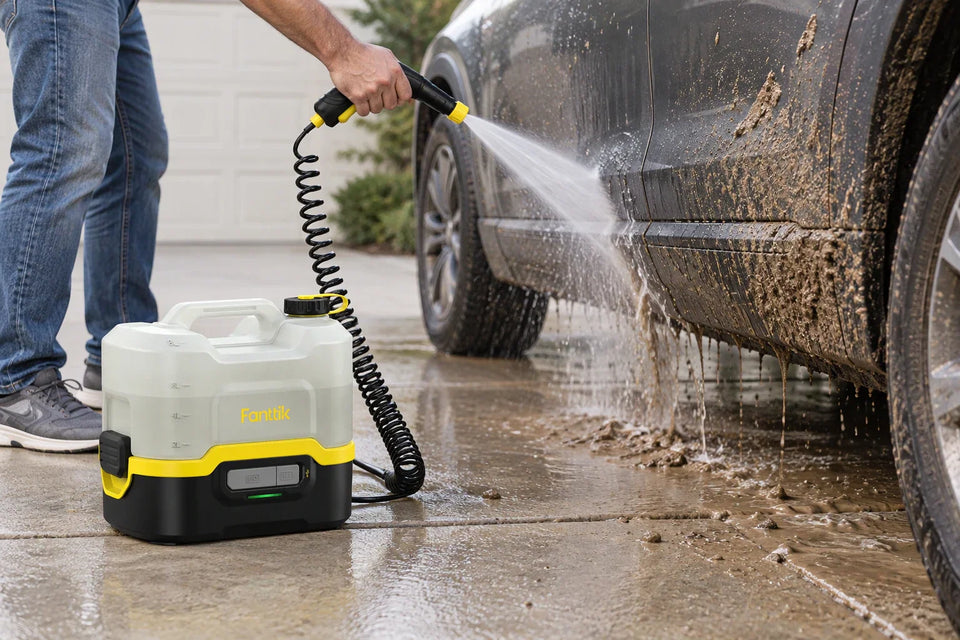 Rinse Camping Mud Off a Car Without Driving Grit Into the Paint
Soak and rinse dried camping mud off without touching the paint, repeat until no loose grit is left,...
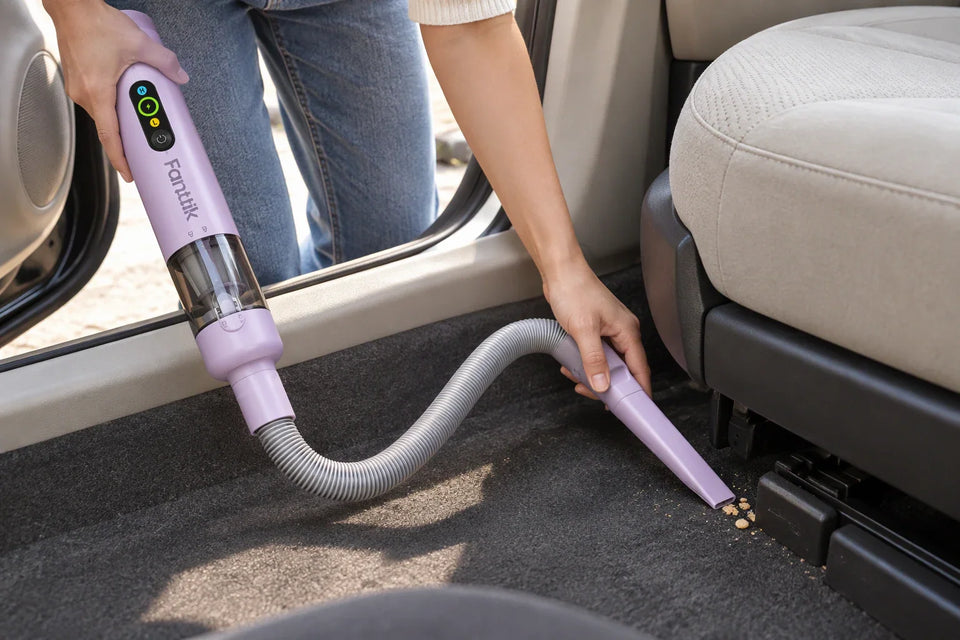 Choosing a Car Vacuum for Cleaning Under Seats and Along Seat Rails
Fit the nozzle tip to the narrowest seat gap, add hose or wand reach only after it clears,...
Leave a comment
This site is protected by hCaptcha and the hCaptcha Privacy Policy and Terms of Service apply.