












































Polishing cannot treat every water spot, and whether a mini polisher is suitable remains unverified by paint-care sources. A polisher can only level surface etching once all mineral deposits are gone. Most car water spots start as mineral residue, which requires gentle cleaning rather than immediate mechanical abrasion.

So begin with the gentlest method, take every bit of mineral residue off, and think about polishing only if a mark is still there afterward. If the etching may go through the clear coat, polishing won't fix it.
Can a Mini Polisher Remove Car Water Spots?
General paint polishing applies only to marks that remain after all mineral residue has been completely removed. Detailing sources evaluate general machine polishing rather than specific mini-polisher performance. One detailing guide emphasizes that you must remove mineral contamination before polishing.
For marks that are likely etched, the guide suggests full decontamination, clay, and polish to level the surface, but all mineral contamination must be removed before polishing. If spots have etched entirely through the clear coat, polishing cannot remove them and the panel requires refinishing.
A paint maker's view points the same way. Sherwin-Williams' automotive refinish troubleshooting guide lists a damp-cloth wipe followed by polishing as one repair for water spotting. Its next options are compound and polish, then sanding with 1500-2000 grit paper, then refinishing. That guide was written for refinish work. It doesn't test mini polishers or give settings for a home tool. Treat polishing as one possible step, not a promise that any one tool will erase your spot.
How Can You Tell Residue From Etching?
You usually cannot distinguish residue from etching simply by looking at the finish. Instead, you identify the damage by working through cleaning steps and checking how the mark reacts. A water spot is either dried mineral deposits or physical etching that damages the paint surface.
According to the detailing guide's diagnosis, you cannot determine the type of mark or its severity until you attempt removal. If left untreated, mineral deposits can etch into the clear coat over time.
Appearance alone won't settle it. The refinish guide describes water spotting as circles with raised edges, or whitish spots shaped like water droplets. Both residue and etching can fit that description, so use it to recognize a water spot, not to diagnose one.
Instead, read the results of each cleaning step:
- It came off during gentle cleaning. It was removable residue, and you're done.
- It's still there after one wipe. The cause is still unknown. One failed wipe doesn't prove etching or justify polishing.
- It's still there after all mineral contamination is gone. The detailing guide calls this likely etching. "Likely" still isn't certain.
What Should You Try Before Polishing—and When Should You Stop?
Go from mildest to strongest, and only move up when a spot survives the step before. The detailing guide gives this order:
- Rewash or use a quick detailer. For fresh spots, the guide says to rewash or use a quick detailer first, or use a waterless wash. If the spots are gone, stop here.
- Use a dedicated water spot remover. If washing didn't work, the guide says you'll need an acidic water spot remover. Most acidic shampoos are too weak. Follow the product's instructions exactly. These are some of the strongest chemicals used in detailing, and misuse can harm you or the vehicle. Before you buy one, check its safety data sheet (SDS). Make sure it doesn't contain hydrofluoric acid or ingredients that form it. Stubborn spots may need more than one round.
- Make sure the minerals are fully gone. Do not polish until all mineral contamination has been removed, ensuring you are treating only residual surface marks rather than abrading over dried deposits.
- Consider decontamination, clay, and polish for marks that are likely etched. The guide treats this as the step that levels the surface. Use only a polisher, pad, and compound whose instructions cover automotive paint, and follow those directions for setup and use.
When to stop: quit before abrasive work if you still aren't sure what caused the mark or what shape the paint is in. Also stop if the damage might go through the clear coat. More polishing can't fix through-clear-coat etching. A qualified paint-care pro can check the finish before anything else is removed.
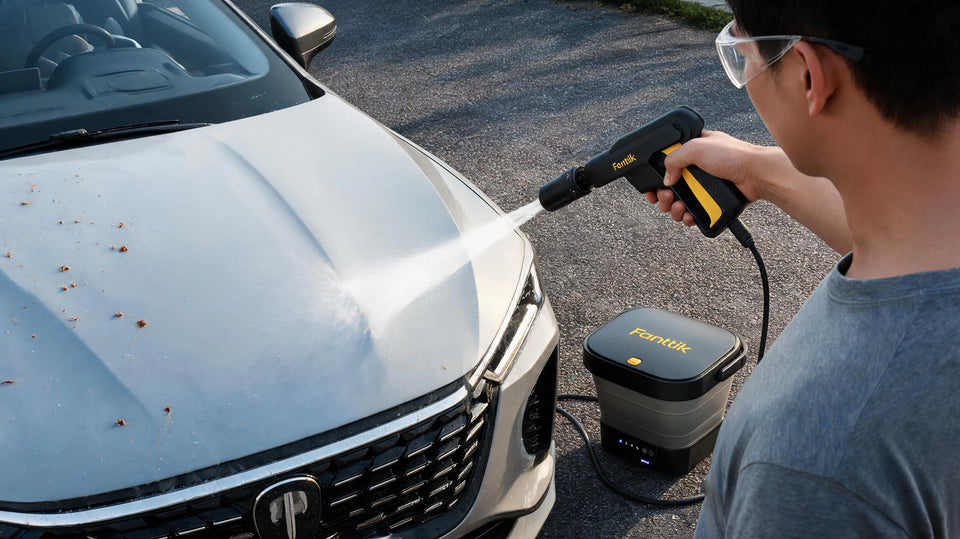
Prevention is part of the fix. The refinish guide suggests washing in the shade and drying right away. Spray choice matters too. Our guide to the right pressure washer nozzle covers rinsing paint without blasting it.
FAQs
Why do water spots form after washing in the sun?
The refinish guide lists washing in direct sunlight as one cause of water spotting. Water that hasn't been dried can leave its minerals behind as it evaporates. Washing in the shade and drying right away helps prevent this.
Is freshly painted paint more at risk of water spots?
Yes. The refinish guide names water touching a finish that hasn't fully dried or cured as a cause. It advises keeping water off new paint and drying it right away with a soft cloth if it gets wet.
Do I have to fix an etched spot right away?
Not necessarily. Once mineral deposits are thoroughly cleaned off, you can take time to evaluate the remaining mark and decide whether gentle polishing or professional paint inspection is appropriate.
Will an acidic car shampoo remove stubborn spots?
Usually not. The detailing guide says most acidic shampoos are too weak for water spots that survive a rewash. It suggests a dedicated water spot remover, used according to its instructions.
Continue reading
 Car Clicking but Not Starting: When a Jump Starter Is and Isn't the Answer
Clicking is a clue, not a diagnosis. Find out when a portable jump is a fair emergency try,...
 Using a Heat Gun to Loosen Adhesive: Check Both Surfaces First
Heat softens some adhesives, but a household item is only a candidate after its adhesive, both bonded sides,...
Leave a comment
This site is protected by hCaptcha and the hCaptcha Privacy Policy and Terms of Service apply.