








































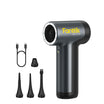



Neither option wins every time. Use a portable tire inflator when it's already with you and you can run it where the car is parked, so you skip a trip just for air. Use gas-station air when you're stopping there anyway or care most about a quicker fill.

Whichever you pick, the job is the same: fill to your vehicle's recommended pressure and confirm it with an accurate gauge. If a tire keeps losing air, another top-up won't fix it.
Which Is Better for a Routine Tire Top-Up?
Deciding between them comes down to two everyday situations: topping off where your car already sits, or using high-volume air during a stop you are already making.

When the Inflator Is Already With You
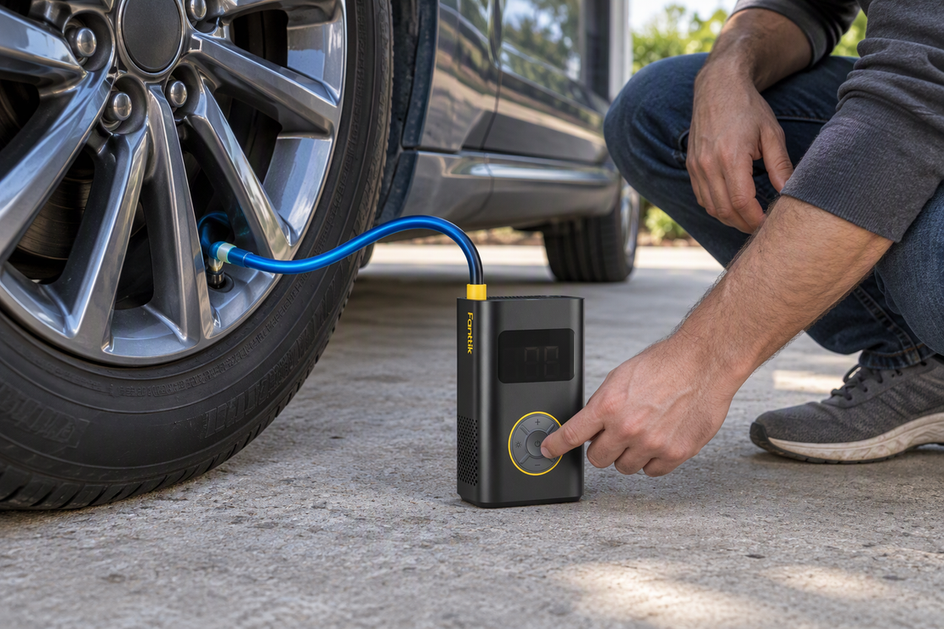
A portable inflator makes the most sense when it's charged or powered, within reach, and usable where the car sits. Then you can check and fill in the driveway instead of planning a stop just for air. Consumer Reports put it simply: topping off at home is more convenient. That advantage only holds if your unit covers your vehicle's pressure target. Our tire inflator fitment guide lists PSI ranges and tire sizes by model. Keep in mind that an inflator's maximum PSI is just its ceiling. It isn't the pressure to set, and it doesn't tell you how fast the tire fills. If the unit turns on but won't add air, work through our inflator troubleshooting steps before you head to a station.
When You Are Already Stopping for Air
Station air fits best when you're at the pump anyway, or when fill speed matters more than avoiding the stop. In Consumer Reports' comparison, the tested cordless inflators took longer to add a few PSI than a plugged-in compressor found at a service station. Those cordless units needed around 40 seconds to a little over a minute, which CR called a reasonable range. That finding compares those specific inflators with that type of compressor. It doesn't show that every gas-station air pump beats every portable inflator. Station air is a weaker fit when you'd have to drive out of your way just to add a couple of PSI.
How to Check and Set Tire Pressure With Either Option
The air source changes nothing about the target or the check. Follow the same sequence at home or at the pump:
- Find the right number. NHTSA says to use the vehicle manufacturer's recommended pressure, listed on the vehicle label or in the owner's manual. Don't use the pressure printed on the tire itself. The sidewall number is not your fill target.
- Use an accurate gauge. Read each tire before you add air so you know how far below the target it is.
- Account for tire temperature. NHTSA's guidance for an accurate gauge and cold-tire measurement is to measure when tires are cold, or to compensate for the extra pressure in warm tires. A cold tire is one that hasn't been driven on for at least three hours.
- Add air, then recheck. Fill in small amounts and read the tire again with your gauge until it matches the vehicle's target. If the inflator or station pump shows its own reading, confirm the final number with your gauge.
Repeat for each tire, including any tire that looked fine. One low tire is easy to miss by eye.
Where Should You Top Up?
Where you fill has a direct effect on how trustworthy your reading is. At home, a car that has sat for three hours or more meets NHTSA's cold-tire definition, so your gauge reading lines up with the recommended pressure without any adjustment. That makes a driveway top-up the simpler way to get an accurate number.
At a gas station, you've usually just driven there, so the tires are warm and read higher than they would cold. If a tire is low after driving, NHTSA advises adding air to the vehicle label's recommended cold pressure level and then checking the reading again once the tires are cold.
Whichever spot you choose, park where the inflator's cord or the station hose reaches all four valve stems. That way you don't have to move the car halfway through the job and warm the tires up again. Neither of these tire inflation options helps much if you can't take a clean reading at every wheel.
When Is a Top-Up Not Enough?
A top-up only replaces air that has slowly escaped. NHTSA advises that you consult a tire service professional if a tire shows either of these signs:
- It fails to maintain proper inflation pressure.
- It makes noise or causes vibration.
If either applies, stop treating the problem as routine maintenance. Adding air again only replaces what was lost and doesn't address why the tire is losing it. If you have aluminum wheels and keep losing a few PSI, our article on aluminum wheel bead leaks explains one cause and when it needs tire service. The diagnosis and repair still belong with a tire shop, whichever air source you've been using.
FAQs
Does a portable inflator's maximum PSI tell me how fast it will fill a tire?
No. Maximum PSI is the highest pressure the unit is rated to reach. It doesn't tell you the inflation speed or the pressure your tire needs. Fill time is a separate measure, which is why Consumer Reports timed how long its tested cordless units took to add a few PSI instead of relying on the rated maximum.
Can I trust the pressure reading on a gas-station air pump?
Use the station's display as a guide while you fill, then confirm the result with your own accurate gauge. NHTSA's pressure guidance is built around an accurate gauge, and checking with the same gauge every time keeps your readings consistent between home and the station.
Is a portable tire inflator the same thing as a shop air compressor?
No. They're different tool categories with different setups and operating guidance, so advice for one doesn't automatically apply to the other. This comparison covers portable tire inflators and gas-station air for routine top-ups only. If you use a shop compressor, follow that equipment's own instructions and still set the tire to the vehicle's recommended pressure.
Leave a comment
This site is protected by hCaptcha and the hCaptcha Privacy Policy and Terms of Service apply.