












































Usually, no. For routine gravel driveway cleaning, a rake, a broom, and a gentle hose rinse do the job without moving stones around. Skip the pressure washer completely if your gravel shifts underfoot.
A small, careful test can make sense for one stubborn spot on gravel that looks well set. Even then, nothing promises the stones will stay put. Oil stains need their own treatment, because blasting water at them is not a proven fix.
Should You Pressure Wash a Gravel Driveway?
Pressure washing is the wrong first choice for most gravel driveways. Gravel is loose by design, so a strong jet can scatter stones, cut grooves, and drive silt into the firm sub-base underneath. Once silt clogs that packed layer or the jet exposes it, you have a repair job instead of a clean driveway.
Use these conditions to decide:
- Stones shift when you walk or drive on them: Don't pressure wash. Loose gravel is where displacement is most likely.
- The problem is leaves, dust, mud, or general grime: You don't need a pressure washer. Gentler cleanup, covered below, handles it.
- One stubborn spot on gravel that looks settled: A limited test is an option, not a sure thing.
- An oil stain: Use a stain-specific method instead of water pressure.

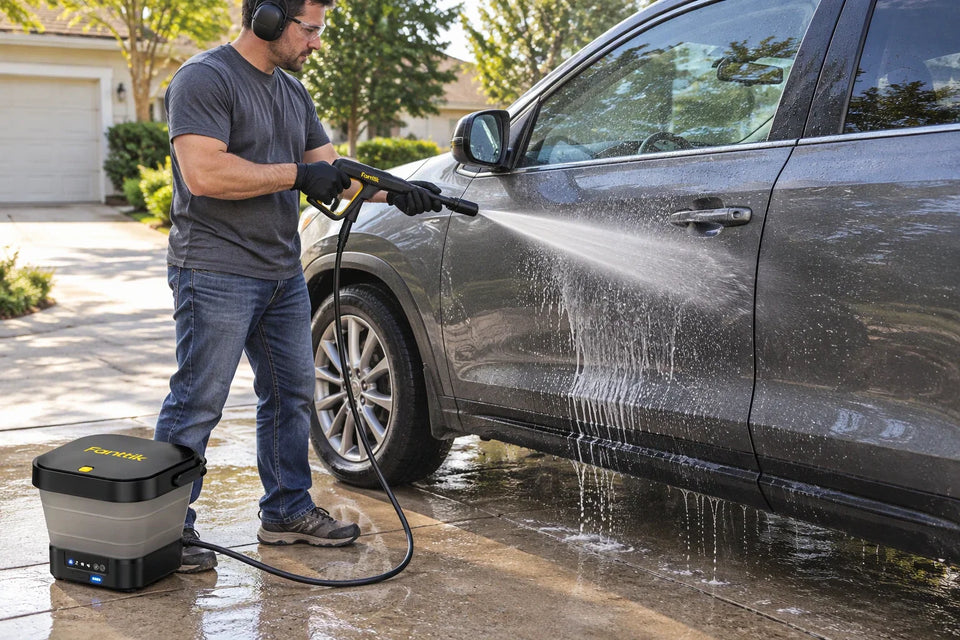
For that stubborn spot, the same supplier suggests a cautious small-area test. Start in a corner. Use the lowest pressure that moves the dirt and a wide fan nozzle. Keep the lance well back from the surface and angled, never pointed straight down. The guide warns against concentrated or rotary "turbo" nozzles on loose stone, and it recommends goggles. No universal PSI setting exists here. If stones start moving or the surface starts to groove during the test, stop and switch to hand methods.

If your driveway is actually pavers with sand joints, that's a different surface with different risks. Our guide on pressure washing pavers without losing sand covers that case.
Choose a Cleaning Method for the Dirt You Have
Pick the method based on what you are removing. Surface dirt clears with hand tools and a gentle rinse, while oil stains require a dedicated stain-specific approach.
Surface Debris and General Grime
Raking and rinsing handle routine dirt. For leaves, litter, mud, and tire marks, the supplier recommends you rake or brush and rinse gently:
- Clear leaves, litter, and weeds first.
- Loosen dirt with a stiff broom.
- Rake the gravel to break up compacted, silty patches and turn the clean sides of the stones face up.
- Rinse with a garden hose on a broad spray. Work in small sections, starting at the highest point and moving downhill so dirty water runs ahead of you.
- Rake the surface level again and top up thin areas with matching stone.
Avoid bleach-based and acidic cleaners. The guide notes they can discolor or etch natural stone.
Oil Stains Need a Stain-Specific Approach
Your best option depends on how fresh the oil is and how far it has spread. The supplier lays out oil-specific cleanup options:
- Fresh spill: Blot it, don't scrub. Scrubbing spreads the oil and pushes it deeper. Cover it with oil-absorbent granules, leave them as long as the product directs, then sweep them up and dispose of them according to the packaging.
- Older marks: Use a degreaser labeled as suitable for your type of stone. Test it first, use as little as you can, and keep runoff out of drains and soil.
- Heavily contaminated patch: Lift the stained stones and the oily material under them, dispose of them properly, and fill the gap with clean, matching gravel.
Replacing stones is often the simplest fix. A couple of shovelfuls of fresh gravel can look new, while scrubbing porous stone may still leave a gray shadow.
FAQs
Does it matter which direction I rinse a gravel driveway?
Yes. Start at the highest point and work downhill in small sections. That way dirty water runs ahead of you and off the drive, instead of back over areas you already cleaned.
What should I do if the gravel looks thin after cleaning?
Rake the surface level, then top up thin spots with stone that matches what you already have. Raking also helps spread the remaining gravel evenly before you add more.
How long does gravel driveway cleaning take?
The supplier estimates a front drive often takes about a morning. A larger drive done one stage at a time usually takes no more than a dry weekend. You rarely need to lift and wash the stones by the wheelbarrow load.
Do I need eye protection when washing gravel?
If you use a pressure washer at all, wear goggles. Water under pressure can kick up grit and small stones, and the supplier guide recommends goggles for this job.

Leave a comment
This site is protected by hCaptcha and the hCaptcha Privacy Policy and Terms of Service apply.