












































The gentlest way to vacuum dry beach sand out of a car is to do it in stages. Start by lifting out larger debris and shaking the removable floor mats outside the car. Then vacuum the mats on their own, and finish with the fixed carpet, seats, seams, and trim, using a tool that suits each surface.

This order matters because sand is abrasive. If you drag a nozzle through a full load of grit, you can push it deeper into fabric or scrape it across plastic trim. Clearing the bulk first and keeping tool contact light makes car sand cleanup faster and easier on your interior.

How to Vacuum Dry Sand from a Car in Stages
Remove Loose Debris and Shake Out Mats
Before you switch the vacuum on, get the easy material out. This method is for sand that is loose and dry. If the sand is still damp, see the FAQs below before you start.
- Park somewhere you can open every door. A driveway or a spot away from the beach parking lot keeps fresh sand from blowing back in.
- Pick out the large stuff by hand. Shells, pebbles, wrappers, and bottle caps can jam a narrow nozzle or rattle through a hose. Grab them first.
- Pull out all removable floor mats. Include the cargo-area mat if your vehicle has one.
- Shake or tap each mat outside the car. Hold it upside down and knock it against a tire or post so the sand falls on the ground, not back onto your carpet.
- Vacuum each mat separately. Lay it flat on a clean surface, vacuum the top in slow, overlapping passes, then flip it and do the back. Set the clean mats aside until the cabin is done.
Doing the mats outside first removes much of the sand from the cabin before you touch any fixed surface. It also means you aren't tracking grit from a dirty mat onto carpet you just cleaned.
Vacuum Carpet and Upholstery in Sections
With the mats out, move to the fixed carpet. Work one small area at a time, such as the driver footwell, then the passenger side, then each rear footwell. Use slow passes so the vacuum has time to pull grit up rather than push it along. If sand stays stuck in the carpet pile after a pass, a light brush can loosen it so you can vacuum again. Avoid hard scrubbing, which tends to work grit deeper into the fibers.
Seat fabric gets the same light approach. Use an upholstery tool if your vacuum has one, and keep the pressure gentle. This matches the basic care advice in Subaru's owner's manual, which recommends vacuuming loose seat-fabric debris and using a vacuum to clear dust and dirt from the cabin. That guidance covers general dirt and debris, not beach sand in particular, but it sets a sensible baseline for fabric seats.
The same manual also gives a next step when vacuuming alone isn't enough. If dirt is caked on the fabric or hard to remove with a vacuum, Subaru says to use a soft brush, then vacuum again. For leftover sand, that means brushing gently to loosen the grains, then picking them up with another vacuum pass. Your own vehicle's manual is the place to confirm the care steps for your exact seat material.
Reach Seams, Trim, and Cargo Areas Carefully
Sand settles where you can't see it: seat seams, the gap between the seat and center console, seat tracks, door pockets, and the edges of the cargo floor. A narrow crevice tool works well along seams and tight gaps. Around hard plastic trim, a soft brush can sweep grains toward the nozzle so you don't need to rub the tool across the surface.
Keep the nozzle lifting grit, not dragging it. Don't force a hard tip into a gap that is narrower than the tool, and don't scrape it along door panels or the dash. If a spot is out of reach, brush the sand toward an open area and vacuum it from there.
Finish with the cargo area, since it often holds the most sand from beach chairs, coolers, and bags. Vacuum the cargo floor in sections the same way as the cabin carpet, then check the corners and any storage wells. Once everything is clean, put the mats back in.
One limit applies to whatever vacuum you use. Stick to the debris types and attachments its own manual allows. Not every vacuum is built for every job, so don't assume yours can handle a use its manual doesn't list.
FAQs
Can I vacuum damp sand with this method?
No. This method is for dry, loose sand only. Damp sand clumps and can be harder on a vacuum, and some vacuums are not made for moisture at all. Use a vacuum on damp material only if its manual clearly permits that kind of debris and use. Otherwise, let the sand dry before you start.
What should I do if vacuuming leaves sand in seat fabric?
Try a gentle brush-and-vacuum follow-up. Subaru's manual advises a soft brush followed by another vacuum pass when dirt is caked on or hard to remove. Brush lightly to loosen the grains rather than scrubbing them in, then vacuum the area again. Repeat once or twice if needed.
Should I empty the bin or clean the filter after vacuuming sand?
Follow your vacuum's own manual for both. Bin capacity, cleaning intervals, and whether the filter is washable all vary by model, so don't assume one rule fits every vacuum. For a closer look at how filters work and how to look after them, see our guide to car vacuum filter care.
Does filtration matter when vacuuming fine sand and dust?
Beach trips often leave fine dust along with sand, and a vacuum's filter decides how much of that fine material it holds onto. If you're curious how filter types differ, our article on HEPA filtration in car vacuums explains what that filter type is designed to catch.
Continue reading
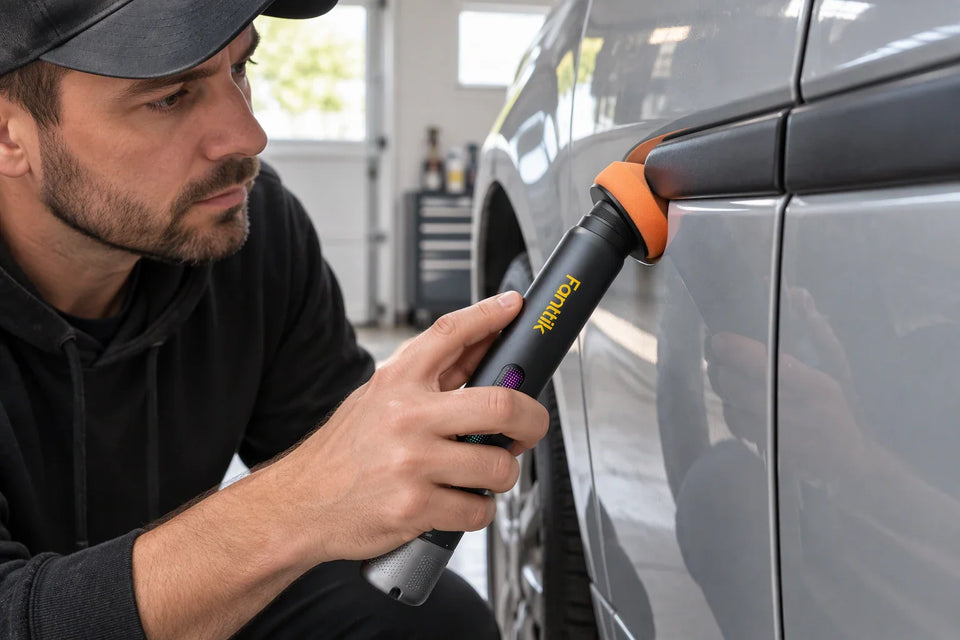 When Not to Use a Mini Polisher on Tight Car-Body Areas
Narrow panels aren't automatically off-limits. This guide covers pad control, thin paint, exposed edges, deep scratches, and what...
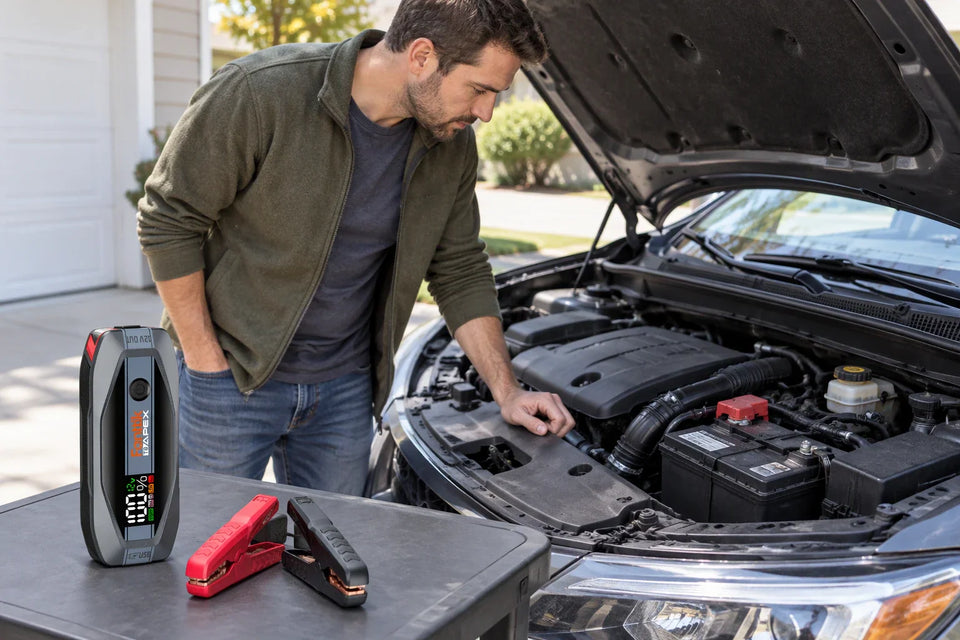 Before You Use a Portable Jump Starter: Check the Car and Battery
Two checks before any boost: the vehicle and starter manuals must agree, and the battery and no-start must...
Leave a comment
This site is protected by hCaptcha and the hCaptcha Privacy Policy and Terms of Service apply.