












































Use a portable jump starter only after two checks pass. First, your vehicle manual has to permit a jump start, and your starter has to match the vehicle's low-voltage battery system. Second, the battery can't be damaged, frozen, or leaking, and you need a clear reason for the no-start.
If either check fails or you can't tell, don't connect the clamps. Stop and get qualified help, such as roadside assistance or a shop. Trying a boost anyway can turn a dead battery into a bigger problem.
Check the Vehicle and Jump Starter Manuals First
Start with the manuals, not the battery, because vehicles do not all share the same low-voltage setup. Consumer Reports notes that some EVs use an unconventional setup like a small lithium-ion battery and directs owners to model-specific manual instructions. If you drive an EV and it won't power up, our guide to EV start-up problems covers safe 12V battery checks and when to call for help.
Go through these steps in order before you touch the hood:
- Find the low-voltage system in the exact vehicle manual. Look up your model's jump-starting or roadside emergency section. It should tell you what kind of low-voltage battery the vehicle has.
- Confirm the manual permits a jump start. Look for the vehicle maker's own procedure. If the manual says not to jump the vehicle, or describes a different recovery method, follow that instead.
- Note any required connection points. Some manuals name a specific ground point or terminal. The 2020 F-150 manual directions say to use only a 12-volt supply and to connect the negative cable only to the designated ground point. That rule applies to that truck. Your vehicle may be different.
- Compare with your jump starter's manual. Check the voltage and the type of vehicle your starter is built for. Then compare those with what your vehicle manual requires.
- Make the go/no-go call. Move on only if the vehicle allows a jump start and both manuals clearly match. If they conflict or either one is unclear, don't connect the starter.

The matching step matters because a wrong connection can be dangerous. In the same F-150 section, Ford warns to connect batteries only with the same nominal voltage. It also says that using jump leads incorrectly or completing the procedure incorrectly can make the battery explode and cause severe injuries. That's why a mismatch or an unclear instruction counts as a no-go, not a guess.
Use the manual that came with your vehicle. Ford's online F-150 manual says the owner's manual originally supplied with the vehicle is the primary source for that vehicle. It adds that the online version may differ slightly or describe features your truck doesn't have.
These steps show whether your vehicle allows a jump start. They don't prove that a particular jump starter will work. Only the starter's own documentation can tell you that. If you're still deciding between a jump starter and cables, our comparison of jump starters and jumper cables explains when each one makes sense.
When Battery Condition or the No-Start Means Stop
If any of the conditions below applies, don't boost the battery. Stop and get qualified help:
- Damaged battery. In a Consumer Reports article, AAA's automotive director warns that trying to jump-start a damaged or frozen battery could cause significant damage to the vehicle and the people around it.
- Frozen battery. The same AAA warning covers frozen batteries. For one vehicle, the F-150 manual includes Ford's frozen-battery warning. It says never to charge that truck's 12-volt battery once it has frozen and that a frozen battery should be replaced. It also notes that a discharged battery can freeze at about 32°F.
- Cracked or leaking case. AAA Club Alliance says not to jump a battery whose case is cracked or leaking.
- No-start with no clear cause. If you can't explain why the car won't start, don't use a boost to test your guess. The safer choice is to get it diagnosed.
These stop conditions matter because the battery is already a hazard. Ford's battery hazard warning for the F-150 says the battery contains sulfuric acid. It adds that work on the battery or electrical system can cause serious chemical burns, fire, or electric shock. A damaged or leaking case makes those risks easier to trigger.
The same F-150 warnings list more hazards that apply even when the battery looks fine. Ford says batteries normally produce explosive gases. It tells owners to keep flames, sparks, and lighted materials away from the battery, to shield their face and eyes when working near it, and to provide proper ventilation. Ford also warns that the battery contains acid that can splash. If acid touches skin or eyes, the manual says to flush with water for at least 15 minutes and get prompt medical attention. These warnings come from one truck's manual, so check the safety section of your own vehicle's manual too.
A visual check helps, but it has limits. Looking at the battery can reveal cracks, bulging, or leaking fluid. It can't confirm what's happening inside. A battery that looks normal isn't proven healthy.

FAQs
Can a battery look normal and still be unserviceable?
Yes. A visual check can catch outside damage or leaks, but it can't rule out problems inside the battery. If the case looks fine but you still suspect the battery, have it tested by a shop or roadside technician before you try a boost.
What if the vehicle manual and jump-starter manual do not clearly match?
Don't connect the starter. Consumer Reports' chief mechanic recommends following the owner's manual to the letter. His advice is "If in doubt, seek help." Contact the vehicle or starter maker for model-specific guidance, or call roadside assistance.
Does a car that will not start prove that its battery is the problem?
No. A no-start alone doesn't show the cause. AAA Club Alliance notes that if a car still won't start after a jump attempt, the cause could be the starter, the alternator, a blown fuse, a bad battery cell, or an electrical fault. At that point, AAA recommends calling roadside assistance or getting the car towed to a shop for diagnosis.
Continue reading
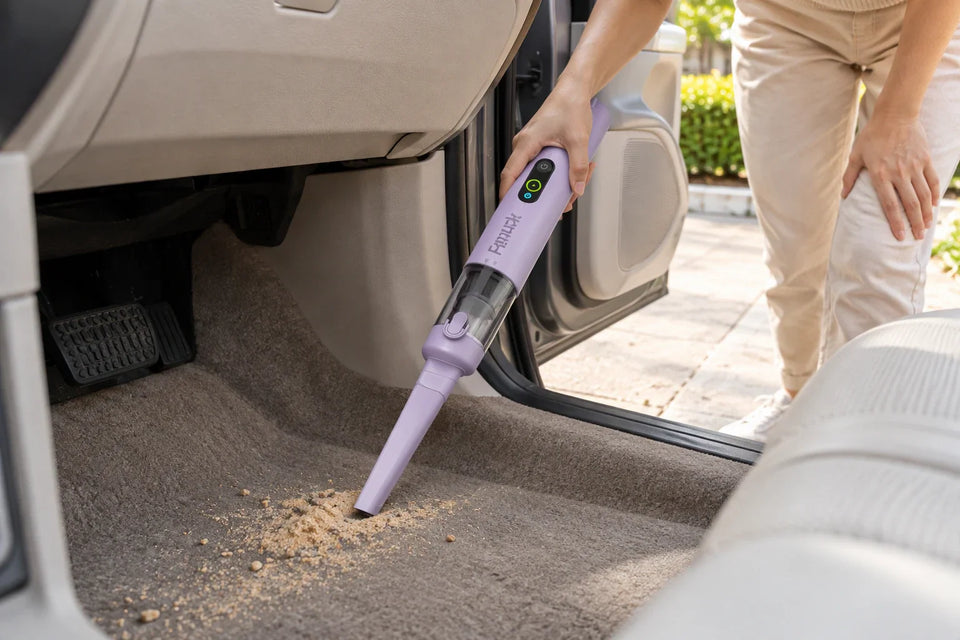 How to Vacuum Dry Sand from a Car After the Beach
A staged, surface-by-surface method for removing loose beach sand from mats, carpet, seat fabric, seams, trim, and the...
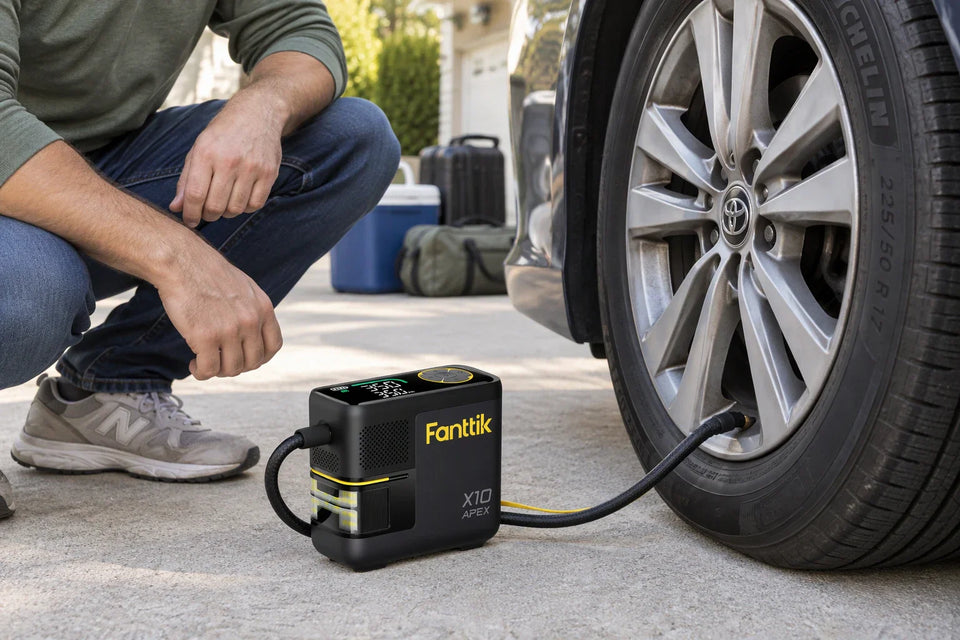 A Tire Is Low Before a Road Trip: Top Up or Stop and Inspect?
How to decide before departure: when a low tire just needs air to the door-label PSI, and when...
Leave a comment
This site is protected by hCaptcha and the hCaptcha Privacy Policy and Terms of Service apply.