












































Low tire pressure before a road trip doesn't always mean a problem. If the tire looks undamaged and this is the first low reading, add air up to your vehicle's recommended PSI and check it again. If you see a cut, crack, or bulge, or the tire keeps losing air, don't leave yet.
Adding air won't fix a leak or damage. In those cases, delay the trip and have a tire professional inspect the tire first. Look at the tire's condition and whether the pressure keeps dropping, not at how quick a top-up would be.
When to Stop and Get a Tire Inspected
Before a long drive, NHTSA's road trip tire checklist says to inspect the tread and sidewalls and to take the vehicle to a tire professional if you find damage. Delay departure if any of these apply:
- Visible damage: cuts, punctures, bulges, scrapes, cracks, or bumps on the tread or sidewall. Go to a tire shop before you set out. Don't plan to inflate the tire and keep an eye on it.
- Pressure that won't hold: NHTSA lists visible damage and pressure loss as reasons to stop using a tire or to see a tire service professional. If the tire drops again after a top-up, more air is not a repair.
- Rapid loss, or new noise or vibration: The U.S. Tire Manufacturers Association says increased air loss, noise, or vibration could point to an internal condition that could cause the tire to fail. USTMA recommends having a tire service professional inspect it right away.
There's no official PSI drop or leak rate that marks the line between safe and unsafe. Treat any repeat loss as the signal. A tire that looks normal can still hide damage, so one good reading after adding air doesn't show that the cause is gone. If the pressure behavior or the tire surface changes, use the inspection path. If you've just had new tires mounted and one keeps going soft, our new-tire leak diagnosis guide explains what the shop should check.

When a Top-Up Is Reasonable and How to Check It
A top-up makes sense when the tire is simply below its target, shows no damage, and hasn't been losing air over and over. Follow NHTSA's vehicle-recommended cold PSI and top-up guidance:
- Find the right target. Look for the Tire and Loading Information label on the driver's door edge or post, or check the owner's manual. Don't use the number printed on the tire. NHTSA notes that the sidewall number is the maximum pressure the tire can hold, not the recommended pressure for your vehicle. If the label is hard to find, this guide shows how to find the vehicle's cold PSI.
- Measure cold when you can. A cold tire hasn't been driven for at least three hours. If you already drove to the air pump, fill to the recommended cold pressure anyway. The tire may end up slightly low once it cools, but NHTSA says that's safer than driving on a badly underinflated tire.
- Add only the shortfall. Subtract your gauge reading from the recommended PSI. That number is how much air to add. Then check the pressure again.
- Check the other tires and the spare. Bring each one to its own target. Front and rear values can differ if your label lists different numbers.
- Recheck cold before you leave. If you filled a warm tire, check it again cold, ideally the next morning before departure. If that tire has dropped again, switch to the inspection path above.

If a gauge reading shows the same uneven tread you can see on the tire, this guide on reading tire wear patterns explains what shoulder and center wear can mean.
FAQs
Can a TPMS warning turn off after I start driving?
Yes. NHTSA explains why a cold-morning TPMS light can come on and then go out: a tire that's slightly low can drop below the warning threshold overnight and then rise again as it warms. A light that went out doesn't clear the tire. If the warning comes and goes, inspect the tires and check the pressure with a gauge.
Does TPMS replace checking tire pressure with a gauge?
No. NHTSA says TPMS is not a substitute for regular tire maintenance. It also notes that underinflated tires are hard to spot by eye, so use an accurate gauge. A system warning means a tire is already significantly underinflated. If your dashboard and your gauge disagree in cold weather, see why TPMS and inflators disagree.
Do the front and rear tires always use the same PSI?
Not always. NHTSA says pressures should match except when the vehicle calls for different front and rear amounts. Use the value printed on your door label or in the manual for each axle, and don't assume uneven readings are an error.
Continue reading
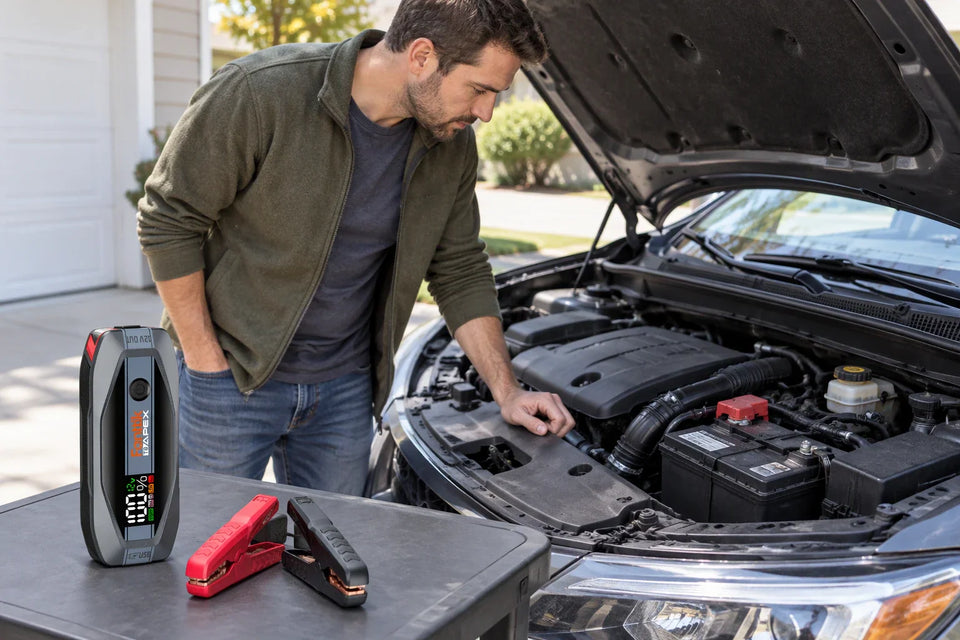 Before You Use a Portable Jump Starter: Check the Car and Battery
Two checks before any boost: the vehicle and starter manuals must agree, and the battery and no-start must...
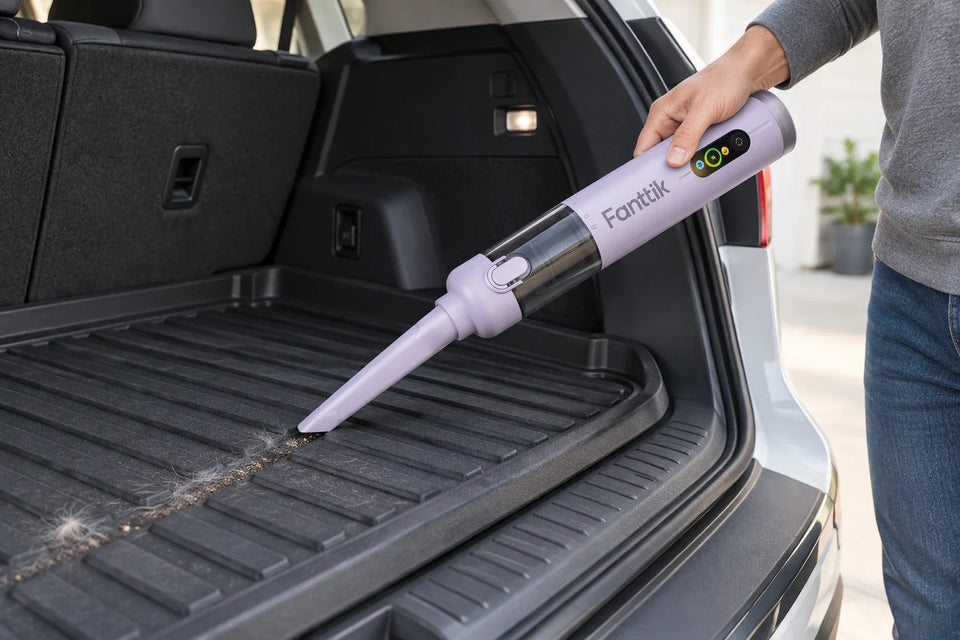 Vacuuming Dog Hair and Dry Debris from a Car Cargo Liner
A practical dry-cleaning sequence for cargo liners covered in dog hair, with nozzle choices for smooth, ribbed, and...
Leave a comment
This site is protected by hCaptcha and the hCaptcha Privacy Policy and Terms of Service apply.