









































Use the cold tire pressure listed on your vehicle's tire and loading information label, not the maximum PSI stamped on the tire sidewall. That placard sits on the driver's side door edge, post, or B-pillar on most vehicles, and it lists the pressure your car was engineered to run on each axle. The sidewall number is a ceiling for the tire itself, not a target for your vehicle.
If you can't find the placard right away, your owner's manual carries the same figures. The rest of this guide covers exactly where to look, why the sidewall maximum can work against you, and what to check the next time you add air.
Which PSI Should You Use: The Placard or the Sidewall?
Your vehicle's placard pressure is the number that matters for everyday driving. The tire sidewall maximum only tells you the tire's upper pressure limit at its rated load, and it isn't meant to be your daily setting.
| Vehicle placard pressure | Tire sidewall maximum PSI | |
|---|---|---|
| Source | Vehicle manufacturer, via the tire and loading label | Tire manufacturer, molded into the sidewall |
| Meaning | Engineered operating pressure for that tire position | Maximum cold pressure at the tire's stated maximum load |
| Correct use | Set your cold tire pressure to this value | Reference point only, not a daily target |
| If you swap them | You're using the manufacturer's intended setting | You risk overinflating relative to the vehicle's setting |
Tire industry guidance draws this same line: the placard gives you the vehicle's recommended tire pressure, while the sidewall figure is simply the tire's maximum rating regardless of which vehicle it's mounted on. Treating the higher sidewall number as safer is a common mix-up, and it's the one this guide is meant to fix.
Where to Find the Tire Pressure Placard
The Tire and Loading Information Label carries your vehicle's true recommended pressure. Check the driver's side door area first, then fall back to the owner's manual if the sticker is gone.
Start at the Driver-Side Door Edge or B-Pillar
Look for the label on the driver's side door edge or on the driver-side doorjamb or B-pillar. On newer vehicles it's typically called a B-pillar. If your vehicle doesn't have one, or the door edge is too narrow to hold it, the label may sit on an inward-facing surface near the driver's seat instead.
Read the Correct Axle and Load Entry
Many vehicles list different front and rear pressures, plus a separate spare-tire figure. Match each tire to its own entry instead of applying one number to all four positions, and don't skip a loaded-condition line if the label includes one.
If the Sticker Is Missing
A damaged or missing label doesn't mean you're stuck guessing. Check the owner's manual and alternate locations NHTSA describes near the driver's seating position. Don't substitute the tire sidewall maximum or a number you remember from a previous vehicle.

Why Sidewall Max PSI Is Not Your Daily Target
The tire sidewall number and the vehicle placard measure two different things. Mixing them up means running your tires above the pressure your vehicle was designed for.
The Sidewall Number Describes the Tire
The sidewall marking shows the tire's maximum cold inflation pressure at its stated maximum load, not a recommended operating pressure. It's also separate from how quickly a tire fills; a higher maximum rating doesn't mean faster inflation, just a higher ceiling.
The Placard Describes the Vehicle Setting
The placard reflects the pressure your vehicle's engineers chose for the tire positions listed, intended to keep the car's pressure balance the way it was designed. It's a vehicle-specific reference, not a universal number that applies to every car wearing that same tire.
What Overinflation Can Change
Running tires at the sidewall maximum instead of the placard value can push them above what your vehicle calls for. That's associated with reduced traction and abnormal wear, and it can leave a tire more vulnerable to cuts or impact damage from potholes and curbs. Handling and ride feel may also shift when a tire runs harder than the vehicle expects, though the exact effect varies by vehicle and tire. For a broader pre-trip check that covers pressure along with other tire concerns, see our road trip tire safety guide.
How to Check and Adjust Tire Pressure
Check pressure when the tires are cold, then match each one to the correct placard value before adding or releasing air.
- Find the placard and note the cold PSI for the front axle, rear axle, and spare.
- Wait for the cold condition: the vehicle should be parked at least three hours, or driven less than one mile at moderate speed.
- Remove each valve cap and measure with a reliable gauge.
- Add or release air only while the tire is still in that cold condition; never bleed pressure from a tire that's warm from driving.
- Recheck each tire after adjusting to confirm it matches the placard value.
- Replace the valve caps, and note any tire that keeps losing pressure between checks.
A tire pressure monitoring system only warns you once a tire is already significantly low, so this gauge check, done monthly on all four tires and the spare, still catches slow leaks earlier than the dashboard light will.
What to Verify After Replacing Tires
A new tire brand doesn't change which pressure to use. Verify the size, load rating, and placard match before you inflate.
A Brand Change Is Not the Same as a Fitment Change
Switching to a different tire brand alone doesn't authorize using that tire's sidewall maximum as your target. As long as the replacement matches the approved configuration, the vehicle placard stays your starting reference.
Verify Size, Load, and Wheel Changes
Check the replacement tire's size and load capacity against the approved replacement tire size your vehicle calls for. A nonstandard tire or wheel choice needs more verification than simply comparing sidewall numbers.
When to Get Fitment Help
If the replacement doesn't clearly match the approved size and load configuration, or the correct pressure is still unclear, get input from a qualified tire professional rather than guessing. Repeatedly adding air doesn't resolve a fitment mismatch.
Tire Inflator vs Shop Air Compressor: Which Fits This Task?
Pick the air source that matches where you're working, not its maximum PSI rating. Either one is fine once it's set to the placard pressure and checked with a gauge.
Choose a Portable Inflator for Access
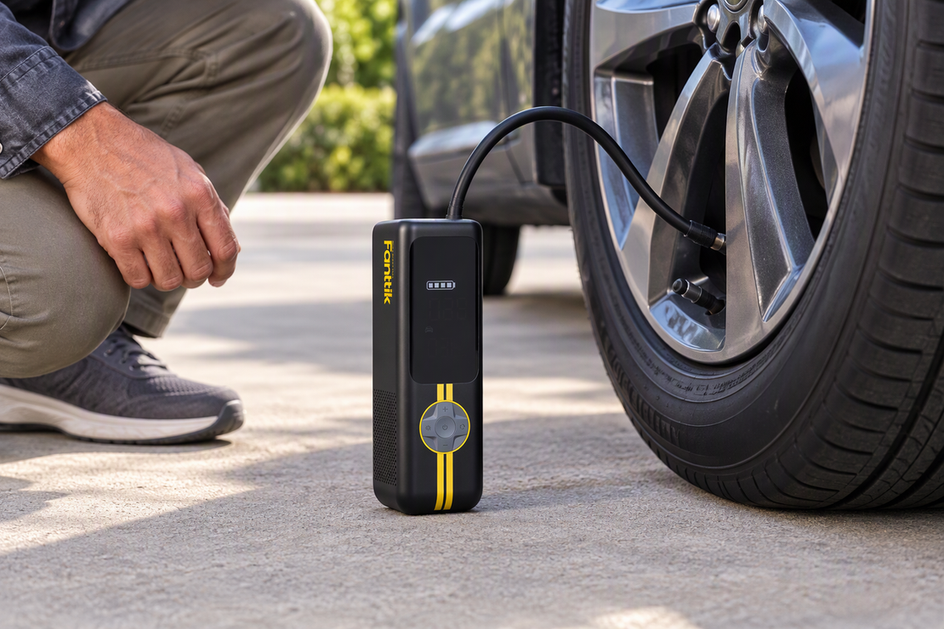
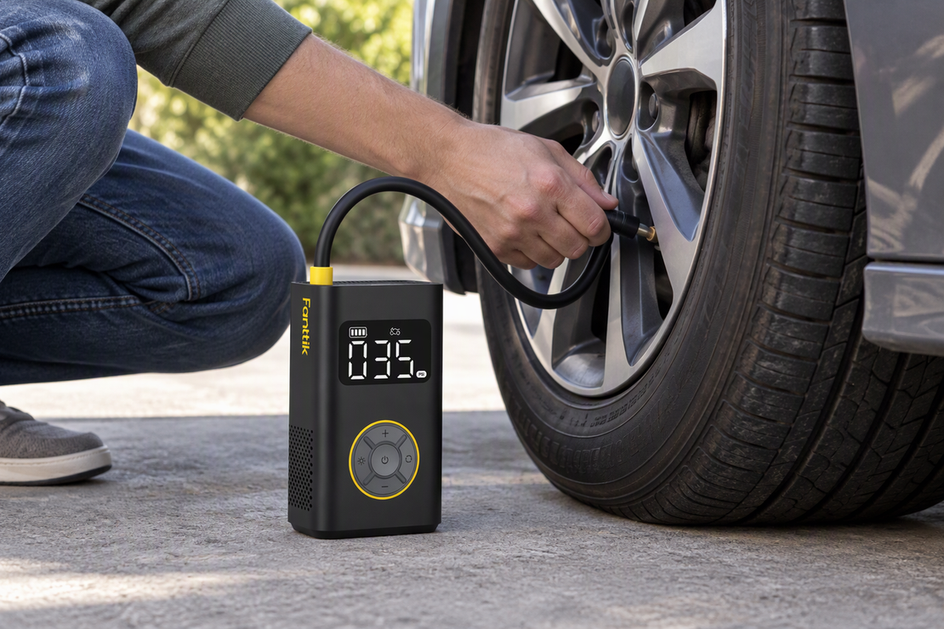
A portable car tire air pump makes sense when you need air in a driveway, parking lot, or roadside stop and portability matters more than plugging into shop air. Our tire inflators collection lists portable options, and a compact plug-in model works well as one dedicated unit for the car.

Choose Shop Air When Workshop Access Already Exists
If you already have a shop compressor set up, there's no need to switch tools just for tire checks. Neither option is inherently faster or more accurate; the tool just needs to reach the tire and hold a steady reading.
The PSI Rule Stays the Same
Whichever air source you use, set the target from the vehicle placard, not the tool's maximum PSI rating. Verify the result with a reliable gauge and follow the cold-tire timing described above.
When to Stop Inflating and Get Tire Service
Stop relying on inflation alone and get qualified tire service if a tire shows visible damage, keeps losing pressure between checks, or the replacement fitment question from above hasn't been resolved. Adding air won't fix a puncture, a damaged sidewall, or a mismatched tire and wheel combination. A tire shop can diagnose the problem and confirm the pressure that's actually correct for your setup.
FAQs
What happens if I inflate my tire to the sidewall maximum?
Wait until the tire is cold, then compare it with the applicable placard value and let air out to reach that number. Don't bleed pressure from a tire that's still warm from driving, since cold-tire checking gives an accurate reading and hot pressure normally runs higher than the cold spec.
Where is the tire pressure placard if I cannot find it on the B-pillar?
Check the driver's side door edge or post, or an inward-facing surface near the driver's seat if your vehicle lacks a B-pillar. If it's still missing or unreadable, the owner's manual lists the same cold pressures for each axle.
Does the recommended pressure change with the tire brand?
Not on its own. A different brand doesn't shift the target away from the vehicle placard as long as the size, load rating, and wheel fitment match what your vehicle calls for. If any of those are nonstandard, a tire professional can confirm the correct approved configuration and pressure.

Leave a comment
This site is protected by hCaptcha and the hCaptcha Privacy Policy and Terms of Service apply.