







































Start with the trailer's tire information placard, certification label, owner's manual, or the tire manufacturer's documentation, not the number molded into the sidewall. That source gives you the cold operating pressure for your exact tire size and load range. Treat the tire's maximum cold pressure as your target only when the applicable trailer or tire documentation actually specifies that number.
Key Takeaways
- Use the trailer's placard, manual, or manufacturer guidance as your pressure source; the sidewall maximum is not automatically the operating target.
- Underinflation increases casing flex, heat, and internal stress under load, which raises the risk of internal tire damage over a highway trip.
- ST tires and passenger-car tires draw their cold PSI from different documents, so a door-jamb number should never be applied to a trailer tire.
- Check every tire cold, before towing, and compare the reading against the documented target rather than judging by appearance.
- Stop and get manufacturer or tire-shop verification if the specification is unclear, mismatched, or if you see damage or recurring pressure loss.
What Pressure Should You Use on an ST Trailer Tire?
The controlling number comes from the trailer's own documentation, matched to the exact tire installed on it. The sidewall maximum is a ceiling, not a default setting, and only becomes your target when that documentation says so.
Start With the Trailer's Cold-Pressure Specification
Look at the trailer's tire information placard, certification label near the frame or tongue, owner's manual, or the tire placard or manual reference that vehicle and trailer manufacturers use to specify cold inflation pressure. Match whatever number you find to the tire size, load range, and construction actually mounted on the axle, since a placard written for a different original tire will not apply cleanly after a tire change. When the trailer's own guidance is missing or illegible, the trailer manufacturer's optimum pressure instructions or dealer records are the next place to check before you inflate anything.
How the Sidewall Maximum Fits
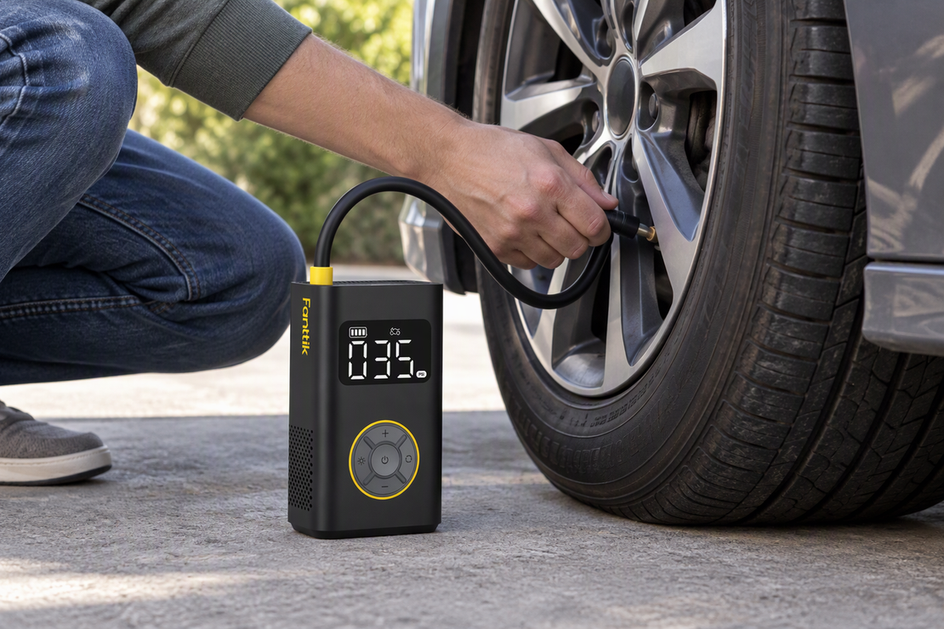
The pressure molded into an ST tire's sidewall is the maximum permissible inflation pressure for that tire, tied to a stated maximum load capacity, not automatically the trailer's recommended operating pressure. Some ST tires do list ST load and pressure data showing how much load the tire can carry at several cold pressures, and in those cases the maximum listed pressure can be the correct target for full-load use. Once you have the right number, checking it with a reliable gauge or a portable tire inflator makes it easy to confirm and correct pressure before you hit the road.
Why Underinflation Raises Flex, Heat, and Internal Stress
Lower pressure lets the tire's casing deflect more under the same trailer load, and that extra flex generates heat inside the tire. Repeated heat and stress cycles raise the odds of internal damage building up before a failure shows on the outside.

What the ST Service Category Changes
ST on the sidewall marks a special-trailer service category with different load and application characteristics than a passenger-car tire, but construction still varies from one ST model to the next. Trailers spend most of their mileage fully loaded and moving in a straight line at highway speed, so a small pressure shortfall gets compounded over hours of steady flexing rather than the varied city-and-highway mix a passenger car usually sees.
Where Inter-Ply Shear Fits—and Where Evidence Stops
Inside a tire's casing, layers of cord and rubber move slightly against each other every time the sidewall flexes; engineers sometimes describe that relative movement as inter-ply shear. It's a useful mental model for why repeated flexing stresses the internal structure, but it is a general mechanical concept rather than a measured, quantified rule specific to every ST tire. What the available evidence does support is more direct: underinflation and sidewall flex rise together, and that flex feeds the heat and stress that can lead to irregular wear or internal damage. The practical response is the same either way: keep the tire at its documented cold pressure and investigate any gap between that target and your actual reading.
ST Trailer Tires vs. Passenger-Car Tires: Which Pressure Source Applies?
Both tire categories need a cold pressure check, but they don't share a pressure source. Passenger cars use the vehicle's own placard or manual; trailers use the trailer's placard, manual, or manufacturer guidance matched to the installed tire.
| Factor | ST Trailer Tires | Passenger-Car Tires |
|---|---|---|
| Pressure source | Trailer placard, certification label, or manufacturer guidance | Vehicle door-jamb placard or owner's manual |
| Sidewall maximum | Permissible ceiling tied to a stated load; sometimes the target when documentation specifies it | Rarely the recommended pressure; almost never the target |
| Cold-check timing | Before towing, tires stationary at least three hours | At least monthly and before longer trips |
| What changes the number | Installed tire size, load range, and actual trailer load | Vehicle model, tire size, and factory recommendation |
Neither category should borrow the other's number. A tire placard or manual still tells passenger-car owners where their pressure comes from, while a trailer's tire information stays tied to the trailer itself. Owners who tow with the same vehicle for both a car and a trailer sometimes keep a single inflator on hand for either job, and options sized for both jobs are grouped in our tire inflator bundles collection.
How to Check Cold Trailer Tire Pressure Before Travel
Read the trailer's documentation first, then measure every tire cold and compare it against that target. Resolve any mismatch before you tow, rather than adjusting on the fly.
- Locate the trailer's placard, certification label, manual, or manufacturer guidance and note the specified cold pressure for the installed tire.
- Confirm the tire size, ST marking, load range, and maximum cold-pressure marking on the sidewall match what the documentation expects.
- Let the trailer sit so tires can check tires when cold, meaning no driving for at least three hours, before you measure.
- Measure every tire with a reliable gauge or car tire air pump, and inflate or bleed to the documented target rather than guessing from appearance.
- Inspect tread, sidewalls, and valves for damage or irregular wear, and check pressure before towing on every trip, not just occasionally.
If a reading comes up low between trips, restoring it with an appropriately sized option from our tire inflators collection keeps the tire near its documented target rather than running underinflated until the next scheduled check.
When Should You Stop and Verify the Trailer Setup?
Stop before highway travel any time the pressure source, tire size, or load information is unclear or mismatched, or when the tire itself shows damage, recurring loss, or overload signs. The next step is manufacturer or qualified tire-shop verification, not a guess.
Stop for an Unclear or Mismatched Specification
- The placard, tire markings, load range, or trailer manual disagree with each other.
- A replacement tire's size, load range, or construction doesn't clearly match the trailer's original specification.
- You can't determine which documented cold target applies to the tire installed now.
When any of these apply, verify replacement tire pressure with the tire or trailer manufacturer, or a qualified tire shop, before towing.
Stop for Damage, Pressure Loss, or Overload Signs
- Visible sidewall or tread damage, or signs of tire damage such as irregular wear patterns.
- One tire repeatedly loses pressure between checks.
- The trailer's load, or the tire's condition, may exceed what the documented setup was built to handle.
In any of these cases, adding air repeatedly and continuing to tow is not a substitute for finding the cause. The pressure decision itself stays simple once the setup checks out: use the documented cold target, matched to the exact tire and load on the trailer, measured cold, with no unresolved damage or loss.
FAQs
Can a different ST tire size or load range use the same pressure?
Not automatically. A different tire size, load range, construction, or brand can change the load-versus-pressure relationship, so pull that exact tire's load and inflation data and confirm it against the trailer's requirements before reusing an old PSI number.
What should I do if one trailer tire keeps losing pressure?
Don't keep towing on repeated top-offs. Recurring loss points to a possible puncture, valve, or wheel problem, and it needs inspection by a qualified tire professional before the trailer goes back on the highway.
Can I replace an ST trailer tire with a passenger-car tire?
Not as a routine substitution. ST is a special-trailer service category with its own load and application requirements, so a replacement tire needs to match the trailer manufacturer's specified size, load range, and construction rather than swapping in a passenger-car tire.
Continue reading
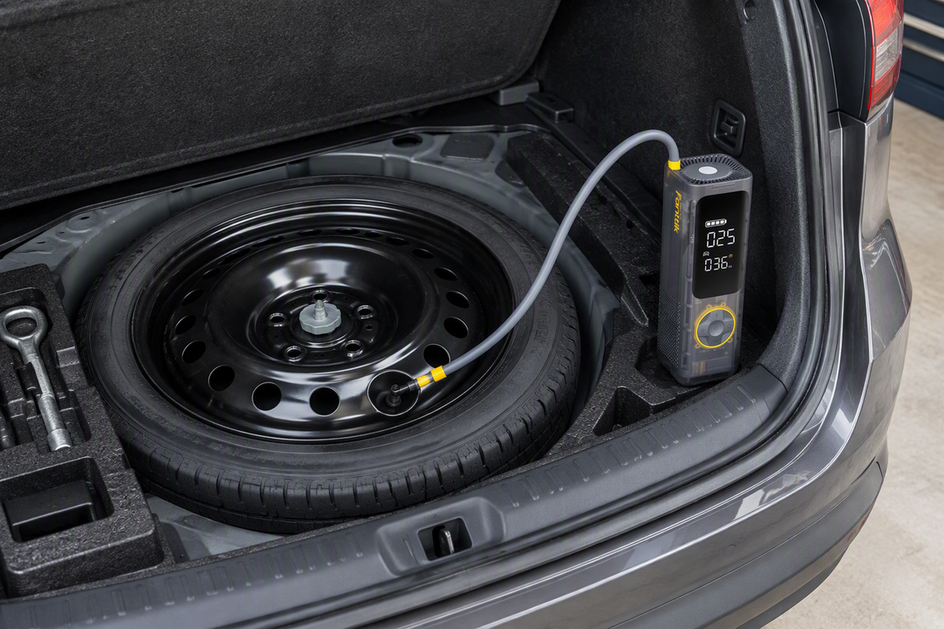 Spare Tire Pressure Maintenance: How to Check and Inflate Space-Saver Donut Tires
A complete walkthrough for locating your donut spare's correct PSI, verifying cold pressure, inflating safely with a portable...
Tire Sidewall Max PSI vs Vehicle Placard: Where to Find Your True Recommended Pressure
Sidewall PSI marks a tire's pressure ceiling; the vehicle placard sets your actual driving pressure. Here's how to...
Spare Tire Pressure Maintenance: How to Check and Inflate Space-Saver Donut Tires
A complete walkthrough for locating your donut spare's correct PSI, verifying cold pressure, inflating safely with a portable...
Tire Sidewall Max PSI vs Vehicle Placard: Where to Find Your True Recommended Pressure
Sidewall PSI marks a tire's pressure ceiling; the vehicle placard sets your actual driving pressure. Here's how to...


Leave a comment
This site is protected by hCaptcha and the hCaptcha Privacy Policy and Terms of Service apply.