










































Check tire pressure cold, not hot. Use the pressure listed on your vehicle's driver-door placard or owner's manual, and take that reading after the car has sat for at least three hours without driving. A reading taken right after driving will be higher, and that warm number should not be used to decide whether to add or release air.
Cold vs Hot Tire Pressure: Which Reading Sets the Target?
Cold tire pressure is the industry reference point for routine adjustment, and it has nothing to do with the weather outside. The National Highway Traffic Safety Administration defines a cold tire as one that has not been driven for hours, giving the contained air time to settle to ambient temperature. The PSI printed on your vehicle's Tire and Loading Information label, usually on the driver's door edge, or listed in the owner's manual, is calibrated against that resting condition.
A hot reading, taken after even a short drive, tells you something different. It shows how much the tire has warmed up during that trip, not whether the tire was correctly filled beforehand. If you check pressure at a gas station after driving fifteen minutes to get there, you're looking at a hot number, and you shouldn't adjust air down to match the cold placard value while the tire is still warm. Save that adjustment for a cold check, and treat a hot reading as temporary operating feedback rather than an action trigger on its own.
Why Does Tire Pressure Change With Heat?
Driving warms the tire, and warmer air inside the tire pushes harder against its walls, so the PSI reading climbs. This is a basic property of contained air: heat it up and it expands, raising pressure even though no air was added. According to NHTSA findings, driving increases internal tire pressure as the assembly heats up, which is why the manufacturer's recommended number is always intended as a cold-tire target rather than a number you should see across every driving condition.

This mechanism explains why two readings from the same tire, taken an hour apart, can differ without anything being wrong. Friction between the tire and the road, plus the flexing of the rubber itself, generates heat as you drive. The longer or faster the drive, the more that tire warms, and the higher the pressure reading climbs relative to its cold baseline. There's no single published formula for how much a given trip will raise the reading, since it depends on distance, speed, ambient temperature, and load. What matters for your maintenance routine is simpler: don't judge a warm reading against the cold target, and don't let a higher-than-expected warm number talk you into releasing air.
How to Check and Adjust Tire Pressure Accurately
A repeatable sequence keeps you from mixing up the target pressure with the reading you happen to get. Follow these steps in order every time you check or adjust:
- Find your vehicle's recommended PSI on the driver-door placard or in the owner's manual before you touch a gauge or pump.
- Confirm the tires are cold, meaning the car hasn't been driven for at least three hours, if you're setting the routine baseline.
- Remove each valve cap and press the gauge or car air pump's pressure sensor firmly onto the valve stem until the reading stabilizes.
- Compare that number with the placard PSI, not with the number printed on the tire's sidewall.
- Add air in small increments if the tire reads low, or release small amounts if it reads high, checking again after each adjustment.
- Repeat for every tire, including the spare if your vehicle carries one and your maintenance schedule calls for checking it.
- Replace each valve cap, then do a final check once the tire has settled to confirm the adjusted pressure holds.
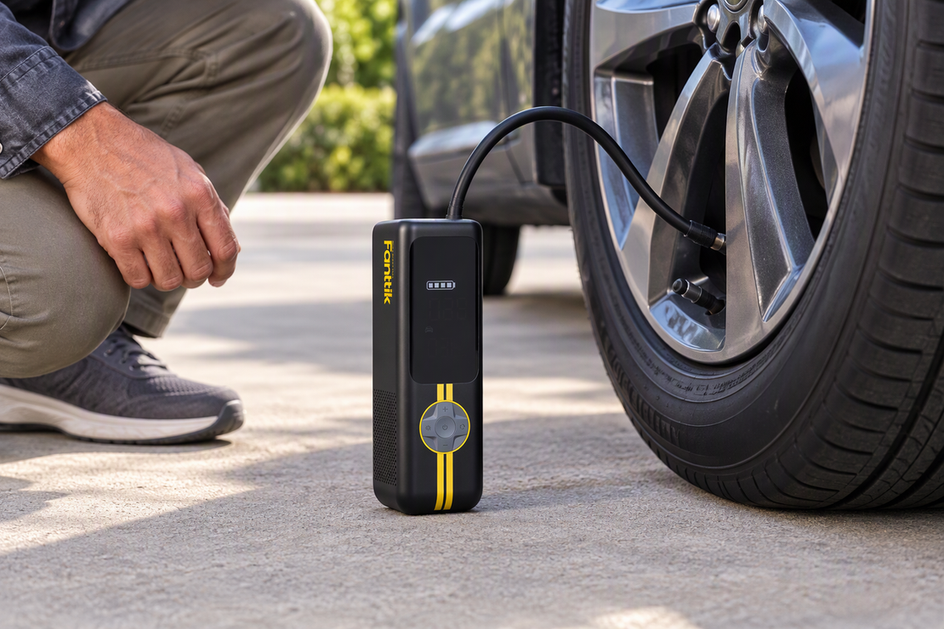
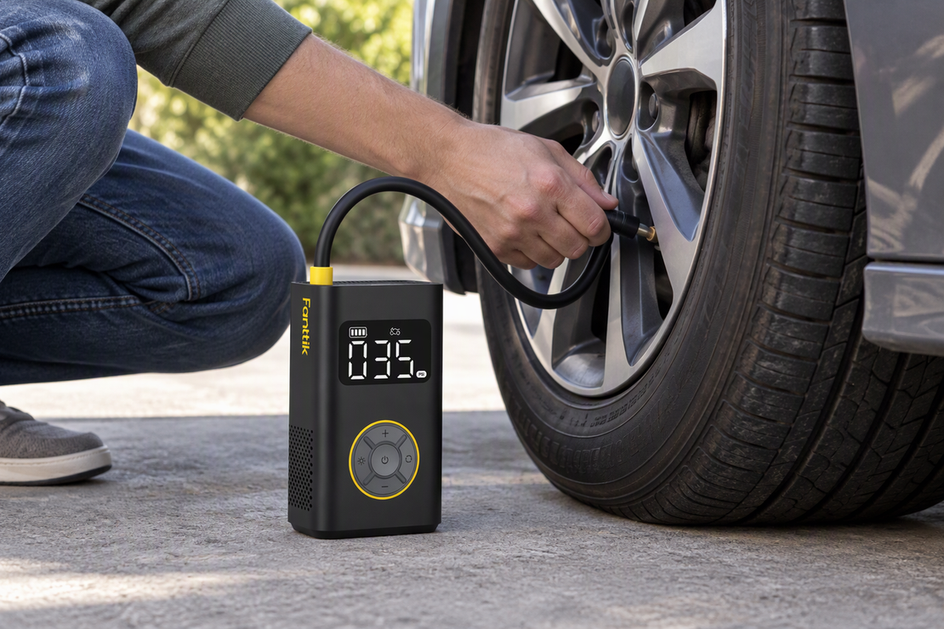
A car air pump with a built-in gauge speeds up this process because you can watch the number climb as you add air instead of stopping to test with a separate gauge each time. Our portable tire inflator guide walks through connecting the hose, setting a target PSI, and confirming the final reading step by step. The pump itself doesn't tell you what the target should be; that number always comes from the vehicle, not the inflator.
What Should You Do With a Warm Tire Reading?
Don't guess a correction factor for a warm reading. Instead, follow one of two paths depending on what you suspect about the tire's condition.
- If you have no reason to think the tire is underinflated, leave the pressure alone for now. Note the warm reading if you want, but wait for a cold check, ideally after the car has been parked for at least three hours, before making any adjustment.
- If you suspect the tire is underinflated after driving, and you can't wait for a cold check, fill it to the vehicle's recommended cold PSI rather than a higher number. NHTSA notes that filling a warm tire to the recommended cold pressure is a safer temporary fix than continuing on a significantly underinflated tire, even though the tire may end up slightly underinflated once it cools. Recheck and fine-tune the pressure the next time you can get a proper cold reading.
Either way, don't release air from a warm tire just to make the display match the cold placard number; that typically leaves the tire underinflated once it cools back down. If you're dealing with a stubborn valve or an inconsistent gauge reading while inflating on the road, our guide to roadside inflation errors covers common causes of inaccurate readings during a roadside fill-up.
Which PSI Reference Is Safe to Use?
Use the vehicle manufacturer's recommended pressure, found on the driver-door placard or in the owner's manual, as your only target for routine inflation. The tire's sidewall lists a different number: the tire's maximum pressure rating, which describes what the tire itself can structurally hold, not what your specific vehicle needs for a safe, comfortable ride. The correct pressure for your vehicle is what the manufacturer specifies, not what's printed on the tire, and mixing up the two is one of the more common ways drivers end up overinflating.
A car air pump's maximum PSI rating and auto-stop feature describe the tool's capability, not your target pressure either. A pump rated to 150 PSI can still be used correctly to reach a vehicle's recommended 32 or 35 PSI; the rating just means the pump has headroom for higher-pressure jobs like some truck tires or sports equipment. Set the auto-stop or target field to the placard number every time, and treat the pump's maximum rating as unrelated to what your car actually needs. Once your car has parked for three hours, check your door sticker and set that exact cold PSI before driving.

FAQs
Does "cold tire pressure" mean the weather has to be cold?
No. In automotive maintenance, cold pressure refers to the vehicle sitting stationary for at least three hours rather than low outside temperatures. The target PSI remains the figure on your vehicle's door placard across every season.
Should you ever let air out of a hot tire that reads above placard PSI?
No. Pressure naturally increases as driving warms the tire, and venting air to match a cold placard specification will cause underinflation once the tire cools down. If the tire reads high when hot, leave it alone until you can verify pressure after the car sits parked for at least three hours.
Can you use the maximum PSI printed on the tire sidewall as your inflation target?
No. The sidewall value indicates the maximum internal pressure the tire structure can safely withstand, not the vehicle manufacturer's operating recommendation. Always inflate to the recommended cold PSI specified on your driver-door jamb sticker or in the vehicle owner's manual.
Continue reading
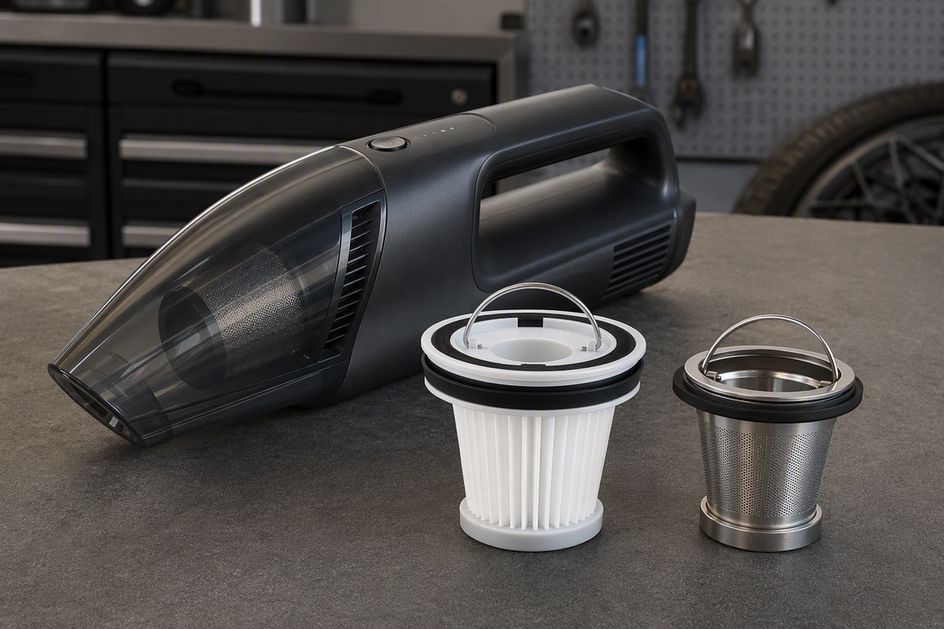 How to Choose the Right Foam Density and Filter Maintenance for Cordless Car Vacuums
A practical guide to matching filter families, safely washing and drying filters, and knowing when to replace them...
How to Choose the Right Foam Density and Filter Maintenance for Cordless Car Vacuums
A practical guide to matching filter families, safely washing and drying filters, and knowing when to replace them...
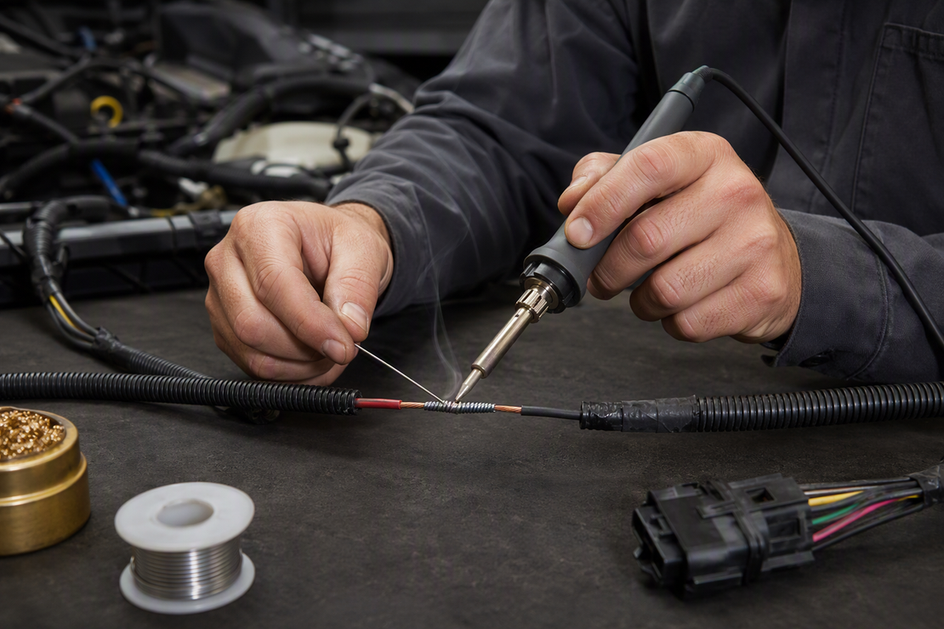 How to Wire and Solder Automotive Auxiliary Lights and Dash Cams Reliably
A step-by-step guide to splicing, soldering, and sealing automotive wiring for dash cams and auxiliary lights, with safe...
How to Wire and Solder Automotive Auxiliary Lights and Dash Cams Reliably
A step-by-step guide to splicing, soldering, and sealing automotive wiring for dash cams and auxiliary lights, with safe...

Leave a comment
This site is protected by hCaptcha and the hCaptcha Privacy Policy and Terms of Service apply.