































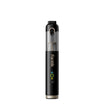






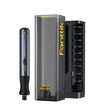



Choose a digital or standard tire pressure gauge that covers your vehicle's documented cold PSI, shows a readable PSI value, includes some stated accuracy information, and seals firmly on the valve stem without hissing. The target pressure itself is not universal, and it is not the number stamped on the tire's sidewall. It comes from your vehicle.
Which Tire Pressure Gauge Should You Choose?
Start by finding the number the gauge actually needs to read. Your vehicle's recommended cold tire pressure is printed on the driver's-side door-jamb placard or in the owner's manual, and front and rear axles sometimes call for different vehicle-specific cold PSI. Once you know that number, judge any gauge against it rather than against a generic "30 PSI" assumption.
For routine passenger-vehicle checks, either a digital gauge or a standard mechanical gauge can do the job well, as long as it covers your target pressure, is easy to read in your usual checking conditions, and locks onto the valve stem without leaking air while you measure. A bigger PSI range or a bigger digital display is not automatically a better gauge. A finer display simply shows more decimal places; it does not prove the reading is close to the tire's actual pressure. Independent measurement guidance treats display resolution is not accuracy, so look separately for a stated accuracy figure or uncertainty note from the manufacturer rather than assuming a fine readout guarantees a correct number.
Accuracy and Repeatability Are Not the Same
A gauge needs to be both close to the real pressure and consistent with itself, and those are two different tests. The National Institute of Standards and Technology draws a clear line between the two ideas: accuracy and repeatability describe closeness to the true value versus closeness among repeated readings taken the same way.
In plain terms, accuracy asks, "Is this reading close to the tire's actual pressure?" Repeatability asks, "Do I get the same number every time I check under the same conditions?" A gauge can be highly repeatable and still wrong every time, because a consistent offset from a worn seal or a miscalibrated mechanism will repeat itself reading after reading. That is why a practical repeatability check only means something when you hold the other variables steady: same gauge, same valve-stem technique, and tires that are genuinely cold each time you compare results.

Which Gauge Features Matter for Your Car?
Beyond the accuracy-versus-repeatability distinction, a handful of physical and documented features decide whether a gauge fits your car and your routine.
- PSI range: Confirm the gauge's range comfortably includes your vehicle's placard PSI; a gauge built for truck tires may compress fine detail at typical passenger-car pressures.
- Readability: Pick a scale or screen you can read in your garage lighting; large or backlit digits help, but pair readability with a stated accuracy figure rather than treating a clear display as proof of correctness.
- Valve connection: Choose a gauge head that seats squarely on the valve stem and stops the hiss quickly, since a slow or leaking connection lets air escape while you measure.
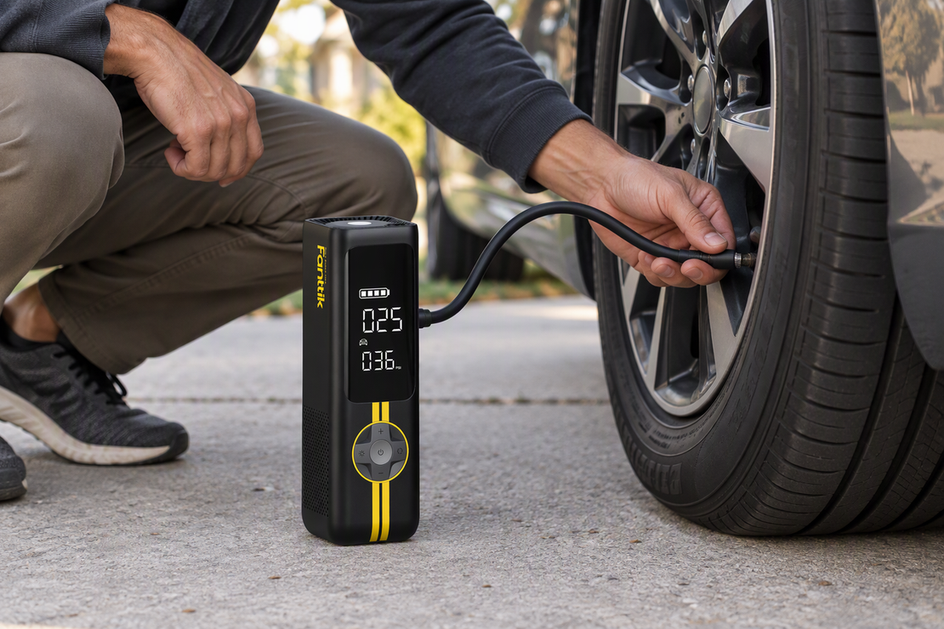
- Gauge type: Either format works for routine checks. Digital or standard gauges both show a usable PSI reading, but a digital gauge depends on a battery, while a standard gauge extends a physical bar and needs no power source at all.
- Verification information: Favor a gauge whose documentation states how its accuracy was determined or how you can check it, instead of one that only lists a maximum PSI on the packaging.
When you do come across an official specification sheet, read range, accuracy basis, and display increments as three separate facts rather than one headline number; a compliance-test gauge specification listing range, accuracy basis, and display increments side by side illustrates the structure, though those exact figures apply to laboratory test equipment, not to a personal gauge you'd buy for home use.
How to Check Cold Tire Pressure Correctly
A cold-tire reading is only meaningful if you take it the same way every time. Follow this order:
- Look up your vehicle's recommended cold PSI on the driver's-side door placard or in the owner's manual, and note separate front and rear values if they differ.
- Check tires while they are cold: the vehicle should have been parked for at least three hours, or driven less than one mile at moderate speed.
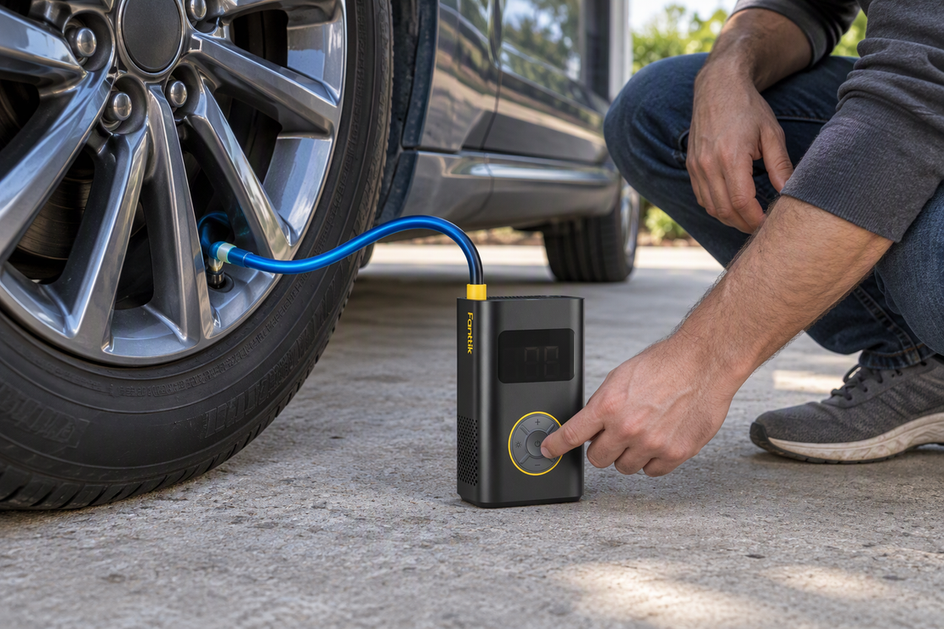
- Remove the valve cap, then press the gauge squarely onto the valve stem until the hissing sound stops and the reading settles.
- Record each tire's PSI before adjusting anything, so you can compare front-to-rear and side-to-side.
- If you add air, check the cold-tire reading procedure again afterward using the same valve-stem technique, since a single top-off does not confirm the target was reached.
How to Compare a Gauge With TPMS
Your vehicle's tire pressure monitoring system and your handheld gauge can report pressure through different paths, so a mismatch is not automatically a sign that either one is broken. The placard or owner's manual still sets the target; TPMS is a secondary signal, not a replacement target.
A direct TPMS uses a pressure sensor mounted in each tire, while an indirect TPMS infers a possible pressure problem from wheel-speed patterns rather than measuring pressure directly. Because these direct and indirect TPMS systems work differently, a TPMS warning light does not tell you which tire is affected or by how much, and a subtle TPMS discrepancy does not establish a universal acceptable gap between the dashboard and your gauge. If your gauge and the TPMS display disagree, repeat the cold-tire measurement with your gauge under matching conditions before treating either reading as the problem.
What to Do When Readings Do Not Agree
When repeated checks or a gauge-versus-TPMS mismatch keep disagreeing, work through the possibilities in order instead of assuming the gauge is faulty.
- Recheck your technique first: confirm the valve seal was complete and the tires were genuinely cold, since a partial seal or a recently driven tire will skew the number.
- Repeat the measurement with the same gauge and the same valve-stem method to rule out a one-off reading.
- If the same gauge still produces inconsistent results, compare it against a known reference gauge or ask a qualified tire professional to check it, rather than assuming a fixed calibration interval or built-in tolerance.
- Check your specific gauge's manual or manufacturer documentation for its stated calibration, verification, or replacement guidance.
If a discrepancy persists after these steps, do not rely on the disputed reading to decide how much air to add or whether it is safe to drive; get a verified reading from a known reference or a qualified tire professional first.

FAQs
Is there a set calibration interval for a tire pressure gauge?
No single interval applies to every gauge. Follow the specific calibration or verification guidance in your gauge's own documentation, and if repeated cold-tire readings stay inconsistent after rechecking your technique, compare the gauge against a known reference or a qualified tire professional rather than guessing at an interval.
Are digital tire pressure gauges inherently more accurate than analog gauges?
No. Digital displays provide fine readout resolution, but resolution simply indicates how numbers are presented, not how close they are to actual tire pressure. Both digital and mechanical gauges can deliver dependable readings when properly manufactured and paired with documented accuracy specifications.
What is the acceptable difference between a handheld gauge and vehicle TPMS?
There is no universal acceptable gap between a handheld gauge and a vehicle's TPMS. Direct systems measure pressure through wheel sensors while indirect systems estimate pressure changes from wheel-speed data, so always use your vehicle's door-placard cold PSI and a verified gauge as the primary standard.
Continue reading
 How to Pressure Wash Garage Floor Oil Stains: Degreasers and Surface Rinsing
A practical breakdown of oil stain removal on concrete: pick the right degreaser, rinse safely with a pressure...
How to Pressure Wash Garage Floor Oil Stains: Degreasers and Surface Rinsing
A practical breakdown of oil stain removal on concrete: pick the right degreaser, rinse safely with a pressure...

Leave a comment
This site is protected by hCaptcha and the hCaptcha Privacy Policy and Terms of Service apply.