












































Before your first winter drive, check each tire with a gauge while it is still cold, before you drive anywhere. Compare each reading with your vehicle's recommended cold tire pressure, then add or release air until it matches. You don't need to guess how much pressure the cold took out, because the gauge reading already shows it.
The target is printed on the tire label on the driver's side or listed in your owner's manual. It is not the number molded on the tire. If one tire is low again on a later cold check, treat it as a possible leak, not just cold weather.
How to Check Tire Pressure on a Cold Morning
A cold morning is a good time to check. According to NHTSA's cold-tire definition and pressure guidance, a tire counts as cold when it hasn't been driven on for at least three hours. The vehicle maker's recommended pressure applies to that cold condition. A car parked overnight meets that condition, as long as you check before you drive.
- Confirm the tires are cold. The car should have sat for at least three hours. Do the check before you drive to the gas station or down the block.
- Find your vehicle's target. Look for the Tire and Loading Information label on the driver's side door edge or door post, or check the owner's manual. The label lists pressure in PSI and in kPa (kilopascals, the metric unit). Use the PSI figure.
- Ignore the number on the tire sidewall. That number is the most air the tire can safely hold. It is not your car's recommended pressure.
- Measure every tire with a tire pressure gauge. Remove the valve cap, press the gauge firmly onto the valve stem, and write down each reading.
- Fix any mismatch. NHTSA's tire-pressure correction steps cover both cases. If a tire reads high, let air out slowly by gently pressing the valve stem with the edge of your gauge. If it reads low, subtract the reading from the target to find how many PSI are missing, then add that much air.
- Measure again and replace the caps. Each tire should now match the target on the label.
Here's a simple example. If the label says 35 PSI and the front left tire reads 31 PSI, it needs about 4 PSI. If the right rear tire reads 36 PSI, let a little air out until it reads 35. The numbers are only an example, so always use the values from your own label.

One thing to watch: driving to an air pump warms the tires, and warm tires read higher. NHTSA says you either need to measure cold or allow for the extra pressure in warm tires.
Why Cold Weather Changes the Reading
Air in a tire takes up less room when it cools. After a cold night, a tire can read lower than it did on a warm afternoon even though no air leaked out. The U.S. Tire Manufacturers Association notes that pressure goes up in warm weather and down in cold weather. That's why the first frosty morning of the season often brings a low-pressure warning.
You don't need to work out a temperature correction. Your vehicle's recommended pressure is already a cold number, so a cold-morning gauge reading compares directly with the label. If a tire is under target, it is under target, whatever the cause, and it needs air. If the weather warms up later, a tire that was set correctly while cold will read a bit higher while warm. That's normal, so don't let air out to make up for it.
The cold explains a drop that shows up on all your tires at about the same rate. It does not explain one tire that keeps falling behind the others.
What to Do if a Tire Keeps Losing Pressure
If you fill a tire to its target and it is low again at your next cold check, that points to a leak, not the weather. To tell the two apart, take the next reading under the same conditions: car parked for at least three hours, gauge used before driving, and similar outdoor temperatures if you can manage it. If all four tires hold steady and only one drops, that tire has a problem.
When a tire keeps failing to hold its proper pressure, NHTSA's advice for a tire that will not hold pressure is to see a tire service professional. A shop can find the source, such as a puncture, a bead leak, or a faulty valve, and tell you whether the tire can be safely repaired. Topping it off every few days only hides the problem.
For common causes and how to confirm the drop before your appointment, read our guide on why one tire keeps losing air. If you think the valve is the issue, our walkthrough on fixing a leaking valve core explains how to check it.
FAQs
Should I add extra air because it's cold outside?
No. Fill to the cold pressure on your vehicle's label, using a reading taken while the tires are cold. That target already accounts for cold tires, so adding extra PSI for the weather can leave the tires overinflated.
Do I need to check the spare too?
Yes. NHTSA's guidance on checking the spare says to check every tire, including the spare. A spare that is low on air won't help much on a cold roadside.
Should all four tires have the same pressure?
Usually, but not always. NHTSA's note on different front and rear targets points out that some vehicles call for different pressures on the front and rear tires. Check the label. If it lists two numbers, set each axle to its own target.
Can I rely on the dashboard warning light instead of a gauge?
Not for this check. Always use a tire pressure gauge to read the actual pressure and compare it with your vehicle's label before driving. For other routine checks, see our car maintenance tips.
Continue reading
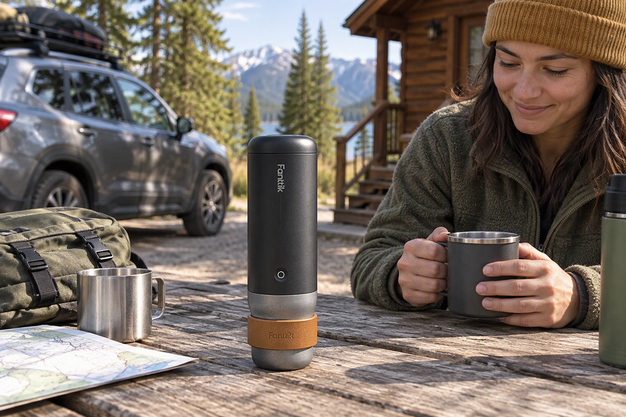 How to Make Road-Trip Coffee Stops Safer and Easier to Clean Up
A step-by-step plan for brewing coffee at a parked stop, from water prep and spill setup to wastewater...
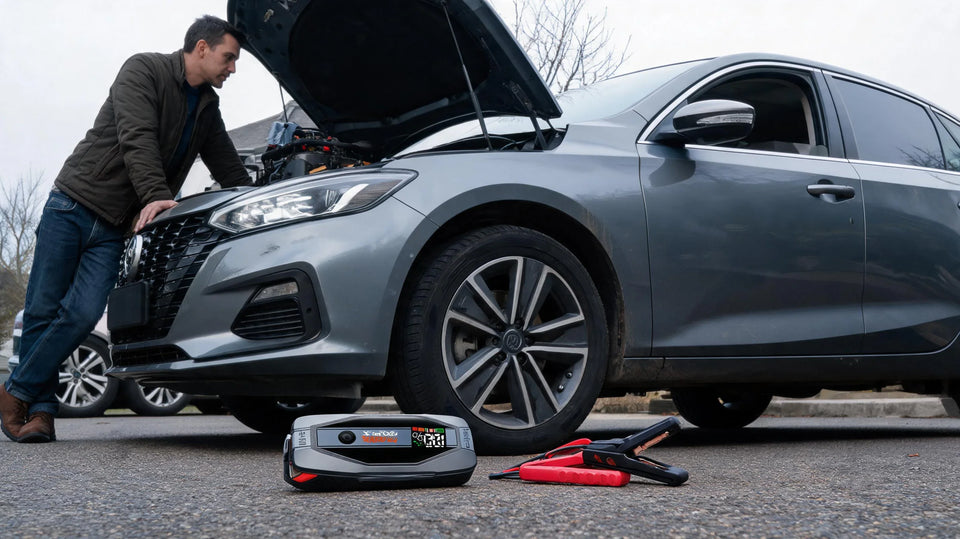 A Single Click on a Cold Morning: Is a Jump Starter the Next Step?
One click on a cold morning doesn't tell you the cause. Here's how battery damage signs and your...
Leave a comment
This site is protected by hCaptcha and the hCaptcha Privacy Policy and Terms of Service apply.