












































To plan coffee on a road trip, list each stop where you might brew. Write down what that stop offers for power, brewing water, and cleanup, then pick a brewing method and a backup for it. Choose where to brew only after those three checks work out.
Good road trip coffee planning treats every stop as its own case. A campground with a utility sink and a parking area with nothing but your car call for different plans. Anything you can't confirm before you leave stays marked "unknown," not "probably fine."
Map Power, Water, and Cleanup Before Choosing a Stop
Make one short record for each stop where you might brew. Don't assume the amenities at one stop carry over to the next. Fill it in this order:
- List the stop. Name the campground, rest area, or overnight spot where you expect to make coffee.
- Record the power source. Note the exact source, such as a vehicle 12V outlet, a vehicle AC inverter, or campsite hookup. Add what its own documentation allows: rated output and any listed restrictions.
- Record brewing water. Write the number of servings, your recipe's water per serving, and where that water comes from: a source you've confirmed or water you're carrying.
- Record cleanup. Note how you'll handle grounds and used filters, plus where any rinse or wash water can go under that site's rules.
- Assign a method and a fallback. Pick your main brewing method for this stop and a backup that has its own water and heat needs covered.
- Mark the result. Call the stop electric-ready only when the documentation confirms the power setup is allowed and water and cleanup also check out. Call it fallback-only when the electric check fails but your backup is fully covered. Call it not yet suitable when an essential item is still unknown.
Check Power Before Choosing an Electric Brewer
Electric brewing counts as available only when your brewer's documented input matches what the vehicle outlet or inverter is documented to supply, and nothing in the vehicle manual forbids it. Keep those two numbers separate: the brewer's label notes its required draw, while vehicle documentation lists available output and any prohibited devices.

A plug that fits proves nothing. Having an accessory outlet doesn't prove it either. If your vehicle manual lists the outlet's voltage and amperage, you can multiply volts by amps to calculate watts. Use your own vehicle's listed ratings, not a general figure for car outlets. That number is one input to the check. You still need to compare it with the brewer's requirement and read the manual's restrictions.
Restrictions can settle the question outright. The 2026 Kia KA4 owner's manual lists its AC inverter at 115 V with a 100 W maximum. It also says not to use heated electric devices such as a coffee pot. That limit applies to that vehicle only. It shows why you read your own manual instead of guessing from the outlet's shape or name.
Stop condition: If a required rating is missing, the ratings don't match, or the manual prohibits the device, don't plan on electric brewing from that source. Switch to a non-electric fallback only if its brewing water and hot-water needs are already covered. Otherwise, choose another stop or skip brewing there.
Calculate the Brewing Water for Each Stop
Plan brewing water from your own recipe: planned brewing water = servings × your recipe's water per serving. Keep the recipe's units so the total matches what you measure at the stop.
Illustrative example only: if your chosen recipe uses 250 mL per serving and you want two servings, you need 2 × 250 mL = 500 mL (about 17 fl oz) of brewing water. Swap in your method's actual recipe amount and your real serving count. Don't carry this example over as a standard amount.
If you haven't confirmed that a stop has suitable drinking water, count that source as unavailable. Bring the calculated amount from a source you've already confirmed. This step plans the quantity only. It doesn't test water quality.
Keep rinse and wash water as a separate line in your record. Cleanup water has its own disposal rules, covered in the next section, and those rules don't apply to the water you brew with.
Plan Coffee-Grounds and Wastewater Cleanup
At outdoor campsites, plan to pack out used grounds and filters. The National Park Service's Leave No Trace principles tell campers to pack out all trash, leftover food, and litter. Treating coffee grounds and filters the same way is a direct use of that rule, so you can pack out coffee waste at campsites in a sealed bag or container along with your other trash.
Wash water follows a separate rule. For washing yourself or your dishes, the NPS guidance says to carry water 200 feet from streams or lakes, use small amounts of biodegradable soap, and scatter strained dishwater. That direction covers dishwashing at outdoor campsites. It doesn't cover your brewing water, and it doesn't make the method acceptable at every road stop.
Developed campgrounds may have their own setup. Leave No Trace advises you to check campground grey-water rules with posted regulations or staff first. Some campgrounds recommend using a dedicated utility sink for grey water, and others provide grey-water disposal units. The same guide lists a flush toilet as a last resort, where allowed. Its scatter-at-200-feet method applies only when those facilities aren't available. Rest areas and parking lots aren't covered by either source, so follow posted rules there. If no permitted route exists, keep your waste and used water contained until you reach one.
Choose Where to Brew After the Checks
At each stop, run through these checks in order and make the location call last:
- Power or fallback. Electric brewing stays on only if the documented ratings match and the manual allows it. If any part is unknown, treat electric as unavailable and move to your fallback.
- Fallback readiness. A non-electric method counts only if its brewing water, hot-water source, and cleanup are all covered.
- Brewing water. Confirm you have the calculated amount from a source you've already verified.
- Cleanup route. Confirm a permitted way to handle grounds, filters, and wastewater at this specific site. Campground guidance applies at campgrounds, not at every pull-off.
- Decide. Brew here if your method, water, and cleanup all work. Use the prepared fallback if it works and the electric option doesn't. If neither works, drive on to a stop where the conditions are confirmed, or skip coffee at this one.
Any item still marked unknown counts as a fail for this decision. That rule keeps one convenient-looking stop from becoming a dead end with a full brew basket and nowhere to rinse.
FAQs
Can running an electric brewer drain my car battery?
It can, depending on the draw and whether the engine is running. As an example of the math, a 120W device pulls about 10 amps at 12V. Our guide on 12V outlet draw with the engine off explains how that kind of load can drain your battery's reserve and why to check your outlet fuse and battery health. Your vehicle's own ratings and restrictions still decide whether a brewer is allowed at all.
What should I do with leftover liquid coffee at a rest area?
The cleanup guidance cited above is written for campsites and campgrounds, not rest areas. At a rest area, follow posted rules or ask staff. If you can't find a permitted spot, seal the liquid in a container and dispose of it at your next stop that has a proper route.
Is a non-electric method always a viable backup?
Only when its own needs are covered. A manual brewer still needs hot water and a cleanup route, so it doesn't solve a stop with no heat source or no permitted disposal option. Coffee you brewed before leaving can work as a backup at those stops, since it needs no power or water on site.
Does the Kia inverter limit apply to other vehicles?
No. The 115 V, 100 W maximum and the ban on heated devices like coffee pots come from one 2026 Kia manual. Other vehicles list their own outlet ratings and restrictions, so check the manual for the exact vehicle you're driving.
Continue reading
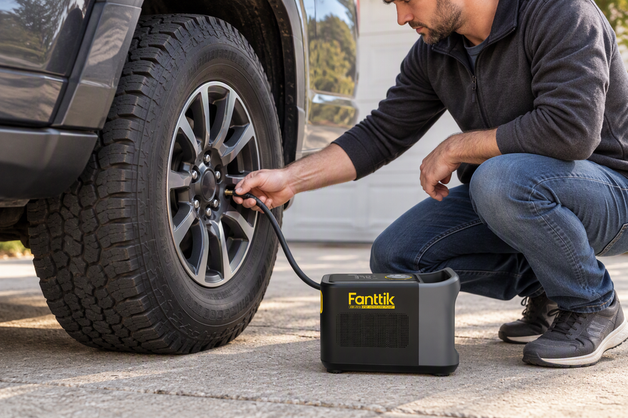 How to Build a Roadside Kit Around the Problem You Need to Solve First
A step-by-step way to plan your car kit: settle the safety and help call, sort gear by tire...
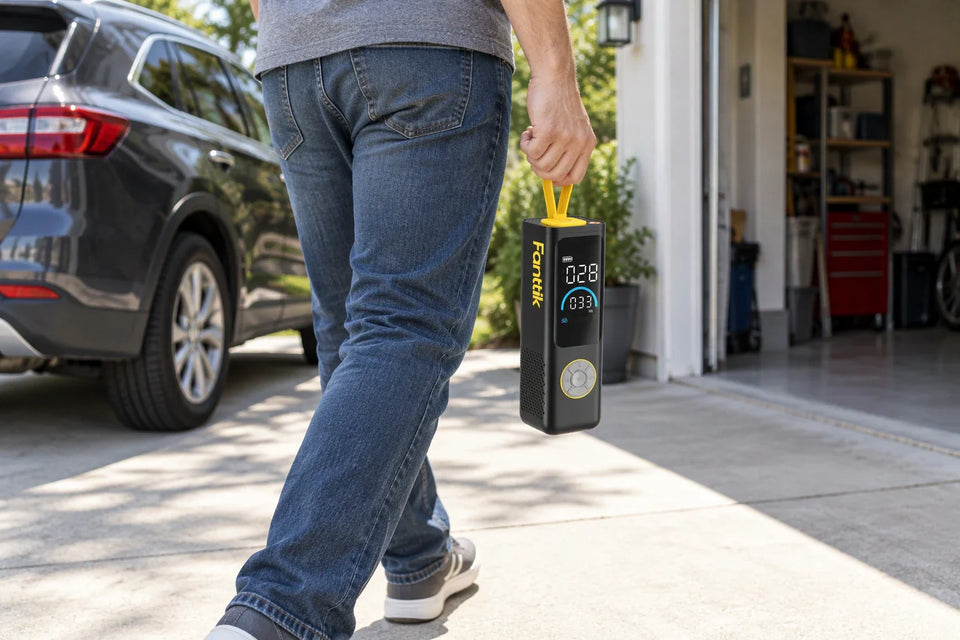 Can You Leave a Portable Tire Inflator in a Hot Car?
A powered-off inflator can stay in a parked car only when its model's storage guidance covers the heat....
Leave a comment
This site is protected by hCaptcha and the hCaptcha Privacy Policy and Terms of Service apply.