












































Use a portable tire inflator only when two things are true. First, you are stopped somewhere you can work away from moving traffic. Second, the tire is simply low on air and shows no damage or other warning signs.

Call roadside assistance if the car is still exposed to traffic, the tire looks damaged, or pressure keeps dropping after you add air. An inflator puts air back in a tire. It does not repair one.
Should You Use a Portable Tire Inflator or Call Roadside Assistance?
Pick the branch that matches what you see. If you're in either of the first two cases, call for help instead of using the inflator.
- Your car is still exposed to moving traffic. Don't use the inflator. Call for help. Maryland roadside guidance for exposed traffic tells drivers who are in the travel portion of a roadway to contact emergency services right away.
- The tire worries you, or the pressure keeps falling. Choose roadside help and a tire professional. USTMA's advice for a tire condition that concerns you is to get a professional's advice right away. USTMA's guidance on continuing pressure loss calls for the tire to come off the wheel for an inside inspection.
- You are parked away from traffic and the tire is just underinflated. A portable tire inflator can bring it back to your vehicle's recommended pressure, as shown in the pressure section below.
Two ideas keep this choice straight. A safe place to stop is not always a safe place to work. And adding air corrects pressure. It does not fix whatever made the tire go low.
Is the Stopping Location Safe Enough to Work?
Pulling over is only the first step, because crouching beside a wheel brings immediate traffic exposure. NHTSA tells drivers to pull off where it is safe, but that advice governs where to stop rather than approving roadside repair work. A safe place to pull off is not automatically a safe place to inflate a tire.
Hazard lights make your car easier to see. They don't protect you while you work beside passing cars, and carrying an inflator doesn't change that either. The deciding question is simple: would hooking up the hose put your body close to moving traffic? If so, don't start.
Maryland's advice for a roadside emergency gives clear steps for that situation:
- If you are in the travel portion of the roadway, contact emergency services right away.
- If you can stay in the vehicle, stay buckled and face forward.
- If you must get out, move quickly away from the road to a spot behind an embankment, barrier, or guardrail.
- Don't stand near the vehicle.
Those steps come from one state's safety program, not a national rule. Still, the lesson carries over to this choice: if you're exposed to traffic, wait for help from a protected spot instead of inflating the tire.
A parking lot or driveway away from through traffic is a different case. That's where the inflator option starts. If you're fully off the road after dark, our guide to nighttime inflator safety covers lighting and visibility while you work. If the trouble began as a sudden blowout, AAA's tire blowout tips explain how to slow down, pull off, turn on your hazards, and call for help.
What Does the Tire's Condition Tell You?
The tire's condition tells you whether air will solve the problem. A tire that is just low has a pressure problem. A damaged tire, or one that keeps losing air, has a tire problem that air alone can't fix.

Roadside providers use a similar test. AAA Central Penn's reinflation guidance says its service may inflate a tire when there's no damage and the car can still be driven. That's one provider's service rule, but it's a useful way to sort what you're looking at:
- Low, with no visible damage or warning signs: Restoring pressure is a reasonable next step. A tire that takes air may still have a problem, so watch whether it holds that pressure.
- Visible damage, or anything else that concerns you: USTMA recommends getting a tire professional's advice immediately. It also lists more air loss, new noise, or vibration as possible signs of a problem inside the tire that could make it fail.
- Pressure keeps dropping, or the tire lost all or most of its air: USTMA says the tire must come off the wheel for a complete internal inspection. The same guide warns that a damaged tire can fail suddenly, even later on.
If pressure falls again after you fill the tire, stop adding air. Call roadside assistance and have the tire inspected. More air won't repair it, and reaching the right PSI doesn't mean the tire is safe to drive on.
If Inflation Is Appropriate, What Pressure Should You Use?
Fill to your vehicle's recommended cold pressure, not the maximum limit printed on the tire sidewall. NHTSA's recommended-pressure guidance outlines how to locate that vehicle target and handle a tire after driving:
- Find the recommended pressure on the tire information placard, the certification label, or in the owner's manual.
- If you've been driving and think a tire is underinflated, fill it to the recommended cold pressure from the placard or label.
- Treat that fill as temporary. Recheck and adjust the pressure once the tire has cooled and you can get a cold reading.
At the cold recheck, compare the reading with the target. If the tire held pressure, the pressure adjustment is complete, though you should still watch for unusual noise or vibration. If pressure dropped again, stop adding air and seek roadside help for a professional inspection.
You can avoid many roadside decisions by checking tire pressure cold before a long drive. Our spring road trip checklist builds that check into trip prep, so you spot low pressure in your driveway instead of on the shoulder.
FAQs
Can a Portable Tire Inflator Repair a Puncture?
No. A portable tire inflator only adds air. It doesn't seal a hole or repair damage to the tire. A punctured tire may take air for a while and then lose it again. Any tire that keeps losing pressure should be inspected and repaired or replaced by a tire professional.
Does a TPMS Warning Mean the Tire Is Completely Flat?
Not necessarily. Here's what NHTSA says the TPMS warning means: at least one tire is significantly underinflated. TPMS is your car's tire pressure monitoring system. The light alone doesn't tell you how low the tire is, so check each tire with a gauge. If the light stays on after you reach the recommended pressure, our TPMS light troubleshooting guide covers reset steps and other causes.
What Might Roadside Assistance Do for a Tire Problem?
It depends on your provider and plan. As one example, AAA Mountain West's tire-service options include reinflating your tire, installing your spare, or towing your vehicle to a repair shop. How far it will tow depends on your membership plan. Other providers and plans may cover different services, so check your own coverage before you need it.
Is an Inflator Still Worth Carrying if I Have Roadside Coverage?
They cover different situations. An inflator lets you correct low pressure yourself when you're parked away from traffic and the tire is only underinflated. Roadside coverage handles the cases an inflator can't, such as a damaged tire, steady air loss, or a spot too close to traffic to work safely.
Continue reading
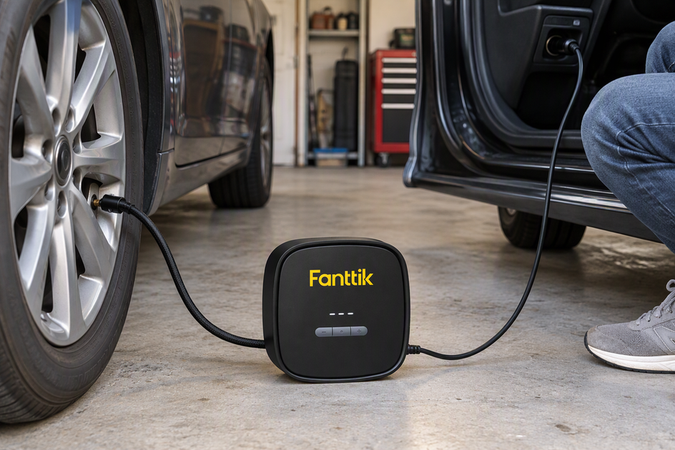 Digital Tire Inflator With a Pressure Gauge: Is an All-in-One Tool Enough?
Built-in inflator gauges make top-ups simpler, while a separate gauge adds a second reading. Neither type is proven...
 How to Check a Portable Jump Starter Before a Road Trip
A step-by-step home check for drivers who charged a jump starter months ago, ending in a clear pack,...
Leave a comment
This site is protected by hCaptcha and the hCaptcha Privacy Policy and Terms of Service apply.