






































Filling your tires to the right pressure does not always turn the TPMS light off right away. The light can stay on because your vehicle still needs to calibrate or relearn the new pressure, because another monitored tire (including the spare) is still low, or because the system itself has a fault.
The fix depends on which of those three is happening. Start by rechecking pressure, then match your vehicle's documented reset or relearn steps before assuming the sensor has failed.
Why the TPMS Light Can Stay on After You Add Air
TPMS is a monitoring system, not a confirmation screen. It doesn't know your tires are correct just because you used an air pump for car tires to bring them up to spec; it has to measure the new pressure and, on many vehicles, run through a calibration or relearn step before the warning clears.
That means correct pressure and an illuminated light can exist at the same time. Three things usually explain the gap: the vehicle is mid-calibration and hasn't finished, a tire you didn't check (often a spare) is still outside spec, or the TPMS system itself has detected a malfunction rather than a pressure problem. Using a car tire inflator and vacuum kit gets the air in, but it doesn't reset or diagnose TPMS on its own — that's a separate, vehicle-specific step covered below.
What to Check First When the TPMS Light Stays On
Before touching any reset button, recheck every tire the vehicle might monitor while the tires are cold, and compare each reading to the number on the driver's door-jamb label or in the owner's manual, not the number molded into the tire's sidewall.
- Let the tires cool for at least a few hours, or check them before driving.
- Measure all four tires plus the spare if your vehicle's documentation says the spare carries a sensor.
- Compare each reading to the door-jamb specification, which reflects your vehicle's load and handling design rather than the tire's maximum rating.
- Correct any tire that's off, including the spare, since a single overlooked tire can keep the warning active.
- Once every monitored tire matches the label, move on to your vehicle's documented reset or relearn method instead of adding more air.
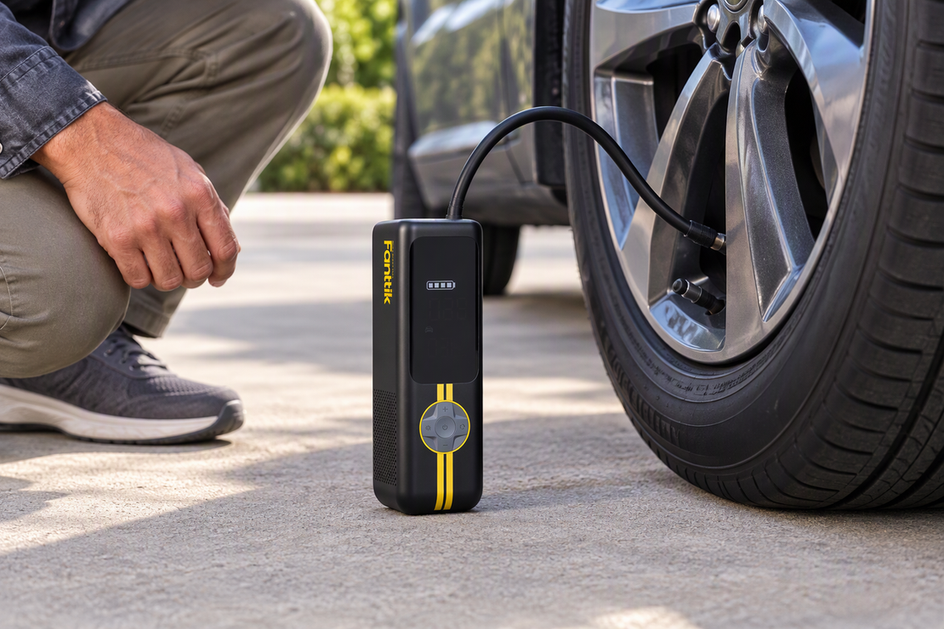
The National Highway Traffic Safety Administration advises checking the pressure of all tires, including spares, and using the label or manual figure rather than the sidewall number, since the sidewall lists a maximum rating, not your vehicle's recommended pressure (NHTSA tire-pressure guidance). If you're shopping for equipment to make this recheck easier at home, a browse through tire inflators shows options built for this kind of routine pressure work.

Use the Vehicle-Specific Reset or Relearn Method
Once pressure is confirmed correct on every monitored tire, the light should clear through one of three method types: drive-cycle learning, a manual reset or calibration control, or a sensor relearn/service procedure. Which one applies, and how long it takes, depends entirely on your vehicle, so the owner's manual is the authority here.
Drive-Cycle Learning
Some vehicles clear the warning automatically once you drive long enough at the right speed for the system to relearn the new pressures. The exact distance, speed range, and conditions vary by model, so there's no single mileage or time figure that applies across vehicles.
Manual Reset or Calibration Controls
Other vehicles need you to trigger the process yourself through a dashboard button, infotainment menu, or steering-wheel control after you've corrected pressure. The menu path and any preconditions, such as having the ignition in a certain position, are specific to your model and are documented in the owner's manual.
Sensor Relearn or Service Procedure
If you've recently replaced a wheel, tire, or sensor, a normal drive cycle may not be enough. Some systems require a scan-tool relearn or a dealer/service procedure to register the new hardware, and that programming step is best left to a qualified shop when your documentation calls for special equipment.
As a labeled example, the 2021 Honda CR-V requires the driver to start TPMS calibration through the vehicle menu any time tire pressure is adjusted, and the process finishes automatically after roughly 30 minutes of cumulative driving between 30 and 65 mph. That same manual states calibration cannot run at all if a compact spare tire is installed (2021 Honda CR-V TPMS procedure). This sequence, timing, and spare-tire rule apply to that model and should not be assumed for another vehicle; check your own manual for the matching steps. If the documented procedure completes and the light is still on, treat that as a sign to move to the next section rather than repeating the process. For general car-care planning, car companion tools can round out a basic at-home maintenance kit alongside whatever your manual calls for.
What the Warning-Light Pattern Tells You
How the light behaves narrows down what's happening, even though it can't identify the exact part on its own. A steady light usually points to pressure or a pending reset; a flash that settles into a steady light points toward a possible system fault.
If the Light Is Solid
A solid, non-flashing light generally means the system is reporting low pressure somewhere or is waiting for a calibration or relearn cycle to finish. Recheck pressure on every monitored tire and confirm whether your vehicle's documented reset process is complete before assuming anything else is wrong.
If the Light Flashes, Then Stays On
A pattern where the TPMS symbol flashes for roughly 60 to 90 seconds and then remains steadily lit is described by NHTSA as a possible system malfunction, separate from a simple low-pressure reading (NHTSA TPMS malfunction explanation). The 2021 Honda CR-V manual describes the same flash-then-solid behavior for its own malfunction indicator and notes that once it's lit, the system may not detect or signal low pressure the way it normally would. That's a reason to stop relying on the warning light and verify pressure by hand.
When to Stop Troubleshooting and Get TPMS Service
Stop resetting and get the vehicle checked once the light flashes and stays on, or once it stays on after you've verified correct cold pressure and completed the reset or relearn steps for your vehicle. At that point, repeating the same steps is unlikely to change the outcome.
Watch for these specific signs that point to service rather than another reset attempt:

- The light flashed for about a minute and then stayed solid.
- The warning is still on after pressure is correct on every monitored tire and the documented reset or relearn has finished.
- The light clears and then comes back within a short time.
- You've recently had a wheel, tire, or spare changed, mounted, or repaired.
- A reading looks inconsistent with what you measured, or a tire shows visible damage.
If the TPMS warning persists after you've manually verified cold pressure and completed the vehicle-specific reset or relearn, or if it flashed and then stayed solid, don't rely on the warning system to catch low pressure going forward. Check pressure by hand on a regular basis and arrange qualified tire or automotive service to diagnose the sensor or system before the next long drive.
FAQs
Does the spare tire affect the TPMS light?
It depends on your vehicle. Some vehicles monitor the spare and will keep the light on if it's overlooked or underinflated; others don't monitor it at all. On the 2021 Honda CR-V specifically, the manual lists compact-spare use as a condition that can trigger the low-pressure/TPMS indicator, and calibration cannot run while that spare is installed. Check your owner's manual to see whether your spare is part of the monitored system before ruling it out.
How long does a drive cycle take to reset the light?
There's no universal answer, since drive-cycle timing is built into each vehicle's calibration or relearn design and can differ by speed range, duration, and driving conditions required. As a labeled example, the 2021 Honda CR-V's calibration process needs roughly 30 minutes of cumulative driving between 30 and 65 mph and finishes on its own once that's met. Don't apply that figure to a different make or model; use the timing listed in your own manual.
Can a faulty sensor be repaired?
Not automatically, and not always the same way. A persistent or flashing warning first needs to be diagnosed, since the cause could be a dead sensor battery, a damaged sensor, a communication fault, or something unrelated to the sensor itself. Depending on what a technician finds and what your vehicle's system supports, the fix might be a relearn, reprogramming, a sensor replacement, or another documented repair, so the right next step is qualified diagnosis rather than assuming one universal remedy.
Continue reading
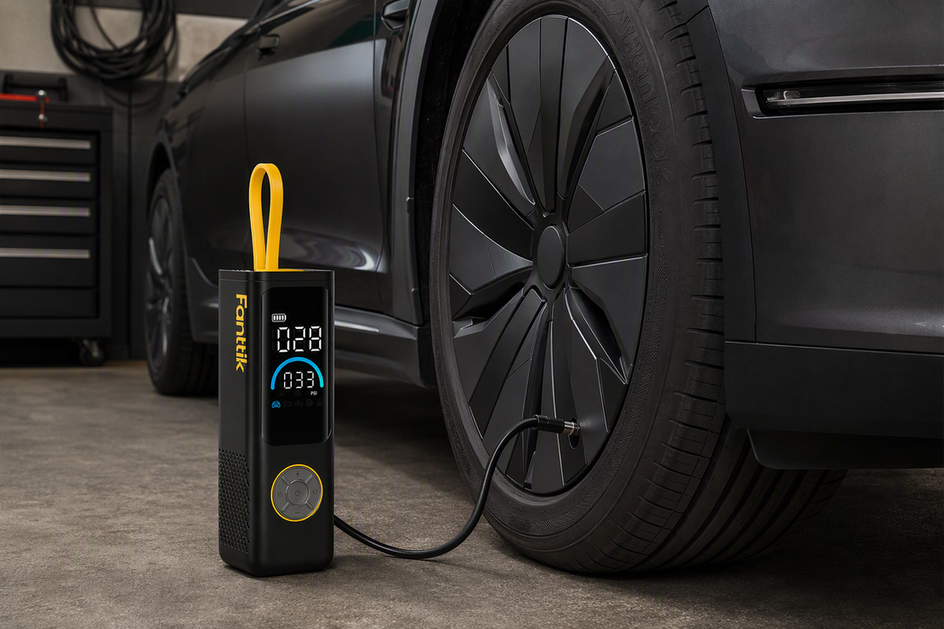 Electric Vehicle Tire Pressure Guide: Why Heavy EV Battery Weight Demands Exact PSI
Heavy battery packs and instant torque raise the stakes for EV tire pressure. Here's how to find, check,...
Electric Vehicle Tire Pressure Guide: Why Heavy EV Battery Weight Demands Exact PSI
Heavy battery packs and instant torque raise the stakes for EV tire pressure. Here's how to find, check,...
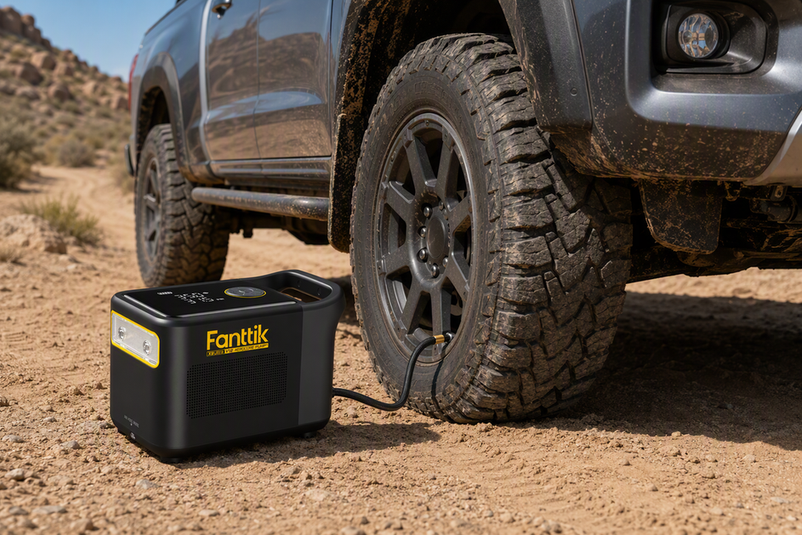 Best Tire Pressure for Sand, Snow, and Off-Road Driving: Deflation and Re-Inflation
A practical guide to airing down for sand and deep snow, understanding tire footprint expansion, and reinflating tires...
Best Tire Pressure for Sand, Snow, and Off-Road Driving: Deflation and Re-Inflation
A practical guide to airing down for sand and deep snow, understanding tire footprint expansion, and reinflating tires...
Leave a comment
This site is protected by hCaptcha and the hCaptcha Privacy Policy and Terms of Service apply.