







































A solid TPMS light usually means at least one tire is significantly underinflated, so the first move is checking pressure and adding air. A flashing light, especially one that flashes for a while and then stays solid, points toward a possible TPMS malfunction rather than a simple pressure problem. The exact behavior still depends on your vehicle, so confirm the pattern against your owner's manual before deciding your next step.
Solid vs. Flashing TPMS Light: The Quick Answer
The two warning patterns call for different first actions. A solid light sends you toward a tire-pressure check, while a flashing or flashing-then-solid pattern sends you toward a system check instead.
| Warning state | Likely system meaning | First action | Boundary |
|---|---|---|---|
| Solid light | At least one tire is significantly underinflated | Check all tires and inflate to the documented PSI | Confirm your exact indicator behavior in the owner's manual |
| Flashing, then solid | Possible TPMS malfunction | Verify pressure and tire condition, then arrange vehicle-specific inspection | Adding air will not resolve a system or sensor fault |
This split comes from NHTSA's TPMS guidance, which describes the solid symbol as a significant-underinflation warning and the flash-then-steady sequence as a possible malfunction indicator. Neither pattern diagnoses the exact cause on every vehicle, so treat the table as a starting decision, not a final verdict.
What to Do When the TPMS Light Is Solid
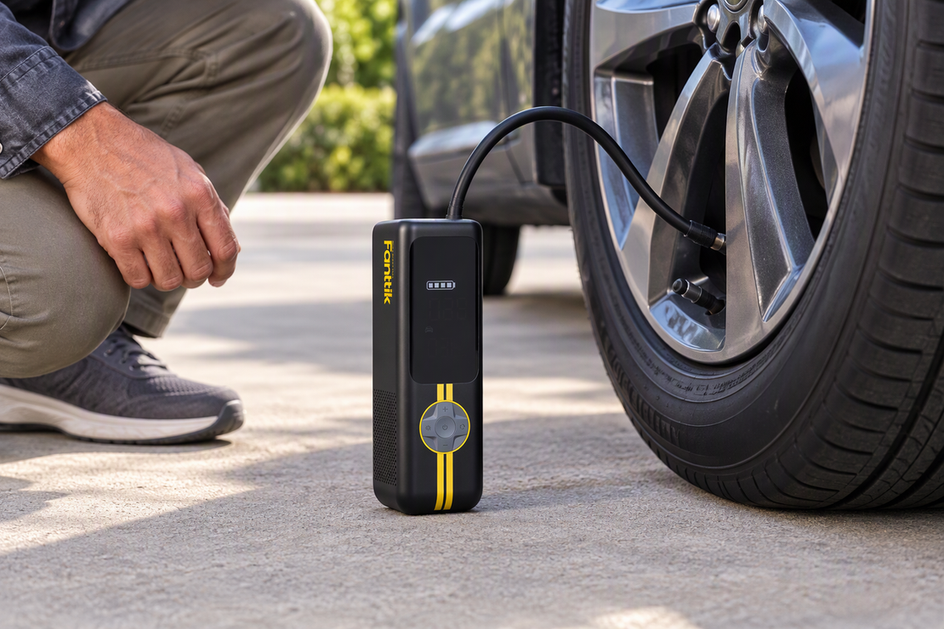
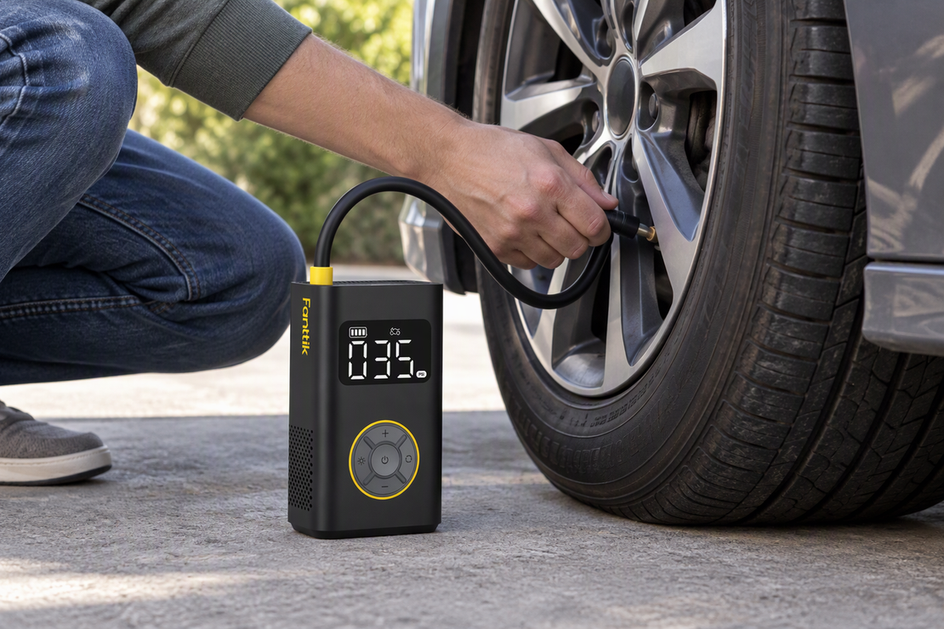
Start with the tires themselves, not the dashboard. A solid TPMS warning is a prompt to inspect and correct pressure, and an air pump for car tires only helps once you know the right target number.
- Inspect each tire for obvious damage, a slow leak, or anything embedded in the tread before you add air.
- Measure every tire, including the spare where applicable, using an accurate gauge rather than guessing from the dashboard warning alone.
- Inflate to the documented PSI found on the driver's-side door jamb placard or in the owner's manual, not the maximum pressure molded into the tire sidewall. NHTSA's tire maintenance guidance is clear that the placard value, not the sidewall number, is the correct target.
- Confirm the result using your vehicle's documented procedure. On many vehicles the light clears once every tire reaches the correct pressure, but that confirmation step still depends on your specific model.
If a tire is visibly damaged, losing air quickly, or won't hold a stable pressure, stop inflating it and arrange qualified roadside or automotive help instead of continuing to drive on it.
What a Flashing or Flashing-Then-Solid Light Usually Means
A pattern where the light flashes for a period and then stays on is different from an ordinary low-pressure alert. If you're seeing a TPMS light flashing then solid and wondering what it means, it typically points to a system malfunction rather than a tire that simply needs air.

NHTSA describes this exact sequence directly: a flashing symbol for roughly 60 to 90 seconds followed by continuous illumination can indicate a TPMS malfunction, and that sequence tends to repeat at each startup until the malfunction is corrected. Adding air will not turn off this kind of warning even if your tire pressure happens to be correct, because the flash-then-solid pattern is reporting a system issue, not a pressure reading.
It's also worth knowing that not every TPMS relies on a battery-powered sensor sitting inside the tire. According to NHTSA, some vehicles use a direct system with tire-mounted sensors, while others use an indirect system that infers pressure from wheel-speed and other vehicle sensors. That distinction matters here: a flashing light on an indirect system cannot be a dead tire-sensor battery, because there is no battery-powered sensor to fail in the first place. Because the exact cause varies by vehicle, the practical next step is verifying pressure and tire condition once, then arranging inspection with your dealer or a qualified technician if the flashing pattern continues.
Why the TPMS Light May Stay on After Inflation or Tire Work
A warning that lingers after you've added air, rotated tires, or noticed a cold snap usually has an identifiable cause once you match the situation to the right check. The four scenarios below cover the most common triggers without assuming every vehicle behaves identically.
If It Flashes at Startup and Then Stays On
Treat this sequence as a possible system malfunction rather than an ordinary pressure issue, even if your tires already read correctly on a gauge. Verifying pressure and tire condition is still worth doing once, but don't assume that step alone will clear the light. If the flash-then-solid pattern repeats on the next startup, that repetition is itself the signal to schedule inspection rather than keep re-checking pressure.
After a Rotation, Replacement, or Repair
A warning that persists after tire work often relates to sensor position or a relearn requirement rather than pressure. One GM technical bulletin illustrates why this is vehicle-specific: for the covered Buick, Cadillac, Chevrolet, and GMC vehicles, GM associates sensor learning with tire rotation or sensor replacement, and specifically notes that learning is not required when simply correcting tire pressure resolves the issue. That distinction is scoped to those GM vehicles only, so follow your own owner's manual or dealer instructions for the correct sequence on your car.
After a Temperature Change
A drop in outside temperature can lower tire pressure enough to trigger a solid warning on its own, so recheck against the placard value before assuming a fault. The same GM bulletin notes a roughly 1 PSI change for every 10°F shift as a manufacturer rule of thumb for its covered vehicles; it's a useful way to understand why cold mornings trigger warnings, but it isn't a universal diagnostic threshold for every make. Learn more about how seasonal TPMS pressure changes affect readings as the weather shifts.
If the Warning Remains After Inflation
Confirm every tire actually reached the documented PSI and look again for a slow leak or hidden damage before assuming the system is at fault. If the light stays on or starts flashing after correct inflation, that's the point to shift from pressure correction to system diagnosis rather than adding more air above the documented target.
When to Stop Troubleshooting and Get Help
Some situations call for qualified help instead of more troubleshooting at home. A visibly damaged tire, one that loses pressure rapidly, or one you can't confidently judge as safe is a stop condition, not something to keep inflating and monitoring.
The same applies to the warning light itself. If a flashing-then-solid pattern repeats across multiple startups, or a warning remains lit after every tire has reached the correct documented pressure and no leak is visible, the TPMS light and an air pump have both told you everything they can. At that point, arrange inspection with a dealer, qualified technician, or roadside assistance rather than continuing to guess. NHTSA's guidance on flashing malfunction indicators supports contacting your dealer for system inspection once that pattern repeats, since neither the lamp nor a home air pump can verify or repair a TPMS fault.

Your final decision comes down to the warning type: if the light stays steady and tires are intact, add air to match the placard PSI; if the light flashes at startup or tires show damage, stop inflating and schedule professional diagnosis.
FAQs
Does adding air automatically reset the TPMS light?
On some vehicles, correcting tire pressure clears the warning without any extra steps. Others require a documented reset or sensor relearn tied to a specific service event. One GM bulletin notes that sensor learning is needed after rotation or sensor replacement, but not when simply correcting pressure resolves the issue on those covered vehicles; treat that as a bounded example rather than a rule for every make, and follow your own owner's manual for the exact procedure.
How long do TPMS sensor batteries last?
There's no single number that applies to every vehicle's TPMS sensors. One GM bulletin gives a design-life example of 10 years or 150,000 miles for its covered sensors, but that figure is specific to those vehicles and isn't a universal replacement schedule. If a malfunction indication persists, vehicle-specific diagnosis, not an assumed battery age, should determine whether a sensor needs replacing.
Does every TPMS system use a battery-powered sensor in the tire?
No. NHTSA describes two designs: a direct system with sensors mounted inside the tires, and an indirect system that infers pressure from wheel-speed and other vehicle sensors instead. That means a flashing warning light can't automatically be read as a dead tire-mounted battery, since indirect systems don't have one. Your owner's manual will identify which type your vehicle uses.

Leave a comment
This site is protected by hCaptcha and the hCaptcha Privacy Policy and Terms of Service apply.