









































Your EV's exact tire pressure target comes from the vehicle's tire-information placard or owner's manual, not from a generic EV number or the tire sidewall maximum. That number matters more on an EV because the battery pack adds significant weight, and underinflation under that extra load increases flexing, heat, and wear faster than most drivers expect.
Getting this right takes a few minutes with the placard and a reliable gauge or inflator. The sections below walk through where to find your target PSI, why weight and torque raise the stakes, and how to check and correct pressure without turning a routine top-up into something it isn't.
What PSI Should an EV Tire Have?
There's no universal EV tire pressure. The number that controls your vehicle is the recommended cold inflation pressure set by the manufacturer for your specific model and tire size.
Use the Vehicle's Recommended Cold PSI
The manufacturer, not the tire maker, sets this figure based on your vehicle's design load limit and installed tire size. You'll find it printed on the vehicle manufacturer's recommended cold PSI placard, usually located on the driver's-side door jamb, or listed in the owner's manual. That figure is the one to use every time you check or correct pressure.
Do Not Substitute the Tire Sidewall Maximum
- Placard PSI: the vehicle's specified operating pressure for your tire size and load. This is the number to maintain.
- Sidewall maximum: the tire's pressure ceiling, not a target. Using it as your everyday setting can overinflate the tire relative to what your vehicle needs.
If your placard lists different front and rear values, treat those as two separate targets rather than averaging them.
Why Battery Weight Makes Underinflation More Costly
An EV's battery pack adds real weight, and that weight lands on the same four tires that carry a gasoline car. When those tires run low on air, the extra load makes every consequence of underinflation more pronounced.
Battery Mass Changes the Load Context
EV battery packs can make a vehicle noticeably heavier than a comparable gasoline model. Since the tires are what carry that load, keeping pressure consistent with the placard target matters more with a heavier vehicle sitting on the same contact patch. This is a load context, not a reason to invent a separate EV pressure standard.

What Underinflation Changes at the Tire
- More sidewall bending and tread shearing, which increases the energy lost as the rubber flexes.
- A larger road-contact footprint, since a softer tire spreads out more under load, which raises rolling resistance.
- Faster, less even wear, as the tire works harder to support weight it wasn't cushioned to carry at the correct pressure.
None of this requires a heavier EV to run a different PSI than its placard specifies. It just means a pressure deviation costs more on a heavier vehicle, so catching it early is worth the habit.
How Instant Torque and Regenerative Braking Affect EV Tire Wear
Instant torque from an electric motor is a traction factor, not a reason to change your target pressure. It changes how hard the tread works, not what number you should be inflating to.
Torque Is a Traction Factor, Not a PSI Setting
Electric motors can deliver strong torque to the wheels the moment you press the pedal, and regenerative braking applies additional force through the same wheels when you slow down. Both add traction-related stress to the tread. That stress varies by vehicle and driving style, so it shouldn't be treated as a fixed wear multiplier that applies equally to every EV.
What to Watch During Routine Maintenance
- Keep pressure at the placard target consistently rather than letting it drift low between checks.
- Inspect tread periodically for uneven or accelerated wear patterns, especially if you drive aggressively or tow.
- Treat pressure correction and tread inspection as two separate maintenance actions, not one combined task.
How Low Pressure Affects EV Efficiency and Range
Underinflated tires can increase rolling resistance and energy use, which may reduce driving range. There's no fixed percentage or mileage figure to quote, since the result depends heavily on your vehicle, tires, and driving conditions.
Why Rolling Resistance Uses More Energy
Tires running below their specified pressure exhibit more tire flexing and rolling resistance because the deformation increases energy loss as the rubber flexes and creates a larger contact patch with the road. Properly inflated tires reduce that resistance and generally support better efficiency than underinflated ones.
Why There Is No Universal Range Number
Vehicle weight, tire size, ambient temperature, speed, and driving conditions all move the actual efficiency outcome. Maintaining your placard pressure is a sound efficiency practice, but it isn't a guarantee of a specific range recovery. Think of it as removing an avoidable energy drain rather than promising extra miles.
How to Check and Correct EV Tire Pressure
Checking EV tire pressure correctly comes down to timing, position-specific comparison, and knowing when to stop relying on air alone.
Follow a Cold-Pressure Check
- Locate your vehicle's recommended front and rear cold PSI from the placard or manual.
- Check pressure before driving, since a cold tire means at least three hours stationary and not simply a cool outside temperature.
- Record each tire's reading and compare it against its position-specific target, since front and rear values can differ.
Match the Reading to the Right Action
| Measured Condition | Comparison to Placard | Next Action |
|---|---|---|
| Below target | Underinflated | Add air, then recheck |
| At target | Correctly inflated | Leave unchanged |
| Front/rear differ | Matches placard split | Keep each axle at its own value |
Know When Inflation Is Not Enough
If a tire has visible damage or keeps losing pressure between checks, stop treating inflation as the fix. A repeat low reading points to a puncture, valve issue, or other problem that needs a qualified tire inspection before you drive on it again. Seasonal temperature swings also shift pressure gradually, so it's worth reviewing seasonal tire care habits alongside your regular checks.
What to Know About Acoustic-Foam EV Tires
Some EV tires include interior acoustic foam to reduce road noise, but this is a tire-specific feature, not something every EV tire has, and it doesn't change your placard pressure target.
Acoustic Foam Is Tire-Specific
Certain tire makers apply an interior foam layer to dampen vibration and noise on select EV-oriented tires. Whether your specific tires include it depends on the tire model installed, not just the fact that your vehicle is an EV. Either way, the correct pressure to maintain remains the one on your placard.
Keep Pressure Correction Separate From Service
- A portable inflator adds air. It has no way to assess foam condition, verify repairability, or authorize a repair.
- If you notice visible tire damage, recurring pressure loss, or you're unsure whether your tires use acoustic foam, check your tire's specific documentation or a qualified tire service rather than assuming inflation alone covers it.
How to Choose and Use a Portable Tire Inflator for an EV
For routine EV pressure maintenance, a portable inflator should give you an accurate reading, a secure connection, and a way to hit your placard target reliably, not diagnose problems.

Match the Inflator to the Task
- A readable, accurate pressure display so you can compare the reading directly against your placard target.
- A secure valve connection that seals cleanly on your tire's valve stem without leaking air during the check.
- A documented preset or auto-stop function, where available, to reduce guesswork when topping up to a specific number.
Treat a device's maximum PSI rating as a ceiling on what it can produce, not as any indication of what your vehicle needs. A 150 PSI-rated inflator doesn't mean your EV runs anywhere near that pressure.
Where the Fanttik X9 APEX Fits
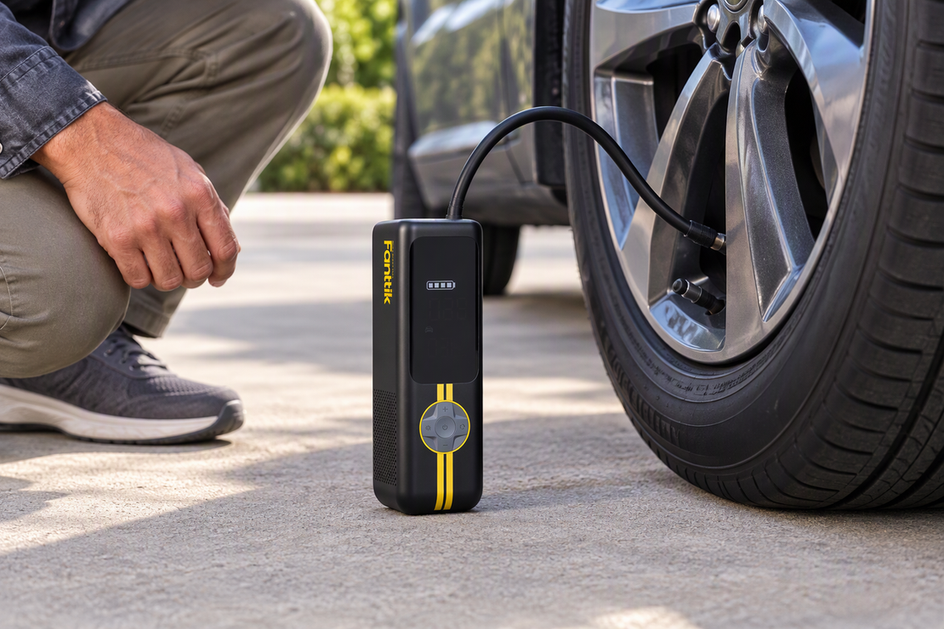
For drivers who want a straightforward routine top-up tool, our Fanttik X9 APEX inflator is documented with high-precision sensing and a preset mode with automatic stop, so you can enter your placard target and let it stop there. It's rated to a 150 PSI maximum and is documented for SUV and sedan compatibility, which covers the routine top-up task most EV owners need between full inspections. It isn't built to diagnose a slow leak, assess acoustic foam, or replace a tire inspection, and if you're weighing it against shop equipment, our guide on the difference between an inflator versus compressor explains where each one fits.
FAQs
Can I check my EV tire pressure right after driving?
No. A reading taken right after driving reflects a warm tire, not the cold tire means at least three hours stationary condition that matches your placard value. Wait until the tire has been stationary for at least three hours, or check before your first drive of the day, before comparing to the target and correcting.
Should all four EV tires use the same PSI?
Not necessarily. Many placards specify different pressures for front and rear tires based on how load is distributed across the vehicle. Record each tire's reading by position and compare it to its own specified value instead of setting all four to one number.
Can a portable tire inflator find a slow leak?
No. An inflator adds air to bring a tire up to a target pressure, but it can't identify why that tire keeps losing pressure. If a tire needs repeated top-ups over days or weeks, that pattern points to a leak or damage that needs a qualified tire inspection before you keep driving on it.
Do all EV tires have acoustic foam?
No. Acoustic foam is a construction feature some tire makers add to specific tire models, not something every EV tire includes. Check your tire's own documentation or the vehicle manufacturer's service guidance if you need to confirm whether your installed tires use it.
Continue reading
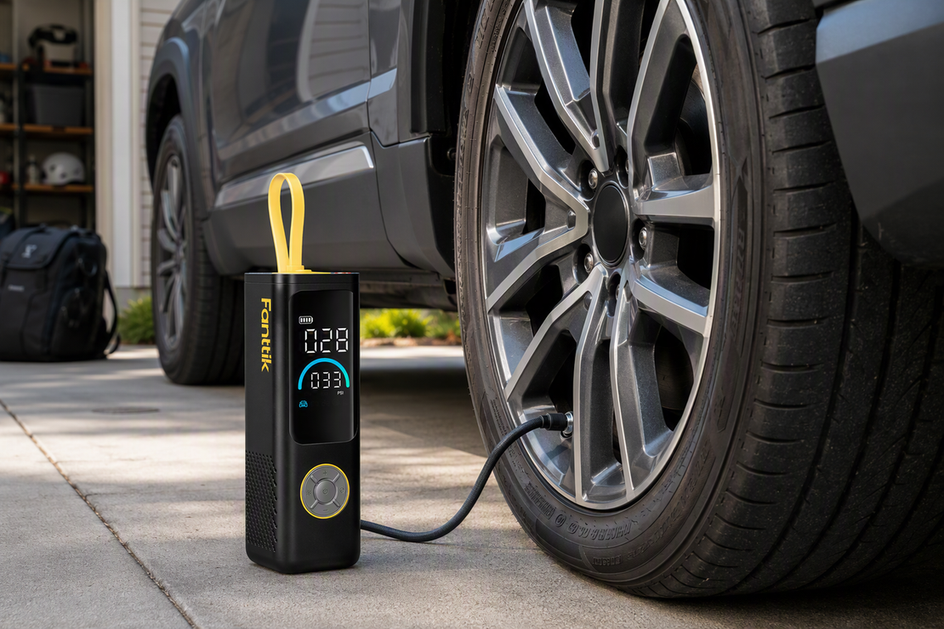 Why Car Tire Pressure Increases During Highway Driving: Should You Bleed Hot Air?
A higher tire pressure reading after a highway drive comes from heat, not overinflation. Here is the safe...
Why Car Tire Pressure Increases During Highway Driving: Should You Bleed Hot Air?
A higher tire pressure reading after a highway drive comes from heat, not overinflation. Here is the safe...
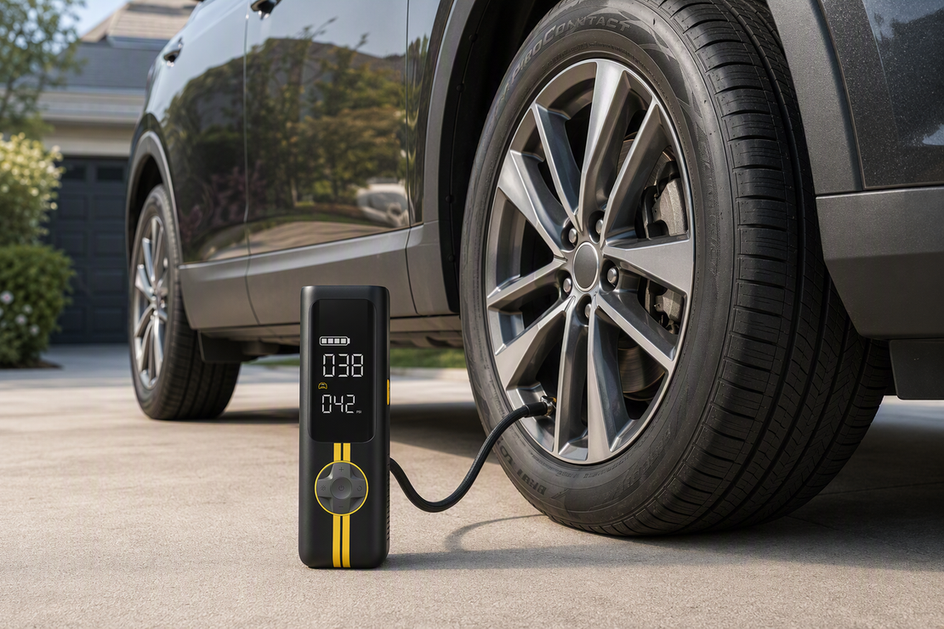 TPMS Warning Light Still On After Inflating Tires: Reset Methods and Common Causes
Why a TPMS warning can stay lit after you use an air pump for car tires, plus how...
TPMS Warning Light Still On After Inflating Tires: Reset Methods and Common Causes
Why a TPMS warning can stay lit after you use an air pump for car tires, plus how...
Leave a comment
This site is protected by hCaptcha and the hCaptcha Privacy Policy and Terms of Service apply.