































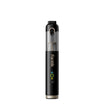






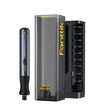
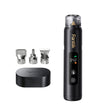



Short answer: pick a portable tire inflator by vehicle class and fill time, not by the 150 PSI number every model advertises. A sedan owner is well served by a 1 lb unit that fills a tire in 60–70 seconds. SUV and truck owners want 30–35 seconds and four or more tires per charge. Pickup and off-road use needs a far larger battery.
The Only Four Specs That Decide This Purchase
Portable inflator listings are dense with numbers, and most of them do not change which model you should buy. These four do.
1. Vehicle class — the ceiling nobody reads
Every inflator publishes a compatibility list, and it is the most honest spec on the page. A unit listed for "Sedan, Motorcycle, Bike" is telling you it was not sized for an SUV. It will still inflate one — it will just take longer and use more of its charge doing it. A unit listed for "Pickup Truck, SUV, Sedan" is built around larger air volumes from the start.
Match this first. Everything else is optimisation.
2. Fill time on a real benchmark
Fill time is only comparable when the benchmark is stated. Fanttik publishes a consistent one — a 25-inch tire topped up from 30 to 35 PSI — and across the range that figure runs from 70 seconds down to 18. When you compare inflators from different brands, check that the tire size and pressure delta match before treating the numbers as equivalent. A "30-second" claim on a bicycle tire and a "30-second" claim on an SUV tire describe completely different machines.
3. Tires per charge, measured from flat
This is the spec most likely to disappoint if you misread it. Fanttik rates it from 0 to 35 PSI — a fully flat tire, not a top-up. The X9 Pro is rated at 3 tires, the X10 Pro Max at 5, the X9 Ultra at 12.
Read that carefully: a compact inflator rated at "3 tires" will not fill four flat tires on one charge. It will comfortably top up all four by a few PSI several times over, because a top-up draws a fraction of the energy. If you want genuine flat-tire capacity for more than one wheel, you need to move up in battery size — there is no way around the physics.
4. Max pressure — and why 150 PSI is mostly irrelevant for cars
Almost every portable inflator on the market advertises 150 PSI, and for car owners it is close to meaningless. Passenger car tires run at 30–40 PSI. You will never approach the ceiling.
Where max pressure genuinely matters is bicycles. Road tires run at 80–120 PSI, and that is the one common use case where the ceiling is a real constraint rather than a marketing figure. If you are buying primarily for a road bike, check the number. If you are buying for a car, ignore it and spend your attention on fill time and battery.
Full Portable Inflator Comparison
All figures below are Fanttik's published specifications on the same benchmark, so they are directly comparable to each other.
| Model | Rated for | Fill time (25" tire, 30→35 PSI) |
Tires per charge (from flat) |
Battery | Weight | Price |
|---|---|---|---|---|---|---|
| X9 Pro | Sedan, Motorcycle, Bike | 70s | 3 | 18.5Wh | 0.96 lbs | $52.99 |
| X10 Pro | Sedan, Motorcycle, Bike, Ball | 60s | 3.5 | 18.5Wh | 0.96 lbs | $59.99 |
| X8 APEX | SUV, Sedan, Motorcycle, Bike | 35s | 4 | 28.86Wh | 1.87 lbs | $69.99 |
| X9 APEX | SUV, Sedan, Motorcycle, Bike | 35s | 4 | 28.86Wh | 1.87 lbs | $69.99 |
| X8 APEX EV | SUV, Sedan, Motorcycle, Bike | 52s | 4 | 28.86Wh | 1.74 lbs | $69.99 |
| X10 Pro Max | SUV, Sedan, Motorcycle, Bike | 30s | 5 | 27.75Wh | 2.47 lbs | $119.99 |
| X9 Ultra | Pickup Truck, SUV, Sedan | 18s | 12 | 92.5Wh | 8.81 lbs | $169.99 |
All seven are rated to 150 PSI and all list an adjustable preset mode. Auto-stop at the preset pressure is documented for the X8 APEX, X8 APEX EV, X9 APEX, X9 Pro, X10 Pro and X10 Pro Max; check the X9 Ultra product page for its exact behaviour. Prices are accurate as of writing and change with promotions. The complete range is on the Fanttik tire inflator collection.
Bike-specific pumps
If the job is bicycles only, a car inflator is the wrong shape of tool — heavier than it needs to be and rated on a benchmark that does not apply. Three dedicated pumps cover it, rated on a 700×23c road tire from 0 to 100 PSI:
| Model | Fill time (700×23c, 0→100 PSI) | Max pressure | Weight | Price |
|---|---|---|---|---|
| X10 Ace Mini | 65s | 120 PSI | 0.26 lbs | $49.99 |
| X10 Ace Tiny | 65s | 120 PSI | 0.29 lbs | $54.99 |
| X11 Ace | 92s | 150 PSI | 0.63 lbs | $59.99 |
The X11 Ace is slower but reaches 150 PSI, which matters if you run high-pressure road tires. The Ace Mini and Tiny are jersey-pocket tools that trade the top 30 PSI for a quarter of the weight.
Choose by What You Actually Drive
Commuter sedan, kept in the glovebox
The X9 Pro or X10 Pro. At 0.96 lbs they genuinely disappear into a glovebox, and a 60–70 second fill on a monthly top-up round is not a number you will ever feel. Three flat tires per charge is more than a top-up routine will ever ask for. The X10 Pro is 10 seconds faster and adds Ball to its preset list for $7 more.
SUV, crossover or a household with several vehicles
The X8 APEX or X9 APEX. Both are rated for SUV, both halve the fill time to 35 seconds, both carry a 28.86Wh battery good for four flat tires, and both add 27W power bank output and an 80 LM light. The extra 0.9 lbs over an X9 Pro is the price of that. The specifications of the two are identical — choose on price and colour.
Roadside emergencies and night work
The X10 Pro Max if you want it portable, the X9 Ultra if you want it capable. The X10 Pro Max fills in 30 seconds and carries a 200 LM light. The X9 Ultra's 2,000 LM output is a work light rather than a torch, and its 95W power bank output will actually charge a laptop — but at 8.81 lbs it lives in a trunk, not a door pocket.
Pickup truck, off-road, overlanding
The X9 Ultra, and it is the only one of these we would recommend for the job. It is the only model rated for Pickup Truck, the only one that fills a 25-inch tire in 18 seconds, and the only one with the 92.5Wh battery required to do 12 tires from flat — which is what airing back up after a trail run actually demands.
Motorcycle or bicycle only
For a motorcycle, any of the car inflators above will do it easily; the X9 Pro is the cheapest that lists motorcycle compatibility. For a bicycle only, buy a dedicated pump from the table above rather than a car inflator.
When a Portable Inflator Is the Wrong Tool
Worth saying plainly, because these limits apply to the whole category and not just one brand:
- Seating a tire bead. That needs a large, fast volume of air, not high pressure. No cordless inflator does it. This is a job for a shop compressor.
- Commercial truck and RV tires. Large-volume tires at high pressure will run a portable unit's battery flat and heat the motor well before the tire is full.
- Continuous, back-to-back inflation. These are duty-cycle-limited tools. They are designed for a fill, a pause and a fill — not for running for twenty minutes straight.
- Repairing a puncture. An inflator gets you to a tire shop. It does not fix anything, and re-inflating a tire with a puncture in the sidewall is not safe at any speed.
Before You Buy: Five Things to Confirm
- Is your vehicle on the model's rated compatibility list? If you drive an SUV, do not buy a unit rated only for sedans to save $17.
- Are you comparing fill times on the same benchmark? Tire size and pressure delta must match or the numbers mean nothing.
- Do you need flat-tire capacity or top-up capacity? These are different jobs with roughly a 5× difference in energy draw.
- Do you need it to be a power bank? The X8 APEX and X9 APEX output 27W, the X8 APEX EV 10W and the X9 Ultra 95W. The X9 Pro, X10 Pro and X10 Pro Max list no power bank output at all — do not buy one expecting to charge a phone from it.
- Where will it live? A 0.96 lb unit lives in the glovebox and gets used. An 8.81 lb unit lives in the trunk and gets used differently. Match the weight to where you will actually store it.
FAQ
What is the best portable tire inflator for a car?
For a sedan, the X9 Pro or X10 Pro — around 1 lb, 60–70 second fill, three flat tires per charge. For an SUV or a multi-vehicle household, the X8 APEX or X9 APEX at 35 seconds and four tires per charge. For a pickup or off-road use, the X9 Ultra at 18 seconds and 12 tires per charge.
Is 150 PSI enough for car tires?
Far more than enough. Passenger car tires run at 30–40 PSI, so a 150 PSI ceiling is never the limiting factor. Max pressure only becomes a real specification for road bicycle tires, which run at 80–120 PSI.
How many tires can a portable inflator fill on one charge?
Rated from completely flat, three to five tires for compact models and up to twelve for the largest. Topping up four tires by a few PSI each — the normal monthly job — uses a small fraction of a charge, so the rated figure understates day-to-day capacity considerably.
How long does a portable tire inflator take to fill a tire?
On a 25-inch tire topped up from 30 to 35 PSI, between 18 and 70 seconds depending on the model. Filling the same tire from completely flat takes several times longer, which is why the per-charge rating is quoted on the flat-tire benchmark.
Is a portable inflator better than a 12V plug-in compressor?
It depends on where you use it. Cordless units work away from the car — bicycles, sports equipment, a tire that has come off the vehicle — and do not tie up a 12V socket. A plug-in compressor draws from the car battery so it never runs out mid-job, which suits long sessions. A fuller comparison is in our air compressor vs tire inflator guide.
Can a portable tire inflator inflate bike tires?
Yes — all the car models above list bike compatibility and reach 150 PSI. But if bikes are the main job, a dedicated pump at 0.26–0.63 lbs is a much better tool than a 1–2 lb car inflator.
Related Guides
- Fanttik X8 vs X9 vs X10: Which Tire Inflator Line
- Fanttik X9 Pro vs X10 Pro Spec Comparison
- Cordless Tire Inflator: X8 vs X8 APEX
- How to Choose a Tire Inflator
- Best Tire Inflator for Pickup Trucks and Cybertrucks
- Best Tire Inflator for Tesla Model Y · Ford F-150 · Jeep Wrangler · Toyota Tacoma
- Shop all Fanttik tire inflators
Continue reading
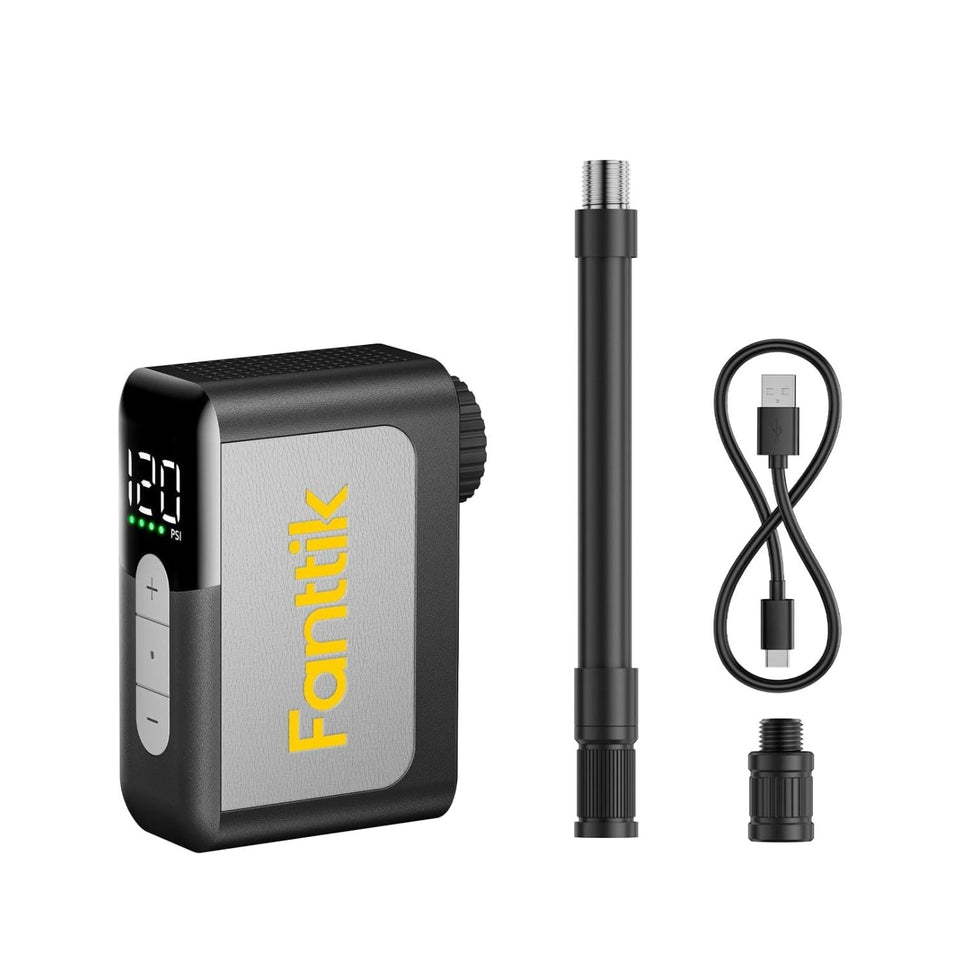 Fanttik X10 Ace Mini vs Tiny: Bike Pump Comparison and Buying Guide
Short answer: buy the X10 Ace Mini if you want the lower price and the lighter unit, and...
Fanttik X10 Ace Mini vs Tiny: Bike Pump Comparison and Buying Guide
Short answer: buy the X10 Ace Mini if you want the lower price and the lighter unit, and...
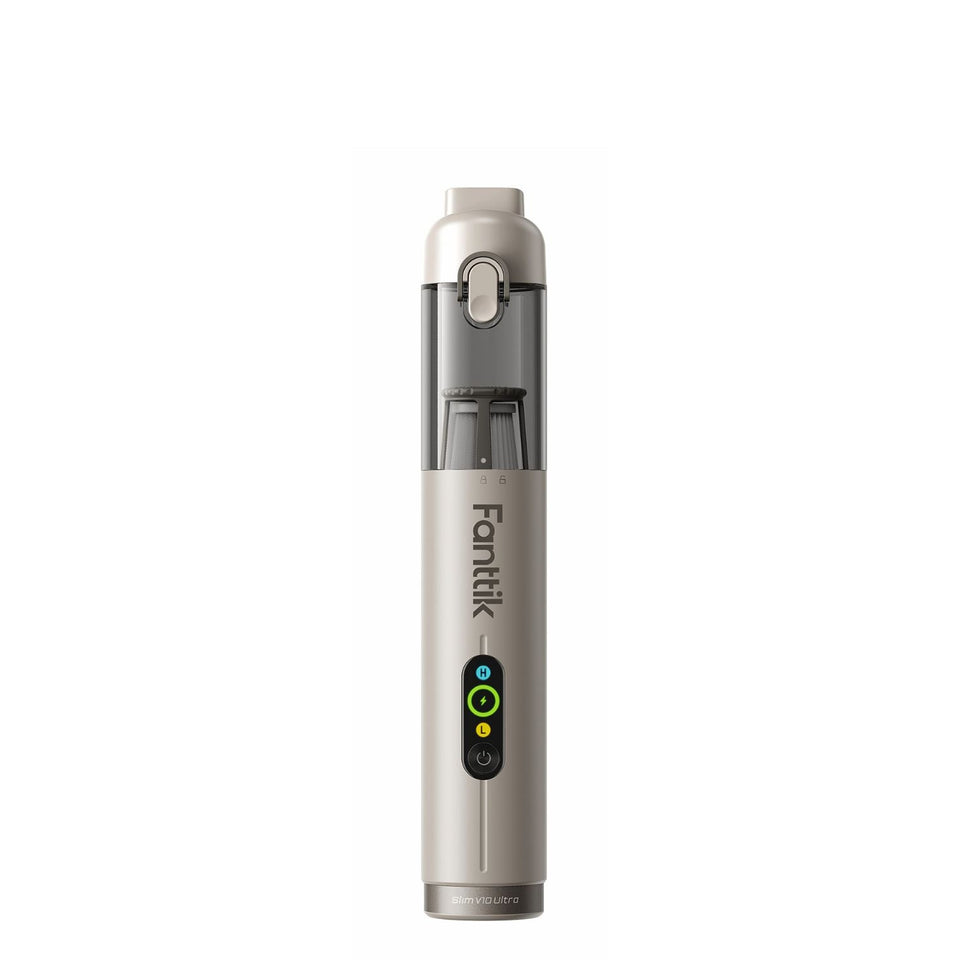 Best Car Vacuum: How to Choose by Suction, Runtime and Dustbin Size
A 19 kPa car vacuum only holds 19 kPa for about 13 minutes. Peak suction and runtime have...
Best Car Vacuum: How to Choose by Suction, Runtime and Dustbin Size
A 19 kPa car vacuum only holds 19 kPa for about 13 minutes. Peak suction and runtime have...

Leave a comment
This site is protected by hCaptcha and the hCaptcha Privacy Policy and Terms of Service apply.