










































Start with where the pump will be used. If you mostly add air at home before rides, pick a pump made for home use. If you need air on the road or trail, pick one you can carry, and if you need both, plan for both jobs instead of expecting one pump to cover everything.

Next, bike pump selection comes down to your bike. You need to know the pressure and air volume your tires need, whether you can read the gauge at that pressure, and whether the pump head fits your valve. A riding label like road, gravel, mountain, or commuting gives you a hint, but it doesn't make the choice for you.
Which Bike Pump Fits Your Riding Needs?
Choose by job first: home inflation, a backup for rides, or both. At this point, whether you pack an inflator like the Fanttik X8 Ace Portable Bike Pump or store a manual pump matters more than the kind of riding you do.
- Mostly home use: The pump lives in your garage, hallway, or apartment. Storage space and how easily you can read the pressure are the main limits, so size matters less than how easy the pump is to use. A pump that stays home won't help if you get a flat 10 miles out.
- Carried on rides: The pump has to fit how you carry gear, whether that's a jersey pocket, saddle bag, backpack, or a bike mount. A pump that's awkward to carry tends to get left behind, and then it isn't there when you need it. Stops on the road, on the trail, and on a commute can be different, so think about how the pump packs for the way you actually ride.
- Both jobs: If you top off your tires at home and also want a backup on rides, treat these as two separate needs. Buying for only one leaves the other need unmet.

Some riders solve the two-job problem with two pumps. The author of Bicycling's bike pump guide, for example, keeps a floor pump at home and carries a mini pump or inflator on every ride, such as the Fanttik X10 Ace Mini Bike Pump in a jersey pocket. That's one rider's setup, but it shows how the two jobs separate.
Commuters and recreational riders face the same split. Say you leave your bike at the office all day. You'll probably care most about a pump that stays on the bike or in your bag. A weekend rider who starts every ride from the driveway has a different problem: keeping tires at the right pressure before leaving, plus having a small backup for the ride itself. Once you know which job you're buying for, check your tires and valve next.
How Does Your Tire Setup Change the Pump Choice?
Your tires set the requirements, and the pump has to meet them. Use your tire's listed pressure and its air volume as your starting point, not the bike category.
Match Pressure Capability to the Tire's Requirement
A pump's maximum pressure is the highest PSI it's built to reach. Your tire's recommended pressure is the range you actually ride at. These are two different numbers. A higher maximum doesn't make a pump a better fit for your tires, and it tells you nothing about how fast the pump inflates. The real test is simpler. Cycling UK's floor pump guide says to check that the pump's pressure range matches what you need. If your riding pressure falls inside the pump's listed range, pressure isn't a problem. If it falls above that range, cross the pump off your list.
Check Air Volume and Gauge Range
Air volume is how much air the pump pushes with each stroke, so it controls how many strokes a tire takes to fill. It's a separate spec from maximum pressure. The same Cycling UK guide explains that on floor pumps, smaller-diameter plungers work better for higher pressures and lower volumes, like road bike tires. Larger-diameter plungers work better for lower pressures and higher volumes, like mountain bike tires. Treat those examples as general tendencies. A gravel bike or a wide commuter tire could land anywhere between them, so go by your own tire's pressure and volume.
The gauge is a third, separate check. A gauge that covers a wide range can still be hard to read at your riding pressure. Look at where your target PSI falls on the dial or display. If you can't read it clearly there, you'll have trouble setting pressure consistently, even when the pump itself can reach that pressure.
If you run high-volume, lower-pressure trail tires, our guide to high-volume mountain bike pumps covers tubeless pressure starting points and how to put together a trail-ready inflation kit.
Will the Pump Fit Your Bike's Valve?
A pump fits your bike when its head supports the valve on your wheel, or when the pump's documentation lists an adapter for that valve. Identify your valve first. This illustrated Presta and Schrader guide shows both valve types, so you can compare them to the valve on your wheel.
Then check which valves the pump head is listed to fit. Pump heads aren't all the same. Cycling UK notes that many floor pumps have a dual or adaptable head that fits both Presta and Schrader valves, but some fit only one or the other. The same guide notes that a Presta head also works on Woods valves.
Here's the decision. If the listed head matches your valve, the pump will connect. If it doesn't, rule the pump out unless the pump maker or the adapter maker lists an adapter for your valve. A head that lists both Presta and Schrader makes life easier if your household has bikes with different valves. For more on how the adapters work, our breakdown of bike valve adapters explains how Schrader and Presta adapters differ based on how each valve opens.
FAQs
Does a higher maximum PSI mean a pump inflates faster?
No. Maximum PSI is the ceiling the pump can reach, not a measure of speed. How fast a tire fills depends on how much air each stroke moves. On floor pumps, a smaller plunger is geared toward higher pressure and lower volume, so a high-pressure pump can take more strokes to fill a large-volume tire.
Can one pump work for both a road bike and a mountain bike?
It can if it passes the same checks for each bike. Its pressure range has to cover both tires' riding pressures, its gauge has to be readable at both pressures, and its head has to fit both valves. Plunger size leans a floor pump toward either high pressure or high volume. If you ride both bikes regularly, judge the pump mainly by the tire you inflate most often.
Will a Presta pump head work on a Woods valve?
According to Cycling UK, a Presta head also works on Woods valves. That means a pump with a Presta-compatible head can cover a bike with Woods valves too. For any other valve pairing, go by the valves the pump head is listed to fit.
Continue reading
 How to Connect an Electric Bike Pump to Presta Valves Without Leaking Air
Step-by-step guide to preparing a Presta valve, matching an electric pump's screw-on or push-on head, choosing direct fit...
How to Connect an Electric Bike Pump to Presta Valves Without Leaking Air
Step-by-step guide to preparing a Presta valve, matching an electric pump's screw-on or push-on head, choosing direct fit...
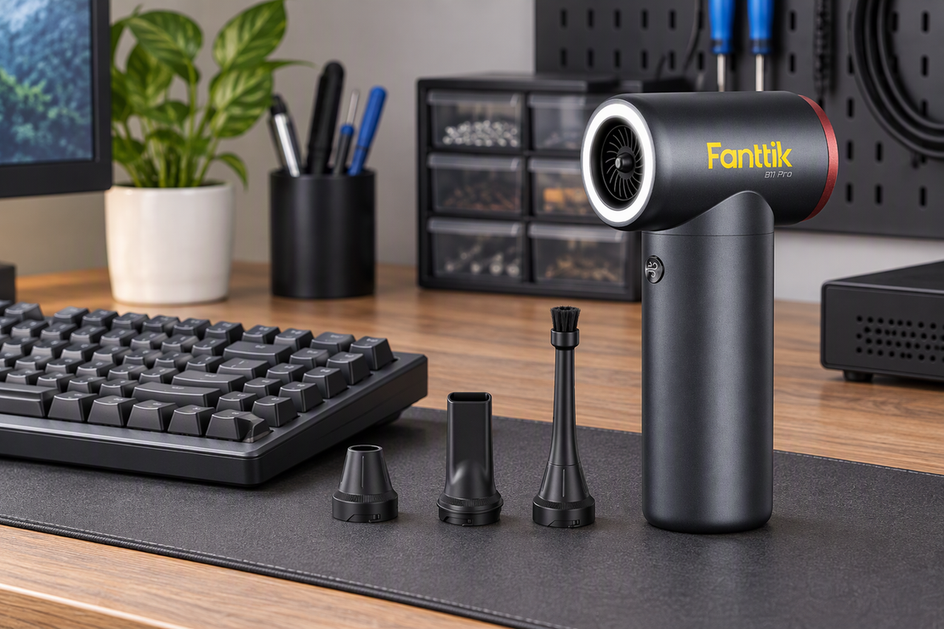 How to Choose an Air Duster for Electronics and Workshop Cleanup
A scenario-based guide to choosing an air duster for PCs and shop cleanup, covering device instructions, OSHA dust...
How to Choose an Air Duster for Electronics and Workshop Cleanup
A scenario-based guide to choosing an air duster for PCs and shop cleanup, covering device instructions, OSHA dust...
Leave a comment
This site is protected by hCaptcha and the hCaptcha Privacy Policy and Terms of Service apply.