









































Carry a portable bike pump if your plan needs to cover a second flat or a botched first attempt without running out of air. Choose a CO₂ inflator if saving pocket or saddle-bag space matters most and you're fine with each cartridge giving you one fill. Carrying both is an optional backup, not a requirement.

Neither one wins every ride. In the bike pump vs CO₂ choice, the real question is how many inflation attempts you need to cover before you can get more air.
Which Option Fits Your Roadside Repair Plan?
Choose based on how many fills you might need and how much room your kit has. This comparison covers manual tools such as a compact mini bike pump and frame pumps carried on the bike, excluding floor pumps or electric models.
| Option | Best fit | Practical limit |
|---|---|---|
| Portable pump | Riders who want repeat fills without spare cartridges | Usually bulkier; every fill takes your own effort |
| CO₂ inflator | Riders who want the smallest kit | One fill per cartridge; supply ends when cartridges do |
| Both (optional) | Riders who want CO₂ speed plus a reusable fallback | More gear to carry |
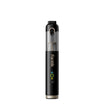
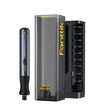
Why the pump keeps going. A dedicated manual pump, a palm-sized inflator like the Fanttik X8 Ace Portable Bike Pump, or a compact portable bike pump provides repeatable fills without requiring single-use gas canisters. That means it can handle a second puncture, a tube that wasn't seated right on the first try, or a slow top-up after a patch. You pay for manual tools in time and arm work at the roadside. For broader sizing options, explore this bike pump comparison guide.

Why CO₂ is a one-shot system. A CO₂ cartridge holds a fixed charge of gas. Once it's discharged into the tire, it's spent, and you can't refill it on the road. Each new CO₂ fill needs a new, unused cartridge. If you carry only one and it doesn't engage properly, or you lose most of the charge while fitting the head, you have no CO₂ left. This is the failure that changes a repair plan. It doesn't come down to inflation speed. It comes down to how many good fills are in your pocket.
Why size sits on a sliding scale. In general, a CO₂ setup takes up less room than most mini pumps. That gap shrinks as you add cartridges, and a very small mini pump can close it further. So "CO₂ is smaller" holds for a typical single-cartridge kit. Don't assume it holds for every combination.
An illustrative scenario. Picture a rider planning a long solo loop with stretches of rural road and no bike shop along the way. One cartridge covers one flat. A second puncture, or a cartridge that misfires, leaves that rider waiting for a ride home. For that route, a pump is the safer choice, or CO₂ with a pump as backup. A rider doing short laps near home, with a jersey pocket that's already full, gives up less by choosing compact CO₂.
Choice rule. If you can't rule out needing a second fill before you reach more air, carry a pump. If you can rule it out, or you're happy carrying enough cartridges to cover it, CO₂ saves the most space. Add the other tool only when a separate backup source is worth the extra weight to you.
Whichever tool you carry, it only adds air. You still have to find what caused the puncture, then patch or replace the tube. Learning how to fix a flat bike tire covers those steps from wheel removal to reinstalling the bead before inflating.
What Should You Do After Using CO₂?
After a roadside fill with CO₂, reinflate with air before your next ride. Treat the CO₂ fill as the thing that got you home. It is not your tire's setup for the next ride.
Once you're home, look the tire over and confirm the repair is holding. Then bring the tire back up with air from a pump. Inflate to the pressure that suits your tire and riding, not to the highest number your inflator or pump can reach. Those are two separate figures. The tool's maximum rating only tells you what the tool can produce. If you want a routine for those top-ups going forward, this bike tire pressure schedule explains how bike type, rider weight, and tire width affect how often to add air.
Presta valves can leak at the connection while you add air. If you hear a hiss at the head during reinflation, seating a brass Presta adapter correctly and checking the valve core can stop it.
Last, restock your kit. Replace any cartridge you used before the next ride. That way your saddle bag holds the same number of fills you planned around.
Decide your carry strategy before heading out: pack a pump if you venture far from help and need guaranteed repeatable fills, or choose CO₂ with fresh cartridges when minimal weight and packed size are your top priorities.
FAQs
Can I reuse a CO₂ inflator head?
The cartridge is the part that gets used up. It provides one fill and can't be refilled on the road. Some inflator heads can take a new cartridge and some can't, so it depends on the head's design. Before a ride, confirm with your inflator's instructions that the head accepts a fresh cartridge. Don't assume it does.
Does a spare cartridge give me a real backup?
Yes, but only for one more fill. A spare cartridge is a new single-use supply. It doesn't extend or reuse the one you already emptied. Carrying two cartridges covers two fills, assuming both engage cleanly, and then your CO₂ is gone. Extra cartridges also make the kit bigger, which reduces CO₂'s space advantage over a small mini pump.
Does an inflator's PSI rating tell me what pressure to run?
No. An inflator's or pump's maximum pressure is the most it can deliver. Your target is the pressure your tire is meant to run, which depends on the tire and on how you ride. A high maximum rating doesn't make a tool better for your tire. It only means the tool can go past the pressure you actually need.
Does this pump vs CO₂ comparison apply to floor pumps or electric inflators?
Not directly. This comparison is about the hand or frame pump you carry on the bike versus a CO₂ inflator. A floor pump is a home tool. It's the kind of air source you'd use for the before-the-next-ride top-up, not something you carry on the road. Electric inflators run on batteries, which adds a different set of tradeoffs that this roadside choice doesn't cover.
Continue reading
 Why Does a Detail Sander Leave Scratches?
A troubleshooting path for scratches left during detail sanding on wood: compare your grit history, check abrasive wear...
Why Does a Detail Sander Leave Scratches?
A troubleshooting path for scratches left during detail sanding on wood: compare your grit history, check abrasive wear...
 How to Drill Repeated Holes to a Consistent Depth
A practical walkthrough of stop collars, block stops, and tape marks for repeated holes, plus how to read...
How to Drill Repeated Holes to a Consistent Depth
A practical walkthrough of stop collars, block stops, and tape marks for repeated holes, plus how to read...
Leave a comment
This site is protected by hCaptcha and the hCaptcha Privacy Policy and Terms of Service apply.