









































Short answer: the best car vacuum for most people is a 1–1.2 lb handheld with around 19 kPa of peak suction and a 120 ml bin — enough for weekly interior cleaning without being awkward to hold. Pet owners should prioritise brush attachments over raw suction. Anyone cleaning a truck or a whole family car wants a larger 300–500 ml bin instead.
What "Suction Power" Actually Tells You — and What It Hides
Every car vacuum leads with a kPa figure, and it is the single most misread number in the category.
kPa measures sealed suction: how hard the vacuum pulls when the nozzle is completely blocked. It is a real measurement and it is genuinely comparable between models. What it does not describe is airflow — how much air moves through the nozzle when it is open, which is what actually lifts sand off a floor mat. Almost nobody in this category publishes airflow, so treat kPa as a useful ranking signal rather than a complete picture.
More importantly, the headline kPa figure is the maximum setting, and every model runs that setting for a fraction of its rated life:
| Model | Suction (max / eco) | Runtime (max → eco) |
|---|---|---|
| Slim V8 APEX | 19 kPa / 8 kPa | 13 min → 40 min |
| Slim V10 Ultra | 19 kPa / 10 kPa | 17 min → 35 min |
| Cruise V11 APEX | 17 / 14 / 9 kPa | 15 / 20 / 35 min |
Thirteen minutes at full power is not a flaw — it is enough to do a car interior, and it is the honest shape of every battery handheld. But it means the right way to read a spec sheet is as a pair: peak suction together with the runtime you get at that peak. A 19 kPa model you have to run in eco mode to finish the job is delivering 8–10 kPa in practice.
The Five Specs That Decide Which Model You Need
- Peak suction and the runtime at peak. Read them together, never separately.
- Dustbin capacity. 120 ml is right for a car cleaned regularly. If you empty the bin twice during one session, the bin is too small for your job — move to 300 ml or 500 ml.
- Weight. You hold this at arm's length under seats. The difference between 1.1 lbs and 2.56 lbs is very obvious ten minutes in.
- Attachments. For pet hair, sand and crevices, the nozzle does more work than the motor. A soft brush, a crevice tool and a flexible hose change results more than a few kPa.
- Whether you need blowing and inflating. Several models are 4-in-1 — vacuum, blower, inflator, pump — which matters if you would otherwise buy a separate air duster for vents and keyboards.
Full Car Vacuum Comparison
| Model | Suction (max / eco) |
Runtime | Dustbin | Weight | LED | Key feature | Price |
|---|---|---|---|---|---|---|---|
| V8 Mate | 13 / 9 kPa | 17–30 min | 120 ml | 1.2 lbs | — | Flexible hose + pet brush | $79.99 |
| Slim V8 APEX | 19 / 8 kPa | 13–40 min | 120 ml | 1.1 lbs | — | Vacuum / blower / inflator / pump | $99.99 |
| Slim V10 APEX | 19 / 10 kPa | 15–30 min | 120 ml | 1.2 lbs | ✔ | 4-in-1 with LED | $109.99 |
| Slim V10 Ultra | 19 / 10 kPa | 17–35 min | 120 ml | 1.2 lbs | ✔ | Largest accessory set (13 pieces) | $119.99 |
| Cruise V11 APEX | 17 / 14 / 9 kPa | 15 / 20 / 35 min | 300 ml | 2.03 lbs | ✔ | Three suction levels | $119.99 |
| Fold V10 APEX | 17 / 9 kPa | 13–35 min | 500 ml | 2.56 lbs | ✔ | Pivoting and extendable head | $129.99 |
All models charge over USB Type-C. Prices are accurate as of writing and change with promotions. The full range is on the Fanttik car vacuum collection.
Choose by How You Actually Clean
Weekly tidy-up of a commuter car
The Slim V8 APEX. At 1.1 lbs it is the lightest in the range, it hits the full 19 kPa, and 40 minutes in eco mode is far more than one car interior needs. It also blows and inflates, which covers vents and dashboard crevices without a second tool. The trade-off is no LED light — if you clean in a dark garage or at night, step up to the V10 APEX.
Pet hair
The V8 Mate if budget matters, the Slim V10 Ultra if it does not. Pet hair is an attachment problem, not a suction problem: fur weaves into upholstery and needs a brush to lift it before any vacuum can pull it away. The V8 Mate ships with a dedicated pet brush and a flexible hose at 13 kPa; the V10 Ultra brings 19 kPa plus a thirteen-piece accessory set that includes six brushes. Raw kPa alone will not solve embedded fur on either.
Family car with kids — crumbs, sand, and a lot of it
The Cruise V11 APEX. Its 300 ml bin is two and a half times the Slim series, which is the difference between emptying once and emptying four times. Its three-stage suction lets you run 9 kPa for 35 minutes on light debris and step up to 17 kPa only for ground-in spots. At 2.03 lbs it is heavier, which is the honest cost of the bigger bin.
Truck, large SUV, or detailing several cars
The Fold V10 APEX. The 500 ml bin is the largest here, and the pivoting extendable head is the feature that matters in a big cabin — it reaches under and behind seats without you having to climb in after it. At 2.56 lbs it is the heaviest in the range; it is designed for longer sessions where reach beats one-handed agility.
You want it to double as an air duster
The Slim V8 APEX, Slim V10 APEX, Slim V10 Ultra and Cruise V11 APEX all list vacuum, blower, inflator and pump functions. If you were also considering a separate electric air duster for keyboards and vents, one of these covers both jobs.
Where a Car Vacuum Is the Wrong Tool
- Cleaning your house. A 120–500 ml bin and 13–40 minutes of runtime is sized for a car interior. Using one on a whole home means constant emptying and recharging. Buy a stick vacuum for that job.
- Wet spills. These are dry vacuums. Liquid will damage the filter and the motor.
- Deep-cleaning stained upholstery. Vacuuming lifts loose debris. Set-in stains need an extractor or shampooer; no handheld substitutes for one.
- Large volumes of construction dust or ash. Fine dust clogs a compact filter quickly and can pass through into the motor.
Before You Buy: Four Things to Confirm
- How long is one cleaning session for you? If it is over 15 minutes, check the eco-mode runtime, not the max-mode one — that is the number you will live with.
- How often would you empty the bin? More than twice a session means you want 300 ml or 500 ml, not 120 ml.
- Do you have pets? Then check the brush attachments before you check the kPa.
- Are replacement filters available? Filters are consumables — suction loss is usually a clogged filter, not a failing motor. Replacement HEPA filters are stocked for the V10 series and the Cruise V11 APEX.
FAQ
What is a good suction power for a car vacuum?
For interior car cleaning, 15–20 kPa at maximum is a strong figure and anything above about 13 kPa is workable. Read it alongside runtime: a 19 kPa model typically holds that setting for 13–17 minutes before you need to drop to an eco mode of 8–10 kPa. Both numbers matter.
Is a cordless car vacuum strong enough to replace a corded one?
For a car interior, yes. Cordless handhelds in the 17–19 kPa range handle crumbs, dust, sand and pet hair in a vehicle. The limits are runtime and bin size, not power — which is why they suit cars and not houses.
What is the best car vacuum for pet hair?
One with a dedicated pet brush. Fur embeds into fabric and has to be agitated loose before suction can lift it, so the attachment set matters more than the kPa figure. The V8 Mate includes a pet brush and flexible hose; the Slim V10 Ultra pairs 19 kPa with a thirteen-piece accessory set of two crevice nozzles, six brushes, four blower attachments and a long hose.
How long do cordless car vacuums run?
Across this range, 13–17 minutes at maximum suction and 30–40 minutes in eco mode, with a 2–3.5 hour recharge. That is enough for one to two full car interiors per charge.
What size dustbin do I need?
120 ml suits a car cleaned regularly by one or two adults. 300 ml suits a family car with kids or a car cleaned every few weeks. 500 ml suits trucks, large SUVs and anyone detailing more than one vehicle in a session.
Why has my car vacuum lost suction?
Almost always a full bin or a clogged filter, not motor failure. Empty the bin, rinse or replace the filter, and check the nozzle for a blockage. Our car vacuum maintenance guide covers the full routine.
Related Guides
Continue reading
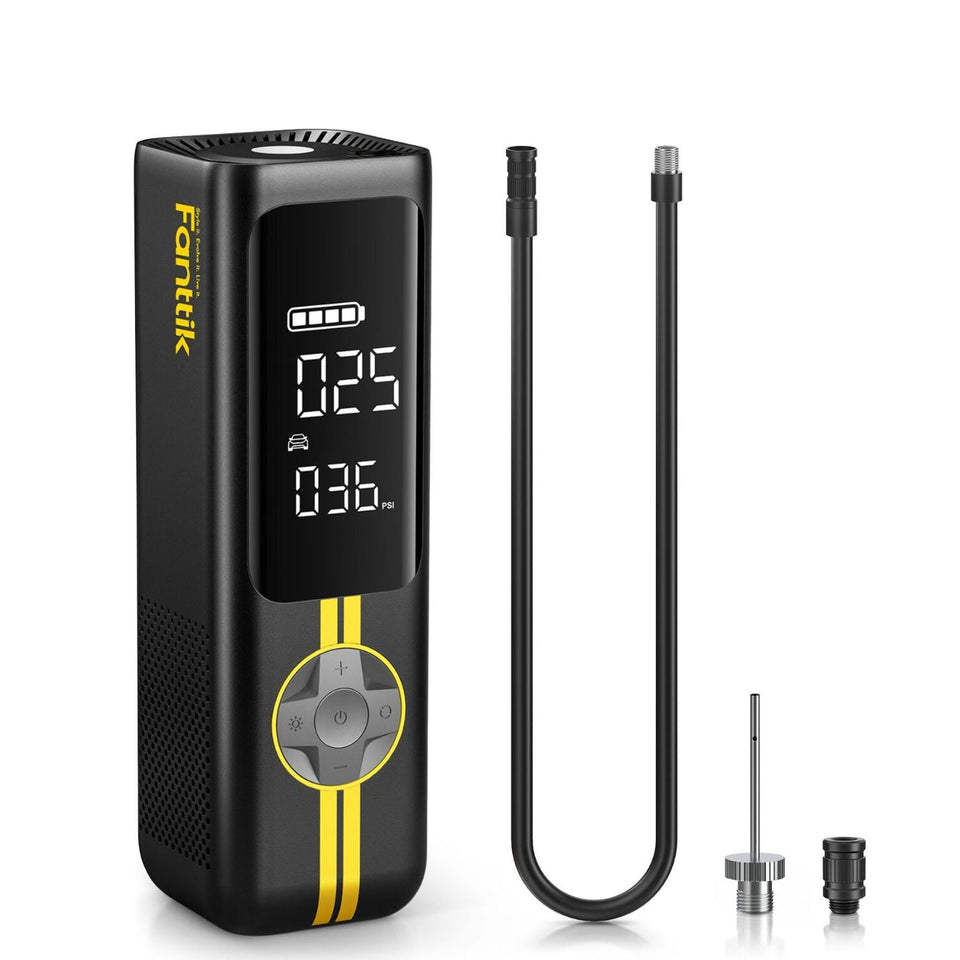 Best Portable Tire Inflator: How to Choose by Vehicle, Fill Time and Battery
Portable tire inflators are sold on a 150 PSI number that barely matters for cars. Here is what...
Best Portable Tire Inflator: How to Choose by Vehicle, Fill Time and Battery
Portable tire inflators are sold on a 150 PSI number that barely matters for cars. Here is what...
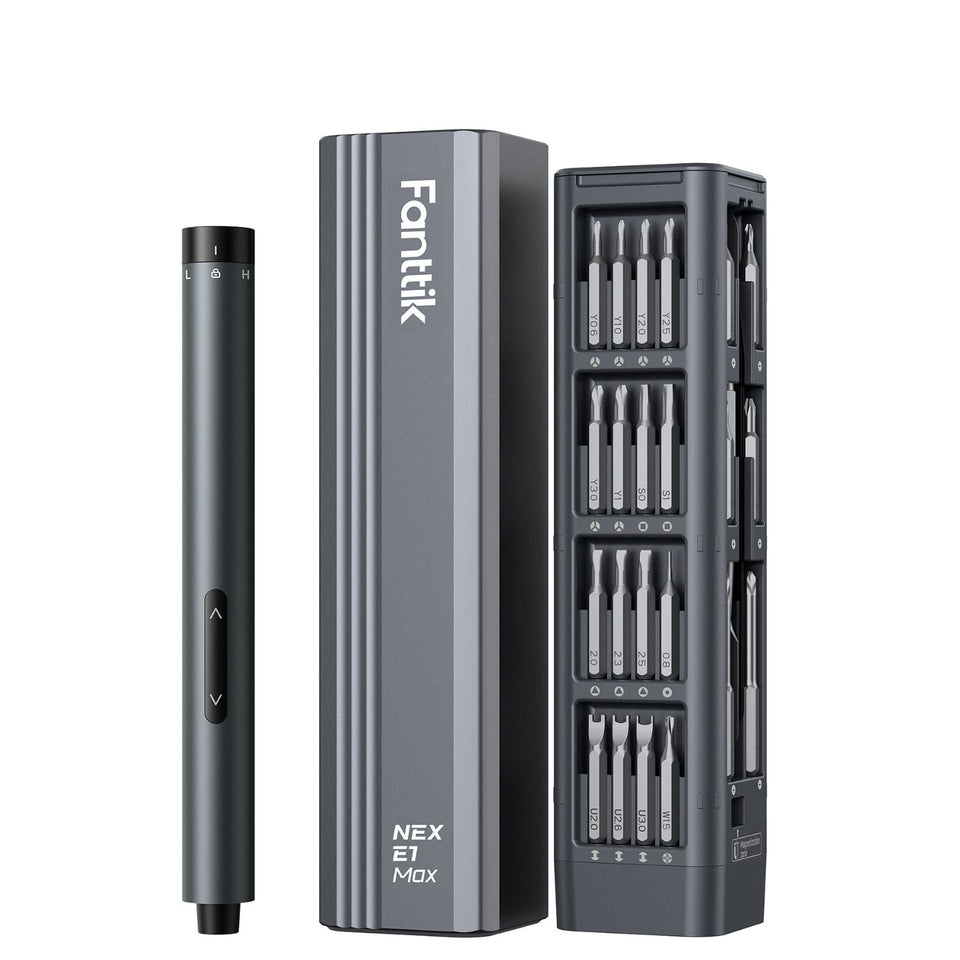 Fanttik vs HOTO Electric Screwdriver: How to Compare Them Fairly
Short answer: pick by torque range, not by badge. If you open cameras and watches, the Fanttik E1...
Fanttik vs HOTO Electric Screwdriver: How to Compare Them Fairly
Short answer: pick by torque range, not by badge. If you open cameras and watches, the Fanttik E1...
Leave a comment
This site is protected by hCaptcha and the hCaptcha Privacy Policy and Terms of Service apply.