












































To vacuum dry camping debris from a car trunk, start by picking out the larger loose stuff by hand. Then vacuum the remaining dry dirt, sand, and crumbs from the open carpet and work along the corners and seams. If you find wet mud or a spill, leave it out of this dry pass and clean it separately.

This order matters because a handheld vacuum works best on small, dry particles. Twigs, wrappers, and tent stakes can block the nozzle or keep it from reaching the carpet. Wet messes need a different method altogether, which we cover briefly below.
How to Vacuum Dry Camping Debris From a Car Trunk
Follow the debris from big and loose to small and stuck in the fibers. These steps adapt general car-carpet cleaning advice to the carpeted floor of a trunk, so match each tool tip to the attachments your handheld actually has.

- Empty the trunk and pick out larger debris. Take out gear bags, coolers, and chairs first. Then grab pinecones, sticks, food wrappers, stray tent stakes, and anything else you can lift by hand. AAA's carpet guide says to clear loose debris first so nothing gets in your way during vacuuming. When you're done, you should see only fine dirt, sand, crumbs, and small bits on the carpet.
- Sort wet from dry before you turn the vacuum on. Press a fingertip or the back of your hand on any dark patches. If a spot is damp, muddy, or sticky, skip it during this pass. AAA lists separate treatment for mud using water and gentle scrubbing instead of vacuuming. Consumer Reports also says to treat stains separately with a light spray of carpet cleaner and a damp microfiber cloth. Dry crusted dirt that crumbles when you touch it can stay in the vacuum pass.
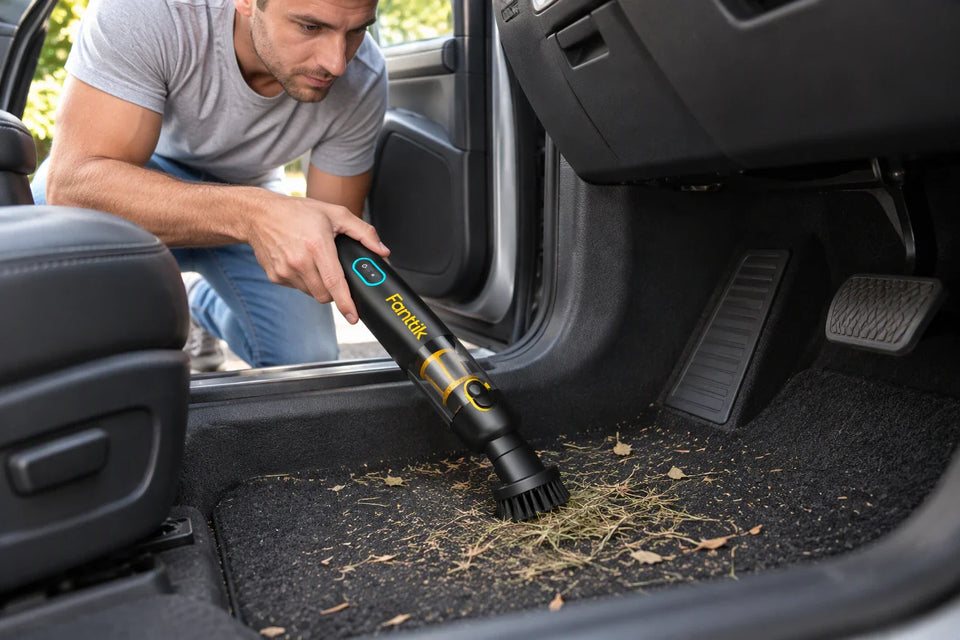
- Vacuum the open carpet. If your handheld comes with an upholstery brush, put it on now. Consumer Reports recommends an upholstery brush for crumbs and dirt, along with sand and pet hair, on car mats and carpet. Work slowly across the floor in overlapping strokes so you don't leave strips untouched. If you don't have a brush attachment, use the plain nozzle and move slowly enough for it to pick up the grit.
- Switch to the corners and seams. Sand and crumbs tend to collect where the carpet meets the trunk walls, around tie-down points, and along the edge by the rear seatbacks. AAA suggests using tools for carpet and corners: a broader upholstery tool for open areas and a crevice tool for tight spots. If your handheld includes a crevice tool, run it slowly along each seam. Without one, angle the nozzle edge into the gap as far as it fits.
- Check your work, then deal with any wet spots. Run your hand across the carpet and look closely at the corners in good light. If you still see or feel grit, go over that area again. Once the dry debris is gone, clean any muddy or damp spots you skipped using the separate method from step 2.
Sorting wet from dry before you start makes the whole job go smoothly. Say a corner of the trunk has a damp patch where a muddy boot sat. You can vacuum the rest of the carpet while that spot waits, then scrub it gently with water afterward. That keeps wet mud out of your dry pass and keeps loose sand out of your wet cleanup.
Before you put gear back in, empty the vacuum's dust cup if it looks full. A full bin can leave you with less pickup on your next pass, and campsite sand fills a small handheld quickly.
If you clean a stain or damp spot after the dry pass, use as little water as you can. Consumer Reports' carpet advice warns against soaking car carpet, because that can lead to mold and musty smells. Mist the spot lightly, work it with a damp microfiber cloth, and let the area dry fully with the trunk or windows open before you load the camping gear back in. A trunk closed over damp carpet stays wet much longer than an open cabin.
While the trunk is empty, check the hard trim around the carpet edge too. AAA suggests sweeping dust off lower door panels with a detail brush and vacuuming it up before it settles. The same idea works on the plastic trim around a trunk opening if you have a small brush on hand. Brush the dust down onto the carpet, then pick it up with one last pass.
FAQs
Should I remove a cargo mat before vacuuming the trunk?
Yes, if it lifts out. AAA's carpet guide says to shake out floor mats to remove loose dirt and debris before cleaning, and the same idea works for a removable trunk mat. Pull it out, shake it away from the car, and then vacuum the carpet underneath. Sand and crumbs often slip under the edges of a mat. If you leave it in place, that hidden layer gets missed.
What if dry dirt remains after the first pass?
Go back over the area with overlapping passes in two directions. For example, run front to back first, then side to side. AAA recommends this crosshatch pattern to loosen stubborn debris, because grit packed into carpet fibers can sit in place when you only pull the nozzle one way. Slow your strokes down on the spots that still feel gritty.
How should I handle wet mud I find in the trunk?
Leave it out of the dry vacuum pass. AAA recommends water and gentle scrubbing for mud on car carpet. Treat that as its own step after you finish vacuuming the dry debris. If the mud dries before you clean it, any crumbly dirt that comes loose can go into a later dry pass.
Can I use a handheld vacuum without attachments for this?
Yes. The bare nozzle can still pick up dry crumbs and sand. It just takes slower, more careful strokes on open carpet. For corners, angle the nozzle edge into each seam. A brush or crevice tool makes those areas easier, but only if your model comes with them. Without a brush, dry grit stuck deep in the fibers may need a few extra slow passes from different angles before it lets go. Check how much the nozzle picks up as you go, and empty the bin if suction starts to drop.
Continue reading
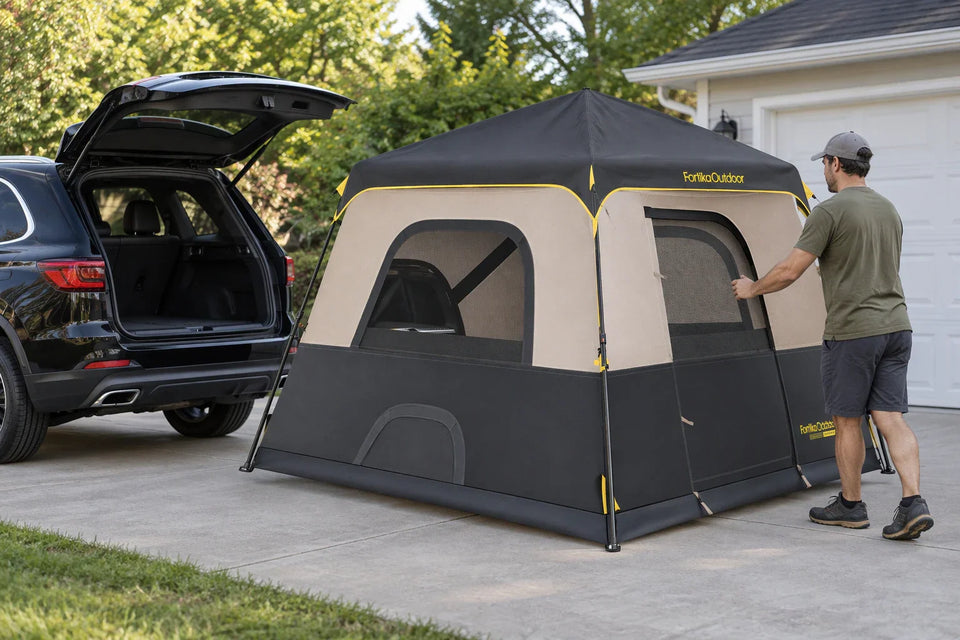 Setting Up an SUV Tent Solo: Plan the Vehicle Connection First
Find out when one person can attach an SUV tent: confirm fit, stage straps and poles before opening...
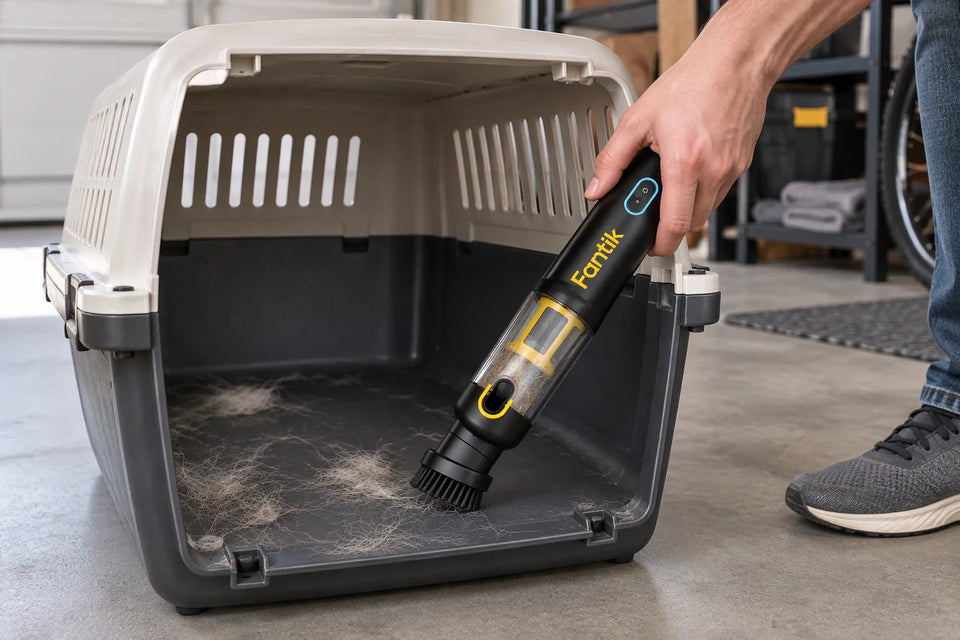 Cleaning a Pet Travel Carrier With a Car Vacuum
A step-by-step method for lifting loose dry fur and crumbs from a hard-sided travel carrier with a car...
Leave a comment
This site is protected by hCaptcha and the hCaptcha Privacy Policy and Terms of Service apply.