












































A safer road-trip coffee stop starts with parking. Brew only after the car is stopped somewhere that allows setup. Then treat the hot water, any spills and the used grounds as one planned routine before you pack up and drive on.
Two things set the details. Your brewer's manual covers heating and cleaning, and the stop itself sets the disposal rules. Check both before departure or once safely parked so the stop stays short and clean.
What Is the Safe Order for a Road-Trip Coffee Stop?
Run every road-trip coffee stop in the same order, and finish each step before you start the next one.
- Park fully first. CDC's distracted-driving guidance lists eating while driving as distracted driving and tells drivers not to multitask. Any coffee task that pulls the driver's attention waits until the car is parked.
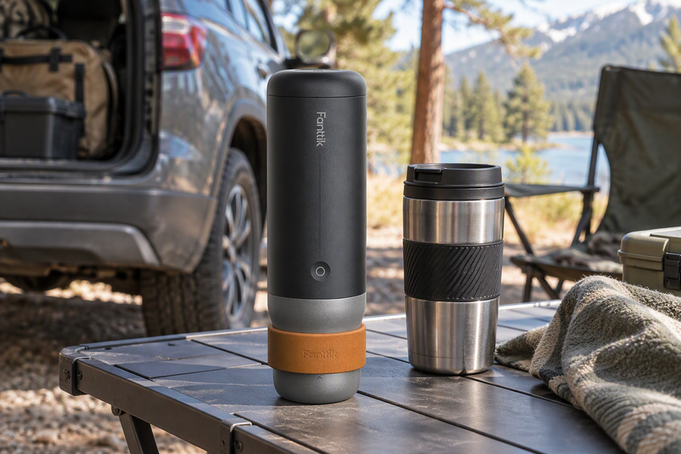
- Confirm the stop allows setup. Look for a flat, stable spot outside the car, such as a picnic table, where the brewer can sit the way its manual says.
- Prepare water and brew by your exact model's instructions. The next section covers how this changes by brewer type.
- Deal with spills right away. Have your cleanup supplies within reach before any water is hot.
- Dispose of grounds and wastewater by the stop's rules. Find those rules before you brew, not after.
- Clean and stow the brewer before anyone gets back on the road.

If you can't park fully where setup is allowed, or there's no spot to set the brewer up the way its instructions require, skip the brew and drive on to a better stop.
Prepare Water for the Exact Brewer
Water prep changes the most from one brewer to the next, so first confirm which type you packed. Your manual tells you that, plus the fill, heating and brewing limits.
If the Brewer Heats Its Own Water
Follow your model's documented sequence for filling, heating and brewing, in that order. A heating spec on a product page tells you the brewer can heat water. It doesn't tell you the fill line, the power source it expects or how to handle it while it's hot. Those details live in the manual. Save a copy to your phone before the trip so you aren't guessing at a rest stop with no signal.
If You Heat the Water Separately
Separately heated water adds a second piece of gear and an extra pouring step. Use the water requirements your brewer lists. Decide before the stop how you'll heat and pour, and do the pour at your outdoor setup spot, not inside the car. If you're drawing water from a stream or lake, the NPS guide to treating natural water says to bring it to a rolling boil for 1 minute below 6,500 feet, or 3 minutes above 6,500 feet. It also notes you can use that water for coffee. Boiling handles water treatment. Your brewer's manual still controls how much water goes in and how it brews.
Plan for Spills Before You Brew
Set up your spill plan before the water gets hot, because you won't have time to dig for towels once something tips. Clear the table around the brewer. Keep it back from the edge, and put paper towels or a cloth on the same surface so you can grab them fast.
Wait until hot spills and wet parts cool down before wiping surfaces or handling grounds. Once cool, wipe up drips and stray grounds. If your brewer has its own cleanup guidance, follow it for the parts that got wet.

Grounds sometimes end up in the car anyway, especially when you pack up in a hurry. If dry grounds land on the floor mats, a quick car cleanup routine can pick them up once you're done brewing. That way they don't get ground into the carpet over the next few hundred miles.
Dispose of Grounds and Wastewater by the Stop's Rules
Where grounds and wastewater can go depends on the stop, so look up the rules before you brew. Requirements vary by location, as shown by differing rules across campgrounds.
Local rules can even vary within a single park or recreation site. For example, Glacier National Park camping guidelines provide background on managing campsite impact and sanitation rules that apply strictly to park grounds rather than general road stops, and they do not establish an allowance for discarding coffee grounds.
At your own stop, look for posted signs, ask the campground host or check the venue's website. If you can't find a clear rule for grounds or for wastewater, the cautious choice is to seal each one in its own bag or lidded container. Carry them until you reach a disposal point you know is allowed. Pack those containers before you leave home so this step never becomes guesswork.
Clean and Stow the Brewer Before Leaving
Clean and pack the brewer according to its manual before the car moves. The manual tells you which parts come apart, which ones you can rinse and whether anything needs to dry before it's sealed in a case.
Once it's packed, keep it from sliding around. Loose gear can shift and rattle on bumpy roads, and these tips on securing gear on rough roads help keep the brewer and your waste containers in place. Keeping the brewer, towels and waste bags in one grab-and-go kit bin makes the next stop faster to set up.
Before you start the engine, do a quick look around. The brewer should be packed the way its manual describes, the waste should be sealed and stowed, and the table should be clear. Then you can drive on.
FAQs
Is it OK to sip coffee while I'm driving?
CDC lists eating while driving as a form of distracted driving and advises drivers not to multitask. Brewing, pouring and fixing your coffee all belong at the parked stop, before the driver gets back behind the wheel.
Can a passenger brew coffee while the car is moving?
Keep brewing at the parked stop for everyone in the car. A brewer and hot water in a passenger's lap can spill inside the cabin. Handing a drink across also pulls the driver's attention away from the road.
Do Glacier National Park's camping rules apply at other stops?
No. Park-specific campsite guidelines apply only within those designated boundaries. Always follow the posted rules for the rest area, park, or facility you are visiting, or pack out your wastewater and grounds if no disposal rules are posted.
Do all portable coffee makers clean and pack the same way?
No. Disassembly, rinsing, drying and storage steps depend on the model. Use the manual for the exact brewer you own, and don't borrow steps from a similar model.
Continue reading
 Can You Leave a Portable Tire Inflator in a Hot Car?
A powered-off inflator can stay in a parked car only when its model's storage guidance covers the heat....
 Checking Tire Pressure on a Cold Morning Before Your First Winter Drive
A step-by-step winter morning routine: get a true cold reading, match your vehicle's own target, and spot a...
Leave a comment
This site is protected by hCaptcha and the hCaptcha Privacy Policy and Terms of Service apply.