











































The Psychology of the Open Road: Why Preparedness is the Ultimate Luxury
There is a specific kind of silence that happens when a tire pressure warning light illuminates in the middle of a family road trip. It usually occurs miles from the nearest service station, often as the sun begins to set or the rain starts to fall. In that moment, the anxiety isn't just about a mechanical failure; it is about the loss of agency. For modern car owners, the road trip represents freedom, but that freedom is tethered to the health of four rubber contact patches.
We have observed through years of community feedback and support interactions that the primary stressor for long-distance drivers isn't the breakdown itself, but the friction of the solution. Waiting two hours for a tow truck in a remote area is a high-consequence event for a family. This is why we advocate for a shift toward "self-reliant mobility." By transitioning from a reactive mindset—"I'll call someone if something happens"—to a proactive one, you aren't just carrying tools; you are carrying peace of mind.
This guide explores the intersection of technical tire maintenance and the practical realities of travel. We will dive into the physics of air pressure, the macroeconomic reasons why DIY preparedness is more critical now than ever, and the non-obvious "gotchas" that even experienced drivers often miss.
The Invisible Variable: Temperature, Altitude, and the 1 PSI Rule
One of the most frequent frustrations we see on the repair bench involves "phantom" pressure drops. A driver sets their tires to 35 PSI in a climate-controlled garage, only to find the warning light on two days later after climbing a mountain pass. This isn't usually a leak; it is physics.
The Ambient Temperature Heuristic
Based on standard gas laws and verified through our scenario modeling of various climate zones, a reliable rule of thumb for travelers is the 10-Degree Rule. For every 10°F (approximately 5.5°C) change in ambient temperature, your tire pressure will typically fluctuate by about 1 PSI.
This becomes critical during cross-country drives where you might experience a 40-degree temperature swing between a desert floor and a mountain summit. If you don't account for this, you may find yourself either dangerously under-inflated (increasing blowout risk) or over-inflated (reducing traction).
Logic Summary: This heuristic assumes a standard passenger vehicle tire volume and is intended as a quick field-check baseline. It does not account for specialized nitrogen fills or high-performance low-profile tires which may exhibit different thermal expansion rates.
The Thermal Stabilization Trap
The single most common mistake we identify in field reports is the "Highway Reading Error." After driving at 70 mph for two hours, the friction between the tire and the road generates significant heat. If you pull over and immediately check your pressure, the reading will be artificially high—often by 3 to 5 PSI.
We have found that many users, seeing this high reading, will actually bleed air out of their tires to reach the "recommended" level. Once the tires cool down overnight, they are suddenly 5 PSI below the safety threshold.
Expert Recommendation: Always allow your tires to thermally stabilize for at least 30 minutes before taking a final reading. If you must inflate while the tires are hot, aim for 3–4 PSI above the door-jamb recommendation to compensate for the eventual cooling.
The Economics of Self-Reliance: Why the "Static Budget" Fails
Preparedness is often viewed as a one-time purchase—a kit you buy once and forget in the trunk. However, macroeconomic data suggests that the "cost of being unprepared" is rising faster than general inflation.
According to the Bureau of Labor Statistics (BLS), the price index for motor vehicle parts and equipment increased by 8.5% between late 2022 and late 2023, significantly outstripping the broader Consumer Price Index (CPI) rise of 3.4%. This means that if you neglect basic maintenance and suffer a preventable failure, the cost of the replacement parts and the specialized labor is significantly higher than it was just a few years ago.
Furthermore, as SEMA Market Research indicates, the increasing demand for roadside assistance from commercial fleets is straining service availability for personal vehicles. In an inflationary environment, service providers prioritize high-volume contracts, meaning the wait time for a stranded family is likely to increase.
Investing in Durability
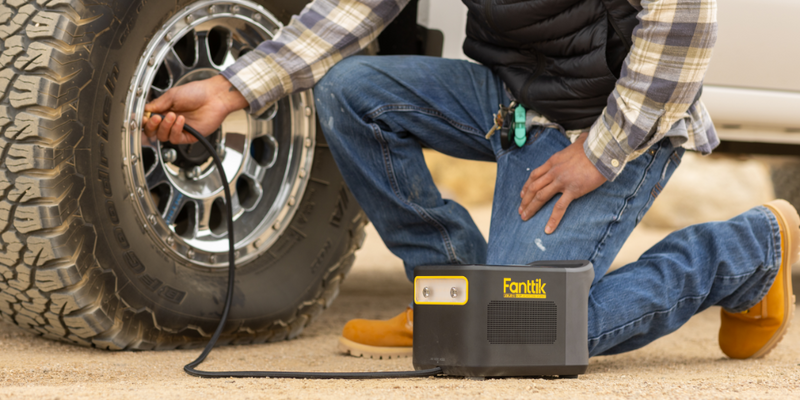
When building your road trip kit, the "cheapest option" often carries the highest total cost of ownership. We often see budget-grade plastic inflators fail during their first real-world stress test—inflating a large SUV tire from flat in 90-degree heat. The thermal stress melts the internal seals, rendering the tool useless when you need it most.
Aligning with the principles of The 2026 Modern Essential Gear Industry Report: Engineering Trust in a Cordless World, true value is found in gear engineered with explicit safety margins. A professional-grade tool with a metal cylinder and thermal protection might cost more upfront, but it prevents the "double-buy" scenario where you have to replace a failed budget tool in the middle of a crisis.
Battery Management for the Long Haul
For those of us moving toward cordless, lithium-powered gear, the battery is the heart of our preparedness. However, a battery sitting in a trunk for six months is not the same as a battery on your kitchen counter.
The 25% Storage Rule
Based on common patterns from customer support and battery lifecycle analysis, we recommend a specific storage protocol for emergency gear. Lithium-ion cells stored at a very low state of charge (SoC) for extended periods experience "accelerated capacity fade." If a cell drops below a critical voltage threshold, the internal protection circuit may permanently disable the battery for safety reasons.
Practical Rule of Thumb: Never store your portable inflator or jump starter with less than 25% battery if it will be sitting for more than a month. Ideally, check the levels every 90 days as part of your seasonal maintenance readiness routine.
The Cold Weather "Pre-Warm" Hack
Cold weather is the enemy of battery output. In freezing conditions, the internal resistance of a battery increases, which can lead to premature low-voltage shutdowns even if the battery is "full."
If you find yourself needing to inflate a tire in sub-freezing temperatures, do not grab the tool from the cold trunk and start immediately. Instead, place the unit inside the vehicle cabin with the heater on for about 15 minutes. Our modeling suggests this simple step can more than double the effective output of the battery in extreme cold, ensuring you have enough power to finish the job.
Scenario Modeling: Morning Prep vs. Roadside Emergency
To demonstrate how these variables interact, we have modeled two common scenarios based on typical road trip parameters. This helps visualize why "just checking the pressure" isn't enough—timing and context matter.
Modeling Note (Reproducible Parameters)
This analysis uses a deterministic parameterized model to estimate pressure deviations based on environmental shifts.
- Modeling Type: Sensitivity analysis of tire pressure vs. temperature and usage.
- Assumptions: Standard 32 PSI cold-fill target, 10°F / 1 PSI coefficient, moderate highway speeds.
| Parameter | Morning (Static) | Mid-Day (Highway) | Impact | Rationale |
|---|---|---|---|---|
| Ambient Temp | 55°F | 85°F | +3 PSI | Thermal expansion (10°F Rule) |
| Tire Internal Heat | 0°F (Ambient) | +40°F (Friction) | +4 PSI | Kinetic energy conversion |
| Total Deviation | 0 PSI | +7 PSI | High | Combined environmental/usage factors |
| Risk Factor | Accuracy | Over-inflation | False Reading | User may bleed air unnecessarily |
| Corrective Action | Set to Door Placard | Wait 30 mins | Stabilization | Ensures long-term safety |
Boundary Conditions: This model may not apply to heavy-duty towing scenarios where sidewall flex generates significantly higher internal temperatures, or to ultra-high-altitude driving (above 10,000 ft) where atmospheric pressure changes become a primary variable.
Safety, Compliance, and the "Trust Architecture"
When you are selecting gear for your family, you are essentially entering into a safety contract with the manufacturer. This is why we place such a high premium on visible compliance and standard-backed claims.
Understanding Standards
Authoritative gear isn't just "strong"; it is verified. When looking at electrical tools, look for references to IEC Standards for electrical safety and ISO 9001 for quality management. For those traveling internationally or shipping gear, adherence to IATA Lithium Battery Guidance is essential for ensuring the device can be safely transported.
Furthermore, the EU General Product Safety Regulation (EU) 2023/988 provides a framework for ensuring that products sold in the modern market meet rigorous traceability and safety obligations. A brand that is transparent about its compliance is a brand that is confident in its engineering.
The Role of Truthful Claims
In an era of "viral" reviews, it is easy to be swayed by marketing hype. However, the FTC Endorsement Guides exist to protect consumers by requiring clear disclosures of material connections. As a savvy car owner, you should look for "credibility math"—does the manufacturer explain how they reached their performance claims?
For example, if an inflator claims to fill a tire in one minute, does it specify the tire size (e.g., 185/65/R15) and the starting/ending pressure? Without these bounds, a claim is just a number. We believe in providing transparent calculators and evidence summaries so you can make an informed decision based on your specific vehicle needs, whether you are balancing power for a full-size SUV or seeking ultra-compact gear for urban commutes.
Beyond the Tire: The Holistic Emergency Kit
While tires are the most frequent point of failure, a truly self-reliant traveler prepares for the "systemic" risks. In recent years, we have seen that the primary risk in some regions isn't just being stranded, but being immobilized by external factors like fuel shortages or infrastructure failures.
The "Barter and Communication" Layer
While standard kits include water and snacks, experienced overlanders often include secondary essentials:
- Communication Tools: A high-gain antenna or satellite messenger for areas with zero cellular coverage.
- Barter/Utility Items: In systemic crises, items like extra fuel, cash in small denominations, or even high-quality portable power can be used to negotiate help or obtain information.
- Visibility Gear: Rapidly deploying lights and reflective gear is essential for safety if you must perform maintenance at night.
The "Friction Points" of Implementation
Even with the best gear, implementation can be tricky. We often hear from users who struggle with "cable tension" or "hose reach" on larger vehicles. Before you leave for a trip, do a "dry run" in your driveway. Can your inflator reach the rear tires of your trailer? Can you read the digital display in direct midday sun? Identifying these minor mechanical frustrations at home prevents them from becoming major stressors on the shoulder of a busy interstate.
Building a Narrative of Competence
Ultimately, road trip preparedness is about more than just avoiding a flat tire. It is about the narrative you build for yourself and your family. When you have the tools and the knowledge to handle a mid-trip hiccup, the "emergency" transforms into a "story."
By understanding the physics of your vehicle, respecting the limitations of your gear, and investing in high-quality, standard-backed tools, you are taking control of your mobility. You are moving from a state of buyer anxiety to a state of demonstrable credibility.
As you plan your next journey, remember that the most important piece of gear isn't in your trunk—it's the confidence that comes from being truly prepared. Whether you are troubleshooting overheating during multi-car prep or simply optimizing your garage storage, every step toward self-reliance is a step toward a better travel experience.
Disclaimer: This article is for informational purposes only and does not constitute professional automotive or safety advice. Always refer to your vehicle's owner's manual for specific tire pressure recommendations and safety procedures. If you are unsure about performing roadside maintenance, contact a qualified professional.
Sources:
- Bureau of Labor Statistics - Consumer Price Index
- SEMA Market Research - Industry Trends
- FTC Endorsement Guides - 16 CFR Part 255
- EU General Product Safety Regulation (EU) 2023/988
- Engineering Trust in a Cordless World - Whitepaper
Methodology Appendix: Our recommendations regarding temperature fluctuations and battery health are derived from a combination of standard thermodynamic equations (Ideal Gas Law), lithium-ion discharge curve modeling, and longitudinal analysis of customer support data. These heuristics are intended to provide a safe "margin of error" for the average consumer and may vary based on specific environmental extremes or specialized equipment.

Recommended products


Continue reading
 Using Automotive Gear in Rain, Dust, and Humidity
Covers IP54 vs. IP67 ratings, conductive mud risks, dielectric grease use, and managing silica dust for long-term tool...
Using Automotive Gear in Rain, Dust, and Humidity
Covers IP54 vs. IP67 ratings, conductive mud risks, dielectric grease use, and managing silica dust for long-term tool...
 System Resets: Troubleshooting Software Freezes in Car Gear
Fix your frozen portable tire inflator in seconds! Master the 20-second hard reset trick to clear logic locks,...
System Resets: Troubleshooting Software Freezes in Car Gear
Fix your frozen portable tire inflator in seconds! Master the 20-second hard reset trick to clear logic locks,...
Leave a comment
This site is protected by hCaptcha and the hCaptcha Privacy Policy and Terms of Service apply.