








































Installing a Nest thermostat is supposed to be easy, but the actual screws involved are tiny and easy to strip with a normal cordless drill. The Nest base plate uses Phillips #1 or #2 into a wall plate that's often into drywall anchors; the Nest Learning Thermostat 4th gen uses some slightly larger screws but still in the precision territory. A precision electric screwdriver with low-torque control is the right tool, not a Milwaukee cordless drill.
The Quick Answer
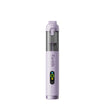
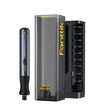
The Fanttik E1 MAX is the right electric screwdriver for Nest thermostat installation. Its low-torque modes handle the tiny mounting screws without stripping, and the manual 3 Nm mode handles seating wall-anchor screws into drywall without splitting.
Why Nest Installation Is Trickier Than It Looks
Nest's installation flow assumes you have a screwdriver. The "included" screwdriver in some Nest kits is a budget manual driver that strips Phillips heads after two installs. DIY installers reach for a cordless drill, which is too coarse for the Nest base plate and the wall-anchor screws — drywall doesn't tolerate over-torque, and the screws strip easily under uncontrolled torque.
The Specs You Need to Know
| Nest install task | Screw type | Torque needed | E1 MAX setting |
|---|---|---|---|
| Remove old thermostat base plate | Phillips #2 | 0.3-0.5 Nm | Manual mode |
| Mount Nest base plate to drywall anchor | Phillips #1 (Nest-provided) | 0.3-0.5 Nm | Manual mode (stop at flush) |
| Mount Nest base plate to wood stud | Phillips #1 self-tapping | 0.4-0.6 Nm | Manual mode |
| Tighten wire terminals on Nest base | Slotted (flat) micro | 0.05-0.1 Nm | Low torque |
| Attach thermostat to base | Snap-on (no screw) | — | — |
Why Wire Terminals Need Low Torque
The Nest thermostat has spring-loaded wire terminals you press to insert wires, but the Nest E and some older trims use small slotted set screws to clamp wires. Those set screws are 1.5-2 mm wide. A cordless drill on slotted will either spin out (stripping) or overtighten and snap the screw head off. The E1 MAX's 0.05 Nm low-torque mode is exactly the right pressure for these.
Step-by-Step: Install a Nest Learning Thermostat
- Turn off the HVAC system at the breaker. Confirm power is off via a non-contact voltage detector.
- Remove the old thermostat. Use the E1 MAX in manual mode with Phillips #2 to back out the old mounting screws.
- Label and disconnect wires.
- Hold the Nest base plate against the wall. If wire holes don't align with anchor positions, mark new anchor positions.
- Drill anchor holes if needed. Insert plastic anchors with a hammer tap (not the screwdriver).
- Set the E1 MAX to manual mode and use Phillips #1 to drive the Nest mounting screws into the anchors. Stop when the base sits flush.
- Insert wires into the spring terminals according to the Nest guide.
- Snap on the Nest thermostat. Turn power back on at the breaker. Walk through the setup.
What to Watch Out For
- Drywall anchors that came with the old thermostat are often too big for Nest. Don't reuse them — use the Nest-supplied anchors.
- If your wall is plaster (older homes), the drywall anchors won't hold. You need plaster-specific anchors and a slightly longer screw.
- Don't power the HVAC system back on until you confirm the Nest base plate is sitting flush. A gap can cause an air-gap reading from the thermostat sensor that throws off temperature accuracy.
FAQ
Q: What screwdriver do I need for a Nest thermostat?
A: A precision electric screwdriver with low-torque control. The Fanttik E1 MAX with Phillips #1 / #2 bits covers every Nest install.
Q: Can I use a regular cordless drill?
A: Not recommended. The Nest base plate screws are easy to strip under cordless-drill torque, and the wire-terminal set screws on some models are too small for cordless control.
Q: Will the E1 MAX work on Nest Learning Thermostat 4th gen?
A: Yes. The 4th gen uses similar Phillips screw sizes and same wire-terminal arrangement as the previous generations.
Verdict
The Fanttik E1 MAX is the right electric screwdriver for any Nest thermostat installation. The bit set covers every screw on a Nest install; the torque range handles drywall anchors without splitting and wire terminals without stripping.
Related reading: Best electric screwdriver for Ring doorbell · Best electric screwdriver for iPhone repair · Best electric screwdriver for LEGO Technic

Leave a comment
This site is protected by hCaptcha and the hCaptcha Privacy Policy and Terms of Service apply.