





























The Invisible Threat: Why Roadside Heat Is the Ultimate Test of Battery Engineering
When we discuss automotive preparedness, we often focus on the immediate utility of a tool—how fast it inflates a tire or how many times it can jump-start a V8 engine. However, in our engineering and support labs, we focus on a much more silent and pervasive threat: the "bake-out" effect. This phenomenon occurs when a vehicle is left in direct sunlight, transforming a closed trunk or cabin into a thermal oven.
For the tech-savvy prosumer, understanding the engineering required to survive these conditions is the difference between a tool that works in a crisis and one that fails when you need it most. In this deep dive, we will explore the thermodynamics of automotive environments, the specific failure modes of high-density lithium batteries, and the sophisticated Battery Management System (BMS) logic required to ensure long-term reliability.

The Physics of the Trunk: Understanding the 70°C Threshold
It is a common misconception that a battery only faces thermal stress during use. In reality, the most significant degradation often happens while the tool is "at rest" in a parked car. According to industry observations and environmental stress testing methodologies, such as those outlined by Logicbus, internal vehicle temperatures can exceed 70°C (158°F) when ambient outdoor temperatures are only 35°C (95°F).
This thermal soak creates a high-energy environment for lithium-ion cells. At these temperatures, the chemical stability of the electrolyte begins to face pressure. While most high-quality cells are rated for storage up to 60°C, the automotive environment frequently pushes past this safety margin.
The "Bake-Out" Effect and Thermal Soak
When a car sits in the sun, the glass and metal chassis act as a greenhouse. The heat is absorbed and then radiated into the interior plastics and storage compartments. Because trunks often lack active ventilation, the heat becomes trapped. We refer to this as the "thermal soak period"—the time it takes for the internal components of a portable device to reach equilibrium with the scorching cabin air.
Logic Summary: The Automotive Thermal Model Our engineering analysis of the "bake-out" effect assumes the following parameters based on common industry heuristics for vehicle cabin thermodynamics:
Parameter Estimated Value Unit Rationale Ambient Air Temp 35 - 40 °C Typical summer day Solar Load 800 - 1000 W/m² Direct sunlight exposure Cabin Gain Factor 1.8x - 2.1x Ratio Greenhouse effect multiplier Equilibrium Time 120 - 180 Minutes Time to reach peak soak Peak Internal Temp 70 - 75 °C Measured in closed trunks Note: This is a deterministic scenario model used for component selection, not a controlled lab study of every vehicle make.
Component-Level Vulnerabilities: Beyond the Battery Cell
While the battery cell itself is the most discussed point of failure, our teardowns and field returns often reveal that the supporting electronics are equally vulnerable. In compact, high-power-density tools like portable tire inflators, the failure isn't always a "venting" cell; it is often a fatigue-related failure in the circuitry.
Solder Joint Fatigue and PCB Traces
Repeated thermal cycling—the daily swing from cool nights to 70°C afternoons—causes materials to expand and contract. Because the PCB (Printed Circuit Board), the solder joints, and the copper traces all have different Coefficients of Thermal Expansion (CTE), they pull against each other.
In cost-optimized designs, these stresses eventually lead to micro-cracks in the solder joints. Over time, these cracks increase electrical resistance, leading to localized "hot spots" when the tool is finally turned on. In extreme cases, the trace can sever entirely, rendering the device dead. To counter this, we often see engineers derating components by 20-30% for automotive applications, ensuring that even under thermal stress, the components are operating well within their physical limits.
The Impact of Deep Discharge in High Heat
Heat accelerates the self-discharge rate of lithium batteries. If a user ignores a low-battery warning and leaves the device in a hot trunk, the battery may enter a "deep discharge" state. At high temperatures, this can cause permanent damage to the cell chemistry, leading to a loss of capacity or an inability to hold a charge. This is why Preserving Battery Health During Seasonal Trunk Storage is a critical topic for any vehicle owner.
The BMS Architecture: Engineering the "Brain" for Heat
A sophisticated Battery Management System (BMS) is the primary line of defense against thermal failure. However, not all BMS designs are created equal. In safety-critical automotive applications, the BMS must do more than just monitor voltage; it must proactively manage the thermal environment.
Ambient Temperature Sensing and Dynamic Cut-offs
Many standard BMS designs only monitor the temperature of the battery cells themselves. While this is important for preventing Thermal Runaway, it misses the broader environmental context.
Robust engineering requires the inclusion of ambient temperature sensors on the PCB. This allows the BMS logic to adjust cut-off voltages dynamically. For example, if the ambient temperature is 65°C, the BMS may lower the maximum discharge current or prevent the device from starting until it has cooled down. This "thermal throttling" is essential for protecting the longevity of the motor driver and the battery cells.
The Criticality of Sensor Placement
A common "gotcha" in cheaper designs is the use of a single temperature sensor. If that sensor is placed on a cool part of the PCB, it may miss localized hot spots near the motor driver or the power MOSFETs. As we've noted in our technical reviews, Thermal Throttling: How Smart Sensors Protect Your Inflator Motor depends entirely on the strategic placement of multiple thermistors to catch heat spikes before they cause damage.

The Insulation Paradox: Why More Isn't Always Better
When designing for heat, the instinctive reaction is to add more insulation. However, in the world of battery engineering, this can be a double-edged sword. This is what we call the "Insulation Paradox."
Thermal Isolation vs. Thermal Conductivity
Conventional wisdom suggests that high thermal conductivity is always good because it moves heat away from the cells. But in a 70°C trunk, a highly conductive enclosure can actually act as a conduit, pumping ambient heat into the battery core.
The optimal strategy is often a combination of:
- Selective Thermal Isolation: Using materials that slow the transfer of heat from the outside environment into the battery compartment.
- Controlled Heat Dissipation: Ensuring that when the tool is running, the heat generated by the motor and cells can still escape.
Research into Passive Cooling Systems suggests that for roadside applications, natural convection and radiative fins are often more reliable than complex active systems (like fans), which introduce their own points of failure.
The Risk of Trapped Heat
Conversely, placing heavy insulation between individual cells can be dangerous. While it may limit heat diffusion during a single-cell failure, it can also trap the heat generated during normal high-power use (like inflating four large SUV tires in a row). This trapped heat accelerates degradation and increases the risk of the system reaching its thermal cut-off prematurely. Engineering a balance between these two needs is what separates a "designed" product from a "resold" one.
Compliance, Standards, and Engineering Trust
In a market flooded with generic options, adherence to international safety standards is the most reliable proxy for quality. For portable lithium-powered tools, several frameworks govern how they must handle heat and stress.
IEC 60086-4 and UN 38.3
The IEC 60086-4 standard specifically addresses the safety of lithium batteries under various stresses, including thermal abuse. Furthermore, all portable batteries must pass UN 38.3 testing to be legally transported. This testing includes a "Thermal Test" where batteries are stored at 72°C for six hours, followed by rapid cooling.
EU General Product Safety Regulation (GPSR)
For consumers in the European Union, the General Product Safety Regulation (EU) 2023/988 mandates that products must be safe under "reasonably foreseeable conditions of use." In the context of automotive tools, this means the manufacturer must account for the fact that the tool will be left in a hot car. Failure to engineer for these conditions is not just a technical oversight; it is a compliance risk.
Field Data: Learning from the Roadside
Our understanding of battery safety isn't just theoretical; it's grounded in field data and pattern recognition from thousands of user interactions. According to The 2026 Modern Essential Gear Industry Report, trust in cordless tools is built on "credibility math"—the systematic reduction of failure points.
Common User Pitfalls
One of the most frequent patterns we see in warranty claims is the "Heat-Discharge Cycle." A user leaves a device in a hot car for months. The heat increases self-discharge. When they finally need the tool, the battery is at 10%. They attempt to use it, the high current draw creates a massive internal heat spike, and the BMS (rightfully) shuts the unit down to prevent damage. The user perceives this as a "broken" tool, but it is actually the safety engineering doing its job.
The "Boring Excellence" Checklist
To ensure your portable tools remain reliable in the heat, we recommend the following "shop rules" based on our engineering observations:
- Check Charge Quarterly: High heat accelerates discharge. Aim to keep tools between 50% and 80% charge for storage.
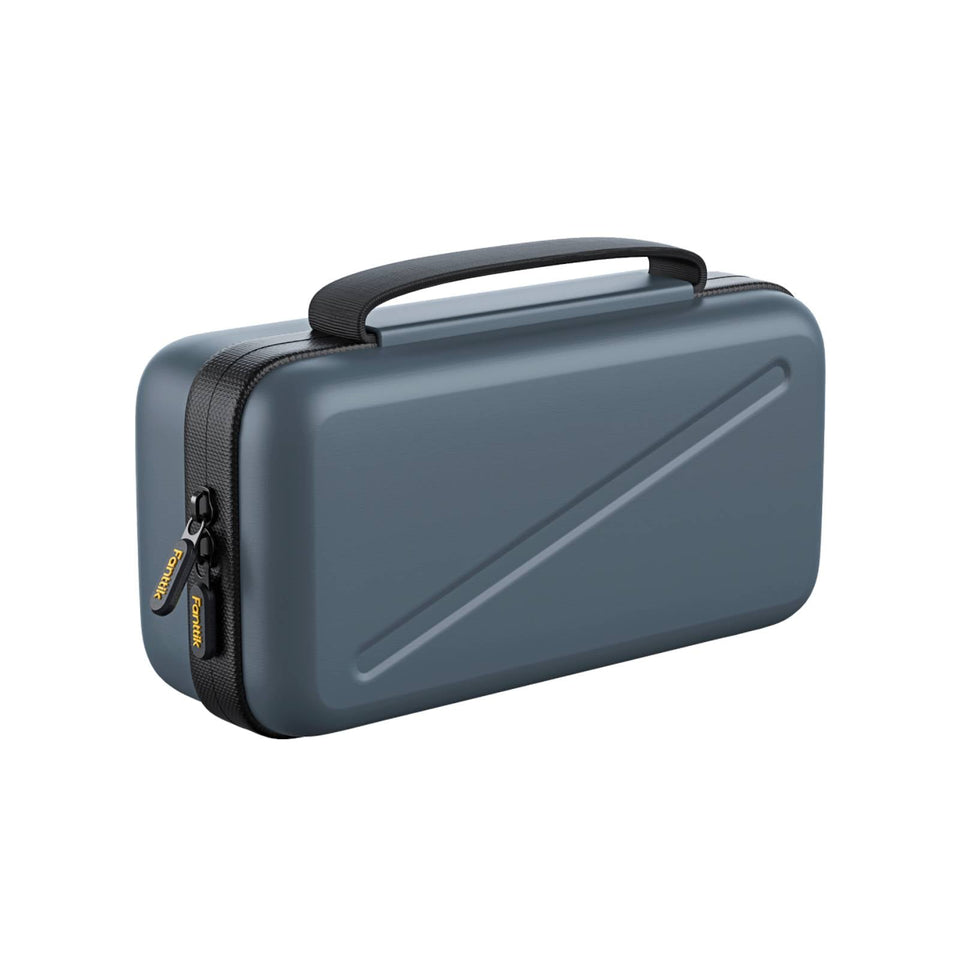
- Avoid Direct Sunlight: Even if the trunk is hot, keep the tool in its carrying case or under a seat to avoid direct solar radiation.
- Allow for "Cool Down" Time: If a tool feels hot to the touch after being in the trunk, give it 10 minutes in the shade before using it for a high-load task like tire inflation.
Hardening the System for the Real World
Protecting a battery from roadside heat requires a holistic approach. It is not enough to have a good cell; you must have a hardened system. This includes:
- Solder Joint Integrity: Using high-quality alloys and PCB designs that account for CTE mismatch.
- BMS Logic: Incorporating ambient sensing and multiple thermistors.
- Material Science: Balancing insulation and conductivity to manage the "Insulation Paradox."
By focusing on these "boring" engineering details, we can ensure that when you reach for that emergency tool on a 100-degree day, it doesn't just look good—it performs with the reliability you expect from safety-critical gear.
Disclaimer: This article is for informational purposes only and does not constitute professional engineering or safety advice. Lithium-ion batteries can be hazardous if mishandled or exposed to extreme conditions. Always refer to your specific product's user manual for safety guidelines and operating temperatures. If you suspect your battery is damaged or swollen, stop using it immediately and consult a professional.
References
Continue reading
 Demystifying High-Torque Motors in Portable Inflators
A technical guide explaining BLDC motors, thermal management, and BMS in compact tire inflators for reliable automotive care.
Demystifying High-Torque Motors in Portable Inflators
A technical guide explaining BLDC motors, thermal management, and BMS in compact tire inflators for reliable automotive care.
 Diagnosing Motor Vibration to Prevent Early Tool Failure
A guide to diagnosing motor vibration and preventing early failure in precision tools through sound, heat, and tactile...
Diagnosing Motor Vibration to Prevent Early Tool Failure
A guide to diagnosing motor vibration and preventing early failure in precision tools through sound, heat, and tactile...
Leave a comment
This site is protected by hCaptcha and the hCaptcha Privacy Policy and Terms of Service apply.