



























The Invisible Guardian: Why BMS Sophistication Defines Inflator Safety
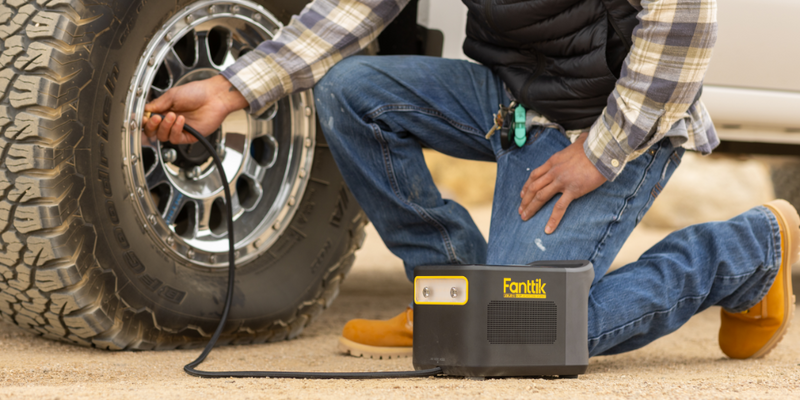
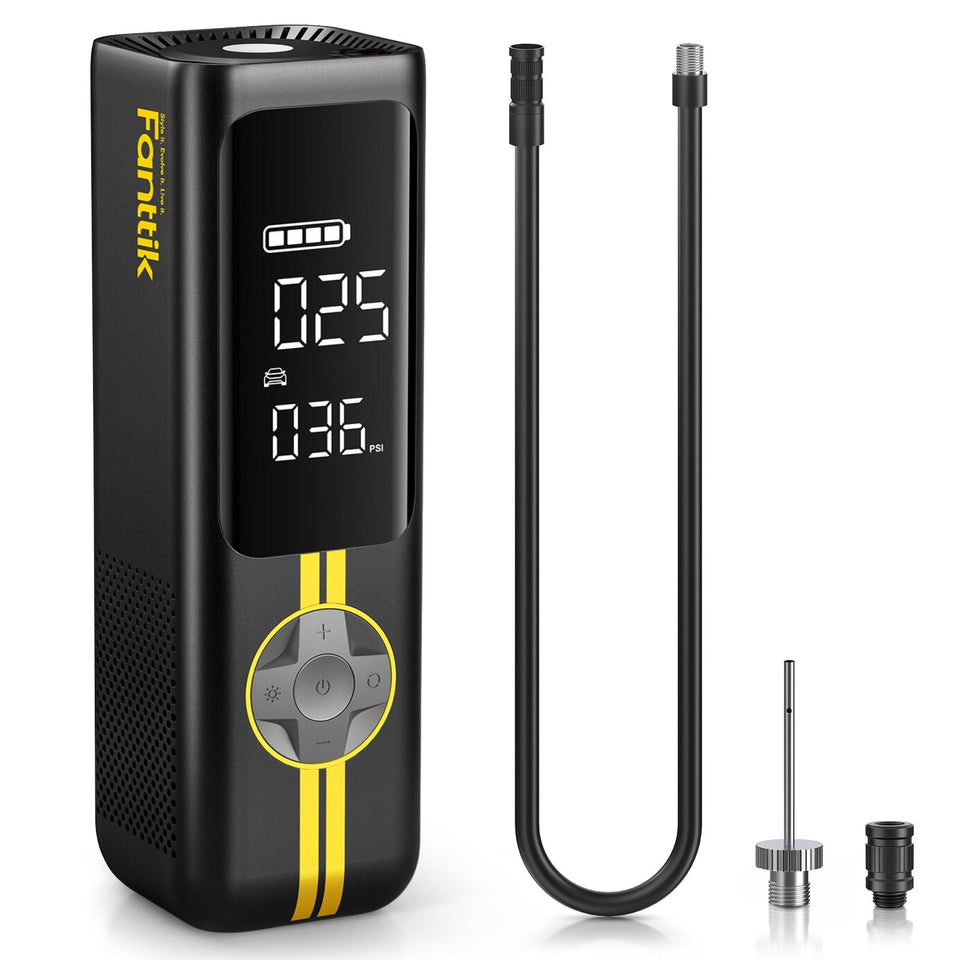
When you hold a portable tire inflator, you are holding a high-energy density system capable of generating immense thermal energy. While most users focus on PSI ratings or inflation speed, experienced engineers look at a different metric: thermal stability. In our work analyzing field performance and repair patterns, we have observed that the difference between a reliable tool and a hazardous one lies in the Battery Management System (BMS).
A BMS is not just a circuit breaker; it is a sophisticated conductor of an electrochemical orchestra. For high-consequence products like cordless inflators—which often operate at the edge of their thermal limits—the BMS acts as the primary defense against overheating, cell degradation, and thermal runaway.
The Physics of Heat in Cordless Inflation
To understand why a BMS is critical, we must first look at the "heat budget" of an inflation cycle. Heat in a portable inflator comes from two primary sources:
- Adiabatic Compression: As air is compressed from atmospheric pressure to 80 or 100 PSI, its temperature rises naturally according to the laws of thermodynamics.
- Motor and Resistance Heating: The DC motors in these units often pull 15A to 30A of current. This creates significant "I²R" losses (heat generated by electrical resistance) in the battery cells, wiring, and the motor itself.
In our scenario modeling for high-pressure applications, we have found that the air exiting the pump head can exceed 100°C (212°F). Without a robust BMS to monitor how this heat migrates to the lithium-ion cells, the tool risks permanent damage or safety failure.
Logic Summary: Our thermal analysis assumes a standard adiabatic process where T_out = T_in * (P_out / P_in)^0.28. This model demonstrates that environmental heat is only half the battle; the internal compression process is the primary thermal driver.
Anatomy of a High-Performance BMS
A methodical approach to BMS design prioritizes spatial accuracy over simple sampling speed. While many entry-level units claim "smart protection," the engineering reality often reveals critical gaps in how they actually "see" heat.
1. Sensor Co-location and Spatial Detection
A common pitfall we see in the industry is placing temperature sensors (NTC thermistors) directly on the Printed Circuit Board (PCB). While this is cheaper to manufacture, it is technically insufficient for safety.
In a high-current pulse load environment like a tire inflator, the "hot spots" occur at the cell terminals and the high-current bus bars. A sensor on the PCB might read 40°C while a battery cell tab is already surging toward 60°C. We advocate for a "co-location" strategy where sensors are in direct thermal contact with the cell terminals. This eliminates the "spatial latency" that allows localized overheating to go undetected until it is too late.
2. Individual Cell Monitoring (Series Level)
Experienced engineers prioritize independent monitoring for each series cell group. In a typical 3-cell or 4-cell pack, a "pack-level" voltage reading can be deceptive.
If one cell is "weak" or has higher internal resistance, its voltage will collapse faster under the heavy 20A load of the motor. A pack-level monitor might see 12V and assume everything is fine, while one cell has dropped to a dangerous 2.5V. A high-quality BMS monitors every cell group individually, triggering protection the moment a single cell deviates from the safety window.
3. Progressive Throttling vs. Abrupt Shutdown
There is a significant difference between "safety" and "usability." According to The 2026 Modern Essential Gear Industry Report: Engineering Trust in a Cordless World, trust is built through predictable performance.
- The Abrupt Cut: Poorly tuned BMS units cut power the millisecond a threshold is hit. If you are at 32 PSI in a 35 PSI tire, the tool simply dies, leaving you with an unbalanced vehicle.
- Progressive Throttling: Advanced BMS algorithms implement a gradual power ramp-down. As the temperature approaches the upper limit, the BMS reduces the current to the motor. You will hear the motor sound change—a deeper, slower rhythm—which serves as an audible cue to the user that the tool is reaching its limit. This allows you to finish those last few PSI safely or stop the task in a controlled manner.
Case Study: The Commercial Fleet Manager Scenario
To demonstrate the real-world demand on a BMS, we modeled a scenario involving a commercial fleet manager in the American Southwest. This user needs to inflate six large truck tires (295/75R22.5) from flat to 80 PSI in 40°C (104°F) ambient heat.
Modeling Transparency: Method & Assumptions
This is a deterministic scenario model designed to test the thermal boundaries of a portable power system. It is not a controlled lab study but a calculation of theoretical limits based on industry heuristics.
| Parameter | Value | Unit | Rationale / Source |
|---|---|---|---|
| Number of Tires | 6 | Count | Full fleet check scenario |
| Ambient Temperature | 40 | °C | Extreme summer highway conditions |
| Target Pressure | 80 | PSI | Standard Class 8 truck tire spec |
| Sustained Current | 15 | A | Typical brushless motor draw under load |
| Pack Capacity | 74 | Wh | High-capacity prosumer battery pack |
| Calculated Runtime | 72 | Min | Total time required for 6 tires |
| Air Exit Temp | 104 | °C | Calculated adiabatic rise (+64°C) |
Analysis of Results: In this scenario, the total runtime of 72 minutes exceeds the typical 40-minute continuous duty cycle of most high-performance inflators. A basic tool would likely fail or suffer thermal shock. However, a sophisticated BMS manages this by:
- Enforcing a mandatory cooldown cycle after the 40-minute mark.
- Using high-accuracy NTC sensors to detect that the internal cell temperature is rising faster than the casing temperature due to the 15A draw.
- Preventing the user from restarting the tool until the cells have reached a stable "recovery temperature."

The Role of Post-Cycle Balancing
Safety doesn't end when you turn the tool off. In fact, some of the most critical BMS work happens during the "rest" phase.
We often see "bad batteries" that are actually just "unbalanced batteries." When an inflator is used for high-PSI tasks, the cells discharge unevenly. If the tool is then stored in a trunk without being balanced, that imbalance becomes "locked in." Over several months, the strongest cells will overcharge and the weakest will over-discharge.
A reliable BMS performs post-cycle balancing. It bleeds off excess voltage from the higher cells to match the lower ones. This ensures that the next time you need the tool in an emergency, the full capacity of the pack is available. This is aligned with IEC 62133 standards for the safety of portable sealed secondary cells.
Identifying a Trustworthy System: A Buyer's Checklist
For prosumers and safety-conscious DIYers, it can be difficult to "see" the BMS through the plastic housing. Based on our pattern recognition from technical audits, here are the markers of a high-authority thermal management system:
- Audible Feedback: Does the motor slow down slightly before it shuts off? This indicates a "Smart Throttling" algorithm rather than a simple thermal fuse.
- Recovery Logic: If the tool shuts down due to heat, will it let you turn it back on immediately? A safe tool will enforce a "lockout" period until the sensors confirm the internal chemistry has cooled. If it lets you restart instantly, the safety margins are likely too thin.
- Thermal Venting vs. Sealing: Look for strategic venting near the battery compartment. A BMS is more effective when paired with passive thermal management, such as aluminum heat sinks or airflow channels.
- Compliance Documentation: Does the manufacturer provide a UN 38.3 Test Summary? This is the international standard for lithium battery transport safety and serves as a baseline indicator that the BMS and cell integration have been vibration- and thermal-tested.
Common "Gotchas" to Avoid
- The "PCB Sensor" Shortcut: If a manufacturer emphasizes "fast sampling" but doesn't mention "cell-level monitoring," they may be using a single sensor on the controller board. This is a lagging indicator of heat.
- Extreme Cold Performance: Remember that overheating isn't the only risk. Charging a lithium-ion battery at sub-freezing temperatures can cause "lithium plating," which can lead to internal shorts. A high-end BMS will include a low-temperature charge lockout to prevent this damage.
Long-Term Reliability and Trust
The goal of a Battery Management System is to make the technology invisible. You shouldn't have to worry about the internal temperature of your 18650 cells while you are trying to get your family back on the road.
By prioritizing individual cell monitoring, spatial sensor accuracy, and progressive power management, engineers create tools that don't just work—they last. For the safety-conscious user, the BMS is the ultimate assurance that the tool will be ready when the pressure is on.
Disclaimer: This article is for informational purposes only. Portable tire inflators involve high-pressure air and high-energy lithium-ion batteries. Always read your specific product manual and follow all safety warnings regarding duty cycles and storage temperatures. If you notice a battery swelling, unusual odors, or extreme heat during charging, cease use immediately and consult a professional technician.
Sources
Continue reading
 Solving Common Roadside Inflation Errors Under Pressure
Covers the Push-Twist-Lock method, the 10 PSI heat rule, and how to avoid the Hot Tire Trap for...
Solving Common Roadside Inflation Errors Under Pressure
Covers the Push-Twist-Lock method, the 10 PSI heat rule, and how to avoid the Hot Tire Trap for...
 Thermal Management: Why Compact Inflators Need Cooling
Covers thermodynamics, heat sinks, BMS safety, and practical cooldown rules for inflator performance.
Thermal Management: Why Compact Inflators Need Cooling
Covers thermodynamics, heat sinks, BMS safety, and practical cooldown rules for inflator performance.

Leave a comment
This site is protected by hCaptcha and the hCaptcha Privacy Policy and Terms of Service apply.