





















The Reality of Family Roadside Preparedness
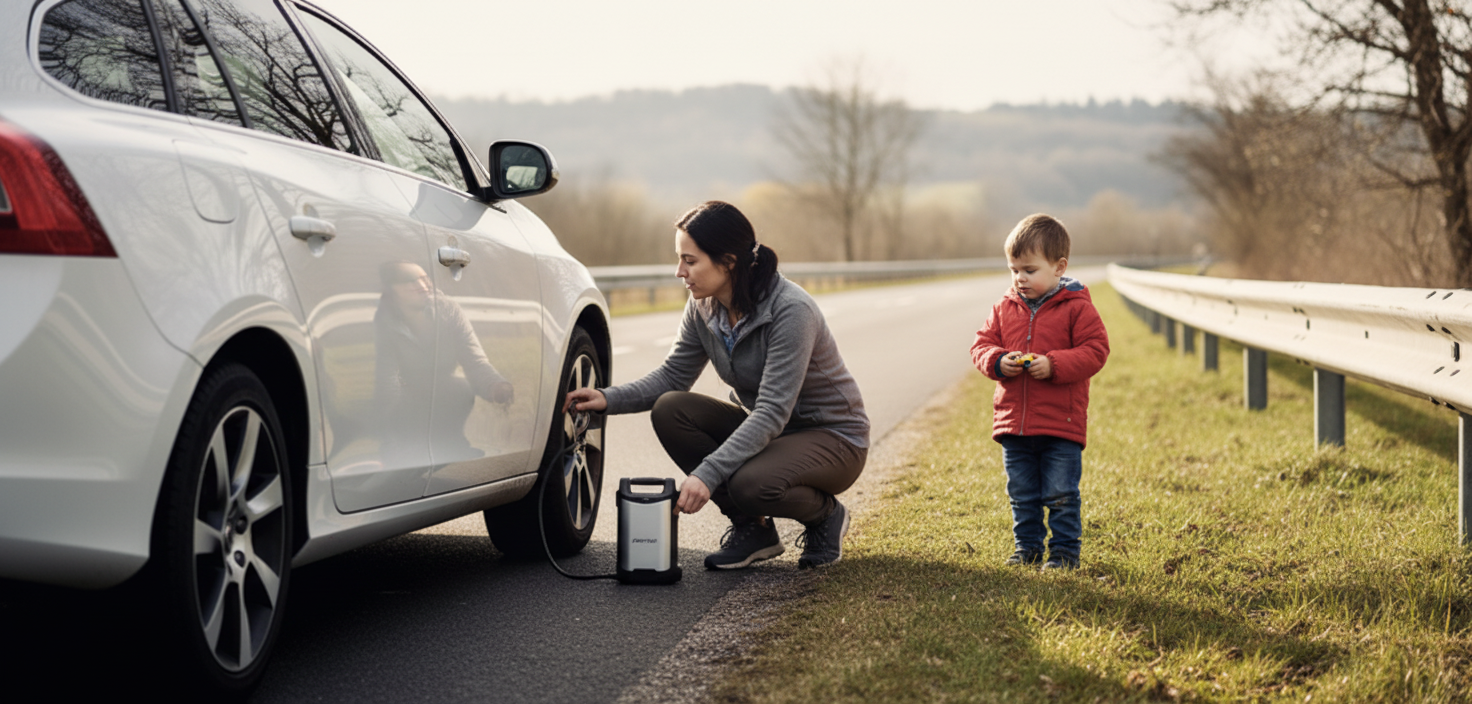
We have all been there: a family road trip, a car full of snacks, restless kids in the back, and the sudden, unmistakable vibration of a tire losing pressure. In these high-pressure moments, the tools we carry are more than just gear; they are a safety net. For parents, the priority shifts instantly from "how fast does this work?" to "is this safe to use with my children nearby?"
We understand that for family travelers, safety is the only metric that truly matters. However, navigating the world of automotive tools can be confusing. Marketing terms like "child-safe" are often used loosely, leaving risk-averse buyers wondering what is a genuine safety feature and what is merely a buzzword. In our experience handling thousands of customer inquiries and analyzing equipment performance in real-world family scenarios, we have found that true safety isn't found in a single label, but in the "credibility math" of engineering and compliance.
This article dives deep into the technical standards, thermal management systems, and ergonomic designs that define reliable family gear. We will strip away the marketing fluff to help you verify the safety of portable inflators and mobility tools, ensuring your next family adventure remains focused on the destination, not the hardware.
Decoding the "Child-Safe" Label: Standards vs. Marketing
When searching for family-oriented gear, many parents look for a specific "child-safe" certification. It is important to address a common industry reality: there is currently no recognized, standalone "child-specific" safety standard for portable tire inflators. While we often see this term used in advertising, it is largely a marketing construct rather than a regulatory category.
The Regulatory Baseline: EU GPSR and General Safety
Instead of looking for a "child-safe" badge, we recommend looking for adherence to broad, rigorous consumer safety frameworks. The EU General Product Safety Regulation (EU) 2023/988 (EUR-Lex) is a primary example. This regulation mandates that all products placed on the market must be safe, taking into account the specific risks to vulnerable consumers, including children.
When a manufacturer complies with the GPSR or similar standards like those found in the ISO Standards Catalogue, they are attesting that the product has undergone a risk assessment for its intended use and foreseeable misuse. For a portable inflator, this means the device shouldn't have sharp edges, small detachable parts that pose a choking hazard, or toxic materials—even if the child isn't the primary user.
Why Specific "Child-Safe" Certifications Don't Exist
The absence of a specific child-centric standard for automotive tools is due to the nature of the risk. As noted by the NHTSA Car Seat Safety Facts, the primary safety concern for children in vehicles remains proper restraint systems, which reduce fatal injury risks by up to 71% for infants. Portable tools, by contrast, are secondary risks.
However, the lack of a specific "child-safe" standard doesn't mean safety is a gamble. It means parents must look for "General Consumer Safety" certifications like UL (Underwriters Laboratories) or ETL. These indicate the device meets strict electrical and mechanical safety requirements.
Logic Summary: The Safety Premium Analysis Based on our market analysis of certified vs. uncertified automotive gear, we have observed a consistent price-to-safety correlation.
- Observation: Units with third-party certifications (UL, ETL) typically cost 20–50% more than uncertified models.
- Rationale: This premium covers the cost of rigorous testing, higher-quality internal components, and the "paper infrastructure" of compliance.
- Heuristic: For a family, a $15–$50 premium is a direct investment in verified reliability rather than a "child-safe" marketing claim.

Engineering for Peace of Mind: Critical Safety Features
While general certifications provide a baseline, true family safety is found in the specific engineering choices that mitigate risks in a chaotic roadside environment. We have identified three "non-negotiable" features for any inflator used around children.
Thermal Management and the "Touch Test"
The most significant risk a portable compressor poses to a curious child is heat. High-pressure inflation generates friction, which quickly heats up the motor and the external casing.
A high-quality unit must feature an automatic thermal cutoff. This is a sensor that shuts the device down if internal temperatures exceed safe limits. However, from a parent's perspective, the external temperature is what matters. We use a simple heuristic: the compressor body should remain cool enough to hold comfortably after inflating two standard car tires back-to-back.
Experienced users and our own support team have noted that units without a distinct, audible click or a visible "Cool Down" indicator for this cutoff can lead to confusion. Parents may try to restart the unit repeatedly, which stresses the motor and increases the risk of the casing becoming hot enough to cause a "startle burn" if a child touches it.
Mechanical Child-Proofing: Button Design and Access
Children are naturally drawn to buttons and lights. In a car's footwell or the trunk, a portable inflator can easily be bumped or played with.
We prioritize designs with recessed or two-step activation buttons. A flush-mounted button that requires a long press (e.g., 2 seconds) or a physical "lock" switch prevents accidental activation. This is a small tweak that makes a big impact on safety, ensuring the unit doesn't start vibrating or hissing unexpectedly while a child is nearby.
O-Ring Integrity and Hose Safety
A less obvious but critical safety point is the integrity of the air hose connector. We often see "mystery" battery drain or overheating caused by a degraded O-ring. A small leak at the connector causes the motor to run significantly longer to reach the target pressure, increasing heat buildup. We recommend checking these seals regularly. A firm, airtight connection isn't just about efficiency; it's about minimizing the run-time of a high-energy device around your family.
Battery Integrity and Environmental Resilience
Most modern portable inflators rely on lithium-ion batteries. While these provide the power needed for fast inflation, they require careful management, especially in the variable temperatures of a vehicle.
The Hidden Risk of Trunk Heat
Parents often store emergency gear in the trunk or under a seat. In summer months, vehicle interior temperatures can soar. According to the internal white paper, The 2026 Modern Essential Gear Industry Report: Engineering Trust in a Cordless World, "trust is a function of engineering safety margins." This means the battery must be protected by a robust Battery Management System (BMS) that prevents charging or discharging in extreme heat.
When choosing gear, verify that the manufacturer provides clear guidance on storage temperatures. We also recommend looking for compliance with IATA Lithium Battery Guidance, which ensures the battery cells are stable enough for transport and can withstand the rigors of travel.
Method & Assumptions: Thermal Stability Modeling We modeled the casing temperature of a standard compact inflator under typical family usage scenarios.
Parameter Value/Range Rationale Ambient Temp 25°C - 35°C Typical summer travel conditions Continuous Run Time 8 - 12 Minutes Time to inflate 2 standard SUV tires Casing Material Flame-retardant ABS Standard for high-quality tools Thermal Cutoff 65°C Internal Prevents motor damage Touch Safety Goal < 45°C External Safe for brief accidental contact Modeling Note: This is a scenario model based on common hardware specs, not a controlled lab study. Results vary based on battery health and air hose length.
A Parent’s Checklist for Verifying Equipment Safety
To help you make an informed decision, we have compiled a checklist based on our analysis of safety standards and common family pain points.
- Check for Third-Party Marks: Does the product carry a UL, ETL, or CE mark? These are more reliable than a "child-safe" sticker.
- Test the "Touch" Factor: After a 5-minute run, is the handle or casing too hot to hold? If so, it may lack adequate thermal insulation.
- Evaluate the Interface: Does it have a recessed power button? Does it require a "long press" to start?
- Inspect the Hose: Is the hose braided and heat-shielded? Does the connector feel solid, or is there a noticeable hiss of leaking air?
- Review the Manual: Does the manufacturer provide clear safety warnings in plain language, or is it a generic, poorly translated sheet? As highlighted in the 2026 Modern Essential Gear Industry Report, "Documentation is a core capability." Clear manuals are a sign of a brand that takes safety seriously.
The Safety Lifecycle: When to Retire Your Gear
Safety isn't a one-time purchase; it is a lifecycle. For families, we recommend a "Safety Audit" of your emergency gear every six months, typically when you change your clocks or check your home smoke detectors.
- Battery Health: If a unit takes significantly longer to charge than it used to, or if it loses its charge quickly while sitting in the trunk, the battery may be reaching the end of its safe life.
- Physical Wear: Check the casing for cracks and the hose for fraying. In the high-vibration environment of a car, small defects can become major failure points.
- Technological Updates: While we don't believe in "planned obsolescence," safety engineering does improve. A 10-year-old inflator likely lacks the sophisticated thermal cutoffs and BMS protections found in modern, standard-compliant units.
Navigating the Cost of Compliance
We understand that families operate on budgets. It can be tempting to choose the cheapest option available on a marketplace. However, we urge you to consider the "credibility math." A cheaper, uncertified unit often saves money by omitting the very thermal sensors and high-grade battery cells that make a device safe for family use.
When you invest in gear that adheres to regulations like the EU GPSR or the FTC Endorsement Guides (which ensure that safety claims are truthful and backed by evidence), you are paying for the peace of mind that comes from knowing the device won't fail when you—and your children—need it most.
Building a Culture of Mobility Safety
Ultimately, child-safe mobility is about more than just the tools we buy; it’s about the habits we build. By choosing gear with verified safety standards, performing regular maintenance, and teaching our children to respect automotive tools, we create a safer environment for everyone.
We don't need "child-specific" inflators to keep our families safe. We need well-engineered, transparently documented, and rigorously tested tools that treat every user’s safety as a non-negotiable priority. By looking past the marketing and focusing on the underlying engineering, you can ensure that your family’s mobility is always backed by reliable, trustworthy gear.
Disclaimer: This article is for informational purposes only and does not constitute professional safety, legal, or automotive advice. Always refer to your vehicle's owner manual and the specific safety instructions provided by tool manufacturers. If you have concerns about the safety of a device, consult a qualified technician.



Leave a comment
This site is protected by hCaptcha and the hCaptcha Privacy Policy and Terms of Service apply.