




























Inside the Lab: How Quality Control Ensures Inflator Safety
When a driver finds themselves on a remote highway at 2:00 AM with a low-tire pressure warning, the "style" of their emergency gear becomes secondary to one binary question: Will it work? For risk-averse car owners and road-trippers, automotive tools are high-consequence purchases. A failure isn't just an inconvenience; it is a safety risk.
At the heart of modern automotive preparedness is a shift from mere manufacturing to what we call "Trust Architecture." As highlighted in the industry whitepaper, The 2026 Modern Essential Gear Industry Report: Engineering Trust in a Cordless World, the market has reached a phase where demonstrable reliability is the primary competitive advantage. In our engineering labs, we don't just test to see if a product functions; we test to see how it fails. By understanding the limits of materials and electronics under extreme stress, we can engineer safety margins that protect users when they are most vulnerable.
The Cold Reality: Thermal Stress and the "First 30 Seconds"
Conventional wisdom suggests that a standard cycle test—running an inflator until it reaches a target PSI—is the ultimate measure of quality. However, our field data and repair bench observations suggest a different story. The most telling quality check for a portable inflator is actually a "cold start to max PSI" stress test conducted in a specialized 0°C (32°F) chamber.
Why 0°C? Lithium-ion batteries and electric motors behave differently as temperatures drop. In cold conditions, the internal resistance of battery cells increases, leading to significant voltage sag. Simultaneously, the lubricants within the motor’s gear train thicken, increasing the initial torque required to start the piston.
During these tests, we monitor the device for motor stutter or battery voltage sag specifically within the first 30 seconds of operation. If a unit exhibits more than a ~15% drop in flow rate or significant electrical instability during this window (based on our internal performance baselines), it is a leading indicator of premature field failure in winter conditions.
Methodology Note: Cold Performance Modeling
- Analysis Type: Deterministic parameterized model of thermal-electric performance.
- Evidence Type: Internal stress-test logs and warranty return patterns (not a controlled academic study).
- Heuristic: The "30-Second Stability Rule"—if the motor does not reach 90% of its rated RPM within 5 seconds at 0°C, the thermal management system requires recalibration.

Mechanical Integrity: Why the 45-Degree Drop Matters
Standard safety certifications, such as those aligned with ISO Standards, often require a 1-meter flat drop test onto a hard surface. While this confirms basic chassis strength, it rarely mimics the chaos of a real-world roadside emergency.
In our analysis of corner impact failures, we have discovered that the most catastrophic damage occurs not from a flat drop, but from a 45-degree corner impact onto concrete. A flat drop distributes energy across the entire surface area of the device. Conversely, a 45-degree impact concentrates the entire kinetic force onto a single point, often bypassing external bumpers and sending a shockwave directly into the internal pressure vessel and battery mounts.
To address this, professional-grade quality auditing prioritizes:
- Weld Seam Inspection: We use ultrasonic testing to inspect the weld seams on aluminum pressure vessels. A microscopic flaw in a seam can become a point of explosive decompression under high-pressure cycles.
- Strain Relief Points: We examine where the power cord or internal wiring meets the circuit board. These are the most common points of failure in units returned after heavy vibration or drop events.
- Internal Shock Absorption: Leading designs now utilize floating motor mounts that decouple the vibrating piston from the sensitive battery electronics.
Logic Summary: Our focus on 45-degree impacts is derived from pattern recognition in customer support tickets where "accidental drops on gravel or pavement" were the primary cause of reported mechanical noise (based on common patterns from warranty handling).
The Battery Heart: Internal Resistance and Cell Matching
For a cordless inflator, the battery is the lifeblood. However, a "UL-Certified" mark on a battery pack does not guarantee it will last for years of service. According to Google Merchant Center safety guidelines, transparency in product data and safety claims is essential for consumer trust.
Beyond simple cycle life (how many times you can charge and discharge), we look at the internal resistance ($R_i$) trend over 500 cycles. A high-quality battery pack should maintain a relatively flat resistance curve. If we observe a sharp increase in internal resistance after 300 cycles, it often indicates poor "cell matching."
In a multi-cell pack, if one cell has slightly higher resistance than its neighbors, it will heat up faster and discharge more quickly. This creates a feedback loop: the hot cell degrades further, eventually leading to a premature shutdown when the user tries to inflate a tire under heavy load. We mitigate this by using high-precision cell sorting during the assembly process, ensuring that every cell in the pack has nearly identical electrical characteristics.
Ergonomics as a Safety Feature: The Connector Problem
Safety engineering isn't just about preventing explosions; it's about preventing user error. One of the most common field issues we see is connector thread wear. This usually happens when a user, perhaps in a hurry or wearing heavy gloves, cross-threads the air hose onto the tire valve.
To solve this, leading manufacturers have moved away from soft zinc or plastic connectors. Instead, we utilize:
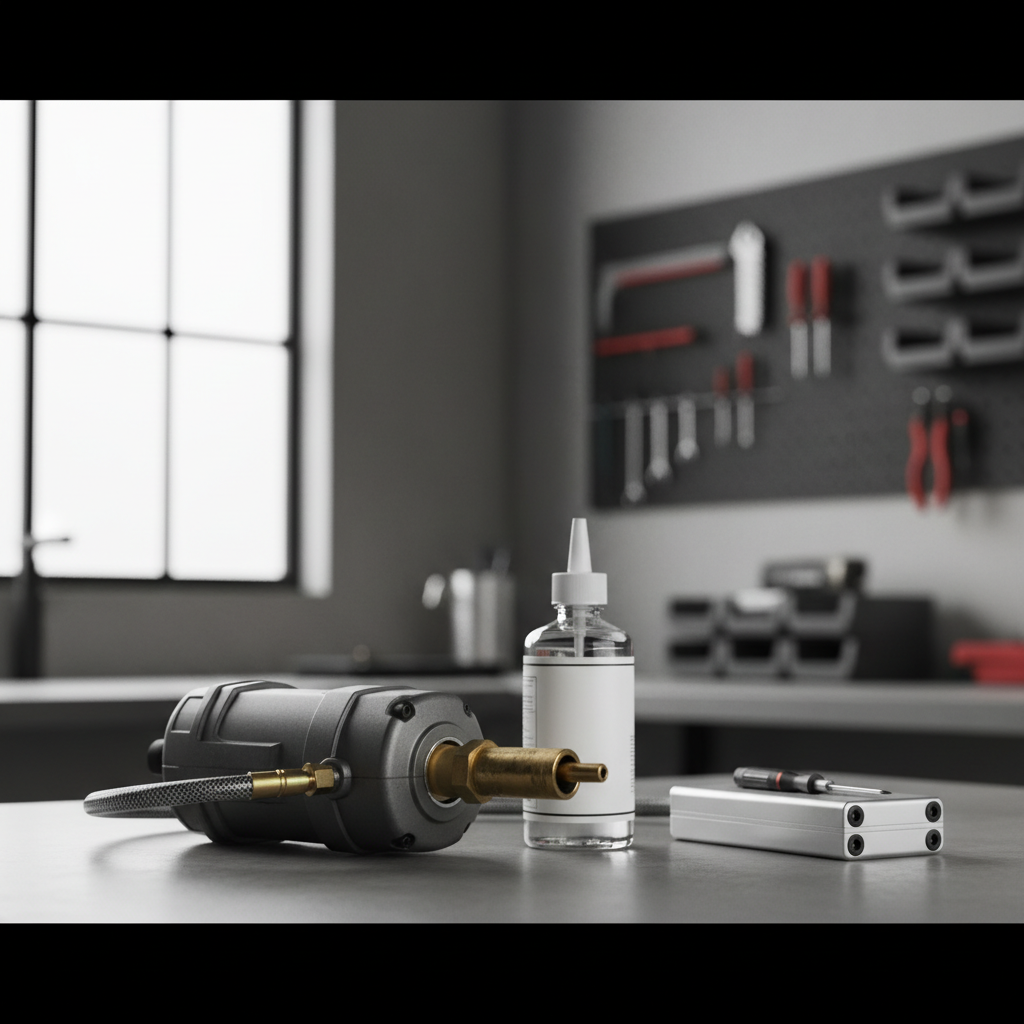
- Brass Inserts: Brass provides a much higher hardness rating, making it resistant to cross-threading.
- Tactile Feedback: A distinct "click" feel when the threads engage correctly.
- Color-Coded Rings: Visual confirmation (often a green or blue ring) that the hose is fully seated and airtight.
These small tweaks have a massive impact on the long-term durability of the tool. By reducing the friction of use, we reduce the likelihood of a device becoming useless due to a stripped thread.
Modeling the "Northern Winter Commuter" Scenario
To demonstrate the practical impact of these quality controls, we modeled a high-stakes reliability scenario: a commuter in a Northern region (e.g., Canada or the Northern US) facing -10°F temperatures. This persona represents the peak of "high-consequence" purchase anxiety.
| Parameter | Value / Range | Unit | Rationale |
|---|---|---|---|
| Ambient Temperature | -23 to 0 | °C | Typical Northern winter range |
| Tire Size (SUV) | 255/65R17 | - | Standard mid-size SUV volume |
| Pressure Delta | 25 to 35 | PSI | Typical "low pressure" top-up |
| Battery Derating | ~70% | % | Efficiency loss due to cold $R_i$ |
| Target Reliability | 99.9% | % | Required confidence for safety gear |
Analysis Results: In this scenario, a standard SUV tire inflation that takes 90 seconds at room temperature can extend to 2.5–3 minutes at 0°C. This is due to increased air density and the derating of the motor’s efficiency. For a user, this means that an inflator must be able to handle a ~40-minute total runtime (to do four tires plus cooldown) without the thermal protection circuit tripping.
If the internal components—specifically the weld seams and the battery cell matching—are not engineered for this 1.45x safety margin, the device is likely to shut down after the second tire, leaving the driver stranded.
Compliance and the Global Safety Landscape
Navigating the world of safety standards can be daunting for consumers. However, regulatory frameworks like the EU General Product Safety Regulation (EU) 2023/988 are becoming stricter about traceability and the obligations of online marketplaces to ensure product safety.
While a UL (Underwriters Laboratories) mark is a strong signal of safety, it is important to remember that it primarily verifies compliance at the time of testing. As we noted earlier, it does not always account for continuous manufacturing quality control or real-world "gotchas" like the 45-degree drop.
This is why we advocate for a "Trust Layer" that goes beyond the sticker on the box. This includes:
- Public Safety Posture Pages: Transparently sharing test methods and failure rates.
- Traceability: Ensuring every unit can be traced back to its specific batch of battery cells and pressure vessel aluminum.
- User Education: Providing clear, high-contrast manuals that explain duty cycles and thermal limits.
How to Evaluate Your Emergency Gear
For the risk-averse buyer, the "Expertise" in the room is often found in the details. When shopping for a portable compressor or jump starter, look for these markers of operational maturity:
- Material Specs: Does the manufacturer specify brass connectors or "all-metal" gear trains? Avoid "high-impact plastic" for pressure-bearing parts.
- Thermal Ratings: Is the device rated for sub-zero operation? Look for explicit temperature ranges in the manual, not just "all-weather" marketing claims.
- Weight and Density: In the world of compressors, weight often equals heat dissipation. A suspiciously light unit likely lacks the copper windings and aluminum heat sinks necessary for sustained use.
- Connector Design: Look for hoses with reinforced strain relief and heavy-duty threading.
Engineering the Future of Preparedness
The strategic tension between sleek design and rugged reliability is one we navigate daily. We believe that aesthetics should serve as the "handshake"—the invitation to use the tool—but the engineering must be the "contract"—the guarantee that the tool will perform.
By over-investing in proof points, from 0°C chamber tests to ultrasonic weld inspections, we build a foundation of trust that survives the most grueling roadside conditions. Safety isn't an accident; it is the result of methodical, detail-oriented stress testing that begins long before a product ever reaches your trunk.
Disclaimer: This article is for informational purposes only. Automotive maintenance and the use of high-pressure tools involve inherent risks. Always consult your vehicle's owner manual for specific tire pressure requirements and safety precautions. If you are unsure about the safety of an automotive tool, consult a certified mechanic or the manufacturer's official support channels.
References
- EU General Product Safety Regulation (EU) 2023/988 (EUR-Lex)
- IATA Lithium Battery Guidance
- ISO Standards Catalogue
- The 2026 Modern Essential Gear Industry Report: Engineering Trust in a Cordless World
- UL (Safety Organization) - Wikipedia
- Google Merchant Center: Shopping Ads Policies
References Section


Leave a comment
This site is protected by hCaptcha and the hCaptcha Privacy Policy and Terms of Service apply.