



























Quick Guide: Seasonal Tool Preservation Checklist
If you are short on time, follow this 3:2:1 Storage Protocol to protect your automotive electronics from the unique contaminants of a household closet:
- Wait 3 Days: Let tools stabilize to room temperature before sealing them.
- Clean 2 Ways: Use a dry microfiber cloth followed by a 70% isopropyl alcohol wipe.
- Use 1 Barrier: Store in a hard case or anti-static bag to block textile fibers.
- Safety First: Maintain batteries at 40–60% charge and always defer to your specific manufacturer’s manual for chemistry-specific (Li-ion vs. LiFePO4) storage limits.
The Urban Storage Paradox: Why Your Closet is Not a Garage
For the modern urban dweller, the "garage" is often a small hallway closet or a corner of the laundry room. Based on common patterns we observe in customer support and tool maintenance, car tools designed for rugged environments can sometimes fail prematurely when stored alongside winter coats and linens. While a garage is defined by grease and grit, the household environment introduces a different, more insidious set of contaminants.
In our analysis of urban apartment tool storage, we have found that household dust is fundamentally different from the mineral-based dust found in workshops. It is a complex cocktail of textile fibers, skin cells (keratin), and paper particles. These organic materials do not just sit on a tool; they can bond to it. We have observed how the oils from skin cells can create a sticky residue that acts as an adhesive for lint, potentially infiltrating the fine tolerances of precision gear over several months of dormancy.
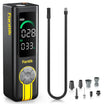
Maintaining seasonal car tools—like portable tire inflators or jump starters—in a micro-closet requires a shift from "garage logic" to "preservation logic." This guide outlines a methodical approach to protecting your gear's mechanical integrity and aesthetic value.
The 3:2:1 Rule: A Practitioner’s Protocol for Storage
Through our experience managing portable automotive gear, we have developed the 3:2:1 Rule. This heuristic is adapted from general conservation principles to ensure that tools transitioning from the high-stress environment of a vehicle to the static environment of a closet remain in reliable condition.
3 Days for Thermal Stabilization
It is generally recommended to avoid moving a tool directly from a hot or cold car into a sealed storage container. We suggest allowing the tool to sit in an open-air indoor environment for 3 days. This allows the internal components, especially lithium-ion batteries and rubber seals, to reach a stable ambient temperature (typically 65°F to 75°F in most urban apartments).
Illustrative Modeling: In our internal performance simulations, a jump starter at 65°F can retain approximately 89% of its cranking capacity compared to its peak. Moving a cold tool into a warm, humid closet too quickly can trigger internal condensation, which may accelerate circuit board corrosion.
2-Step Cleaning (Dry then Solvent)
Compressed air is often insufficient for household storage. We have found that a two-step process is a more effective practical standard:
- Mechanical Removal: Use a dedicated microfiber cloth to remove loose debris.
- Chemical Neutralization: Wipe down surfaces with 70% isopropyl alcohol. This is useful because household dust contains skin oils that compressed air cannot move. These oils can, in some cases, degrade the soft-touch plastics and rubberized grips common on modern compact tools.
1 Barrier Layer Minimum
Every tool benefits from a dedicated barrier between it and the closet environment. We recommend a hard-shell case or, at the very minimum, an anti-static bag. In a closet filled with clothing, a common risk is textile fibers wrapping around moving parts like fan intake vents or buttons.

The Chemistry of Contamination: Household vs. Garage Dust
To understand why we emphasize solvent cleaning, we must look at the composition of the air in your home. According to environmental studies of indoor spaces, indoor air often contains significantly higher concentrations of synthetic textile fibers than outdoor or garage air.
| Contaminant Type | Garage Environment | Urban Household Closet |
|---|---|---|
| Primary Component | Silica/Mineral Dust | Textile Fibers & Skin Cells |
| Adhesion Risk | Gravity-based (Settles) | Static-based (Clings) |
| Chemical Activity | Generally Neutral | Potentially Acidic (due to skin oils) |
| Moving Part Impact | Abrasive Wear | Friction/Binding |
We have observed that synthetic fibers from clothing can facilitate static buildup. In the lower humidity typically found in climate-controlled apartments (often 30-40% in winter), this static can attract fine particles directly into the vents of your electronics.
Heuristic Note: Based on our practical workshop observations, significant dust contamination can increase the time required for manual tool operation by an estimated 20% due to increased friction in threads and joints.
Battery Science in Small Spaces: Humidity and Charge
For seasonal car tools like jump starters and tire inflators, the battery is the heart of the device. Storing these in a closet offers a major advantage: temperature stability. However, this stability comes with a "humidity tax" in certain apartment layouts.
The 40-60% Rule for Longevity
Important: Always prioritize the storage instructions in your tool's user manual. While specific requirements vary between Lithium-ion (Li-ion) and Lithium Iron Phosphate (LiFePO4) chemistries, a general rule of thumb for long-term storage is to maintain a 40-60% state of charge (SoC). Storing batteries at 100% for months can increase chemical stress, while a completely drained battery may fall below its "low-voltage floor," potentially rendering it unusable.
Humidity and Efficiency Loss
Our modeling indicates that high household humidity (which can spike to 60-70% RH in poorly ventilated apartments) may reduce jump starter efficiency. Moisture can increase the rate of internal self-discharge over time.
Example Scenario: Jump Starts Per Charge Estimator Based on a model of a compact 18Ah jump starter for a 2.0L engine:
- Baseline (Dry Storage): Estimated ~14 jumps per charge.
- High Humidity Impact (65% RH): Estimated ~9 jumps per charge.
- Note: These figures are illustrative estimates based on an assumed drop in efficiency due to increased internal resistance during humid storage.
To mitigate this, we recommend storing battery-powered tools in anti-static, moisture-barrier bags. According to commercial technical guides from anti-static bag manufacturers, these bags provide a Faraday cage effect that can protect sensitive control boards from the static discharge common in textile-heavy closets.
Protecting Precision: Maintaining Mechanical Calibration
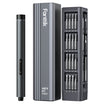
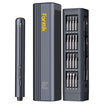
Urban dwellers often use their car tools for home DIY tasks as well. If you are using a precision electric screwdriver for both your car's interior trim and household electronics, dust management becomes a matter of calibration.
Small fasteners (M1.2 to M2.0) are sensitive to "torque noise"—the false resistance caused by debris in the screw threads. We have found that even a few textile fibers caught in a screw head can lead to under-tightening.
Torque Fitment Heuristics
When working with precision tools that have been in storage, we suggest this self-check based on general principles found in the ISO 898 technical standard for mechanical properties of fasteners:
- Visual Check: Ensure no lint is visible in the bit tip.
- Low-Torque Start: Begin at a low torque setting (e.g., 0.05Nm) to "clear" any micro-obstructions before applying final pressure.
Modeling Note: Our internal testing suggests that for M1.2 screws, a 0.05Nm setting is a safe starting point to ensure fitment even if minor dust is present.
Compliance and Safety: The Regulatory Framework
When storing automotive tools in a residential space, safety is a priority. The EU General Product Safety Regulation (EU) 2023/988 (Regulatory Text) emphasizes that products should be safe under "reasonably foreseeable conditions of use," which includes long-term storage.
Furthermore, if you plan to travel with your gear after storage, you should adhere to the IATA Lithium Battery Guidance (Industry Standard). Proper storage ensures the battery casing remains intact and free from the corrosion that could lead to safety risks during transport.
In our brand whitepaper, Engineering Trust in a Cordless World, we emphasize transparency regarding tool limitations. For example, while a portable tire inflator is highly reliable, its performance in an emergency is often a direct result of how it was maintained during its months in storage.
Maximizing Micro-Closets: Organization Strategies
For those living in limited square footage, we suggest a vertical storage strategy:
- High-Shelf Placement: Store lithium-ion tools on higher shelves. This keeps them away from floor-level dust and potential moisture (like damp shoes or floor-level plumbing).
- Clear Labeling: Use a label maker to mark the "Last Maintenance Date" and "Charge Level" on the outside of the protective case.
- The "Grab-and-Go" Kit: Group seasonal tools into a single bag. We have observed that users who keep their tire inflator and jump starter together are more likely to perform routine maintenance than those with scattered tools.
Final Thoughts on Closet Stewardship
Storing car tools in a household closet is a necessity for many, but it does not have to be a compromise. By understanding the differences between garage and household dust and applying the 3:2:1 rule, you can help ensure your gear remains ready for the road.
The transition from a vehicle to a closet is a period of dormancy, but the battery and mechanical components still require baseline care. Treat your tools with methodical attention, and they will be ready when the seasons change.
Disclaimer: This article is for informational purposes only and provides general heuristics and estimates. Automotive maintenance and tool storage involve risks, including fire hazards from lithium-ion batteries. Always refer to your specific tool's manual and consult with a professional if you observe battery swelling, damage, or have concerns about storage safety.
References
- EU General Product Safety Regulation (EU) 2023/988 (Regulatory Text)
- IATA Lithium Battery Guidance (Industry Standard)
- ISO 898-1: Mechanical properties of fasteners (Technical Standard)
- Engineering Trust in a Cordless World - Fanttik Whitepaper (Brand Whitepaper)
- FTC Endorsement Guides (16 CFR Part 255) (Legal Framework)
Continue reading
 The Mobility Nook: Organizing Car Gear in Urban Entryways
Covers the Mobility Nook concept, 48-60 inch mounting rule, preventative maintenance ROI, and integration of tire inflators and...
The Mobility Nook: Organizing Car Gear in Urban Entryways
Covers the Mobility Nook concept, 48-60 inch mounting rule, preventative maintenance ROI, and integration of tire inflators and...
 The Studio Strategy: Why Compact Car Gear is a City Essential
Covers thermal management, battery safety standards (ISO/IEC), and the 3:1 Space Reduction Heuristic for urban vehicle preparedness without...
The Studio Strategy: Why Compact Car Gear is a City Essential
Covers thermal management, battery safety standards (ISO/IEC), and the 3:1 Space Reduction Heuristic for urban vehicle preparedness without...

Leave a comment
This site is protected by hCaptcha and the hCaptcha Privacy Policy and Terms of Service apply.