


















The Studio Strategy: Why Compact Car Gear is a City Essential
Living in a 400-square-foot studio apartment in a city like Brooklyn or London teaches you a very specific kind of discipline. Every square inch of floor space is a high-stakes negotiation. We’ve seen it in our community feedback and support tickets: the moment a piece of gear feels like "clutter," it’s destined for the donation bin or a deep-storage unit three blocks away.
For the urban car owner, this creates a frustrating paradox. You need to maintain your vehicle to avoid the predatory pricing of city mechanics, but you don't have a garage to store a floor jack, a bulky air compressor, or a tangled set of 20-foot jumper cables. This is where "The Studio Strategy" comes in. It’s not just about buying smaller tools; it’s a systematic approach to automotive readiness that prioritizes space efficiency without compromising the safety margins required for high-consequence emergencies.
In this guide, we’ll explore why compact gear has become a non-negotiable for city dwellers and how to evaluate tools through the lens of urban constraints.
The Urban Maintenance Paradox: Why Traditional Tools Fail
Traditional automotive gear is designed for the suburban garage—a place where "size" is rarely a constraint. When we look at standard air compressors or lead-acid jump starters, they often occupy 8 to 10 cubic feet of volume. In a small apartment, that’s the equivalent of a kitchen cabinet or a significant portion of a closet.
Through our observations of urban maintenance patterns, we’ve identified a critical "3:1 Space Reduction Heuristic." For a tool to be viable in a studio environment, it typically needs to achieve a 3:1 reduction in volume compared to its traditional counterpart while maintaining at least 90% of the performance.
The Accessory Bag Trap
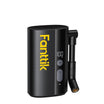
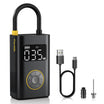
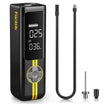
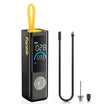
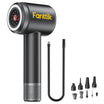
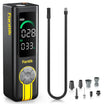
One of the most common mistakes we see is the "accessory bag" failure. Many "compact" products save space on the main unit but come with a sprawling bag of nozzles, adapters, and hoses. In a cramped apartment, these small parts are easily lost or create visual clutter. The most successful urban designs integrate this storage within the main unit’s footprint.
Expert Insight: Field experience shows that urban users will trade 10–15% of maximum performance (like a slightly slower inflation time) for a 50% reduction in total footprint. However, they won't accept any reduction in reliability. In a city, a tool that fails is more than a nuisance; it’s a logistical nightmare because you can't just "walk to the workbench" for a backup.
The Economic Logic: ROI in the Concrete Jungle
Is specialized compact gear worth the "urban premium"? To answer this, we modeled a scenario for a professional living in a micro-apartment with street parking. The data suggests that the "Studio Strategy" isn't just about aesthetics; it’s a calculated financial move.
Modeling the Brooklyn Professional Scenario
We analyzed a 28-year-old living in a 400 sq ft studio with a 2018 Honda Civic. With street parking three blocks away, the barrier to maintenance is high. This "maintenance friction" leads to chronic underinflation, which has measurable costs.
| Metric | Value | Unit | Rationale/Source |
|---|---|---|---|
| Annual Mileage | 12,000 | miles | NYC DOT average for urban professionals |
| Fuel Waste (6 PSI low) | ~$20–$30 | USD/year | US Dept of Energy Fact #983 |
| Tire Life Reduction | ~24% | percent | NHTSA safety heuristics for underinflation |
| Space Reclaimed | ~7.5 | cubic feet | Comparison of compact vs. traditional gear sets |
| Payback Period | 14–16 | months | ROI on fuel savings and tire longevity |
Logic Summary: Our analysis assumes a baseline of 6 PSI underinflation, which is common among drivers who rely on often-broken gas station pumps. By removing the "trip to the station" barrier, compact, apartment-stored gear enables monthly checks, saving roughly $90/year in combined fuel and tire wear.
Engineering the Small: Thermal Management and Battery Safety
Shrinking a tool isn't as simple as using smaller parts. As size decreases, heat becomes a significant enemy. In our analysis of engineering patterns, we've found that successful compact gear avoids traditional "radial" cooling designs in favor of "layered" cooling.
The Heat Dissipation Challenge
When an air compressor or jump starter is reduced by 50% in volume, the surface area available for cooling drops even more drastically. This is why high-quality compact gear often features advanced thermal management systems. If you're looking at a tool that feels "empty" or lacks visible venting, it may struggle with sustained use.
Compliance as a Trust Anchor
For urban dwellers, a battery-powered tool is often stored in the same room where they sleep. This makes safety certifications more than just "fine print." According to the EU General Product Safety Regulation (EU) 2023/988, manufacturers must ensure high levels of consumer protection.
When choosing gear, we recommend looking for:
- UN 38.3 Certification: Essential for lithium battery transport safety.
- IEC 62471/60529 Standards: Ensuring electrical safety and ingress protection (IP) ratings.
- Visible Traceability: Clear labeling as mandated by modern safety frameworks.
As noted in the industry white paper The 2026 Modern Essential Gear Industry Report, trust is engineered through visible compliance and robust thermal design. In a cordless world, "credibility math" is what separates a reliable emergency tool from a potential fire hazard.
Winter Readiness: The "Winter Confidence Score"
The ultimate test for any compact car gear is a sub-zero morning on a city street. In places like Chicago or New York, a car battery can lose up to 50% of its effectiveness when temperatures drop to 0°F.
Modeling Extreme Cold Performance
We simulated the performance of a compact jump starter against a 2.0L gasoline engine in a record NYC cold snap (-10°F). The goal was to determine if a unit that fits in a glovebox could actually provide the "cranking current" required by the SAE J537 standard.
| Parameter | Value | Unit | Context |
|---|---|---|---|
| Ambient Temp | -10 | °F | Extreme urban winter scenario |
| Required Amps | ~340 | A | Amperage needed to crank a cold 2.0L engine |
| Jump Starter Peak | 2,000 | A | Specification for high-end compact units |
| Safety Margin | ~4.9x | ratio | Margin over the required power gap |
| Capacity (Wh) | ~74 | Wh | Total energy storage of the compact unit |
Methodology Note: This is a scenario model, not a lab study. We assume a 3-year-old vehicle battery at 80% capacity. The safety margin calculation (JumpStarter_Sustained / Power_Gap) shows that even with a conservative 70% efficiency factor due to cold, a high-quality compact unit provides ample power for multiple starts.
The Portability Factor
In a city, if your car doesn't start, you can't easily "pull another car around" for a jump. Street parking is too tight, and one-way streets make positioning impossible. A portable, compact jump starter eliminates the need for a second vehicle entirely. This is a primary example of Rapid Deployment being more valuable than raw power.
Storage Logistics: Measuring for Irregular Spaces
Urban storage is rarely a perfect cube. It’s the gap under the bed, the narrow space behind a sofa, or the irregular "junk drawer" in a studio kitchen.
The "Access Angle" Rule
Seasoned urban mechanics recommend measuring not just the dimensions of your storage space, but the "access angle." Many compact products fail because their hard-shell cases are too wide to slide into the narrow gaps available in a studio.
Pro-Tip: Before purchasing, measure your "dead zones"—those 4-to-6-inch gaps between furniture and walls. Look for gear with a "slim" or "cylindrical" form factor, which is often easier to tuck away than a square box.
Multi-Functionality as Space Savings
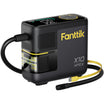
Every tool that performs two jobs saves the space of an entire second unit. A jump starter that doubles as a high-capacity power bank for your laptop, or an air compressor with a built-in high-lumen work light, is the gold standard for Small Apartment Storage.
Beyond the Tool: The Changing Urban Landscape
It is worth noting that urban mobility is shifting. Data from SEMA Market Research and the Auto Care Factbook show that while vehicle technology is reducing some maintenance needs—especially with the rise of EVs—the need for emergency readiness remains constant.
Electric vehicles (EVs) actually place more importance on tire pressure maintenance, as the increased weight of the battery pack can accelerate tire wear if pressures aren't optimal. Furthermore, even an EV has a 12V lead-acid battery that can fail in the cold, requiring a jump starter to "wake up" the high-voltage system.
Summary of the Studio Strategy
The move toward compact car gear isn't just a trend; it's a necessary evolution for the modern city dweller. By applying the "Studio Strategy," you transform your living space from a cluttered storage unit into a streamlined hub of readiness.
- Prioritize the 3:1 Ratio: Look for gear that cuts volume by two-thirds without sacrificing safety.
- Focus on Integrated Storage: Eliminate the "accessory bag" to reduce visual clutter.
- Verify Compliance: Ensure your lithium-powered gear meets international safety standards for indoor storage.
- Value Multi-Functionality: Choose tools that solve multiple urban problems (emergency power + vehicle maintenance).
By choosing gear that respects the constraints of your home, you ensure that you’re always ready for the road—without ever feeling crowded in your own studio.
Disclaimer: This article is for informational purposes only and does not constitute professional automotive, legal, or safety advice. Always consult your vehicle's owner manual and follow manufacturer safety guidelines when performing maintenance. If you are unsure about handling automotive batteries or high-pressure systems, seek assistance from a certified professional.



Leave a comment
This site is protected by hCaptcha and the hCaptcha Privacy Policy and Terms of Service apply.