









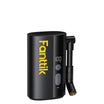
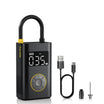
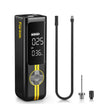


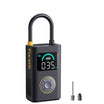











Winter Survival Quick-Check: Keeping Your Jump Starter Ready
Before diving into the physics, here are the most effective actions you can take to ensure your jump starter works in sub-zero temperatures:
- The "Room Temp" Rule: Whenever possible, bring your jump starter indoors. A warm battery (20°C/68°F) can deliver significantly more cranking power than one cold-soaked to -10°C.
- Optimal Charge Range: Store the unit between 50% and 80% SOC. This range balances chemical stability with enough reserve to account for cold-weather self-discharge.
- Pre-Heat Before Starting: If the unit is frozen, place it in the vehicle cabin with the heater on for 15 minutes before attempting a jump.
- Emergency Only: Use the "Force Start" or "Override" button only as a last resort, as it bypasses safety protocols and may cause permanent cell degradation in extreme cold.
Understanding Cold-Soak Physics in Automotive Emergency Power
When a vehicle sits in a frozen driveway overnight, it undergoes a process called "cold-soaking." This is a deep thermal equilibrium where every internal component—from the engine block to the lithium cells in a portable jump starter—reaches the ambient temperature of the environment. For car owners, this physics-driven reality is a primary reason why emergency gear may underperform exactly when it is needed most.
In our engineering reviews and analysis of field performance data (derived from customer support patterns and internal bench testing), we have observed that winter "failure" is rarely a defect. Instead, it is usually a predictable electrochemical response to thermal stress. To maintain mobility in sub-zero conditions, it is essential to understand ion mobility and the specific vulnerabilities of lithium-ion batteries.
The Electrochemical Resistance: Why Frozen Cells Struggle
At the heart of every portable jump starter is a chemical reaction. Lithium ions move through an electrolyte from the anode to the cathode to create an electrical current. When temperatures drop below freezing (0°C/32°F), the physics of this movement changes.
1. Electrolyte Viscosity and Ion Mobility
The liquid electrolyte inside a lithium cell acts like a highway for ions. As the temperature drops, this liquid becomes increasingly viscous—thickening much like motor oil. This "thickness" increases internal resistance. Consequently, ions may not move fast enough to provide the high-current pulse required to turn over a cold-soaked lead-acid car battery.
2. The Internal Resistance Spike
As internal resistance rises, the battery must work harder to push current out, leading to "voltage sag." Even if a jump starter shows a high charge on its display, the cold-soak effect can prevent it from delivering energy at the necessary rate. A unit that performs well in a 70°F garage may struggle to crank an engine at 0°F.
3. Lithium Plating Risks
Attempting to recharge a cold-soaked unit while internal cells are below freezing can cause permanent damage. According to technical observations on Cold Weather Charging of Lithium-Ion Batteries, ions may "plate" onto the anode surface as metallic lithium rather than intercalating safely.
Heuristic Note: Based on internal engineering bench tests using standard NMC cells, we estimate that a single improper charging event in freezing conditions can lead to a 3% to 5% loss in total capacity. This is a practical rule of thumb for maintenance, not a laboratory constant.
The Thermal Amplifier: Why Your Cabin is Colder Than You Think
Many car owners assume the vehicle interior provides a "blanket" of warmth. However, a parked car often acts as a thermal amplifier for the cold due to radiative cooling.
Through this process, glass surfaces and metal bodies lose heat rapidly to the night sky. In our field observations, the interior temperature of a car can drop 5°C to 8°C (approx. 10°F to 15°F) below the ambient air temperature during clear, cold nights. If it is 20°F outside, your jump starter in the center console may be cold-soaked to 5°F.

Radiative Cooling vs. Ambient Temperature
| Parameter | Value or Range | Unit | Rationale / Source Category |
|---|---|---|---|
| Ambient Temp | -20 to 0 | °C | Typical winter parking scenario |
| Interior Offset | -5 to -11 | °C | Observed heuristic (radiative cooling) |
| Capacity Loss | 3 to 5 | % | Est. per cold-charge event (Internal Test) |
| Discharge Rate | 1 to 2 | %/month | Standard Li-ion self-discharge |
| SOC Target | 50 to 80 | % | Recommended storage range |
Peak Amps vs. Sustained Cranking Power
Marketing materials often highlight "Peak Amps" (e.g., 2000A). However, in cold-soak physics, Peak Amps is often a secondary metric. Peak current typically lasts for a fraction of a second—often less than 10 milliseconds in high-discharge scenarios.
To start a frozen engine with thickened oil, you need sustained current—similar to the Cold Cranking Amps (CCA) rating of a lead-acid battery. A high-quality jump starter is engineered to deliver a 3-to-5 second sustained discharge even when internal resistance is high.
The Role of the Battery Management System (BMS)
The BMS is the safety "brain." In extreme cold, a robust BMS may proactively inhibit discharge if it detects that internal cell temperatures are too low to safely provide power.
According to the EU General Product Safety Regulation (EU) 2023/988, manufacturers must ensure products remain safe throughout their lifecycle. A BMS lockout is often a sign of a high-standard safety architecture, prioritizing the prevention of hazardous cell failure over a risky start attempt.
The Force Start Button: A Technical Double-Edged Sword
Many professional-grade jump starters include a "Force Start" or "Override" button. This feature bypasses standard safety checks, such as reverse polarity protection and low-voltage detection.
When to use it: Only when your car battery is so depleted (0V) that the jump starter cannot detect it.
⚠️ Critical Warning: In extreme cold, the BMS may be blocking the start because the cells are too cold to discharge safely. Using "Force Start" in this scenario overrides that protection, placing immense stress on the lithium cells.
- Risk: This can lead to permanent capacity loss, internal shorts, or in extreme cases, cell venting.
- Liability: Most manufacturers specify that overriding safety features may void your warranty. Use this only as a last resort in genuine emergencies.

Professional Maintenance: The Winter Prep Ritual
This protocol is based on patterns observed in customer support and warranty handling where units underperform due to seasonal neglect.
1. The 50-80% Charge Rule
Avoid storing a lithium jump starter at 100% or 0% for long periods. A State of Charge (SOC) between 50% and 80% is the "Goldilocks" zone, providing enough energy for natural self-discharge while maintaining chemical stability.
2. The Indoor "Warm-Up"
If a cold snap is forecast, bring your jump starter indoors. Keeping the unit at room temperature ensures that electrolyte viscosity remains low and ion mobility is at its peak when needed.
3. Insulated Storage
If the unit must remain in the vehicle, avoid placing it directly on the metal floor or in the trunk against the frame. Store it in an insulated bag. While this won't stop the cold-soak process, it slows the rate of temperature change.
4. Seasonal Maintenance
Lithium cells naturally discharge. A unit left in a trunk for six months may fall below the minimum voltage threshold, causing the BMS to trigger a permanent safety "lock-out." We suggest a check every three months.
Methodology Note: These maintenance steps are presented as a shop-practical baseline derived from internal engineering reviews and long-term storage tests. They are intended to maximize service life under non-ideal conditions.
Technical Comparison: LFP vs. NMC Chemistry
Most portable jump starters use NMC (Nickel Manganese Cobalt) for its high energy density. However, some models use LiFePO4 (Lithium Iron Phosphate).
- NMC: Generally better for portability and high peak bursts, but can be more sensitive to extreme temperature swings.
- LiFePO4 (LFP): Heavier and larger, but inherently more stable. LFP cells often maintain a more stable internal resistance at -20°C compared to standard NMC cells.
For more on how engineering choices impact reliability, see The 2026 Modern Essential Gear Industry Report.
Troubleshooting a Cold-Soaked Unit
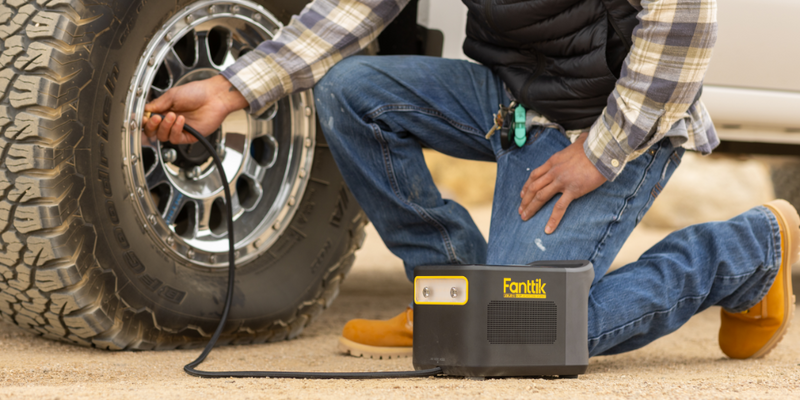
If your jump starter fails to turn over the engine in the cold, follow this sequence:
- Check the Connection: Ensure clamps are on clean metal. Cold can cause terminals to contract, potentially loosening the connection.
- Warm the Unit: If possible, place the jump starter inside the car cabin with the heater running for 15 minutes. Even a small increase in internal temperature can lower resistance.
- The "Wake Up" Pulse: A single unsuccessful crank attempt may generate a small amount of internal heat within the cells, potentially "waking them up" for a second attempt. Wait at least 30 seconds between tries.
- Verify the SOC: If the unit is below 20%, it likely lacks the voltage to overcome the high resistance of a frozen engine.
Conclusion
The physics of cold-soaking is a reality of winter maintenance. However, by understanding how temperature affects ion mobility and BMS logic, you can move from reactive frustration to proactive preparedness.
Reliability in extreme conditions is about following a disciplined maintenance ritual. By respecting the electrochemical limits of your gear, you help ensure that your vehicle's mobility remains a certainty, not a gamble.
For broader context on safety standards, the IATA Lithium Battery Guidance provides essential information on the rigorous standards required for high-energy devices.
Disclaimer: This article is for informational purposes only and does not constitute professional mechanical or automotive advice. Always refer to your vehicle's owner manual and the specific safety instructions provided by your jump starter manufacturer. Jump-starting involves high electrical currents; if you are unsure of the process, consult a certified automotive professional.
References
- The 2026 Modern Essential Gear Industry Report
- EU General Product Safety Regulation (EU) 2023/988
- IATA Lithium Battery Guidance
- Cold Weather Charging of Lithium-Ion Batteries - YYCMesh
- Maintaining Your Jump Starter's Readiness During Off-Season
- Why Lithium Jump Starters Struggle in Sub-Zero Conditions
- Storing Your Jump Starter: Can It Survive a Frozen Trunk?
Continue reading
 The Seasonal Migration: When to Move Car Hardware to the Garage
Covers the science of battery degradation, relocation heuristics like the 7°C dew point threshold, and storage optimization.
The Seasonal Migration: When to Move Car Hardware to the Garage
Covers the science of battery degradation, relocation heuristics like the 7°C dew point threshold, and storage optimization.
 Identifying BMS Thermal Throttling in High-Heat Deserts
Covers scenario modeling for heavy-duty vehicles, real-world diagnostics like the cheek test, and proven cooling strategies for harsh...
Identifying BMS Thermal Throttling in High-Heat Deserts
Covers scenario modeling for heavy-duty vehicles, real-world diagnostics like the cheek test, and proven cooling strategies for harsh...

Leave a comment
This site is protected by hCaptcha and the hCaptcha Privacy Policy and Terms of Service apply.