










































Beyond Grip: Evaluating Ergonomic Balance in Precision Tools
For prosumers and serious DIY enthusiasts, the success of a project is rarely measured by raw power. Whether you are performing a delicate logic board repair on a smartphone or assembling an intricate 3D-printed model, the limiting factor is often not the tool’s motor, but the fatigue in your own hand. We have observed a recurring pattern in our repair workshops: practitioners often report that a poorly balanced screwdriver causes more acute fatigue in the thumb and index finger within 30 minutes than a heavier tool with a superior center of gravity (CG).
Precision work demands fine motor control, which relies on the small stabilizing muscles of the hand and forearm. When a tool is "front-heavy"—a common issue when a large battery or heavy chuck is cantilevered forward—your wrist must perform constant micro-corrections to keep the bit aligned. This conflict between stabilization and execution is where "claw cramp" begins. To build a toolkit that supports long-duration, detail-oriented work, we must move beyond evaluating grip materials and start analyzing the physics of tool balance.
The Physics of Fatigue: Center of Gravity and the Moment Arm
In the world of ergonomic tool design, weight is a secondary concern to distribution. A tool's center of gravity (CG) dictates how much "effort" your hand must exert simply to hold the tool level. According to the Canadian Centre for Occupational Health and Safety (CCOHS), a misaligned center of gravity creates a moment arm—a physical lever that forces your muscles to work against the tool's own mass.
When the CG is located forward of the grip zone, the tool wants to tip downward. Your forearm muscles (specifically the extensors) must contract to counteract this rotation. If you are driving 200 screws in a single session, these micro-contractions lead to cumulative trauma. Conversely, we have found that a tool that is too light often lacks the rotational inertia required for smooth, controlled starts. This can lead to hand tremors during the critical first few threads of a delicate screw.
The ideal engineering solution, which we see implemented in high-performance gear like the Fanttik S1 Pro Cordless Electric Screwdriver, involves placing the motor and battery mass as close to the palm as possible. By using the hand itself as a counterweight, the "effective weight" felt by the user during a pivot is significantly reduced.

The Finger Pivot Test: A Practitioner’s Heuristic
How do you evaluate a tool’s balance without a laboratory? We recommend a simple shop-floor check known as the Finger Pivot Test. This is a heuristic we use to quickly identify tools that will likely cause strain during long sessions.
- Assume the Working Grip: Hold the tool exactly as you would during a repair (e.g., a "pencil grip" for precision work or a "pistol grip" for light assembly).
- Locate the Fulcrum: Place your index finger under the tool at the primary contact point.
- Check the Balance: A well-balanced precision tool should balance roughly on your index finger or tip slightly toward the palm.
If the tool dives forward aggressively, it is "front-heavy." This indicates the motor mass is cantilevered, which will require your thumb and wrist to provide constant upward tension. In our experience, tools that pass this pivot test allow the user to maintain a neutral wrist position, which is fundamental to preventing repetitive stress injuries.
Modeling Efficiency: Quantitative Benefits of Balanced Power
To demonstrate the impact of moving from manual precision work to a balanced, electric-assist system, we modeled a standard electronics repair scenario. This analysis focuses on the "Professional Electronics Repair Technician" persona—an individual who handles high volumes of delicate fasteners daily.
Modeling Note: Method & Assumptions Our analysis uses industrial engineering time-motion study principles (similar to NIOSH methodologies). We assume a standard laptop disassembly/reassembly involving 200 screws (M1.2 to M2.0).
Parameter Value Unit Rationale / Source Total Fasteners 200 count Typical high-density electronics project Manual Drive Time 15 s/screw Average manual supination/pronation cycles Powered Drive Time 3 s/screw Based on 200 RPM driver specifications Manual Wrist Rotations 10 cycles/screw Thread depth for M1.2-M2.0 fasteners Powered Wrist Rotations 0 cycles/screw User holds tool static; motor handles rotation
Analysis Results:
- Time Reduction: Under these assumptions, total active driving time drops from 50 minutes to 10 minutes—a 40-minute saving per session.
- Mechanical Strain Avoidance: More critically, the technician eliminates approximately 2,000 wrist rotation cycles per session.
By eliminating these 2,000 cycles, you aren't just working faster; you are removing the primary mechanism of repetitive strain. However, this efficiency is only valuable if the tool is balanced enough to be held static without tremors. A tool like the Fanttik S2 Pro Cordless Electric Screwdriver, with its centered mass distribution, allows the user to act as a stable platform for the motor, rather than a mechanical counterweight.
Torque Management and the Ergonomic Torque Index
Precision is a function of control, and control is often compromised by torque reaction. When a screwdriver reaches its target torque, the "kickback" or reaction force is transferred to the user's hand. In heavy industrial tools, this is managed by torque arms. In precision DIY, it must be managed by tool geometry and balance.
We refer to the Ergonomic Torque Index, a calculation that considers tool weight, grip distance, and force application. A higher index indicates a tool that manages its internal forces without requiring excessive grip strength from the user. For delicate work, we recommend matching your tool's torque settings to the fastener class.
| Screw Class | Min Required Torque (Nm) | Max Safe Threshold (Nm) | Recommended Tool Setting |
|---|---|---|---|
| M1.2 - M2.0 | 0.02 | 0.10 | 0.05 Nm (Low/Precision) |
| M2.5 - M4.0 | 0.20 | 0.50 | 0.20 - 0.30 Nm (Medium) |
| Small Appliances | 0.50 | 1.00 | 0.50+ Nm (High) |
Using a tool with a digital display or physical torque selector, such as the Fanttik S1 Pro Cordless Electric Screwdriver, allows you to stay within the "safety buffer." For example, a 0.05Nm setting provides a 2.5x safety margin above the minimum required torque for a smartphone screw, while remaining 50% below the threshold where plastic bosses typically strip.
Bridging the Gap: Prosumer Features in DIY Gear
The transition from hobbyist gear to "prosumer" grade is defined by the integration of professional features into accessible form factors. This is a central theme in The 2026 Modern Essential Gear Industry Report: Engineering Trust in a Cordless World, which argues that trust is engineered through transparency and technical precision.
Key features that define this "prosumer" bridge include:
- Smart Torque Sensors: These prevent over-tightening by cutting power the millisecond resistance meets the preset limit.
- Magnetic Enhancements: Beyond just a magnetic tip, prosumer tools often feature magnetized internal housings that keep bits organized and secure during high-vibration tasks.
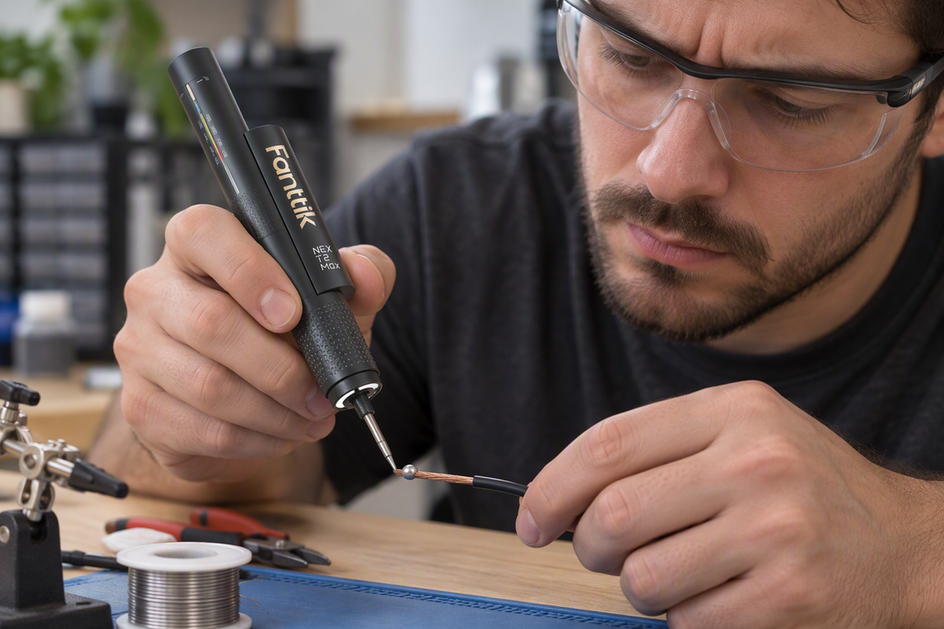
- Precision Drilling: For those working with resins, PCBs, or aluminum plates, a dedicated precision drill like the Fanttik K2 Nano 3.7V Precision Power Drill offers the high-RPM, low-torque profile necessary for sub-millimeter accuracy.

Compliance, Safety, and Trust
When choosing precision tools, especially those powered by lithium-ion batteries, authoritativeness matters. High-quality tools should comply with the EU General Product Safety Regulation (EU) 2023/988, ensuring they meet rigorous safety and traceability standards. Furthermore, transport safety is a critical trust indicator; reputable brands ensure their batteries meet IATA Lithium Battery Guidance and UN 38.3 standards for stable energy storage.
For the DIY enthusiast, this technical compliance translates to peace of mind. You aren't just buying a motor in a plastic shell; you are investing in a system designed to be used safely for hours on end.
Selecting the Right Tool for the Task
Not every project requires the same balance profile. A tool optimized for carving or sanding, like the Fanttik F2 PRO Cordless Rotary Tool Kit, prioritizes a "pencil grip" balance to allow for fluid movement across surfaces. Meanwhile, a driver used for furniture assembly may prioritize a "palm-neutral" balance to maximize downward pressure without wrist deviation.
Selection Checklist for Ergonomic Success:
- Identify the Grip: Will you use a pencil grip (precision) or a power grip (torque)?
- Apply the Pivot Test: Does the tool balance near your index finger?
- Verify the Torque: Does the tool offer settings low enough for your most delicate fastener?
- Check the Weight Distribution: Is the battery mass positioned to act as a counterweight?
By focusing on these methodical principles, you can ensure that your tools reduce friction in your workflow rather than adding to it. Precision is a discipline, and a well-balanced tool is the practitioner's most essential partner.
Disclaimer: This article is for informational purposes only and does not constitute professional ergonomic, medical, or safety advice. Always refer to your tool's user manual and follow local safety regulations. If you experience persistent pain or strain, consult a qualified medical professional.
References
Continue reading
 Heat Dissipation: How Prosumer Tools Manage Thermal Loads
A guide to thermal engineering in prosumer tools, covering magnet demagnetization, the 10-Minute Rule, and material science for...
Heat Dissipation: How Prosumer Tools Manage Thermal Loads
A guide to thermal engineering in prosumer tools, covering magnet demagnetization, the 10-Minute Rule, and material science for...
 The Science of Run-Out: Why Low Bit Wobble Defines Quality
Covers concentricity mechanics, field verification techniques, and the economic impact of using stable tools like the Fanttik L2...
The Science of Run-Out: Why Low Bit Wobble Defines Quality
Covers concentricity mechanics, field verification techniques, and the economic impact of using stable tools like the Fanttik L2...
Leave a comment
This site is protected by hCaptcha and the hCaptcha Privacy Policy and Terms of Service apply.